Friday, September 08, 2006

Essay 1038


From The New York Times…

-------------------------------------------------------

City Ad Firms Agree to Hire More Black Managers

By DIANE CARDWELL and STUART ELLIOTT

Finding that just 2 percent of the upper echelon of the advertising industry is black, New York City officials said yesterday that they had reached agreements with several of the nation’s biggest ad firms forcing them to bring more black managers into this crucial sector of the city’s economy.

The city’s Human Rights Commission found that hiring of black workers had barely improved since an inquiry found similar problems 40 years ago. Of 8,000 employees working for 16 agencies the commission examined, Patricia L. Gatling, chairwoman of the commission, said about 22 percent make more than $100,000 a year, and only 2.5 percent of those are black.

Faced with the findings, nearly a dozen agencies, including those owned by the Interpublic Group of Companies and the WPP Group, have promised to set numerical goals for increasing black representation on their creative and managerial staffs and to report on their progress each year.

Under the agreements, the agencies have agreed to submit to three years of monitoring by the city, under which the companies will report hiring, promotion and retention figures to the commission each year. If they do not meet their goals, they will hire an outside consultant to help them do so, among other measures.

At the same time the companies have agreed to set up diversity boards and to link progress on the issue to their managers’ compensation.

The commission has the authority to fine companies up to $250,000 or to sue them, but officials said that they believed the threat of pressure from agency clients like Pepsi and Citigroup was a more effective stick in bringing corporate leaders to the negotiating table.

“In a city where African-Americans make up one-quarter of the population, with billions of dollars in purchase power, the lack of representation in the advertising industry is completely unacceptable,” Ms. Gatling said at a meeting of the Congressional Black Caucus in Washington yesterday. “There are plenty of secretaries and clerks, but very few African-Americans have risen much higher.”

A former advertising executive first brought the problem to the attention of the commission, which decided to focus on black workers as officials discovered that they were more severely underrepresented than other groups, Ms. Gatling said.

The city’s ad industry has long had a huge economic and symbolic role in New York, accounting for 46,000 jobs in the city. The industry is a crucial part of the media nexus — from TV networks to glossy magazines to Web design firms — that help make New York City the nation’s business capital. And the industry’s failure to hire and promote minorities has put it at odds with its clients as they try to reach an increasingly polyglot consumer marketplace.

By signing the agreements, which also require that agencies establish recruiting and internship programs through universities with large minority student populations, the agency executives can avoid the embarrassing prospect of testifying at public hearings scheduled for Sept. 25, at the start of the industry’s annual gathering, Advertising Week. So far, of the 16 agencies subpoenaed to testify by the commission, only the agencies of the Omnicom Group have declined to work on an agreement, officials said.

The commission’s analysis, which looked at salary levels as well as job titles, indicated that although the major ad firms have black workers, they are largely absent from the most senior or creative levels. Of 476 employees at DDB’s New York office, commission officials said, 51 are black. But of 159 employees making $100,000 or more, only 2 are black. Neither is among the 29 employees earning $200,000 to $300,000 or the 22 employees earning more than $300,000.

A similar pattern exists across the industry, commission officials said. At BBDO, of 1,077 New York office employees, 104 are black. In the group making $100,000 or more, 6 employees are black; among the 140 who earn $100,000 to $200,000, there are only 5. Not one of the 89 employees who earn $200,000 to $300,000 is black, and among the 59 earning above $300,000, there is but one black employee.

At Merkley & Partners, 10 of 207 employees are black. None earn more than $100,000.

Through the years, the advertising industry has tried to make efforts to increase the diversity of its work force, in many instances spurred by agency clients: marketers want the staff members of the agencies to reflect the increasing diversity of the American consumer, so they can better aim their pitches at a multicultural shopper.

One senior executive at a top agency said there had been previous investigations by the commission or its predecessors in 1968 and 1978, which led to reports being issued but nothing more. He spoke only when granted anonymity because he was not authorized to discuss the agreement before it was formally announced.

“This represents a concrete step in the right direction,” the senior executive said, because until now “no agreement has ever been signed by any agency on this issue.” Whatever efforts have been made before have been voluntary and informal, the senior executive said.

“The industry generally has recruiting issues,” the senior executive said, adding: “Let’s be honest. Minorities are targeted broadly by everyone: Wall Street, Fortune 100 companies. Your top minority students have lots of opportunities outside advertising.”

Interpublic, which owns agencies like Draft and Gotham, said the decision by four of its agencies to sign agreements with the city commission demonstrated how the firms “will continue to make achieving an increasingly diverse work force and transparency on this issue major corporate priorities,” said Philippe Krakowsky, an executive vice president at Interpublic.

One company not party to the deal is Omnicom, which owns agencies like BBDO, DDB and Merkley. But Omnicom says it is pursuing its own strategy for diversifying its work force, making an arrangement with the City Council that does not involve setting specific hiring goals.

The company has promised to spend, for instance, at least $2.35 million to finance a diversity development program that will include an institute at Medgar Evers College from which the company will hire graduates. And it has pledged to recruit at historically black colleges around the country. The City Council has agreed to put up matching funds of $1 million for the institute.


Thursday, September 07, 2006

Essay 1037


Both of these ads appeared in the latest issue of BusinessWeek — which is a pretty amazing thang already, given the typical lack of ad diversity in such publications. But what’s with chopping up Black folks?

Essay 1036


From Adage.com…

--------------------------------------------

Several Agencies Sign Agreements to Forestall Diversity Hearings
Industry Execs Could Avoid Testifying During Advertising Week

By Matthew Creamer

NEW YORK (AdAge.com) -- Several ad agencies under scrutiny for their lackluster diversity-hiring practices have pledged to ramp up their minority recruiting, signing agreements designed to forestall potentially embarrassing public hearings planned for later this month.

Aggressive pursuit
Multiple executives familiar with agreements reached with the New York City Human Rights Commission said they don’t entail quotas, fines or any especially stiff oversight, though the commission is expected to review the matter after some time. Agencies owned by WPP Group, parent of Ogilvy & Mather and Grey, are said to have already signed, and Interpublic Group of Cos., Publicis Groupe and Omnicom Group are all at varying stages of negotiations with the commission, which has been aggressively pursuing the issue.

15 agencies
Each one of the 15 agencies initially subpoenaed by the commission is expected to sign on to the agreements, the executives said.

The pacts, these executives said, will take the agencies’ executives off the hook for hearings set to coincide with Advertising Week in New York, the annual industry celebration that begins Sept. 25. “By reaching an understanding, the idea is they’d no longer be called to testify,” said one.

Commission comment
A representative for the commission denied that any resolution has been reached. “I don’t know where you’re hearing it from, but you’re hearing it from me that [we’re] moving forward with the hearings on [Sept.] 25,” said Betsy Herzog, a spokeswoman for the New York Human Rights City Commission.

The agencies all referred calls to the commission or declined to comment.

Complaints about the ad industry’s historical lack of diversity has long besmirched the industry, despite the fact that most agencies have put in place programs designed to help them foster more diverse workplaces. Short of taking legal action, it was never clear exactly what the commission could achieve in terms of pushing the agencies on the diversity issue, though by scheduling the hearings during Advertising Week -- a bit of PR moxie worthy of Madison Ave. -- it promised to move the issue onto a larger stage.

Attention From Washington
The issue is likely to be addressed at a forum on minority advertising at the Congressional Black Caucus’ annual meeting in Washington on Thursday. The discussion features Sen. John Kerry, D-Mass.; U.S. Rep. Carolyn Cheeks Kilpatrick, D-Mich.; and some top New York City officials involved in the dispute.

Mr. Kerry, the ranking Democrat on the Senate Small Business Committee, has been especially concerned that the government isn’t adequately supporting minority agencies and minority media in the government’s own media buying.

Willow Duttge and Ira Teinowitz contributed to this report.

Essay 1035


The guy in this ad is probably praying for guidance in paying off his credit card debt.

Essay 1034


The latest issue of Adweek features an essay by Marian Salzman, executive vice president and director of strategic content at JWT in New York (pictured above). Salzman fancies herself a futurist who’s plugged into cutting-edge culture, and her Website claims she “identified such trends as wiggers.”

The piece is titled, “Spilt Champagne: Is bling history or are urban culture leaders still tastemakers?” Unfortunately, viewing the story online requires a subscription, but don’t fret if you can’t access it. You’re not missing much.

It’s always interesting when Madison Avenue lifers boast having street cred.

Salzman opens by announcing, “The playas in the club are no longer raising glasses of Cristal, at least not the playas at Jay-Z’s upscale 40/40.” She then proceeds to detail the recent conflict between the hip-hop mogul and Cristal. Salzman writes, “If it’s not exactly the East Coast-West Coast rap music beef that spilled blood years ago, Jay-Z’s falling out with Cristal shows how far urban culture has come from its inception as the angry protest of ghetto youth.” Guess rap and hip-hop are now completely synonymous with “urban culture.”

Salzman continues to school Adweek readers. “Now, the highest strata of urban culture is occupied by multi-millionaire music producers and recording artists whose conspicuous consumption have written brands like Bentley, Burberry and Courvoisier into the pop culture lexicon. Cross that community, Jay-Z seems to be saying, and you can just as easily be rubbed out.” Don’t recall Jay-Z ever threatening to rub out anyone.

Then Salzman reveals, “A major survey by JWT confirms what I’ve been saying for 15 years: CMOs who want a handle on young consumers from all walks of life must understand what’s taking hold dozens of stories below their penthouse offices, on the streets of the cities where they lunch.” Well, it’s safe to guess few CMOs do lunch in the ‘hood. But it’s encouraging to note Salzman has spent the last 15 years trying to sell notions that most Black advertising agencies have hyped for over 30 years.

Thank goodness Salzman’s here to drop gems like, “Young urban style is clearly a mainstay for a solid minority, but more significantly, it is a major influence for a big majority of young people.” Quick, somebody tell Diddy!

Salzman (w)raps it up by predicting, “Booty shaking and bling may always be in style, but we think hip-hop’s future is in the music with a message: the young Parisian Arabs who have something to say about racism, the Mexican youth who rap about poverty, the Middle Eastern teens who seek to protest war. We think artists who turn away from mass-marketed music will begin using their skills to raise consciousness and make a difference. They may yet make Grandmaster Flash proud.” You go, girl.


Special Bonus! Not sure about the reproduction quality, but here’s a copy of the complete Adweek essay.

Wednesday, September 06, 2006

Essay 1033


This is what happens when healthcare advertising agencies try to be creative.

Essay 1032


From TVWeek.com…

---------------------------------------

‘Survivor’ Stirs Up Supremacists
Web Posters Embrace Show’s Racial Split

By James Hibberd

CBS’s plan to racially segregate the tribes for the 13th season of “Survivor” has white-supremacist Web bulletin boards buzzing, prompting concern from the Southern Poverty Law Center civil rights group.

“It has lit up the white-supremacist world,” said Mark Potok, director of the Intelligence Report at the SPLC. “It’s been a fairly remarkable reaction. [The format] plays into the hands of many people in this country who have racist feelings.”

The upcoming season of the 6-year-old CBS reality show has contestants separated by race into four groups: The African-American Tribe, the White Tribe, the Hispanic Tribe and the Asian-American Tribe. The tribes will stay segregated for about half the season.

Since the format was announced two weeks ago, the plan has been widely criticized as a racially inflammatory ratings stunt. Show creator Mark Burnett has said the format was a response to criticism that the reality program didn’t include enough minorities.

People posting messages on white supremacist Web sites such as Stormfront.org and Vanguardnewsnetwork.com, are greeting the “Survivor” format with a mix of hope and suspicion: Some hail the idea as a way to foster racial pride among whites, but others fear Hollywood will portray whites unfavorably.

“This is a great idea,” wrote poster “Drafli Hakon” on Stormfront, which claims 120,000 members. “This will get all those millions of couch potatoes who watch the show [rooting] for their own. Win, lose or draw, millions of whites will start to remember that they ARE part of a tribe. If the Whites win, they will feel pride. If they lose, they will feel resentment towards those who won. It’s win-win for us.”

Another poster, “Krom,” agreed. “This is great and should be really interesting!” the poster wrote. “One benefit I see is that people will really see racial differences are real PLUS they will be able to root for their own people; a sense of racial solidarity. Good luck to the white team!”

Much of the reaction is tempered by fearful certainty that the show will portray whites in a negative light.

“The show will choose the weakest and most indecisive whites to be on the island, and the opposite for the other races (except the asians, maybe),” wrote one poster, “Kragen.” “The show will also be carefully edited to fit their agenda … to make people think whites are nothing without non-whites.”

CBS declined to comment about the message boards. Mr. Burnett could not be reached for comment by press time.

Mr. Burnett has denied the show will inspire racism and has called critics “less than open-minded.”

Mr. Potok, whose nonprofit group investigates racist organizations, said segregating players is an unhelpful way to address diversity issues. “I’m not sure if creating a mini-race war on TV is much of a solution to an affirmative-action problem,” he said. “To some people, this is a chance to get up and cheer for your race. And that’s not helpful at a time when race relations are doing poorly in America.”

One poster on Stormfront noted that the new “Survivor” format might “double or triple [CBS's] ratings.” To which another member hopefully replied: “It might double or triple Stormfront’s ratings.”

Stephanie Robbins contributed to this report.

Essay 1031


Ford wants us to think the quest for vehicles that run on alternative fuels is somehow inspired by warm-and-fuzzy motives. Is Ford doing it for the Black kids — or just desperately seeking to get in the black?

Essay 1030


Business as unusual in a MultiCultClassics Monologue…

• In a not-so-bold move, William Clay Ford Jr. stepped down as CEO and President of Ford Motor Company, handing the roles to Alan Mulally, a top executive of Boeing. Ford retains his title of Chairman and Master of His Universe. And technically, since he gave up his salary in a symbolic gesture last May, the new appointment will obviously cost the struggling automaker more money. Chairman Ford proclaimed, “Our team needs a steady hand from somebody who’s been through turnarounds and knows what it takes and can say, ‘You’re on the right path, stick with it, it’s going to work,’ or ‘This isn’t the way to go, let’s refocus and go somewhere else.’” Spoken like a true and decisive leader. Ironically, the matchmaker behind Mulally’s appointment was Richard Gephardt, a man who’s failed to turn around the country or land the presidency after numerous attempts.

• There will be about 10,500 fewer folks inside Intel, as the chipmaker announced plans to reduce its staff by 10 percent. “They have to go back to their roots, go back to what they know how to do, which is microprocessors for notebooks, desktops and servers,” said one analyst. Let’s hope going back doesn’t involve reviving the obnoxious commercials starring the Blue Man Group.

• The father of Ron Goldman is seeking to get the rights to O.J. Simpson’s name, image and likeness — in an attempt to collect on the $33.5 million judgment awarded in a 1997 wrongful-death suit. “He personally has never paid a dime on the judgment to anyone,” said Fred Goldman. “He has made it very clear over the years that he has no intention of doing so.” Can’t imagine O.J.’s name, image or likeness could amount to $33.50, let alone $33.5 million.

• The digital divide continues, as a new study shows Internet usage gaps between White and minority kids. 67 percent of White kids use the Internet, while the figures for Black and Hispanic students are about 50 percent. “This creates incredible barriers for minorities,” said a senior fellow at the Center for American Progress and an analyst on how communications influence civil rights. Not using the Internet “narrows their ability to even think about the kind of work they can be doing. … It doesn’t prepare them for a world in which they’re going to be expected to know how to do these things.” Imagine all the kids being deprived of experiencing MultiCultClassics.

Tuesday, September 05, 2006

Essay 1029


At last, there’s a multicultural management technique to help you train those immigrant employees to wash their hands after using the restroom.

Essay 1028


A recent episode of “Mind of Mencia” presented a sketch titled, “The Stereotype Olympics.” Contestants of different ethnicities competed in politically-incorrect challenges that included looting televisions and eating watermelons. In typical Carlos Mencia fashion, the event was crude, obscene and hilarious.

Which calls to mind the CBS “Survivor” fiasco, with the reality program’s intention to segregate players by race. Criticism has been fast and furious, with organized protests and advertisers abandoning sponsorships (although the advertisers insist their decisions were not based on the show’s provocative format).


But maybe the “Survivor” deal isn’t so crazy. After all, one could argue that race has always been present in arenas of competition. On abstract and literal levels, the true Olympic Games have many race-based components. Few American professional sports succeed in dodging issues of race. Things are even more intense with international sporting duels — see World Cup Soccer for plenty of examples. Race repeatedly surfaces in political elections. Hell, the race factor even comes up during every installment of “American Idol.”

It’s interesting to note that “Survivor” has traditionally referred to its teams as tribes. Let’s be honest. People tend to be clannish, congregating with their own kind. Yes, we all try to get along on professional and societal planes. But the country — and perhaps the entire planet — leans towards tribalism. “Survivor” isn’t resorting to desperate attempts at boosting ratings. This upcoming season is the natural and inevitable progression.


The only true controversy involves Jeff Probst, the current host of “Survivor.” Probst may not be qualified to oversee the new dynamics of segregated tribes. Perhaps Carlos Mencia or Dave Chappelle should be considered as replacements. Either comic is better suited to mediate the potential conflicts — plus provide some sorely needed entertainment value.

Essay 1027


Greyhound takes very different approaches when targeting Hispanics and Blacks. Hard to decide which ad is the bigger dog.

Essay 1026


Growing concerns in a MultiCultClassics Monologue…

• A new study showed pudgy toddlers tend to grow up to become pudgy teens. “These findings underscore the need to maintain a healthy weight beginning in early childhood. Contrary to popular belief, young children who are overweight or obese typically won’t lose the extra weight simply as a result of getting older,” said a doctor involved with the study. Hey, let’s refer to the issue as The Happy Meal Syndrome.

• USA Today reported that most Americans don’t realize the actual amount of calories in supersized portions at fast-food restaurants. “One of the big dangers of fast-food lunches is that we not only mindlessly overeat, but we mindlessly underestimate how much we've eaten,” said the lead author of a recent study on the topic. “The more we eat, the less we think we eat. … Nobody is immune from doing this, from the lightest person to the heaviest person.” However, the end results have people looking more like Mo’Nique versus Nicole Richie.

• A Minnesota company has hatched an idea to help students pay for textbooks: load the titles with advertising. By integrating ads, students may enjoy free textbooks. Would you like fries with that physics lesson?

Essay 1025


For Bridgestone, switching from Black to Hispanic messaging is as easy as changing a tire.

Essay 1024


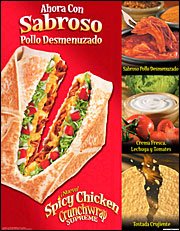
AdAge.com states the obvious regarding Taco Bell’s inability to connect with Hispanics. The ad above certainly tells the story — would anyone be attracted to food that looks like that?

----------------------------------------------

Taco Bell Grapples With Its Hispanic Conundrum
Chain Struggles to Attract Latino Demographic; Analysts Claim the Problem is the Product

By Kate MacArthur

CHICAGO (AdAge.com) -- Taco Bell’s fast-food version of Mexican food isn’t playing very well with Hispanics, who contributed just a half-percent to the company’s same-store-sales gain of 7% in 2005, despite making up 20% of Taco Bell’s core 18-to-34-year-old target market. Now, as the definition of the average American increasingly includes Spanish-speaking consumers, the Yum Brands chain plans to boost its Spanish-language marketing.

Ads or product?
But experts aren’t sure whether Taco Bell’s problem is the advertising -- or the product.

With same-store sales declining for two consecutive months after a 43-month streak of gains, the fast-feeder shared with analysts its plans to prevent a full-out sales swoon. Among them, Taco Bell is considering adding carnitas, a braised pork dish, to the menu and doing more Spanish-language advertising. Management said Taco Bell’s English-language TV ads tended to underdeliver to Hispanic consumers, according to John Ivankoe, a JPMorgan Chase restaurant analyst who attended the chain's investor meeting.

‘Not really Mexican’
“It’s not really Mexican food or food that unacculturated Hispanics know from their home country,” said Everett Hernandez, senior VP-general manager, diversity for market-research firm Synovate. “It’s a new offering to them.”

Taco Bell tends to rely on food-oriented advertising and uses the same positioning regardless of language.

“Food looks like food whether you’re Spanish-dominant or Anglo-Saxon,” said Debbie Myers, VP-media services for Taco Bell. Because its tagline “Think Outside the Bun,” designed to lure consumers from their burger routines, doesn’t translate well into Spanish, the chain uses “No solo de pan vive el hombre” (“man does not live by bread alone”) in Spanish-language ads.

Taco Bell Hispanic ads
Taco Bell does ads for 10 different marketing periods throughout the year, with a Hispanic version for each, Ms. Myers said. The “food-heavy” spots are adapted from general-market footage, and the company also did two live-action original Hispanic spots last year with its Hispanic agency, Dieste Harmel & Partners, Dallas, a Taco Bell spokesman said.

A Dieste executive declined to comment, saying it is too early to discuss the work.

Sonya Suarez-Hammond, director-multicultural marketing insights at Yankelovich, recommends using both Spanish and English to reach Hispanics. “If you think about extended family where you have grandparents, uncles, in-laws and cousins living in one home, there are varying levels of acculturation and language proficiencies,” she said. “Oftentimes marketers have to get past the question of: Is it English or Spanish? It’s really both. We’re seeing the important thing is marketers have to reach out to Hispanic consumers in a culturally relevant way.”

For instance, mealtime is more important to Hispanic families and creates a different opportunity from general-market consumers hooked on dashboard dining.

That opens up a host of operational issues, from point-of-sale materials to dining-room cleanliness.

‘Their issue is authenticity’
“If they want to broaden their Hispanic market … their issue is authenticity, and they have a lot of years of not being perceived as authentic to break through,” said Carl Kravetz, chairman-chief strategic officer of Cruz/Kravetz: Ideas, Los Angeles, which handles advertising for fast-casual chain El Pollo Loco.

He also questioned whether adding more traditional Mexican food would help the situation.

“If they say they deliver good Mexican food to [Hispanics] they won’t be believed. If they say they have good, filling, cheap American food, they may have a chance.”

Essay 1023


Looks like the same creative team was responsible for both of these ads. Or maybe there’s a template or formula for creating really bad liquor ads targeting Blacks.

Essay 1022


From The New York Post…

-------------------------------------

YOU ARE WORKING HARDER & YOU ARE GETTING PAID LESS

By John Crudele

AMERICANS shouldn’t celebrate Labor Day just once a year. They should do it twice or maybe even three times — that’s how many jobs it now takes to maintain the standard of living they had in the early 1970s.

Yesterday was the 123rd anniversary of Labor Day as a national holiday. And now that people are going back to their post-summer, workaday routines, I thought it would be a good time for a reality check.

Politicians will try to make jobs an issue in the congressional election in two months. I’m not going there: The current financial state of the American household has more to do with the costs of homes, education and health care over decades, as well as the pricey amenities of life we’ve all come to love, than it does with political parties.

And we are paying for all that stuff with declining incomes.

Here’s a figure that I find stunning.

When I was in college in 1972 (and paying about $3,000 a year total for an expensive private school), the average American had an average weekly paycheck of $334.60.

Today, the figure is just $277.96 after it’s adjusted for inflation. And that is down about 90 cents a week from August of 2005.

Don’t believe me? Look it up on the U.S. Department of Labor’s Web site — www.bls.gov.

The tables go back to 1964, when average earnings were consistently over $300 a week.

If you look around, you’ll see that Americans are obviously surviving and even thriving. But they are doing it by taking on additional jobs, or by having more than one adult in each household working.

And that gets me to the current state of the job market, which can be best described as confusing.

Last Friday, the Labor Department announced that a modest 128,000 new jobs had been created in August. That figure was slightly higher than the 125,000 new jobs that Wall Street had been expecting, but the number was made a bit better when the government restated the previous two months upward by 18,000 new jobs.

(After I wrote a couple weeks ago that the employment number might be stronger than expected, some on Wall Street boosted their expectations to 130,000 new jobs.)

The fantasy Make Us Rich hedge fund that Bill King and I have conjured up made a measly profit of about $125,000 on Friday when we covered our short position after bond futures initially sank on the slightly better than expected employment figure.

But the jobs number was benign enough to allow stocks their typical rally on the first day of the month. And the Make Us Rich fund is using that as an opportunity to increase our bet that stocks will ultimately have a bad September.

So we are shorting another 500 contracts on the S&P index — adding to our anti-market bet. (see www.nypost.com for details.) Over the past month the Make Us Rich fund is up a mythical $5 million — about the price of a house I’d like to buy in Beverly Hills.

Monday, September 04, 2006

Essay 1021


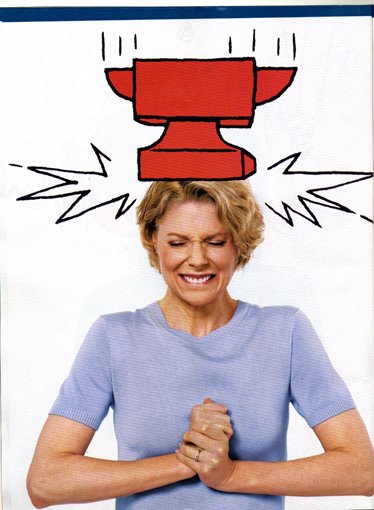
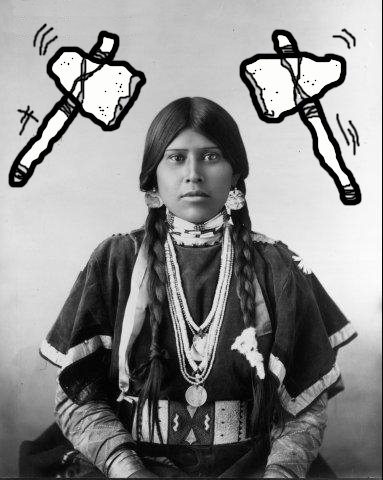
Relpax is an equal opportunity advertiser, covering a variety of ethnic categories with this multi-page message for migraine sufferers. The only thing missing is a Native American being pummeled by tomahawks.

Essay 1020


Working through Labor Day with a MultiCultClassics Monologue…

• Plans are underway to build a fast-food restaurant on Rikers Island. The goal is to offer prison workers and visitors alternative dining options, as 7,500 workers and hundreds of visitors pass the proposed restaurant site daily. Wonder if menu items from Mickey D’s might be categorized as cruel and unusual punishment.

• The Ku Klux Klan held a Saturday rally in Gettysburg, Pennsylvania, on the Civil War battlefield that Abraham Lincoln delivered the Gettysburg Address. Counterdemonstrators were in attendance, including Confederate re-enactors taking offense to the Klan’s use of the Confederate battle flag. “These guys don’t stand for anything I stand for,” said a flag fan. “And it’s time we disengage our flag from what they stand for.” Right, let’s properly segregate our biased beliefs.

Essay 1019


Memo to creative team: Appetite appeal can be adversely affected when depicting children dancing on food.

Essay 1018


From The Plain Dealer…

----------------------------------------------------

Campaigns find diverse ways to play race card

By JULIE CARR SMYTH
The Associated Press

COLUMBUS, Ohio (AP) — When you bring up race in a political campaign, be careful how you do it.

No one was alarmed last week, for example, when GOP gubernatorial candidate Ken Blackwell, who is black, brought black ministers from around the country before reporters as a show of their support for his campaign.

Nor has it raised any eyebrows for Blackwell’s opponent, Democrat Ted Strickland, who is white, to overtly cultivate Ohio’s big-city mayors — most of whom are black — to support his candidacy and his urban proposals.

And neither Democrats nor Republicans have caught flak when they’ve vigorously courted the black vote this year by hosting visits from black stars, such as Sen. Barack Obama, or summits aimed at boosting black membership in the party.

Just don’t try conducting a poll to see whether race is going to be a factor in Ohio this fall.

That’s what Mary Taylor, the Republican candidate for auditor, did last week — when her campaign asked in a telephone poll whether voters would be swayed if they knew her opponent, state Rep. Barbara Sykes, is president of the Ohio Legislative Black Caucus.

Taylor, who is white, has said she was testing information about her opponent’s strengths and considers Sykes’ role as leader of the black caucus to be one of those strengths.

Her adversaries portrayed the question as race-baiting. For Ohio Senate Minority Leader C.J. Prentiss, a former president of the OLBC, the distinction is clear.

“I think in Barbara’s literature, there’s probably a bullet that says ‘president of the Ohio Legislative Black Caucus,’” said Prentiss, who is black. “I think in a poll, though, it’s a trigger word, to see if it really matters. It’s like me saying, ‘Do you know that blank-blank goes to synagogue every Saturday?’ Maybe he does, but what’s the trigger word there? It’s synagogue, it’s this guy is a Jew.”

The question of how race will play in the Nov. 7 election is exasperating to Ohio’s political prognosticators. Blackwell, who would be Ohio’s first black governor, is thought to have the potential to cut into some of the Democratic Party’s black base.

His presence at the top of the Republican ticket also presents a challenge to the diversity-seeking Democrats, who are running two white men for governor and lieutenant governor in Strickland and his running mate Lee Fisher. It is the question everyone wants to answer but no one, until Taylor, was willing to ask.

When news of the poll question surfaced, Ohio Republican Party spokesman John McClelland noted Blackwell’s presence on the party’s ticket as evidence of the party’s obvious inclusiveness. Blackwell declined comment on the issue last week, saying he lacked background on the poll.

Sykes and Supreme Court candidate Ben Espy represent needed diversity on the Democrats’ ticket if they want to retain the support of their racially diverse followers, and Prentiss said the party’s objections to Taylor’s poll question shouldn’t imply that they would see Sykes’ race as a negative in November.

“Even though we’re celebrating that the ticket is more diverse with Barbara and Ben Espy on it, and her position on the Black Caucus is seen as a positive, this just shows a sign of desperation that could be troubling down the road,” she said. “Where will it take the campaign?”

Taylor’s campaign declined to comment beyond the statement she issued earlier this week, in which she rejected the notion that the poll question was intended as a slur.

Tufts University political scientist Jeffrey Berry said there are ways to test the race question without being racist, but Taylor did not employ them. You could, for example, conduct focus groups that weigh the same information when presented next to a white candidates’ face and then next to that of a black candidate, he said.

“Measuring race relations is a valid enterprise,” he said. “I think why this is offensive is because what you’re doing is suggesting that that’s a negative and asking how they feel about that. You’re sort of loading it, going beyond basic information about whether race is a factor into essentially how can I use race against this candidate.”

Sunday, September 03, 2006

Essay 1017


Despite the fact that Black women are especially struggling with the obesity epidemic, Mickey D’s sees fit to present a sistah who thinks, “I wish I had two mouths” in order to more easily consume her McShit.

Essay 1016


Pre-Labor Day celebrations in a MultiCultClassics Monologue…

• “The business model that sustained us for decades is no longer sufficient to sustain profitability,” declared Ford Motor Company Chairman and CEO Bill Ford. “It is important to note that all of the issues that some onlookers view as ‘problems’ for our company are issues that I view as opportunities.” This guy sounds like a big part of the “opportunity.”

• New surveys showed American workers are increasingly disgruntled. “Three years ago, workers told us they felt overworked, but they were patient. They realized the economy was getting better and they would share in the wealth ultimately,” said the vice president of a workforce management company that conducted one workers’ study. “Last year, the work improved, but they are mad as hell. Their paychecks are no better.” The study revealed 61 percent of workers are not feeling the benefits of an improved economy; and 74 percent are seeking a new gig — with 41 percent pursuing opportunities while on the job. Another report showed 97 percent of women were most concerned about being unable to afford health care. The good news is there are plenty of “opportunities” available at Ford Motor Company.

Essay 1015


Um, guess this would qualify as a booty call.

Essay 1014


From Targetmarketnews.com…

------------------------------------------------------------

Rep. Carolyn Kilpatrick to convene panel on ad industry at CBCF Conference
Session previews issues in upcoming NYC hearings

When the Congressional Black Caucus Foundation holds its annual legislative conference [this] week in Washington, D.C., the eyes of the advertising and media industries will be focused on one panel in particular. Congresswoman Carolyn Cheeks Kilpatrick (D-MI) will oversee a session entitled “Truth in Advertising: How You are Affected by the Practices of Ad Agencies and Their Clients.” The panel is scheduled for Thursday, September 7, 1:00- 2:50 p.m. in Room 140A at the Washington Convention Center.

The goal of the issue forum, according to a statement from Rep. Kilpatrick’s office, is to educate consumers about the business practices of advertising agencies and their impact on the African American communities and businesses. “The policies and practices of ad agencies should be of serious concern to all Americans,” said the statement. “As the primary means for keeping news and information outlets viable, equitable advertising practices have a direct bearing on the ability of citizens to be informed.”

The panel comes just weeks before hearings by the New York City Council as part of an investigation into hiring and spending practices by advertising agencies. Larry Seabrook, the New York Councilman who is leading the hearings, and Patricia Gatling, the commissioner for the New York City Commission on Human Rights who conducted the ad agency investigations, are both expected to participate on the panel.

The other participating panelists include Senator John Kerry (D-MA), who recently requested an updated GAO study of ad spending by federal agencies; Adonis Hoffman, Senior Vice President and Counsel of the American Association of Advertising Agencies; Eugene Morris, President and CEO of E. Morris Communications, Chairman of the Board for the Association of Black-Owned Advertising Agencies, and a Board Member of the American Association of Advertising Agencies; Carol H. Williams, President, CEO and Chief Creative Officer of Carol H. Williams Advertising; and Ken Smikle, President of Target Market News.

Congresswoman Kilpatrick’s involvement in minority advertising and media issues includes securing an Executive Presidential Order in 2000 designed to increase contracting opportunities for minority businesses, and initiating the 2000 GAO report on federal advertising expenditures. She expressed hope that participants will leave the CBCF session empowered to take action by personally getting involved in advertising issues. “The pattern of inequitable ad spending of tens of millions of dollars with minority media ultimately jeopardizes the public’s access to vital information.”

Essay 1013


Offering free long distance seems like an empty gesture when you consider most business travelers have realized it’s much easier and cheaper to simply use your own cellphone. Plus, hotel visitors can still expect to enjoy an in-room movie and mini-bar Snickers® for the current rate of about $34.

Essay 1012


A few random thoughts regarding the ads presented this past week:

For those who missed it, MultiCultClassics collected advertisements featuring Black talent from nearly 30 mass market publications. The grand total of 16 messages is pretty pathetic, considering literally hundreds of ad pages were searched (plus, the hunt spanned two months’ worth of magazines). It translates to roughly half an ad per publication, which technically doesn’t make sense. Then again, the lack of minority presence in mass market publications doesn’t make much sense either.

Some folks might feel compelled to present the stereotypical debates.

For example, there’s the NBA rant. After all, look at the insane amount of money the players receive to endorse everything from soft drinks to sneakers. Sorry, but this argument doesn’t deserve a response.

Others will argue that minority-targeted media presents an equally imbalanced advertising mix that skews in the opposite direction. Well, not really. Most of these magazines run more than a few mass-market messages between their covers. Although it’s probably because most advertisers are too cheap to produce segmented marketing.

Besides, minority-targeted media is supposed to be filled with minorities. But shouldn’t mass market publications reflect the mass market versus mirroring White culture? Shouldn’t mass market advertising appeal to the true mass market — you know, the country where Blacks and Hispanics comprise about 25 percent of the population?

To leaf through entire issues and spot zero minorities is crazy. But it’s a common occurrence for anyone pursuing the quest. Popular fashion magazines are particularly bad in this regard. Pop culture titles are surprisingly culture-free too.

One must wonder how our segregated advertising business fuels the dilemma. But what can you expect when White people continue to dominate the ivory towers of Madison Avenue?

Saturday, September 02, 2006

Essay 1011


Adman and Blogger Extraordinaire Ernie Schenck published his book, available in bookstores soon — or immediately via pre-order with Amazon.com or Barnes & Noble.

Ernie is offering a FREE SAMPLE of the book on his blog. Click on the essay title above to check it out. It’s definitely worth a read, as the insightful perspectives apply to advertising and just about any other human endeavor.

The Houdini Solution (pictured below) promises the following:

“Transform the shackles of conformity into the tools for generating amazing, unconventional results.

Houdini performed his greatest tricks within the confines of a box. Now one of the advertising industry’s brightest and most innovative stars shows you how to do likewise: to use the power of thinking inside the box to unleash the power of innate creativity.

Who hasn’t been extremely creative when boxed into an exceedingly tight deadline or budget? The Houdini Solution introduces a radical theory of how to generate more focused and powerful ideas by accepting, and even thriving on, constraints instead of being controlled by them. Filled with inspiring anecdotes and intriguing exercises that will yield surprising results, this book will spur you on to unleash the full power of your creativity, work magic in the workplace, and succeed beyond your wildest dreams.”

Essay 1010


Recipes for disaster in a MultiCultClassics Monologue…

• New Orleans Mayor Ray Nagin visited New York City and addressed his controversial comments on the World Trade Center site. “I tell you what I will never do again is refer to that site as a hole. It’s a sacred site that is presently in an undeveloped state. I’ll leave it at that,” said Nagin. He then probably proceeded to refer to New Orleans as chocolate soup.

• Hazleton, Pennsylvania, delayed launching a new law targeting illegal immigrants. The law would slap $1,000 fines on landlords who rent to illegal immigrants; plus, employers hiring them would be denied business permits. Additionally, English would become the city’s official language. Hispanic groups and the ACLU had filed a lawsuit challenging the ordinance’s constitutionality. Hazleton’s mayor insisted the delay was required because officials are creating a replacement ordinance. “We’re not enforcing it because we are in the midst of amending it,” said the mayor. “The amended ordinance will be even stronger and more defensible.” It will probably simply proclaim, “No Mexicans Allowed.”

• The National Latino Congreso is slated to stage its inaugural powwow in Los Angeles starting Wednesday through September 9. The event is billed as the first major gathering of Latino leaders and community members in almost 30 years. The folks seek to address pervasive gaps between Whites and Latinos in areas like income, home ownership, education and healthcare. “The sad news is that the gap is as big as it was 30 years ago,” said one leader. “We hope that [the National Latino Congreso] is a turning point in Latino politics and policy.” Maybe next year the event can be held in Hazleton, Pennsylvania.

• Mos Def sought to stage a semi-impromptu performance at the MTV Music Video Awards, but cops wound up busting him. The rapper-actor appeared outside the event, quickly assembled a stage and proceeded to jam his 2005 Katrina Clap. But Def was shut down by police and charged with “operating a sound-reproduction device without a permit.” A spokesperson said, “Mos Def did not set out to get arrested or break laws. … His only intention was to remind people that after one year, the people hardest hit by Katrina still need the support of all Americans.” Mos Def and Ray Nagin should start coordinating their New York-related hype.

Essay 1009


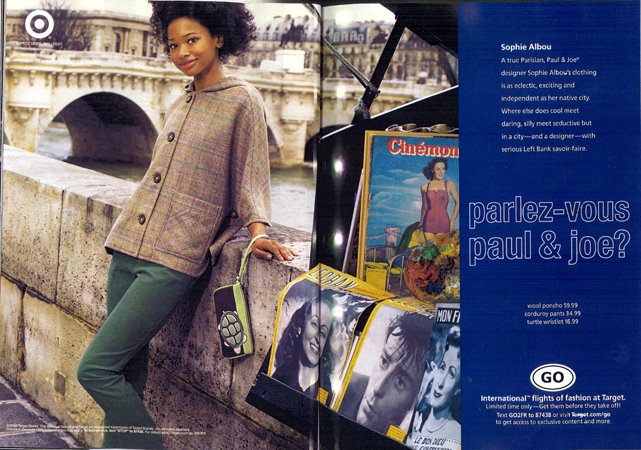
Target depicts a Black female in Paris, yet shows entertainment posters without any references to Josephine Baker?

----------------------------------------------------------

For the past few weeks, MultiCultClassics has been paging through general market magazines in search of advertising featuring Black characters. The list included Elle, Vogue, Cosmopolitan, People, Us, Reader’s Digest, TV Guide, Redbook, Woman’s Day, Parents, Esquire, GQ, Vanity Fair, Time, Newsweek, Business Week, Forbes and many more.

Excluded were layouts with Black sports figures, celebrities and super models. Additionally, ads depicting group photos including token Black figures were nixed. The goal was to determine the true diversity of the general market adscape.

After poring over scores of publications — and literally thousands of pages of ads and editorial — barely a dozen messages were uncovered.

This week, MultiCultClassics presents the rare findings.

Essay 1008


Prejudices cloud vision on immigration

BY SUE ONTIVEROS, SUN-TIMES COLUMNIST

My, my. One little brown woman sure has a lot of people very angry. She must be on the right track.

That’s my reaction after reading the e-mails on last week's column on Elvira Arellano, who, along with her American-born son, Saul, has taken sanctuary in Adalberto United Methodist Church to protest her deportation to Mexico. You all sure started e-mailing early and often!

The biggest point of contention is that Arellano came into this country illegally. “She broke the law” is mentioned repeatedly. Of course, not one of them ever fudged on their income tax returns, “borrowed” supplies from the workplace, figured out how to hook up “free” cable TV or purchased a bootleg DVD. Oh, no.

Yes, Arellano broke the law. But, I’m sorry, no one, unless you’ve been in her situation, can say for sure you wouldn’t have done the same. She, like so many others, sees opportunity here, and because there isn’t a timely fashion to enter the country legally, did so illegally.

When it’s convenient for our government, it pays attention to undocumented workers. It looks the other way when it is not. As I’ve said before, people have been coming here for at least 100 years to work because businesses need them. At the same time that a very vocal contingent is yelling, “Send them back where they came from,” industries, such as agriculture, are saying, “Hey, wait -- what are you trying to do to our work force?”

I’d like to see the folks who are so up in arms over immigration enter a grocery store and find apples selling for $5 apiece because picking crops has become so costly. For that is exactly what many in agriculture warn will happen. They’re willing to follow a legal system, but say the current one is cumbersome and doesn’t work.

For the life of me I cannot understand why, especially with the fifth anniversary of Sept. 11 so near, no one seems concerned about the other border. Seeing Arellano and others like her being escorted over the southern border is going to make me safer? Right. Osama bin Laden himself could probably cross over from the north and there’d be someone available to carry his bags right in. Why? Because we’re so busy letting our prejudices about our neighbors to the south cloud our vision.

Yes, prejudices. Because for every e-mail that spoke of the legality of Arellano’s actions, two others dredged up bigoted stereotypes and overall distaste for anyone who doesn’t look or speak like themselves as reasons to deport her.

They’re incensed she had a child out of wedlock. (If she’d been a popular actor, those same e-mailers would have been buying magazines galore to see her offspring.) It angers them that Arellano’s spoken English isn’t up to their standards and she appears to be more comfortable speaking Spanish. Hey, if we were going to start deporting people because of the way they fracture English, I’d say from the e-mails I’m getting, a lot of my critics would be on the way out, too. Studies have found that with all immigrants to the United States, by the third generation, everyone is speaking English as their first language. So relax; English is here to stay.

These same critics have decided Saul isn’t really an American. Wrong! The way it works here is if you are born in the United States, you’re a citizen. That’s all it takes. If we start limiting citizenship because of heritage, what’s next? How much longer until economic or religious requirements exist? How soon before the only folks eligible for citizenship are those with the physical features Adolf Hitler liked?

The immigration system in our country is broken and needs fixing. That’s why Arellano sits in that church, why thousands are marching this weekend to U.S. House Speaker J. Dennis Hastert’s home office. Our leaders need to figure out a system with realistic numbers for entering this country. We need a clear path to citizenship. If politicians such as Hastert had done their jobs, instead of just “stirring the pot,” as my old granny used to say, and getting people all riled up, we wouldn’t be in the situation we’re in today. Real solutions are needed.

Maybe the speaker of the House will think about that when guess who comes to dinner on Labor Day.

Friday, September 01, 2006

Essay 1007


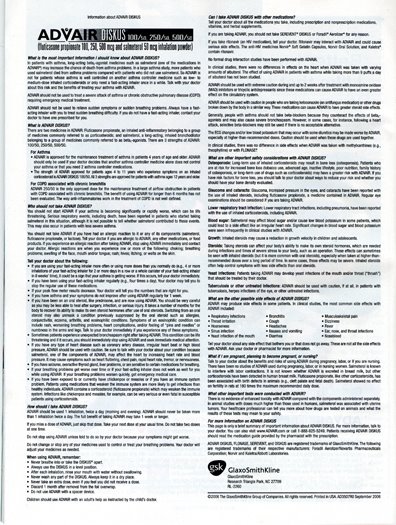
ADVAIR promises fewer asthma symptoms and better breathing. With a huge asterisk and a solid page of disclaimer copy.


For the past few weeks, MultiCultClassics has been paging through general market magazines in search of advertising featuring Black characters. The list included Elle, Vogue, Cosmopolitan, People, Us, Reader’s Digest, TV Guide, Redbook, Woman’s Day, Parents, Esquire, GQ, Vanity Fair, Time, Newsweek, Business Week, Forbes and many more.

Excluded were layouts with Black sports figures, celebrities and super models. Additionally, ads depicting group photos including token Black figures were nixed. The goal was to determine the true diversity of the general market adscape.

After poring over scores of publications — and literally thousands of pages of ads and editorial — barely a dozen messages were uncovered.

This week, MultiCultClassics presents the rare findings.

Essay 1006


Give CBS black eye for ‘Survivor’ segregation

By Stanley Crouch

Now CBS is retreating into that good old golden age of segregation, featuring teams divided by race on the upcoming season of its “Survivor” show.

There is a logic to this. Segregated groupings are always good in the world of business because they result in the reduction of all human fact to the profoundly simplistic arena of color. If people don’t get the point, literally put it in black and white, or don’t exclude: Give everybody a segregated shot. Put it in black, white, Latino and Asian. Then the gang’s all there.

The move is clearly being done in order to prop up profits by doing something so easily provocative that audiences will be asked to identify along the lines of skin tone.

Responding to protests from a multiethnic New York coalition of officials led by City Councilman John Liu (D-Queens), CBS Entertainment said in a statement that the show is doing no more than continuing a tradition of introducing fresh elements and casting that supposedly reflect cultural and social issues. This translates to organizing teams to compete against each other that are not simply based on a mix of age, gender and physical condition. That obviously does not speak to enough cultural and social issues.

Answering its critics, CBS Entertainment says, “CBS fully recognizes the controversial nature of this format but has full confidence in the producers and their ability to produce the program in a responsible manner. ‘Survivor’ is a program that is no stranger to controversy and has always answered its critics on the screen.”

That’s intellectual hog slop.

What it all adds up to is a sensationalism based on cheap enmities and trivial resentments. It may all come down to finding out whether or not white teams do well or exceed teams of minorities. There are your cultural and social issues.

In other words, do white men and women, young or old, in good, middling or bad shape, stand up well against those people who are usually depicted in mass media as mysterious, stupid, exotic, disordered or more akin to animals in their physicality?

There also is more than a hint of minstrelsy in the segregated concept that “Survivor” is trying to float. It is one that could easily have been inspired by the minstrelsy of rap videos or by hip-hop minstrel figures like Flavor Flav. His mush-mouthed and buffoonish episodes on VH1’s “Strange Love” with Brigitte Nielsen were so intrepidly stupid that they must have warmed the hearts of every member of the American Nazi Party.

Those episodes either intrigued or appalled enough people to lead to continuation of the sort that those programmers at CBS would surely be aware of, just as they must be aware of the multibillion-dollar hip-hop industry. The underlying ethos of that industry seems to be the demand to become wealthy by assuming the roles of apes in drop-down pants and freelance hookers intent on giving new meaning to “pressing the flesh.”

Well, just another day at the fount of exploitation. It would be wonderful to think that those responsible for the new formation of “Survivor” might burn in hell for these efforts at imposed ethnic division, but it is more important to let them know that this is a very tired game that fools no one.

Essay 1005


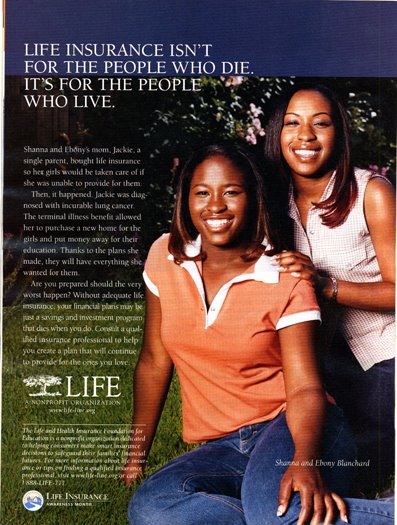
There’s no better way to sell life insurance than with orphans. And you wonder why the insurance industry has such a lousy image among consumers.

----------------------------------------------------------

For the past few weeks, MultiCultClassics has been paging through general market magazines in search of advertising featuring Black characters. The list included Elle, Vogue, Cosmopolitan, People, Us, Reader’s Digest, TV Guide, Redbook, Woman’s Day, Parents, Esquire, GQ, Vanity Fair, Time, Newsweek, Business Week, Forbes and many more.

Excluded were layouts with Black sports figures, celebrities and super models. Additionally, ads depicting group photos including token Black figures were nixed. The goal was to determine the true diversity of the general market adscape.

After poring over scores of publications — and literally thousands of pages of ads and editorial — barely a dozen messages were uncovered.

This week, MultiCultClassics presents the rare findings.

Essay 1004


Exposing the truth in a MultiCultClassics Monologue…

• Las Vegas strippers donated money to support a local school system. The loot was acquired via an event titled “Detention,” where the women dressed up — and undressed — as teachers, schoolgirls and librarians. The strippers managed to raise $2,500 — among other things.

• The IRS ended its 2-year probe of the NAACP’s tax status. The decision to investigate the group allegedly stemmed from the NAACP’s criticism of President Bush during the 2004 election. But now the IRS declared the civil rights organization’s remarks didn’t violate their tax-exempt status. NAACP President Bruce Gordon said, “It’s disappointing that the IRS took nearly two years to conclude what we knew from the beginning: The NAACP did not violate tax laws and continues to be politically nonpartisan.” The politicians probably would not have pressed for an investigation if the NAACP agreed to only accept donations from strippers.

• Rapper 50 Cent declared, “I actually like George W. Bush. In some ways, I’m the George W. Bush of hip hop — nobody likes me, but I’m still gonna run it for the next four years.” Democrats will probably ask the IRS to investigate Fiddy’s tax status.

• Former Village People cop Victor Willis has agreed to seek treatment following his plea to drug possession charges. So he’ll go from “In the Navy” to “In the Pokey” to “In the Betty Ford Center.”