Wednesday, May 31, 2006

Essay 651


Old news from Advertising Age…

• The latest issue of Ad Age published the final results of its online poll that asked, “Do you think that the changing media environment is fueling age discrimination at ad agencies?”

The publication also offered quotes from various whiners. “[Age discrimination] is so obvious it hurts,” said one agency executive. “They completely ignore the most affluent and powerful generation this country has ever seen — the baby boomers!” A creative director proclaimed, “I’m a dinosaur that’s been online since 1987. I wonder: Are 25-year-olds writing all those ads for products and services aimed at aging baby boomers? Can ad agencies not see the value in employing creatives in the demographic segment that they’re pitching?”

Gee, it sure is interesting to see old admen defend themselves with arguments they’ve ignored when shutting out others.

Incidentally, the final tally showed 89 percent of respondents voted yes. The overwhelming majority were probably boomers who needed assistance from their young secretaries to figure out how to vote online.


• Ad Age also offered the editorial below (the MultiCultClassics rebuttal immediately follows)…

Old or young, talent is the issue

AD AGENCIES SHOULD fire older employees who don’t get that the advertising game is changing. Agencies also should fire young people who don’t get that the game is changing.

The issue should not be about age but about ability and, as an agency CEO said in Ad Age last week, “finding people who display intellectual curiosity.”

The specter of age discrimination came to light in a lawsuit by 54-year-old George Hayes, a 30-year veteran of McCann Erickson and Universal McCann who is suing his former employer, alleging wrongful termination based on age.

Courts will decide the case on its merits. But there is a broader imperative for agencies and employees: Both must embrace change or face the consequences.

Advertising is a “youth-obsessed profession,” as Ad Age’s Matthew Creamer wrote last week. That’s reality. There is a bias toward new and improved, not old and improved.

Agencies (and all employers) must not discriminate based on age (that’s illegal) and should reward talent regardless of age (that’s smart business).

Younger workers have a competitive advantage in a changed media world. They came of age in the digital era, growing up with wireless, the Net and iPods. Younger talent also comes cheaper than older workers, a critical issue when marketers are hammering agencies to work on lower margins.

What about older workers? The issue is front and center for aging boomers. The average baby boomer this year will turn 50, according to American Demographics. There will be no coasting to retirement; the onus on boomers is to perform.

So what should older advertising workers do? Embrace change; draw on experience, but be ready to ditch old methods; and stand with colleagues, regardless of age, who believe in a zero-based, media-neutral approach to marketing, communication and technology.

The game is changing, but there has never been a greater need for talent of any age with the intellectual curiosity to define the new rules.

----------------------------------------------------------------------

“Talent is the issue.”

“The issue should not be about age but about ability…”

“There is a bias toward new and improved, not old and improved.”

“Agencies must not discriminate based on age and should reward talent regardless of age.”

Gee, these arguments are old. And downright disgusting in an industry that thrives on discrimination and exclusivity.

It’s easy to seamlessly replace the word “age” in the lines above with Black, Hispanic, Minority, Female, Gay, etc.

The discriminators are quick to push fairness and legality when they find themselves playing the role of victim. How stereotypical.

Essay 650


Throwing bricks and more in a MultiCultClassics Monologue…

• Supporters of stricter border security have been sending messages to elected representatives in Washington via bricks (pictured above). The bricks symbolize the notion of building a barrier between the U.S. and Mexico, in addition to being a disruptive delivery device. About 10,000 bricks have been received to date. “Given the approval ratings of Congress these days, I guess we should all be grateful the bricks are coming through the mail, not the window,” said one senator’s spokesperson. Rep. William Jefferson has requested that people send him only gold bricks.

• Liz Taylor defended Michael Jackson, speaking about his bedroom antics with children and insisting “there was nothing abnormal about it.” In fact, Taylor admits she played in bed with Jacko and his nephews. Yeah, there’s nothing abnormal about frolicking between the sheets with Uncle Michael and Auntie Liz.

• DJ Troi Torain (aka DJ Star) defended himself against charges of sex threats aimed at the child of a rival DJ (see Essay 600). DJ Star insisted that if his words make him a criminal, then someone should also bust another rival who labeled him a “spermless dwarf.” Great, now folks are defaming dwarves with erectile dysfunctions too.

Essay 649


Oprah’s record as hip-hop fan has scratches

By Clarence Page

WASHINGTON -- You can tell a lot about people by what they have on their iPod. Oprah Winfrey recently acknowledged that she’s “got a little 50 [Cent] on my iPod. I really do. Love ‘In Da Club.’” That’s the most revealing tidbit I’ve heard about a major newsmaker since Sen. Hillary Clinton (D-N.Y.) said she clicks her iPod most often to Aretha Franklin’s “Respect,” among other anthems of our generation.

That’s appropriate. Every woman has at least a little Aretha in them, Lena Horne once said, although I expected the former first lady to be humming along to Helen Reddy’s “I am woman, hear me roar …”

Winfrey was defending herself in a surprise appearance on a New York City radio station, Power 105.1 FM, against a complaint from rap star and actor 50 Cent that she rarely invites rappers on her talk show. “I think she caters to older white women,” he said.

Now, now, that’s a cheap shot even for a guy who calls himself “50 Cent.” Ludacris, another rap star and actor whose real name is Chris Bridges, chimed in with a complaint in GQ magazine. Oprah was “unfair” to him, he said, during a show in which he appeared last October with co-stars from best-picture Oscar winner “Crash.”

Mercy. Who knew that big-name macho rap stars had such tender feelings? Apparently touched by their angst, Ms. Live-Your-Best-Life called New York DJ Ed Lover to assure the world that, “I listen to some hip-hop.” Besides “Fitty,” she claimed to “love Jay-Z, love Kanye [West], love Mary J. [Blige].”

I’m still trying to wrap my mental arms around the thought of Ms. Winfrey jogging, say, along Lake Shore Drive listening to 50 Cent's “In Da Club.” You go, girl.

I don’t question her musical taste. As they used to say on Dick Clark’s “American Bandstand” back in my day, it’s got a good beat and you can dance to it.

However, as I often ask my teenage son as he tries, often in vain, to keep me in tune with today’s late-breaking cultural waves, does she listen to the lyrics?

“You can find me in da club/ bottle full of bub,” it begins. “Bub,” by the way, is short for “bubbly,” as in champagne, I am told on the street. If you’ve heard something different, feel free to further enlighten me.

“I’m into having sex, I ain’t into making love/ So come give me a hug if you into getting rubbed.” And that's from the clean version, I point out, the one played on old-fashioned, non-satellite radio. The uncensored version could make Howard Stern blush, were he still capable of embarrassment.

But, while Winfrey tries to show how deeply she still gets down with the people, Ice Cube, another rap and movie star, has joined the bash-Oprah fray, arguing that he’s more ready for Oprah's audience than she seemingly thinks.

“I’ve been involved in three projects pitched to her, but I’ve never been asked to participate,” he tells FHM magazine in its July issue, scheduled to hit newsstands on June 6. When he was helping to promote “Barbershop,” his hugely successful 2002 movie, she had Cedric the Entertainer and Eve on the show, “but I wasn’t invited,” he moaned. “Maybe she’s got a problem with hip-hop ... She’s had damn rapists, child molesters and lying authors on her show. And if I’m not a rags-to-riches story for her, who is?”

Well, not exactly from “rags,” judging by various Cube biographies. Born O’Shea Jackson in 1969 in South Central Los Angeles, he was raised by working parents, which in itself puts him well ahead of the usual gangsta stereotype.

He reportedly began writing rap as a student at William Howard Taft High School, a racially and economically mixed school in the San Fernando Valley community of Woodland Hills, where the median income tops $70,000. Not too ghetto.

Despite the cultural handicap of graduating from a decidedly un-ghetto high school, he dropped out of college to join young Dr. Dre and others to form the angry N.W.A., short for “Niggaz With Attitude,” best known for the 1989 underground hit “[Expletive] Tha Police,” which brought an FBI investigation and a publicity bonanza.

Yet, now in his mid-30s, a different, family-oriented Cube has emerged in such comedies as “Barbershop” and “Are We There Yet?” I eagerly await the satisfaction of seeing him yell at his kids to turn down that profane rap music.

In the meantime, as 50 Cent trumpets his “rubbin’” work and a former N.W.A. promotes his family values, I need not wonder why so many of our kids today are so morally confused. Maybe that’s just my generation talking.

Essay 648


From the latest issue of Newsweek…

-----------------------------------------------

See Reverend Run
Former Run-DMC rapper brings back the tough love.

By Allison Samuels

June 5, 2006 issue - Angela Simmons wants a party for her high-school graduation, and boy, does she have ideas. A Plexiglas dance floor over the family swimming pool. Gift bags with iPods. And the finest food 250 teenagers can devour. But, look, girls with much less spend much more on MTV’s hit show “My Super Sweet 16,” and the Simmons family has a brand-new Rolls-Royce. If you watched the first season of “Run’s House” on MTV, however, you know that Angela and her four siblings don’t get to fling much bling. “Run”—formerly of the seminal rap group Run-DMC—is her dad. He’s a minister now, and he and wife Justine preside over their house like stern Sunday-school teachers. It may not sound like fun—Angela ended up with a simple pool party and barbecue—but that’s the surprise of “Run’s House,” which is returning for its second season on June 15. In a time when TV families have to be outrageous, dysfunctional or both, “Run’s House” is sweet, wholesome and charming. “We wanted to do a show about a family who just has regular problems, not extremes,” Run says. “You don’t have to always be shocking.”

How did a functional family end up on MTV, home of “The Osbournes”? Star power helped. Run has a mogul for a brother, Russell Simmons, and a good friend in co-executive producer Sean (Puffy) Combs. “Run is hip-hop’s Frank Sinatra, and MTV saw that,” says Combs. The show plays like an unscripted version of “The Cosby Show” or “Father Knows Best,” with Father fighting valiantly to keep the upper hand. A reality show with a moral? “My children don’t talk back to me or my wife or cuss,” says Run. “Can you imagine a black family where the children cuss out the parents? There is just no way that’s happening around here—and that’s the biggest difference you will see on our show: total respect. You can’t live in here with me without it.”

The show speaks to anyone with a family, but it’s been especially resonant for African-American viewers. They’ve made the Simmons family superstars. Angela and her sister, Vanessa, have been dubbed the “hip-hop Hiltons”—they’re always looking to spend Dad’s money—and Justine is something of a June Cleaver with a manicure. “I have people come up to me all the time at church, in the mall, just saying how they know someone just like me,” she says as she scrambles eggs for her youngest son. “It’s weird to have someone you’ve never met before tell you how much they like you—but I take it as a compliment.” The biggest winner has been Run, who’s been out of the spotlight for years. In addition to doing the show, he’s written a new book, “Words of Wisdom: Daily Affirmation of Faith.” “I’m showing people, and in particular the younger hip-hop artists, that you can grow up, have a family and still be cool,” he says. “I have guys like Nelly coming up to say what an inspiration it is to see me be a father. What more can I ask for?”

Tuesday, May 30, 2006

Essay 647


The following appeared in newspapers nationwide…

--------------------------------------------------

Women can’t save black America alone

By Leonard Pitts, a syndicated columnist based in Washington

For some of us, it is the easiest thing in the world to idealize black women. To romanticize them, sentimentalize them.

Consider “Legends Ball,” a TV special last week produced by that uber black woman, Oprah Winfrey. I seldom watch Winfrey’s programs, but her salute to trailblazing black women kept me rooted. There was something soul settling in seeing all those sisters, daughters, mothers--Gladys Knight, Maya Angelou, Cicely Tyson, Dorothy Height, Leontyne Price and more--gather in their big hats and finery to celebrate and be celebrated.

Or, consider a chat I had earlier this month with a group of academics and health-care professionals about the fact that black women have among the lowest suicide rates in the country--one-third that of white women, according to a 2003 University of North Carolina study. Asked why, I began to wax rhapsodic about the grounding that spirituality gives, the grace that hardship brings and that serene majesty that often settles in on black women of a certain age.

Point being, black women are the strength and succor of their community. They are the last line of defense.

That’s why there’s something heartbreaking in what Bill Cosby recently told 500 of them, the graduating class of Spelman College, a historically black women’s college in Atlanta. In his commencement address, Cosby advised the young women that they will have to assume sole responsibility for the salvation and uplift of the black community because their men, by and large, have opted out.

As quoted by the Atlanta Journal-Constitution, he said: “Men as young boys are dropping out of high school, but they can memorize lyrics of very difficult rap songs and know how to braid each other’s hair.”

As quoted by the Palm Beach Post, he said, “You young women have to know it is time for you to take charge.”

As quoted by EURweb.com, a black Web site, he said, “It is time for you to pick up the pace and lead because the men are not there.”

The stark figures on incarceration and education that support Cosby are, of course, so well known as to defy repetition. And a 2003 Newsweek report tells us that increasingly, black women of education and achievement are having a hard time finding similarly situated black men.

Full disclosure: Cosby provided a blurb for the cover of my book, “Becoming Dad,” which is being reissued in June. The book makes many of the same points he's been making in recent years, so it should come as no surprise that I agree with him here. But I have a caveat:

There is nothing new about women picking up the slack for men. We take it for granted that they will do this, that they will raise the children, tend the house, anchor the community, when the men are jailed or killed or simply uninterested.

So Cosby simply told those women what, surely, they already know. And even though it was truth, it occurs to me that it’s truth that might more productively be addressed to black men.

Even iron, my father liked to say, wears out. And if iron can get tired, maybe even idealized, sentimentalized, romanticized black women can. Maybe sisters can get tired of forgiving brothers, daughters tired of making excuses for fathers, mothers tired of burying sons. And maybe, instead of telling them to be ready to shoulder the burden, Cosby should have told them to demand that men share the burden. After all, a man will generally always strive to be what a woman he adores requires him to be.

Maybe, then, black women should begin to require one thing of black men: that they be better. Better than the systemic racism of the criminal injustice system, better than all the internalized lies of inherent inferiority. Better, in the way women have long had to be.

See, my father was right. So it is neither fair nor pragmatic to ask black women to save black America. We all need to save it, or else stand by and watch as that last line is crossed.

Essay 646


From The New York Times...

----------------------------------------------

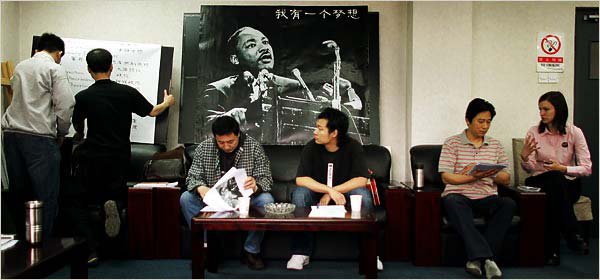
Found in Translation: King’s ‘Dream’ Plays in Beijing

By HOWARD W. FRENCH

BEIJING — For months now, Caitrin McKiernan has gone from place to place in this city to ask Chinese people an unlikely question: What does the life of the Rev. Dr. Martin Luther King Jr. mean to you?

The questions don’t end there, either. In most of these gatherings, she gets far more specific, burrowing into the history and tactics of the American civil rights movement.

“Who knows what the Birmingham bus boycott was?” she asked a group of university students in May. “What is a sit-in?” “What’s the meaning of separate but equal?” At the level of language, every one of those terms presents a formidable challenge, even to a woman who has spent years in this country and speaks fluent Chinese.

But language is not the half of it. How can one translate Dr. King’s actions into the realm of ideas for an audience in a city notably hostile to protests? How does one convey to Chinese people the meaning of the life of a man who died fighting for civil rights nearly 40 years ago?

The answers may have begun to emerge since the production at the National Theater on Sunday of the play “Passages of Martin Luther King Jr.” by the noted King scholar Clayborne Carson and based on the life and words of the American civil rights leader. Ms. McKiernan, who studied under Mr. Carson at Stanford and is the play’s producer, was prepared for any kind of audience response, from deeply moved to completely stumped and anything in between.

But the responses of Ms. McKiernan’s discussion groups and the reactions of her cast suggested that Dr. King’s message would hit home here, that Chinese viewers would see parallels to divisions in their own society. That prospect poses a thorny problem for the government, which, on one hand, has endorsed Dr. King’s work as a blow for the class struggle and against American imperialism, but on the other insists that racism and discrimination are purely problems of decadent Western societies.

The government, however, gave the production its imprimatur, and permission to play at the prestigious theater.

A distinct possibility was that the universality of Dr. King’s message and the causes he fought for would completely escape Chinese viewers.

But the reactions Ms. McKiernan has heard so far suggest otherwise, and give her reason to hope that her dream of building a bridge between the societies by talking about peaceful struggle and universal rights has some hold on reality.

During one recent discussion at a Beijing university, after viewing excerpts from the PBS documentary “Eyes on the Prize,” students explored their feelings on the discrimination they discern between migrant workers and more affluent residents of the country’s eastern cities. Others spoke about the inferior position of women in their society or of being treated badly during visits overseas or the predominance of American power in the world.

“The significance of Martin Luther King for me is that we have to have the courage to stand up for our legitimate benefits,” said a Chinese student who identified himself as Paul.

Ms. McKiernan has avoided lecturing her audiences, or even steering the discussions. “I don’t want this to be about what happened in the U.S. in some past year,” she said. “I want this to be about what discrimination is, and how it relates to your life.”

The talks have usually begun with an explanation of how Dr. King’s life came to mean so much to her, a Californian who first came to this city at 16 as an exchange student and had to struggle to overcome cultural differences with her host family. Then she studied Dr. King in college, and she has had him on her mind ever since.

“I realized that King was this great bridge between the United States and China,” Ms. McKiernan said. “China is an emerging superpower, and the U.S. is the superpower, and King is someone that both sides believe in, and can be the starting point for a dialogue about how we wish the world to be.”

Then she sighed, and said, “But it’s the hardest thing I’ve ever done.”

The challenges have come from every direction: persuading the National Theater to accept the production, recruiting professional actors and production people, enlisting gospel singers from the United States to join the performance, doing endless and mostly fruitless fund-raising.

The American Embassy provided a modest grant, as did Stanford. But the multinational corporations that abound in Beijing proved skittish, even more than the government.

Beijing’s unexpected stake in Dr. King’s legacy is twofold, involving both past and present. The country’s slogan for the 2008 summer Olympics is “One World, One Dream,” which officials say brings to mind Dr. King’s “I Have a Dream” speech. That address has been famous here since Mao Zedong hailed it in August 1963, and it is still taught in schools.

In such matters context is everything, and for Mao, Dr. King was first and foremost a symbol of “the sharpening of class struggle and national struggle within the United States.” In a speech some people here still recall today, Mao called on “enlightened persons of all colors in the world, white, black, yellow and brown, to unite to oppose the racial discrimination practiced by U.S. imperialism.”

Then, as now, Chinese people were ill prepared to discuss their country’s internal problems, a subject about which they were not educated, nor did Mao link Dr. King’s struggles to the problems of China’s ethnic minorities or, for that matter, human rights or inequality.

But to listen to the participants in Ms. McKiernan’s discussion groups, or the actors in her production, that is what many people confronted with Dr. King’s words today readily do.

“In today’s China it would seem that discriminatory actions are not so common,” said Yan Shikui, the narrator for the production. “But in fact, it is very serious. We talk about the difference between urban and rural citizens, the gap between the strong and the weak. All of these are very deep notions buried in people’s minds, which cannot be solved by using violence. They have to be addressed through ideas.”

Essay 645


A one-liner MultiCultClassics Monologue…

• It’s all in the family with G-Unit rappers. The mother of a G-Unit member pulled her pistol and opened fire at a wild barbecue in Queens. Technically, the mom is a correction officer — so she was using a licensed gun to return fire at shooters taking aim at party guests. But her son, G-Unit’s Jesse Brown Jr., was arrested on various charges after resisting with police who arrived on the scene. Reports claim over 30 shots were fired. Somebody better rent a metal detector for the next family get-together.

Essay 644


With this Nationwide ad, the only thing more overdone than the art direction is the copywriting.

“That’s why I roll with Nationwide. …my Nationwide agent always has my back.”

Um, Nationwide got caught red-handed redlining. Better watch your back for now.

Monday, May 29, 2006

Essay 643


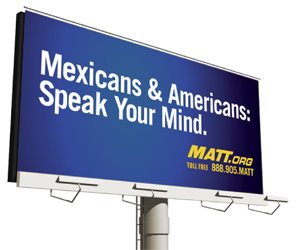
The following originally appeared in The Washington Post (for those who have noticed the ad campaign depicted above) …

----------------------------------------------------

For Mexicans and Americans, A Nudge to ‘Think Together’

By Frank Ahrens

Just in time for Cinco de Mayo (the celebration of Mexico's May 5, 1862, military victory over the French, for those not versed in their Mexican history) and the flare-up of the immigration debate comes the launch of http://www.matt.org/, the Web site of “Mexicans and Americans Thinking Together.”

First, let’s address the fact that Matt is about the most Anglo name you can think of. A more Spanish acronym would have resulted if the group had been named “Mexicans and Americans Taking Exception, Okay?” That would make the site “Mateo,” Spanish for Matthew.

Now, on to the nonprofit group itself.

It’s the brainchild of Lionel Sosa, Mexican American businessman success story and a friend of the Bush family and Republicans all the way back to former Texas GOP senator John Tower, who hired Sosa for the 1978 campaign. Sosa became known as a man who could deliver the Hispanic vote. He worked for President Ronald Reagan in 1980 and President Bush in 2004.

Sosa’s message -- which he says he learned from Reagan -- is that Latinos and Republicans share much -- strong family values, self-reliance, religious faith. They are natural Republican voters, but they “just don’t know it yet,” Sosa has quoted Reagan.

Perhaps to appear apolitical, the Web site of MATT.org, based in San Antonio, does not mention Sosa. The site could use much more disclosure in its “About Us” section, such as mentioning Sosa and saying where its money comes from. Sosa is mentioned in a trade press article about MATT.org that is linked to from the site.

MATT.org’s mission is: “To encourage bicultural Mexicans and Americans to understand, address and solve the major problems of our two nations to the benefit of both peoples,” according to a video on the site. Those problems include: the simultaneous U.S. reliance on undocumented Mexican labor and moves in Congress to crack down on immigration; the porous, 2,000-mile border and its capacity to deliver terrorists to the United States; an American backlash against Mexican and other Latin immigrants and their rising political and economic power here; and the debate on “free trade” vs. “fair trade,” to name a few.

America and Mexico have shared a number of things in their pasts, Texas, among them. And before the 9/11 terrorist attacks, President Bush’s main foreign interest appeared to be Mexico and his compañero President Vicente Fox, a onetime Coca-Cola executive and neighbor of the former Texas governor.

The two rode horses together like old range hands and seemed to share a vision for a more open border. For a short time, “Amexica” became a popular term for describing the growing nation-between-two-nations that runs along the border and the rising influence of Mexicans in the U.S. culture.

But the terrorist attacks waylaid much of that, and with the recent demonstrations of hundreds of thousands of legal and illegal immigrants across the country, sentiment has risen among many in Congress and across the country to tighten the border and crack down on foreign workers.

MATT.org says it provides a way for those on both sides of the border to let lawmakers know what’s on their minds. Site organizers envision it as a bipartisan sounding board.

The site is part of a large media campaign featuring radio and television spots in English and Spanish, as well as print and billboard placements. “Mexicans & Americans: Be Heard,” read the billboards. TV spots promote unity, with Latinos and Anglos saying, “We’re a lot alike.”

One spot features a testimonial by a blond American woman, saying, “it hurts me to read in the newspapers about problems going on between our two countries. Who’s solving them? Should we leave it to others? Maybe it’s time we spoke our minds.” The tagline for the ads is, “Let’s shape the future with a million clicks,” a strategy used to great effect by grass-roots Web groups such as MoveOn.org and the Parents Television Council.

Curiously, there appears to be no way for users to e-mail lawmakers, a staple of grass-roots Web activism, through MATT.org.

The site -- which charges no fees -- also includes discussion forums, registration to allow viewers to participate in opinion polls, and op-ed articles assembled from wire services in the United States and Mexico, such as a profile of three candidates for Mexican president, titled “The Three Enemigos,” saying that none of the trio is dealing effectively with the immigration issue.

Essay 642


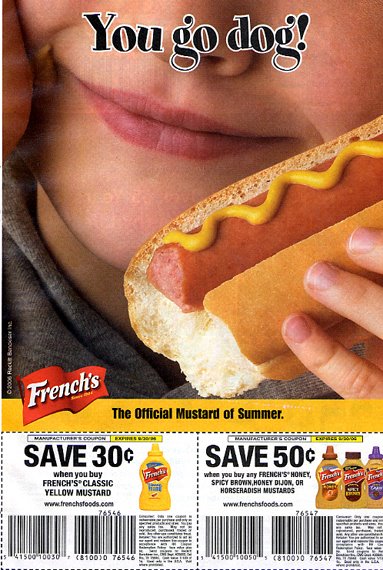
French’s mustard says, “You go dog!”

The lower right coupon should have read, “Save Fiddy.”

Essay 641


The essay below appeared in The Chicago Tribune. Leave it to Mickey D’s to create a Global Moms Panel while ignoring the Global Obesity Problem. If the fast feeder really wants to learn how to “better serve the needs of mothers and families worldwide,” it would have been easier for company officials to simply read “Fast Food Nation.” Or the ingredients list of any item on their menu.

--------------------------------------------------

Lovin’ the global moms

McDonald’s recently announced the creation of a Global Moms Panel to provide guidance on ways that it can better serve the needs of mothers and families worldwide.

The folks at McDonald’s haven’t exactly spelled out the duties of these moms--from Argentina, China, Germany, Italy, the United Kingdom and the United States. Advising the fast food giant on “balanced, active lifestyle initiatives” is how a news release put it. Will this international panel of moms be giving McDonald’s advice on new items for its menu? Moms, after all, are the commanders in chief of many dinner tables and lunchboxes.

If so, McDonald’s may want to determine just what kind of mom it has installed on its panel. Is this the mom of our childhood, the mom of Velveeta and baloney sandwiches on white bread? Or is this more of a free-range organic chicken modern mom? Will she replace the McFlurry with tofu shakes and yank the extra large fries in favor of the extra large bag of carrot sticks?

How much do these moms--or any moms--really know about nutrition? It depends. In many a childhood experience, it was Mom who insisted that we eat our fried liver, which is in no way to be confused with a health food. It was Mom who cooked the life--and vitamins--out of our vegetables. Don’t even get us started on the dreaded meatloaf of uncertain provenance.

This is not to criticize Mom--honest! No one, least of all she, really knew about the potential risks in certain foods then. Now we’re bombarded with information about dietary dangers--some real, some imagined.

Feeding kids healthily isn’t easy. And it isn’t always Mom’s mission. What about global dads in this equation? Not every dad is a beer-guzzling, doughnut-worshiping Homer Simpson. Some of them are overseeing the care and particularly the feeding of their children with admirable hawkishness, deflecting demands for candy or cookies with offers of fruit or other healthier snacks. (What’s that? Laughter?)

Yes, the siren song of fast food and junk food, of grease and salt and fat, is loud and often irresistible. Many moms and dads fight those battles every day; more healthy choices at places like McDonald’s can only help.

So we wish the global moms well. We’ll be awaiting their insights into nutrition and whether they’ll provide some tips on, say, how to entice their kids into ordering the occasional salad instead of the burger. First, however, we'd like to know the moms’ stance on the critical issue of fried liver.

Essay 640


Tyson continues its campaign showing the superhuman benefits to be gained from eating their food products (see Essay 336). Not sure how this stuff got past the legal department. Or the creative department.

Essay 639


Monday Morning MultiCultClassics Monologue…

• Michael Jackson is touring through Japan and made a stop at an orphanage in Tokyo (pictured above). Isn’t that sort of like inviting a Roman Catholic priest to a Boy Scouts convention?

• Americans are impatient, according to an Associated Press poll. Sorry, don’t have the time to come up with a smart-ass line for this one.

Sunday, May 28, 2006

Essay 638


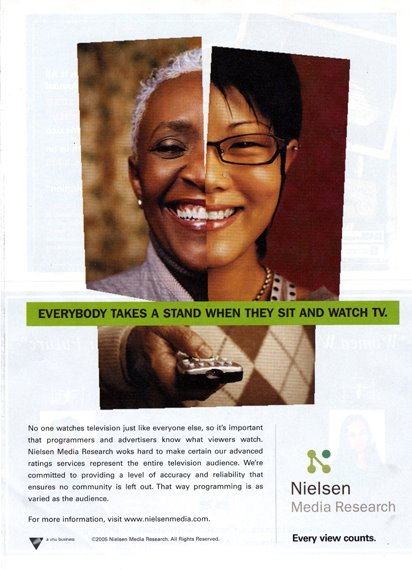
Nielsen Media Research came under fire for questionable measuring tactics involving minority programming. As a result, Nielsen partnered with minority advertising agencies to help create positive spin. The ad featured here represents one such effort.

Funny thing is, there’s a blatant typo in the second sentence of the body copy. So much for the company’s alleged commitment to accuracy and reliability.

Essay 637


Borderline insanity with a MultiCultClassics Monologue…

• If you build it, they will not come. The Minuteman Project is erecting a fence in Arizona to aid their anti-immigration efforts (pictured above). About 200 volunteers had gathered for the event, and a few hope to continue the barrier along the entire border. “We’re not going to stop,” said a Minuteman. “We’re going to stay here with a group and keep building.” Hey, it would go a lot quicker if they hired undocumented workers to help.

• There’s controversy brewing in the West, where undocumented workers are used to fight wildfires. In the Pacific Northwest, immigrants account for nearly half of the 5,000 private firefighters. An unspecified number may be here illegally. “I don’t think it’s in anybody’s interest, including the Forest Service, to enforce immigration — they’re benefiting from it,” said a spokesperson from one forestry company. Wonder how Smokey the Bear feels about this.

• Police and skinheads disrupted Moscow’s first gay pride parade, which had been officially banned by the city. Moscow’s mayor said such events “may be acceptable for some kind of progressive, in some sense, countries in the West, but it is absolutely unacceptable for Moscow, for Russia. … As long as I am mayor, we will not permit these parades to be conducted.” Participants claimed the police did not prevent the skinheads from hassling marchers. “The police were encouraging the skinheads,” a supporter said. “It was disturbing but not surprising. [The mayor] spent months encouraging violence by his public homophobia.” Don’t look for Moscow’s mayor to make an appearance on Queer Eye For The Straight Guy.

Saturday, May 27, 2006

Essay 636


MultiCultClassics presents Blacks & Booze…

Tanqueray is one of the few liquor brands featuring a Black spokesperson. Yet Tony Sinclair rarely appears in Black media. Whassup?

Essay 635


Rocking the boat with a MultiCultClassics Monologue…

• Minnesota Vikings players Fred Smoot and Bryant McKinnie pleaded guilty to misdemeanor charges from the infamous boat party last October (see Essay 476). Smoot allegedly used sex toys on women, while McKinnie performed oral sex on another partygoer. “Hopefully next year’s party will be at the children’s hospital,” said a prosecutor on the case. Hide the children.

• A federal appeals court decided former Arkansas basketball coach Nolan Richardson was not fired for being Black with attitude. Richardson charged the school terminated him after comments made during a 2002 press conference. Richardson had said, “See, my great-great-grandfather came over on the ship, I didn’t. And I don’t think you understand what I’m saying. My great-great-grandfather came over on the ship. Not Nolan Richardson. … I did not come over on that ship, so I expect to be treated a little bit different. Because I know for a fact that I do not play on the same level as the other coaches around this school play on. I know that. You know it. And people of my color know that. And that angers me.” Richardson was fired four days after making the statements. However, school officials insist they decided to ship out Richardson prior to his speech. Interestingly, the school chancellor’s last name is White.

Essay 634


MultiCultClassics presents Blacks & Booze…

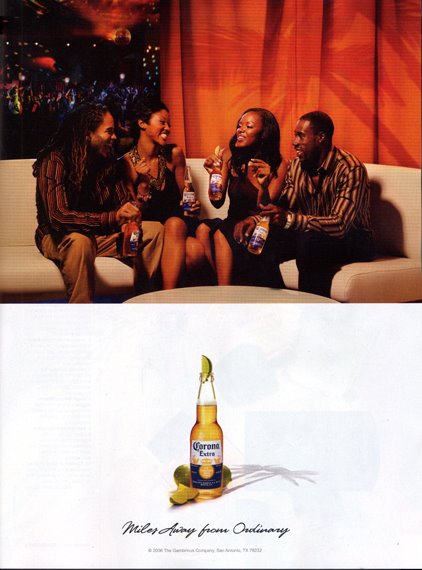
Corona’s line reads: Miles Away from Ordinary.

The only extraordinary thing here is the unrealistic way that everyone is displaying the bottle labels.

Essay 633


Movies and Manicures in a MultiCultClassics Monologue...

• Walt Disney Studios is considering layoffs, as DVD sales fall and movie production costs rise. Insiders indicate the staff cuts — which could reach up to 10 percent — may happen in July. Talk about a summer blockbuster.

• Foxy Brown is scheduled to go on trial in July for allegedly attacking salon workers for a manicure gone bad. You don’t want to be around while she’s getting her nails done for the big trial.

• Ice Cube became the latest rapper-actor to complain about Oprah. Mr. Cube claims the talk-show goddess has dissed him. “For [Ice Cube’s movie] ‘Barbershop,’ she had Cedric the Entertainer and Eve on, but I wasn’t invited,” he said. “Maybe she’s got a problem with hip-hop.” Or maybe she saw “Are We There Yet?”

Friday, May 26, 2006

Essay 632


MultiCultClassics presents Blacks & Booze…

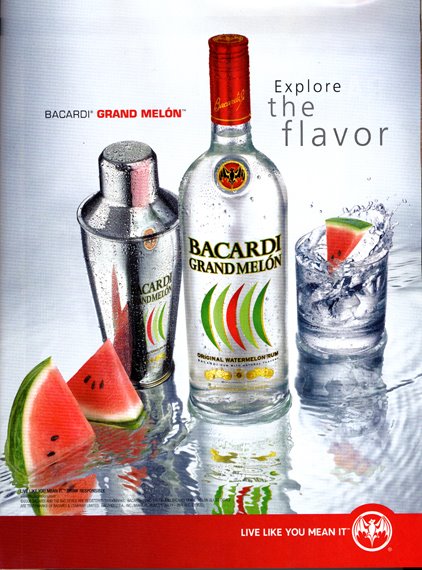
Not sure how to respond to Bacardi’s decision to target Blacks with watermelon rum.

Essay 631


The following appeared in newspapers nationwide…

--------------------------------------------------

Lifting the veil off ‘Latinophobia’

Immigration debate covers for an assault on a culture

by Ruben Navarrette Jr.

May 26, 2006

SAN DIEGO -- In declaring English the national language of the United States, the Senate finally did something useful.

Oh, I don’t mean the result. It was dreadful. What I mean is that the Senate did the country a service by lifting the veil and revealing what (much of) the immigration debate is really about. Here’s a hint: It ain’t immigration policy. And it ain’t pretty.

Senate Minority Leader Harry Reid wasn’t far off the mark when he called the English language amendment racist and said it was “directed basically to people who speak Spanish.”

People don’t like to hear it, but now that much of the country has come down with a touch of “Latinophobia,” racism, nativism, ethnocentrism and other unpleasant “isms” are back in style.

I don’t have a problem with declaring English--as in a related amendment also approved by the Senate--merely a “common and unifying language.” But calling English “the national language” is more absolute, as if no other languages should be spoken. It is also unnecessary, divisive and insulting to any U.S. citizen or legal immigrant who, in addition to English, also speaks Spanish, Russian, Chinese or any other foreign language and doesn’t feel any less American because of it.

Of course, as I’ve said before, anyone who lives in the United States should learn English. But here’s the key: They should do so for their own good and for the good of their children, and not to stay in the good graces of fellow Americans desperate to remain culturally relevant amid changing demographics.

Don’t confuse this with requiring that illegal immigrants learn English if they want a path to legal status. These people shouldn’t even be here in the first place, and so the United States has every right to set the conditions under which they can stay.

But what about the Puerto Rican in Connecticut who was a U.S. citizen at birth because Puerto Rico is a U.S. commonwealth, or the Cuban-American in Florida who came to the United States legally in accordance with the Cuban Adjustment Act, or the Mexican-American whose family has lived in Arizona for six generations? These people and their children have worked hard, paid taxes, gone to war and defended this country against enemies foreign and domestic. These people may speak both English and Spanish, but why should they be made to feel as if the only way to be authentically American is to speak only English and drop the Spanish?

Besides, what’s the point? The Senate vote was entirely symbolic. While declaring that government should “preserve and enhance” the role of English, the Senate did not do away with bilingual education or bilingual ballots. And the vote won’t have any effect on what really drives many Americans loco (if I can still say that)--namely, efforts by companies to advertise and otherwise communicate in Spanish in hope of getting their slice of more than $700 billion in annual spending power rattling around in the pockets of the nation’s 40 million Latinos. The vote was also cravenly political. It was red meat tossed to the radical fringe of the Republican Party to help make more palatable what the administration really wants: a comprehensive reform plan that combines enforcement with guest workers, with the possibility of legalization for at least some of the 11 million to 12 million illegal immigrants.

And yet, the Senate vote--and the public support for it--did serve a purpose. It proved once and for all that, despite the insistence by many Americans that their only concern is with illegal immigration, the truth is more complicated. We’d be more honest to admit that if there is one toxin that this country has never gotten out of its bloodstream, it’s a resentment of immigrants and foreigners regardless of their status.

The vote made clear that what worries many Americans is not just the fact that people are coming illegally, but the impact they’re having on the culture and the rest of society once they get here. After all, if the only issue is that people enter the country legally, what difference does it make what language they speak once they get here?

And last, senators confirmed the suspicions of many U.S.-born Latinos that they’re in the cultural crosshairs, that many of those who claim to only be anti-illegal immigrant are really anti-Latino and anti-Mexican, and that the immigration debate has become a proxy for an assault on the language and culture of a minority that is, in parts of the country, on its way to becoming a majority.

Like I said, the real motive behind all this is not pretty. But at least now it’s out in the open.

Essay 630


MultiCultClassics presents Blacks & Booze…

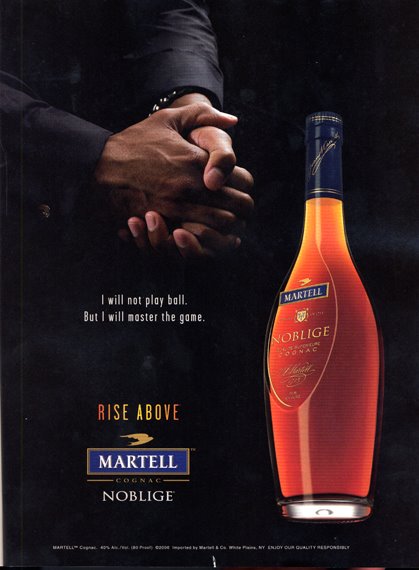
Looks like Martell produced a campaign of Black hands folded/praying before the product (see Essay 624).

Now the headline reads: I will not play ball. But I will master the game.

Good, because it’s dangerous to drink and drive to the basket.

Essay 629


Suits and shoots in a MultiCultClassics Monologue…

• Ford Motor Company is being sued by 22 former and current employees who charge the automaker discriminates against Blacks. Lawsuits were filed between April 2004 and January 2006. One incident occurred in November 2004 when a worker emailed his supervisor to inquire about a raise. The response email read, “Now you listen to me nigger you will never receive a pay increase at Ford as long as I’m manager.” While Ford acknowledges the email was sent, no proof existed that it was actually sent by the supervisor. Others claim they were denied promotions. “I’ve been with the company for 29 years,” said another employee. “I have a bachelor’s and master’s degrees and I never made entry-level management. … I’ve done everything that I needed to do and still I cannot break that glass ceiling to entry-level management. It is sexism, it’s racism, it’s all of the ‘isms.’” Ford’s new advertising slogan is, “Bold Moves.” But it looks like the automaker is executing some old moves.

• Kanye West provided an impromptu performance during the current trial accusing West and Ludacris of ripping off other rappers’ rhymes (see Essay 623). The judge asked West to recite lines from the 2001 hit “Stand Up,” and the artist proceeded to deliver the obscenity-filled lyrics. The jurors burst into laughter. IOF, the opposing rap group, probably failed to laugh — but more than likely started to spout profanities.

• Rapper Beanie Sigel was wounded by gunfire during an attempted holdup. After treatment at a Philadelphia hospital, Sigel called out from his ride, “I got shot. I’m cool.” Just another day at the office.

Essay 628


MultiCultClassics presents Blacks & Booze…

The ad simply reads: Feel More.

We’re not feeling it.

Thursday, May 25, 2006

Essay 627


The story below appeared in The Christian Science Monitor. Apparently, Mexican President Vicente Fox was wrong when proclaiming, “There is no doubt that Mexicans, filled with dignity, willingness and ability to work are doing jobs that not even Blacks want to do there in the United States.”

----------------------------------------------------------------------

Rising black-Latino clash on jobs

By Daniel B. Wood
Staff writer of The Christian Science Monitor

LOS ANGELES - From where Johnny Blair Vaughn sits outside Lucy Florence Coffee House in the heart of Los Angeles's black community, he can feel the temperature rising over immigration.

The biggest reason, says the father of seven, is jobs.

“If you drive across this city, you will see 99 percent of all construction is being done by Hispanics.... You will see no African-American males on these sites, and that is a big change,” says Mr. Vaughn, who has worked in construction for two decades. His two oldest boys, in their early 20s, have been turned down so many times for jobs — as framers, roofers, cement layers — that they no longer apply, he says.

While Los Angeles is ground zero for black-Hispanic friction these days, echoes of Vaughn’s words are rising throughout urban black America as Congress labors over immigration reform. In cities where almost half of the young black men are unemployed, a debate is raging over whether Latinos — undocumented and not — are elbowing aside blacks for jobs in stores, restaurants, hotels, manufacturing plants, and elsewhere.

Hispanics and blacks tend to gravitate to the same inner-city areas and low-skill labor markets — and the result is a clash over jobs that require less skill and less education, experts say.

“In this era of mass immigration, no group has benefited less or been harmed more than the African-American population,” says Vernon Briggs, a Cornell University professor who researches immigration policy and the American labor force.

Yet a precise relationship between the presence of immigrants and the loss of black jobs has not been clearly proven in research. Rather, the influx of legal and illegal immigrants has been so massive that it has affected the internal migration of native-born Americans to the point where “economists have given up trying to prove a one-to-one-displacement,” says Dr. Briggs.

Some Latino groups, meanwhile, counter that such a correlation is more a perception than a reality.

“We are fighting ... hearsay and opinion,” says Randy Jurado Ertll, a Hispanic educational consultant and director of El Centro de Acción Social, Inc., a community service organization in Pasadena, Calif. “Blacks say, ‘Hey a Latino immigrant came and took my job,’ and some Latinos say, ‘Blacks have all the jobs at the post office or city hall and don’t want to give jobs to Latinos.’”

Statistics show that young African-Americans are having trouble in the job market. Unemployment among young blacks nationwide is 40 percent, according to the US Bureau of Labor Statistics. “For blacks, the growing presence of immigrant workers adds to the formidable obstacles they face in finding a job,” said a Pew Research Center study released in April. Among blacks, 78 percent say jobs are difficult to find in their community compared to only 55 percent of Hispanics.

Many economists disagree that immigration is the reason black unemployment is high. Instead, shrinking budgets for job training and creation, industry downsizing and manufacturing flight to foreign countries are to blame.

Yet the perception that Hispanic immigrant workers are pushing blacks aside in the job market is evident in many cities with a high black population including Los Angeles, Detroit, Philadelphia, Washington, and Denver, Briggs says.

“Latinos and blacks are at each others’ throats in our jails and in our high schools,” says Najee Ali, an activist based in Chicago and Los Angeles.

Mr. Ali notes that Mayor Antonio Villaraigosa had to intervene after several high school brawls broke out between Hispanics and blacks in recent months. Riots in the Los Angeles County Jail — the nation’s largest — came about in part because of tensions on the streets between black and Hispanic gangs, observers say.

“Undocumented immigration that is taking jobs from blacks is the number one issue nationwide. Unless we address it, the same kind of eruptions we are seeing in Los Angeles will jump to these other cities as Latino populations increase there,” he says.

Others point out that tensions between blacks and Hispanics are not new and are not tied solely to immigration. They also result from a competition for housing, education, and healthcare due to the sheer number of Latinos — they are the largest and fastest-growing minority group. Hispanics’ increasing political clout as well as recent immigrants-rights demonstrations involving hundreds of thousands Hispanic immigrants in dozens of cities have roiled many in the black community.

“It angers me because I know that the jobs immigrants are coming to get are not just the ones they got in the past ... seasonal jobs for picking,” says Vaughn. “They got a glimpse of what America is, and they want a piece of the American pie. I can’t blame them ... but there has to be a way for the government to step in and make it fairer so that African-Americans can be employed also.”

A vast majority of blacks, including Vaughn, believe Latin American immigrants are hard working, according to the poll taken by the Pew Research Center. Blacks are also more sympathetic than whites to the plights of immigrants.

They remember their own struggle to gain civil rights and the help that Latinos offered during the 1960s.

“The battle over immigrant rights will be fought as fiercely and doggedly as the civil rights battle of the 1960s. That battle forever altered the way Americans look at race. The immigrants-rights battle will profoundly alter the way Americans look at immigrants,” says Earl Ofari Hutchinson, author of nine books on the black experience.

Today, the black community is split over how to address immigration. The NAACP, the Congressional Black Caucus and the Leadership Conference on Civil Rights generally support the immigrant marches. They’re against exposing all illegal immigrants to felony charges as outlined in a bill passed by the US House in December. A California Field Poll in April found that 82 percent of blacks instead support a US Senate measure, which would give undocumented workers currently in the US for more than five years the opportunity of citizenship.

But a vocal subset of blacks has a different view. Choose Black America, a coalition of business, academic, and community leaders, formed this week to advocate for stronger border security and not allow illegal immigrants to become citizens.

In April, a band of protesters marched in front of the office of Rep. Maxine Waters (D) of California because she, along with the Rev. Al Sharpton and Jesse Jackson, supports citizenship for illegal immigrants. Blacks also have “singed the phone lines at black radio talk shows with anti-immigrant tirades” and “bombarded black newspapers with letters blasting illegal immigrants,” says Hutchinson.

“It’s definitely one of the hottest topics on talk radio I’ve ever seen,” says Greg Johnson, marketing director of KJLH, a leading black radio station in Los Angeles. The majority of callers favor more conservative enforcement solutions to immigration, but the station is getting callers on all sides, he says.

“Some are adamant to get them [immigrants] out; others say, ‘let’s work with them;’ and others say ‘let’s figure out how to regulate it,’” says Mr. Johnson. “Some of the stress I’m seeing I don’t understand. Blacks are divided on this issue and it needs to be talked out ... Latino/black relationships have to be resolved. We all live in the same neighborhoods we are part of the same community.”

Despite these differences, some in the black community are seeking to build an alliance that lifts both blacks and Latinos.
With Rev. Sharpton and Christine Chavez, the daughter of United Farm Workers founder Cezar Chavez, Ali is expanding a national black and Hispanic coalition in Chicago, Atlanta, Houston, Washington, and New York — modeled after efforts started here last August. The groups are trying to find common ground on jobs, housing, education, healthcare, and controlling gangs.

Mr. Ertll says his group wants to meet at both the official and grass-roots levels to address the concern of low-income jobs for all ethnicities.

But some do not agree with construction worker Vaughn and others who say that Hispanics are a threat to blacks trying to find work.

“Yes, immigrants are coming in to take the jobs, but if you really put your mind to it, you can get one,” says Jamal Dillard, 18, who just got hired as a courtesy clerk at Albertsons grocery for $6.75 per hour.

Some Hispanic and black thinkers agree that many American employers are taking advantage of both groups.

“It is past time for all African-Americans to understand that our interests and those of immigrants are not at odds,” wrote Sharpton in a reply to critics. “Those truly concerned about economic fairness would be better off targeting businesses that exploit and underpay illegal immigrants to the detriment of American workers.”

That detriment is the bidding down of wages for all lower-income jobs.

“The real culprits are the employers who work people 12 to 14 hours a day at $8 an hour or less without having to pay payroll taxes or provide any other form of benefits,” says Ernesto Nieto, president of the National Hispanic Institute. “To direct blame to people in need because of American greed is to beg the question of who’s really at fault here and who’s really playing by the rules.”


Essay 626


MultiCultClassics presents Blacks & Booze…

Liquor as a status symbol is not new. But positioning it as a prize for privileged people is pathetic.

Essay 625


Making comebacks in a MultiCultClassics Monologue…

• Alleged misogynist and adman Neil French is reportedly launching a new awards show. Hey, the advertising industry definitely needs another awards show. Wonder if the competition will be open to women.

• DiversityInc.com wonders if former Hewlett-Packard CEO Carly Fiorina lost her job because she was a woman playing in a traditionally male arena. The computer company appears to be profiting under the concepts and structures Fiorina created. DiversityInc.com wrote: “When male CEOs formulate a plan and execute it, they are described as bold, mavericks and visionary. Former Hewlett-Packard CEO Carly Fiorina did just that and got fired.” Neil French probably thinks Fiorina is “crap.”

• Responding to the recent news of an age discrimination lawsuit filed against McCann-Erickson (see Essay 621), AdAge.com posted the following question: “Do you think that the changing media environment is fueling age discrimination at ad agencies?” On Wednesday, the yes votes tallied 81 percent. Not convinced the changing media environment is fueling age discrimination; rather, deep-rooted discrimination is fueling age discrimination. The changing media environment is simply a convenient excuse.

• Michael Jackson lost his appeal to maintain undisputed custody of his kids. A February 15 ruling reinstated parental rights to ex-wife Debbie Rowe, who had relinquished her rights in 2001. Jackson sought to appeal the decision, but his effort was rejected. No word if Rowe will also seek parental rights for pet chimp Bubbles.

• Janet Jackson lost 60 pounds. She claims she gained weight for a movie role, which ultimately went to Mariah Carey. Janet must have felt like a raging bull.

Wednesday, May 24, 2006

Essay 624


MultiCultClassics presents Blacks & Booze…

Martell tells us, “The choices we make define who we are.”

We choose to define the makers of this ad as hacks.

Essay 623


Reading the legal copy in a MultiCultClassics Monologue…

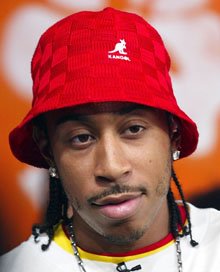
• Ludacris (pictured above) and Kanye West are being sued for allegedly ripping off other rappers’ rhymes. A group called IOF and their managers believe the 2003 hit “Stand Up” is too similar to their tune, “Straight Like That.” The rapper superstars call the charges ludicrous and insist IOU nothing, IOF.

• The U.S. Senate voted on a measure that would double the fines imposed on companies hiring undocumented workers. Employers could be charged up to $20,000 under the new rules. Hey, where does all the money collected from these fines inevitably go? Maybe Rep. William Jefferson knows (see Essay 619).

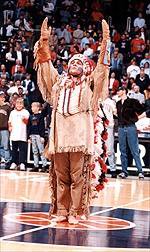
• Indian students in Arizona are protesting a mandate that may prohibit them from wearing eagle feathers in their graduation caps. Tribal elders and family members traditionally give feathers to students to honor their graduation achievement. But the Mesa School Board is enforcing the anti-feather rule. However, the students are encouraged to enroll at the University of Illinois, where they can join the school’s Chief Illiniwek mascot (pictured below).

Essay 622


MultiCultClassics presents Blacks & Booze…

We’ll send a silver dollar to anyone who can explain this ad’s concept.

Tuesday, May 23, 2006

Essay 621


The article below appeared in the latest issue of Advertising Age. The MultiCultClassics response immediately follows…

--------------------------------------------------------------------

Digital Future Poses Threat of Ad-Industry Ageism

Discrimination Lawsuit Seen by Some as Harbinger

By Matthew Creamer

NEW YORK (AdAge.com) -- The ad industry’s march into the digital future could lead to some early retirements for Madison Avenue’s baby-boomer executives.

Age discrimination lawsuits could become more of a problem for the industry as large ad agencies refit themselves for a digital world.

A lawsuit filed earlier this month by a longtime McCann Erickson media executive who alleges he was wrongfully terminated because of his age is drawing attention to what one executive recruiter calls “the elephant in the room.” While the issue of age discrimination has long been a wrinkle for a youth-obsessed profession, the intense pressure from marketers for guidance on how to survive in the fast-evolving media world, now forcing dramatic changes in so many agencies, is likely only to exacerbate it.

“With the digital age, there are so many things that are new that having 15, 20 or 25 years of experiences can actually be a disadvantage,” said Amy Hoover, exec VP at recruiter Talent Zoo. “It’s no secret that this is a young person’s business, and I don’t have the solution to that problem.”

In the past few years, that’s only become more apparent, as it’s now standard operating procedure for ad agencies to make bold statements about the need to equip themselves for a consumer-controlled media landscape. Iconic agency names have been altered, creative departments have been turned over, top managers have been fired and org charts have been rewritten-all in the name of change.

‘youth instead of experience’

Former Universal McCann exec VP George Hayes’ lawsuit against his former employer and its parent, Interpublic Group of Cos., is interesting because it arises out of that very language. Universal McCann, which last year brought in new leadership to stem a couple of years of client losses, is now in the midst of attempting a turnaround, having made management shifts in recent months in important regions as well as in its global ranks.

In papers filed in New York State Supreme Court, Mr. Hayes, 54, argues that new Worldwide CEO Nick Brien “has value[d] youth instead of experience and desired younger persons in place of older persons and acted upon his discriminatory preference by terminating older persons because of their age.” Mr. Hayes, who had worked at McCann Erickson since 1975 in various capacities, including launching McCann’s spot-buying unit for former media-buying client General Motors, is seeking $30 million in damages.

Mr. Hayes points to a series of meetings in which Mr. Brien displayed the alleged bias, including one in New York in which the new chief executive “stated that the young people in the group ‘got it’ when it came to the ‘new media’ of the digital age, that ‘things will be different around here.’”

That’s the kind of talk that can send shivers up the spine of a human-resources person or agency manager. “I worry about it, and I’m sensitized to it,” said one agency CEO who requested anonymity. “But I’ve found this isn’t about age. It’s about finding people who display intellectual curiosity.”

Talent Zoo’s Ms. Hoover said many agencies aren’t looking for that, especially since 9/11, when a lot of big salaries were dumped as part of broader layoffs. “I’ve interviewed hundreds of senior-level executives who have had to make dramatic changes in lifestyle and who aren’t finding positions,” she said. “I often encourage them to look outside this industry.”

One employment-law expert said agencies need to be careful when attributing abilities, skills and talents to one age group over another.

“Agencies can’t have decision-making based on stereotypes in culture,” said John Dickman, a partner at the Chicago law firm Winston & Strawn. “They also have to give older employees the same opportunities to succeed or fail as everyone else.”

--------------------------------------------------------------------

Love the last comment:

“Agencies can’t have decision-making based on stereotypes in culture. … They also have to give older employees the same opportunities to succeed or fail as everyone else.”

The legal eagle is obviously unfamiliar with the advertising industry, as agencies have practiced decision-making based on stereotypes in culture since the very beginning. Looks like ageism offers new possibilities for discrimination and exclusivity on Madison Avenue.

Essay 620


The viewpoint below appeared in the latest issue of Advertising Age. The MultiCultClassics response immediately follows…

-----------------------------------------------

Here’s how to harness the Hispanic market

Marketers who look long-term and avoid assumptions can come closer to capturing that elusive Latino demographic

By CHIQUI CARTAGENA

As tv and cable networks unveil their programming plans for next year, there is huge buzz around the fact that some-in an effort to stop the corrosion of their audiences-are borrowing a page from their Spanish-language counterparts and warming up to the idea of the telenovela, a type of Spanish-language soap that drives millions of viewers every day in the United States and around the world.

The interest, no doubt, comes as a result of the success of “Desperate Housewives,” which is nothing more than a telenovela in the true sense of the genre. ABC recently announced plans to roll out “Betty the Ugly,” based on a popular Colombian telenovela that reigned supreme on Telemundo a few years ago, and NBC is leveraging its knowledge of the Hispanic market by developing an English-language telenovela called “Body of Desire.” But many people in the TV industry still ask themselves: “Will this new format work in the general market and, more important, will English-dominant Hispanics watch?”

This quandary is the same for all marketers looking to tap into the growing Hispanic market no matter what products they are trying to sell. The reality is that most marketers are as “Lost” as the characters in the ABC hit drama when it comes to the Latino market. The problem is exacerbated even more by the level of ignorance that “general-market” executives exhibit toward this market. After 20 years of advising executives in corporate America about how to enter the relatively uncharted waters of the Hispanic market, I have to come realize that, invariably, they all make the same mistakes. Here, then, are a few to avoid:

1. Don’t make assumptions about the Hispanic market.

I’m always shocked by the number of companies that go to market with Hispanic efforts without ever doing any research. The first thing you need to do before you can successfully sell your products to Latinos is understand who your target market really is and what they know (or don’t know) about your product or brand.

Hispanics are different. Unlike most other immigrant groups in the United States, Latinos have been able to hold on to their language and culture, thanks to the geographic proximity of Latin America and the ease with which one can travel and communicate with friends and family back home; the constant flow (both legal and illegal) of Hispanic immigrants, which refreshes the number of predominantly Spanish-speakers; and the growth of Spanish-language media in the United States. These three factors have slowed the natural process of assimilation. Don't get me wrong: Assimilation is taking place, but at a much slower pace than most people ever imagined.

Another factor slowing the process of assimilation is the fact that now everything Latino is cool. Whereas before, children of Hispanic immigrants may have wanted to hide their roots, now they proudly display them by speaking Spanish not only with their families but also with friends at school.

2. Don’t assume all Latinos speak only Spanish.

While the usage of the Spanish language is not going away and will continue to be a critical factor in this market for years to come, the reality is that Latinos are becoming more bicultural and bilingual. You often will see data claiming that 75% of all Latinos speak some Spanish, while other data claim the complete opposite-that 75% speak some English.

Guess what? Both statistics are true, because roughly half of all Hispanics are bilingual and the rest are more or less evenly split between Spanish-dominants and English-dominants. The main point here is that a growing number of Latinos are actually bilingual and bicultural, especially the younger generations that either were born in the United States or immigrated at a very young age. This group of bilingual Latinos is often referred to as “acculturated.”

Acculturated Latinos live in two worlds: the English world of work or school and the Spanish world of family and friends. They are unique in that they choose which language to use depending on the situation and their needs at the moment. The fact is that “language switching” is a reality in the Hispanic market. Why should this matter? Because contrary to the popular notion that you are reaching the Hispanic market through a Spanish-language media buy, the reality is that you are only reaching part of it. Smart marketers are starting to realize that they must advertise in both languages.

3. Don’t enter the Hispanic market without making a commitment.

There are more Hispanics in the United States than there are Canadians in Canada. However, when companies are considering the Hispanic market, they think in terms of “test.” Because of that short-term mentality, their Hispanic efforts usually are underfunded and not really well-thought-out. The result, more often than not, is a complete disaster, and then everyone throws his hands up in the air and says: “Oh well, we tried, but it didn’t work.” Do you really want to enter this market with a mediocre effort that could taint your brand for years to come with this increasingly important demographic? If you are looking for growth for your business in the future, start by making a commitment to the Hispanic market and putting your best people to work on a long-term plan.

4. Don’t be fooled by a Hispanic surname.

I’m always amazed at how stupid some very smart executives can be regarding the Hispanic market. Once they have decided to do a Hispanic project, their knee-jerk reaction is to assign someone with a Hispanic surname to lead the project. Truth be told, it was not that long ago that just about any Tom, Dick or Harry-or should I say Jose, Rafael or Maria-would get the job without having the first clue about what to do. There is a big difference between a “professional Latino” and a “Latino professional.”

5. Don’t think that this market is monolithic.

This is a fast-growing market in an incredibly dynamic marketplace. As a result, what we know about the Hispanic market today will change in a year or two. But perhaps the most important thing to note is that the Hispanic market has been slowly shifting from one that was predominantly foreign-born, 20 years ago, to one that is predominantly U.S.-born. Studies show that foreign-born Latinos are very different than U.S.-born Latinos. They tend to be older and more conservative in their views on family, religion and politics. They also tend to be less educated and have lower household incomes. It’s this younger, more educated Latino with a higher household income that everyone wants to capture. I guess we will soon find out if they tune in to “Betty the Ugly” or not.

[Chiqui Cartagena is managing director-multicultural communications, Meredith Integrated Marketing and author of “Latino Boom! Everything you Need to Grow your Business in the U.S. Hispanic Market.”]

-----------------------------------------------

It’s always sobering (and slightly depressing) to discover that these arguments must still be presented — for nearly every minority segment in the U.S.

Here are a few reasons behind the mistakes presented by Ms. Cartagena:

1. Clients make assumptions about the Hispanic market because they’re cheap, lazy and ignorant. The cheapness often inspires the decision to forgo any sort of research. Besides, it’s easier to conduct down-and-dirty focus groups with corporate cafeteria and janitorial services employees — or personal housekeepers. And if the agency folks are Latinos, well, they should inherently know everything, right?

2. Clients assume all Latinos speak only Spanish. They also assume all Latinos eat tacos 24/7, dance to Salsa music, wear sombreros and beat piñatas. If any or all of these elements are not blatantly visible in a layout or storyboard, don’t expect to sell the concept. Remember, you don’t have research to dispute the need for such stereotypical imagery.

3. Clients almost always enter the Hispanic market with a commitment. Unfortunately, it’s a commitment to keep funding significantly lower than general market efforts, develop project-based, short-term objectives and assign the initiatives to segregated — and even junior-level — executives.

4. Clients are routinely fooled by anyone even remotely Latino. Most clients would gladly hand over their segregated business to Cameron Diaz or Martin Sheen without a second thought. Additionally, general market agencies are notorious for trotting out their resident minorities and positioning them as bona fide experts.

5. Clients MUST think of the Hispanic market as monolithic. Otherwise, they would have to allocate more financial resources to their Hispanic marketing. Instead, the general market efforts will continue to receive the lion’s share of budgets, with generous sub-segmentation. But Hispanic efforts shall cover the entire market with limited messages and money; in other words, the (stereo)typical Hispanic spot must speak to every living Latino regardless of demographics, psychographics or any other distinguishing characteristic.

Again, the points above can be applied to all minority segments in the U.S. with minor modifications.

Essay 619


ProTesting our Patience with a MultiCultClassics Monologue…

• A South Carolina student (pictured above, center) protested her high school’s ban on clothes displaying the Confederate flag. She’s also challenging the ban in court, claiming she wants to honor ancestors who fought in the Civil War. More than likely, she’s just a die-hard Dukes of Hazzard fan. (Oh, and the “Southern Chicks” shirt she’s holding in the photo is a solemn tribute.)

• PETA named Prince the “world’s sexiest vegetarian.” Let’s all celebrate with Chex Party Mix like it’s 1999.

• Author Studs Terkel and other professionals filed a lawsuit against AT&T, seeking to bar the phone company from providing customers’ calling records to the National Security Agency. “Having been blacklisted from working in television during the McCarthy era, I know the harm of government using private corporations to intrude into the lives of innocent Americans,” remarked Terkel in a statement. “When government uses the telephone companies to create massive databases of all our phone calls it has gone too far.” Yeah, the government should just go back to using illegal wiretaps and high-tech surveillance devices.

• Rep. William Jefferson continues to dispute charges that he illegally accepted money (see Essay 615). “There are two sides to every story; there are certainly two sides to this story,” said Jefferson. “There will be an appropriate time and forum when that can be explained.” OK, but at this point, it appears the two sides of the story are Jefferson’s version and the truth.

• A federal judge nixed a lawsuit against NBC Universal for creating a parody of hip-hop clothing company FUBU. The 2001 film “How High” featured a fake line of clothes called BUFU — By Us, Fuck You. FUBU (For Us, By Us) complained the gag hurt their reputation. Guess the judge’s ultimate statement was, “FU FUBU.”

Essay 618


MultiCultClassics presents Blacks & Booze…

What’s the message here — hit the barbershop then hit the bar? It’s enough to drive an adman to drink.

Essay 617


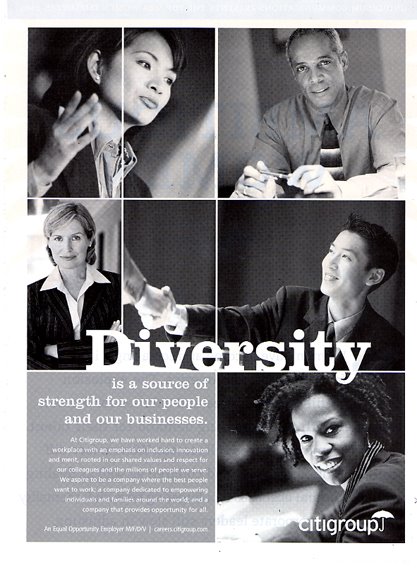
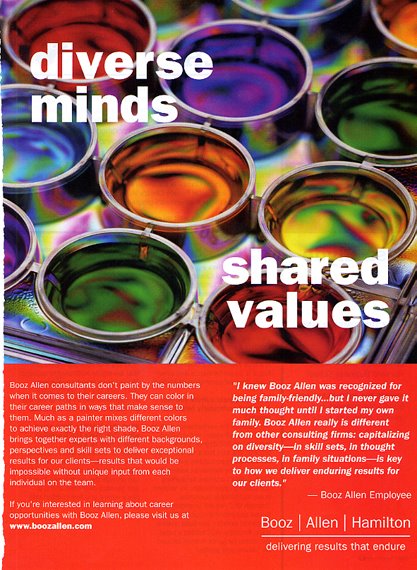
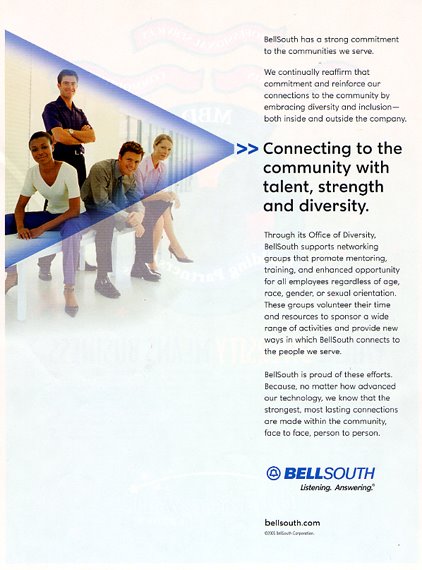
Here’s another collection of corporations boasting about their commitment to diversity.

What do they all have in common?

These advertisers partner with ad agencies demonstrating zero commitment to diversity.

Sure, some of the advertisers will compensate by also hiring minority ad shops. But does that really address the core dilemma — or simply perpetuate the industry’s segregation and exclusivity?

(Click on the essay title above to review related rants.)


Monday, May 22, 2006

Essay 616


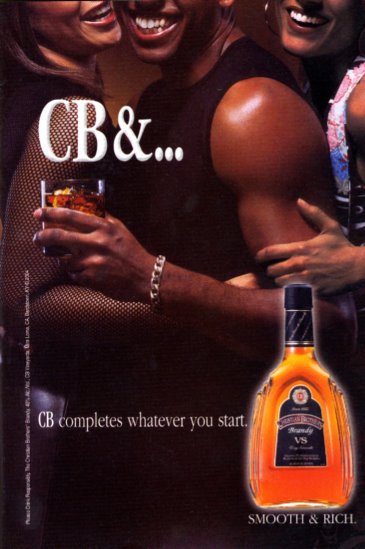
MultiCultClassics presents Blacks & Booze…

CB completes whatever you start. Don’t get us started.

Essay 615


Cold case in a MultiCultClassics Monologue…

• Looks like Rep. William Jefferson of Louisiana is busted (pictured above). The man was videotaped taking $100,000 from a Northern Virginia investor wearing a wire. FBI agents later found $90,000 stashed in Jefferson’s freezer. Talk about getting caught with cold, hard cash. Of course, Jefferson vehemently denies all accusations. During the Hurricane Katrina aftermath, New Orleans was a graveyard of discarded refrigerators. Most residents would have loved swapping their Frigidaire for Jefferson’s.

Essay 614


MultiCultClassics presents Blacks & Booze…

Courvoisier proclaims: Drink Responsibly. I’m not exactly cheap.

The ad seems like a cheap imitation of Crown Royal.

Sunday, May 21, 2006

Essay 613


Winners and losers in a MultiCultClassics Monologue…

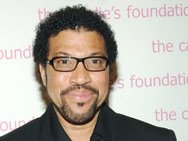
• Lionel Richie (pictured above) is big in Iraq. Iraqis who can’t utter a word of English still belt out Richie’s tunes with reckless abandon. Why is the crooner so popular there? Richie believes the mystique is rooted in the core message of his work — Love. Hey, Iraq sounds like the perfect locale for Paris Hilton and Nicole Richie to stage The Simple Life.

• Even members of the National Guard are unsure about the decision to deploy troops to secure the U.S.-Mexican border. One soldier remarked, “It’s not the right thing to patrol the border, ‘cause that’s not what they’re for. … You’re taking people from high-stress areas; you’re putting them somewhere they don’t belong. People are going to be getting killed. It could be detrimental.” Or it could be a dream come true for The Minuteman Project.

• A new underground video game is sparking controversy because it’s based on the infamous Columbine shooting. “Super Columbine Massacre RPG” lets players assume the roles of real-life shooters Eric Harris (pictured below) and Dylan Klebold, attacking victims in the high school. The game’s creator claims it was made as an “indictment of our society at large,” and also because he’s a bullied kid who related to the actual killers. Regardless of his high score, the guy sounds like a total loser.


• Ray Nagin is a winner in New Orleans, retaining his mayoral title. “It’s time for us to stop the bickering,” he said. “It’s time for us to stop measuring things in black and white and yellow and Asian. It’s time for us to be one New Orleans.” He then thanked voters of The Chocolate City for their support.

• Barry Bonds matched Babe Ruth by belting his 714th homerun in Oakland (pictured below). Although for most fans, Bonds’ record will always feature a major-league asterisk.

Essay 612


MultiCultClassics presents Blacks & Booze…

Why would Hennessy use the image of a man who suffered from drug and alcohol addictions? For that matter, would Marvin Gaye ever have agreed to hawk this brand? What’s going on?

Essay 611


From The New York Times…

-------------------------------------------------------------------------

Hip-Hop Is Spoken Here, but With a Queens Accent

By NICHOLAS CONFESSORE

There is not much racism in Howard Beach, say young people in Howard Beach. Just look at our clothes. Listen to our music. Listen to how we talk.

“In this neighborhood, it doesn’t matter what color you are,” said Lorenzo Rea, as he sat outside Gino’s Pizzeria on Cross Bay Boulevard. “Everyone’s listening to hip-hop, wearing G-Unit.”

It has been two decades since a gang of whites here chased a black man to his death, and about a year since Nicholas Minucci was accused of fracturing the skull of a black man with a baseball bat. Howard Beach is still a mostly white, mostly Italian neighborhood, with a lingering — and, people there insist, unfair — reputation for prejudice.

But it is now also a neighborhood where the mostly white, mostly Italian kids favor the same style and music as their peers over in East New York and New Lots.

There may still be a few people around here “who have a problem,” Mr. Rea allows.

“But if they don’t like black people,” he said, “they’re still dressing in the clothes, listening to the music.”

Whether such emulation is heartfelt or superficial is always up for debate, and it is in the hate-crime trial of Mr. Minucci, who admitted to investigators that he called out a too-familiar word beginning with the letter “n” to the man said to be his victim, preceded by the greeting “What up?”

His lawyers maintain that Mr. Minucci, 19, was defending himself against a robbery attempt, and during jury selection last week, they suggested that the word was not meant as an insult.

Most teenagers in Howard Beach, of course, weren’t even born when the Rev. Al Sharpton led a march through their neighborhood to protest the 1986 episode, to jeering and taunting from the locals. During their adolescence, the city’s name ceased to be synonymous with violent crime and racial tension. Where their parents feared the ghetto, they romanticize it, idolizing the swaggering culture and music born there.

“I got friends from all over,” said Matt Martocci, a carrot-topped, buzz-cut 18-year-old, horsing around with some of them near a Howard Beach park on Thursday.

“We all listen to hip-hop. Look at how we’re dressed,” he said, pointing his thumbs at his immaculate navy Sean John track suit and gold chain.

Some of his friends live in New Howard, the neatly kept, almost entirely white district west of Cross Bay Boulevard where last year’s attack took place. Some live in Old Howard, on the other side of the brackish creek spilling into Jamaica Bay. Many hail from Ozone Park or Lindenwood, more racially and ethnically diverse neighborhoods on the other side of the Belt Parkway.

But they have hip-hop in common. They listen to Snoop Dogg, Eminem, Cam’Ron, and Fabolous. They wear G-Unit, Sean John and other hip-hop labels like Rocawear, the same brand-new baseball caps, stickers still affixed to the brims, cocked sidewise. Some stick hair-picks in their headbands, though few of them, truth be told, have hair kinky enough to need one. Like any number of white suburbanite kids, they favor black slang, embellished with the Queens accents of their parents.

“Sometimes, when I’m talking to my friends, it’ll come out,” said Mr. Martocci. “It’s just slang. It’s the way we talk. You know, I’m like, ‘What up, my brutha.’”

His friends all nodded.

There are no high schools in the neighborhood, so when kids get older, they drift off to public high schools in Forest Hills or Ozone Park, or Catholic schools like Christ the King, all of them more racially and ethnically diverse than Howard Beach. Mr. Martocci attends Forest Hills High School, where, he said, his friends include black and Hispanic kids.

“The younger kids, they’re not racist at all,” Mr. Martocci said. “Everyone’s gotten over it.”

A few blocks away, in New Howard, a half-dozen or so young men were playing around near an elementary school, talking and wrestling. “We don’t live in a bubble,” one of them called out. Anthony Borzacchiello, 19, who goes to John Jay College of Criminal Justice in Manhattan, and hopes to be a defense attorney, agreed. “I went to Christ the King,” he said. “It’s white and black. Everyone gets along.”

Still, there are limits. Mr. Rea, who grew up in Ozone Park and works for a trash hauler, lives in Howard Beach with a Puerto Rican roommate. He listens to a lot of 50 Cent. Some kids call the rapper Fitty. “But I call him Fifty,” Mr. Rea says, with a meaningful look. “I try not to go overboard. I don’t like my jeans too baggy.”

Essay 610


Cosby’s quest for solutions

By Clarence Page

May 21, 2006

WASHINGTON -- Bill Cosby can be a very funny guy, but he does not suffer fools gladly.

A heckler found that out the hard way after shouting at the actor-comedian last week during a forum at the University of the District of Columbia, the latest of about 20 cities to host a free “A Call Out with Bill Cosby” symposium for black parents and community leaders.

Two years almost to the day had passed since Cosby caused a national uproar over his blunt statements in this town, on the 50th anniversary of Brown vs. Board of Education, about the problems low-income black folks bring upon themselves.

How blunt were his statements? Allow me to refresh your memory:

“We’ve got these knuckleheads walking around who don’t want to learn English.”

“In the neighborhoods that most of us grew up in, parenting is not going on ... These people are fighting hard to be ignorant.”

“Five and six different children ... Pretty soon you’re going to have to have DNA cards so you can tell who you’re making love to.”

It is no surprise that Cosby’s pitch for black self-reliance delighted conservative talk-show hosts. Black Americans expressed a range of reactions as diverse as we are. I, for one, agree with Cosby’s general sentiments, as I think most black Americans do, although many of us would have chosen more polite words to express them.

The mostly black crowd at the university last week was on Cosby’s side. Through two two-hour sessions, Cosby coaxed poignant stories of violence, abuse, self-reliance and redemption from his panel members, who included educators, family court experts and a mother of adopted children who was named the city’s “Foster Parent of the Year.”

As I pondered how sad it is that the problems of our communities receive so much more media attention than the solutions, conflict erupted. The heckler, whom news reports called “a self-described community activist,” started shouting from the audience. He derided Cosby’s “watered-down dialogue” and demanded answers to Michael Eric Dyson’s highly publicized book, “Is Bill Cosby Right? (Or Has the Black Middle Class Lost Its Mind?).”

That’s when Cosby lost his cool. The 68-year-old former college athlete jumped off the stage, wireless microphone in hand, and raced up the aisle to loom over his somewhat astonished questioner. “I’m sick of you and your Dyson,” Cosby declared. “Dyson is not a truthful man.”

In a backstage interview with me and another journalist, Cosby scoffed at the “elitist” charge coming from Dyson, a black professor at the ritzy University of Pennsylvania. “And how much does it cost to go there [to Penn]?” taunted Cosby, who attended Philadelphia’s less-elite-but-still-proud Temple University on a track-and-field scholarship. “How many black students do they have at Penn?” he continued. If Dyson taught at a school like the University of the District of Columbia that serves mostly lower-income non-whites, Cosby said, “then maybe he could talk.”

I don’t blame Cosby for feeling steamed. He and his wife, Camille, have given millions to colleges, scholarship funds and worthy individuals. Still, he gets the “elitist” rap.

I, too, might blow my stack.

Still, Dyson must be delighted. As the attacks against “The Da Vinci Code” have shown us, overreaction helps book sales.

That’s too bad, since I think Dyson’s view of Cosby reveals another curious version of elitism, a version I think is shared too widely in left-progressive intellectual circles. Institutional racism is still a problem, as Dyson repeatedly reminds us, but African-Americans will not defeat it through political agitation and legislation alone. We also need to employ the same basic tools that have brought success to countless black families during far worse racial times than these: education, hard work, strong families and high moral standards.

The debate between black self-help versus outside help is an old one in black America, but it is a false choice. Black America needs to look not for what’s right or what’s left, but to what works in our drive to liberate those left behind by the civil rights revolution.

Cosby doesn’t have all of the answers. He doesn’t even have all of the facts. But he’s helping the rest of us to find both. That’s a good start.

Saturday, May 20, 2006

Essay 609


So beefy, your husband might get jealous. Or get a massive coronary.

Honey, it’s a mess.

Essay 608


Colorful expressions with a MultiCultClassics Monologue…

• Halle Berry got stormy with a radio DJ during a BBC interview. Berry and co-star Hugh Jackman appeared on Chris Moyle’s Radio One show to promote the latest X-Men flick. During the taping, Moyles began speaking with Jackman about the role of James Bond, joking he could play Jackman’s body double. “I could definitely do that,” Moyles insisted before adding, “Put your hands in the air!” A slightly confused Jackman asked, “Are you some kind of Brooklyn Bond?” Moyles responded, “I’m a Black American guy. A big, fat, Black guy. Put your hands up in the air.” Then Berry remarked, “Are we having a racist moment here?” At that point, the studio got chilly in Storm-like fashion.

• New White House Press Secretary Tony Snow sparked minor controversy with a remark to reporters. While trying to elude questions about the National Security Agency, Snow said, “I can’t confirm or deny it … Having said that, I don’t want to hug the tar baby of trying to comment on the program… the alleged program, the existence of which I can neither confirm or deny.” Joe Leonard, executive director of the Black Leadership Forum, said, “Why would you use rhetoric that is ensconced in such racism and discrimination unless you don’t have a regard for the gains that African Americans have made? … It’s simply inappropriate. Why didn’t he use ‘powder baby’ ‘talcum-powder baby?’ … There aren’t any lynchings of children associated with ‘talcum-powder baby.’” No word yet from Halle Berry.

Friday, May 19, 2006

Essay 607


Does anybody else think shorty looks better with the ‘fro?

Essay 606


Politically incoherent with a MultiCultClassics Monologue…

• The Senate approved a measure to make English the national language. “We are not a nation based on race,” Sen. Lamar Alexander (R-Tenn.) proclaimed. “We are a fragile idea based on a few common principles and our national common language.” Minority Leader Sen. Harry Reid countered, “I believe this amendment is racist. … I think it’s directed basically to people who speak Spanish.” Well, our political leaders continue to demonstrate their universal ability to talk trash.

• BellSouth is now demanding a retraction from USA TODAY for its story on telecommunications companies providing customer phone records to the National Security Agency. “No such proof was offered by your newspaper because no such contracts exist,” stated a letter from BellSouth. “You have offered no proof that BellSouth provided massive calling data to the NSA as part of a warrantless program because it simply did not happen.” However, the company does not deny consistently screwing up customers’ phone bills.

• Sprite appears to be abandoning its hip-hop connections, presenting a new campaign featuring “subLYMONal” advertising. While the Miles Thirst character definitely deserved to die, it will be interesting to see how the soft drink fares with its new direction. Particularly since nearly every competing brand inevitably jumped on the hip-hop bandwagon.

Essay 605


From AdAge.com…

-------------------------------------------------

John Kerry Calls for Study of Minority Ad-Contract Opportunities

Requests Information on Government Compliance With Executive Order

By Lisa Sanders and Ira Teinowitz

NEW YORK (AdAge.com) -- Responding to complaints from members of the National Newspaper Publishers Association, Sen. John Kerry, D-Mass., is pushing the Government Accountability Office to investigate the federal government’s compliance with a policy, signed into law in October 2000, that seeks to increase minority advertising contracting opportunities.

In his role as top Democrat on the U.S. Senate Committee on Small Business & Entrepreneurship, Mr. Kerry on May 15 sent a letter to the GAO requesting detailed information on compliance to Executive Order 13170, signed by former President Clinton, that directs federal departments and agencies to take aggressive action to ensure inclusion of disadvantaged businesses in federal contracting, and to expand opportunities in advertising and other industries.

“It’s time we know how the government measures up in meeting its responsibility to reach out to all sectors of the American economy and in keeping its commitment to minority entrepreneurs,” Mr. Kerry said in a statement.

Lack of available information
The request followed Mr. Kerry’s meeting in March with members of the NNPA, when publishers complained that the government has not adequately complied with the order, said Kathryn Seck, press secretary to the Democratic side of the Senate Small Business committee. She said he asked for the study because of a lack of readily available, detailed information on what is taking place.

“We are suffering because of the retrenchment of advertisers from our publications over the past few years,” said Dorothy Leavell, editor and publisher of The Crusader Newspapers in Chicago and Gary, Ind., and a past president of the NNPA. NNPA, also called the Black Press of America, is the federation of more than 200 African-American newspapers across the country. “This executive order was signed several years ago, and the federal government markets to our constituency. We asked him if he might be able to help us get out of our position of stalemate, so to speak,” she said.

Of the federal agencies with advertising budgets, Ms. Leavell said she would expect to have ads from the Postal Service, U.S. Army and the Office of National Drug Control Policy.

“We asked him to find out how much money is being spent, and where it is being spent,” said Mollie Belt, publisher, the Dallas Examiner newspaper, which has a circulation of 10,000.

No advertising increase
W. Reggie Hales, co-publisher of the Inquirer Newspaper Group, which publishes The Inquirer News, a weekly paper for African-Americans living in Connecticut and Springfield, Mass., and has a circulation of about 100,000, said that during his 30 years in business, “I’ve had four or five ads from the federal government.” Even after the order was signed nearly six years ago, advertising did not increase.

Mr. Kerry’s letter to the GAO asked that it determine which federal agencies have developed plans to comply with the order and to what extent there were shortfalls in compliance; to find out how many contracts have been awarded to small, disadvantaged businesses, minority enterprises and firms participating in a particular Small Business Administration program affected by the order; and to examine the total amount of federal dollars spent on advertising from 2001 to 2005, and of that, how much went to small and minority businesses.

Peter Mathes, chairman-CEO, Asian Media Group, which operates a TV station in Los Angeles and one in Honolulu, said: “We’d be very interested in hearing what this report uncovers, because we broadcast to all the various Asian populations in Los Angeles and Honolulu every day. We run programming in Chinese, in Korean, Vietnamese, Japanese, among others, and up until now we’ve had very little government advertising.”

Essay 604


Be Authentic. Be True. Be contrived by showing a jazz musician enjoying your product. That’s not cool, Kool.

Essay 603


From marketingymedios.com…

-----------------------------------------------------------------------------

Creatives, Planners Discuss Latino Creativity at Clio

By Mariana Lemann

Panelists during an educational session this weekend at the 47th Clio Festival in Miami Beach said that the most important distinction in Latino advertising, in the U.S., Latin America, Spain and Portugal, is the creative mindsets of advertising executives.

“Advertising created by Latinos is more exportable,” said moderator Alex Pallete, vice president of account planning at New York-based The Vidal Partnership. He noted that a brand’s strong positioning in the marketplace helps the promotion of Latin ideas beyond its boundaries.

The lack of resources encountered by many Hispanic advertising agencies can help boost, in an ironic way, shops’ creativity. “Necessity is the mother of invention and creativity,” said Laurence Klinger, senior vice president and chief creative officer for Chicago-based Lápiz.

For Ignacio Oreamuno, founder and director of online creative archive ihaveanidea.org, his work in Latin America has taught him to get his creative ideas in order the first time around. In North America, he says, “If something doesn’t come up right, it can be fixed in post-production.” But in Latin America, the resources for those kinds of changes are limited, he says.

Other panelists included Fernanda Romero, executive creative director for Lowe New York; Salvador Veloso, partner and creative director for Miami-based Concept Café; and Andrew Speyer, director of account planning for Miami-based Zubi advertising.

Founded in 1959, the Clio Awards competition recognizes creative excellence and innovation in advertising. The festival takes place through May 16.

Thursday, May 18, 2006

Essay 602


From USA TODAY…

--------------------------------------------------------------------

L.A. confronts Asian family abuse

By Martin Kasindorf

LOS ANGELES — Seven deaths within one week in spasms of family violence have plunged this city’s Koreatown into questioning its immigrant culture of stoically bearing the stresses of adjusting to American life.

Three Korean-born men allegedly killed spouses or children, and in two cases killed themselves, police reports say. The killings April 2-9 echo murder-suicides in recent years among immigrant Chinese and Filipinos in California and among Laotian Hmong refugees in California, Minnesota and Wisconsin.

Mental health professionals are searching for explanations. Many say that traditional Asian values of patriarchy and reticence may make these immigrant families more vulnerable to murder and suicide when they encounter setbacks than groups from other countries.

Among fathers emigrating from Asia, “there’s a mentality of, ‘If I’m a failure, I make my whole family look bad, and we’re all in this together, for better or for worse,’” says Helen Hsu, a psychologist with Asian Community Mental Health Services in Oakland. “And there’s a huge social stigma in a man seeking help, telling people he’s having family problems or he’s depressed.”

In most Asian cultures, “people try to deal with problems ourselves or within the family,” says Alice Lai-Bitker, a Chinese-American and a member of the Alameda County, Calif., Board of Supervisors. “If you’re an immigrant, you have added stress. Some of the populations come from war-torn countries. Cambodians, Laotians, Hmong had tremendous trauma before they got here.”

Family violence has been a problem in Asian-American immigrant neighborhoods for years, says Howard Kim, director of Korean Community Services here. Still, the bloodshed last month “came as a great shock to all Korean families,” he says. “It just gave us this chilled feeling.”

According to the 2000 Census, 78% of the 1.2 million Korean-Americans counted that year were immigrants. Korean-born fathers struggle silently to meet social expectations that “they’ll work hard to get rich in business and their kids will succeed,” says David Cha, 30, a youth pastor at Oriental Mission Church here.

‘Shame and guilt’

“If things don’t fall into place in that magic formula, there’s a lot of shame and guilt,” Cha says. “The culture says the parents must provide for their kids. Suicidally, they may think, ‘I’m not going to be a fit parent. No one will be left to care for the kids, so I’m going to take them with me.’”

The April incidents:

•Prosecutors allege Dae Kwon Yun, 54, was distraught after his garment-manufacturing business failed and his wife filed for divorce. He allegedly locked himself, daughter Ashley, 11, and son Alexander, 10, in his SUV and set it afire. Yun stumbled out. The children died. Yun, still hospitalized with burns, has been charged with murder.

•Bong Joo Lee, 40, shot and killed his 5-year-old daughter, Iris, then killed himself, says Sgt. Bill Megenney of the Fontana, Calif., police. Lee had been unemployed and owed a $200,000 gambling debt, Megenney says.

•Sang In Kim, 55, fatally shot his wife, Young Ok, 50, and their son, Matthew, 8, and wounded their 16-year-old daughter before killing himself. Police haven’t disclosed a motive.

In reaction, the Korean American Family Service Center started a telephone hotline that is getting “two or three calls a day from families asking about some help and prevention,” executive director Peter Chang says. At a news conference, Los Angeles County Supervisor Yvonne Burke advised immigrants that by dialing 211 they can get foreign-language referrals to social services. (Dialing 211 for referrals is available in six California counties, parts of 37 other states and Washington, D.C.)

In churchgoing Koreatown, some social service providers are criticizing pastors for ignoring domestic violence. “One of our problems is that the church wants to take care of the church stuff, not the community stuff,” Chang says.

Role-reversal

Violence isn’t the pastors’ fault, Kim says. “By long custom in Korea, there is a lack of opening yourself up to other people,” he says.

Other Asian-American groups have worked to shore up community mental-health services after incidents like these:

•Charles Loo, 50, a wealthy businessman who had emigrated in 1995 from Singapore, died in May 2005 while on life support after he tried to hang himself in the San Mateo County, Calif., jail. Loo was awaiting trial on a charge of fatally stabbing his 17-year-old son before stabbing himself. Loo’s mother told the Oakland Tribune he had never learned English, had no friends and felt “isolated.”

•Four Filipinos were found dead in a San Francisco murder-suicide in 1999. Lorenzo Silva, 62, shot three neighbors he was friends with, police say. Silva had been diagnosed with cancer and his wife had returned to the Philippines, police say. Two murder-suicides in Seattle during the 1990s involved Filipino couples.

•Police records show at least nine Hmong murder-suicides involving spouses or children since 1998. In Oshkosh, Wis., on April 5, Yang Pao Lo, 37, fatally shot his wife, Zia Yang, 36, who wanted a divorce. During an 11-hour standoff with SWAT teams, the man killed himself, police say. The couple had seven children, ages 4 to 17. In St. Paul in February, Kou Khang, 30, fatally stabbed his wife, Joane, 25, and himself.

In Hmong communities, spousal violence is “this ongoing, rampant issue that people just don't want to deal with,” says Doua Thor, who is Hmong and executive director of the Washington-based Southeast Asia Action Resource Center. “There needs to be more community discussion on violence.”

Role-reversal and loss of status for men are frequent problems as women quickly learn English and take over family finances, Lai-Bitker says. “It seems to be easier for females to adjust, to get jobs.”

A Ford Foundation study in 2002 blamed the Hmong killings on “the changed economic status of some Hmong women and the violent backlash by men who feel they have ‘lost control’ of their women. … Men use suicide killings as a weapon to keep their wives in line by … threatening: ‘If you don’t behave, the whole family will die.’”

Essay 601


From The New York Times…

-----------------------------------------------------------------

Tolerance for a Racial Slur Is a Test for Potential Jurors

By COREY KILGANNON

Potential jurors for the trial of a 19-year-old charged in a bias attack in Howard Beach last summer have been asked some unusual questions during jury selection: Do they listen to rap music? Are they familiar with hip-hop culture? Yesterday, the prosecution and defense asked them how they feel about a certain longstanding epithet denigrating black people.

The epithet — or “the N-word,” as the lawyer representing the defendant, Nicholas Minucci, repeatedly described it in court — may well be the crux of this racially charged and high-profile case.

Prosecutors in the trial, in State Supreme Court in Queens, will try to establish that Mr. Minucci, who is white, uttered the word as he chased down and beat a 22-year-old black man, Glenn Moore, with a baseball bat on June 29, fracturing Mr. Moore’s skull. Mr. Minucci is charged with assault as a hate crime and 18 other counts and faces up to 25 years in prison if convicted on all of them.

Mr. Minucci told police investigators in a videotaped interrogation after the incident that he said, “What up?” — followed by the epithet — in addressing Mr. Moore as he approached him, and that Mr. Moore responded by saying, “What up?”

Mr. Minucci has maintained that his subsequent actions were self-defense against a robbery attempt.

If Mr. Minucci is convicted in the attack, but the jury decides it was not motivated by racial hatred, then he will face a lower sentence.

Prosecutors hope to prove the attack was motivated by such a bias. The defense, meanwhile, is expected to suggest that a young man growing up in a mixed neighborhood in New York City uses “the N word” as a matter of course and that the word no longer carries the racially charged overtones it has historically.

Mr. Minucci’s friends and family have said that the word is uttered today more in collegiality than hatred, and that its proliferation in rap music and everyday conversation among young people of various races and ethnicities has changed its meaning and impact.

At one point yesterday, Mr. Minucci’s lawyer, Albert Gaudelli, surveyed 11 potential jurors, four of whom were black. He turned to a black man from Queens Village and asked him what he thought about “the N word,” explaining that “the N word is going to be an issue in this case, and its use.”

The man responded, “It depends on who’s saying it and how it’s being used.”

Mr. Gaudelli said, “At one time, it had only one meaning, as a pejorative term, but today it means many things, or can mean many things.” He motioned toward the prosecutors and said of the case, “They have to prove that it is bias.”

He told the jury pool, “The word in and of itself dose not establish bias. Does everyone agree with that?” This elicited a murmur of faint agreement.

However, for all the assertions that the word has become harmless, neither Mr. Gaudelli nor anyone else in the courtroom actually uttered it.

Outside the courtroom, Mr. Minucci’s mother, Maria Minucci, discussed the word in explaining his actions. She calls the case politically motivated and charges that prosecutors have seized upon the word to justify a grandstanding prosecution of her son to get publicity for the Queens district attorney.

She said her son grew up in the ethnically diverse neighborhood of Lindenwood, where his friends were — and still are — the black and Hispanic children from nearby housing projects.

The pejorative has become a form of address, Ms. Minucci said.

“Every kid in the neighborhood uses it,” she said. “It doesn’t mean the same thing anymore. They all say it all day long, no matter what race. They all grow up saying it now.”

She added, “All of Nick’s friends — black, white, Spanish, Chinese — they all use the word. You should hear when they talk on the phone to him in jail.”

Ms. Minucci suggested that such a shift has been “the best thing possible for that word” because through its use “it’s lost a lot of its power and hatred.”

Clearly, not all prospective jurors felt that way. At one point, Mr. Gaudelli objected to the possible selection of one black woman who “felt that the use of the N-word is automatically biased and prejudiced,” he said.

Under questioning by Justice Richard L. Buchter, she said, “I guess I’m from the old school. I still find it offensive when I hear it.”

She eventually acknowledged that under certain circumstances she might see it otherwise.

Not surprisingly, prosecutors seemed to be looking for jurors who still hear poison in the word. One prosecutor, Michelle Goldstein, asked potential jurors it they were familiar with hip-hop terminology.

“Do you listen to rap music?” she asked a woman who appeared to be under 30. The woman nodded.

“Sure you do,” Ms. Goldstein said. “It’s all over the place. Clearly, there are offensive words. Just because rap artists use a word does not mean it is not offensive to people.”

She turned to a white man in the jury pool who said the word must be evaluated in context.

“You have to look at who is communicating the word,” he said. “Words have different meanings and annoy different people.”
She asked a white male schoolteacher, “Wouldn’t you agree that certain words are more commonplace today than 20 years ago when they were pejoratives?”

“Not in my classroom,” the man snapped back, prompting laughter.

Suggesting that the word has not lost its sting, Ms. Goldstein compared it to “sweetheart,” saying it means one thing when used by one’s fiancé but something very different if uttered by a stranger to a woman on the street.

The defense and the prosecution both asked the jury pool if they would be biased against Howard Beach, which two decades ago was the location of another high-profile racial attack.

In the end, the jury of 12 was picked: four blacks, four whites, three Hispanics and one Asian. Two of the five alternates are black.

Essay 600


Quick shots in a MultiCultClassics Monologue…

• “Can you fear me now? Good.” The New York Police Department is on alert for a new rapid-fire pistol that looks like a cellphone. The weapon has been popping up in European countries like the Netherlands and Slovenia, but none have been found in the U.S. yet. Though it would be great if somebody used one on the Verizon dude.

• The Senate approved building a 370-mile fence between the U.S. and Mexico. The estimated cost is about $900 million. Hope they can find enough illegal immigrants to work cheap and erect the blockade.

• New York City Council members blasted the owners of the hip-hop radio station whose DJ was arrested for threatening the family of a rival DJ (see Essay 588). In fact, the City Council wants the company to donate $5.7 million to a foundation for children. “Your corporation must accept true responsibility by taking solid and constructive actions … that make an impact on your bottom line,” the council stated in a letter to Clear Channel Communications Inc. Wonder if the council will accept payment in the form of bling.

Essay 599


Here’s a strange recruiting tactic from the U.S. Army. Join the military to play music — jazz, classical, country, even marching music. No mention of rap. Of course, the gig includes possibly going on tour in Iraq.

Wednesday, May 17, 2006

Essay 598


A Mini-Midweek MultiCultClassics Monologue…

• The Southern Poverty Law Center claims immigration is inspiring an increase in hate groups and hate crimes. Between 2002 and 2004, the number of U.S. hate groups rose 33 percent — from 762 to 803. A center official said, “More and more groups are turning to immigration to help recruitment.” Hey, maybe the military should consider using hate as a recruitment tactic.

• Now Verizon denies any involvement with the National Security Agency (see Essay 594). A company statement read, “One of the most glaring and repeated falsehoods in the media reporting is the assertion that, in the aftermath of the 9/11 attacks, Verizon was approached by NSA and entered into an arrangement to provide the NSA with data from its customers’ domestic calls. This is false.” The Senate Judiciary Committee plans to ask telecommunications officials under oath for their side of the story. It should be interesting to see the committee’s response to the Verizon dude whose only testimony will be, “Can you hear me now? Good.”

Tuesday, May 16, 2006

Essay 597


How to create a Jazz Festival ad:

1. Use quirky, colorful type.
2. Use quirky, colorful illustrations (saxophones encouraged).
3. Clumsily list featured performers.
4. Clumsily compose sponsor logos.
5. Submit your invoice, hack.


Essay 596


The article below appeared on AdAge.com — MultiCultClassics’ response immediately follows…

------------------------------------------------

Dismissed McCann Media Buyer Claims Age Discrimination
George Hayes, 54, Says Agency Sought a More Youthful Image

By Matthew Creamer 
(Published: May 15, 2006)

NEW YORK (AdAge.com) -- A McCann Erickson media executive has sued his longtime employer and its parent company, Interpublic Group of Cos., for age-discrimination, claiming he was wrongfully dismissed in the struggling agency’s attempt to modernize itself.

Age discrimination lawsuits could become more of a problem for the industry as large ad agencies refit themselves for a digital world.

The lawsuit, filed by George Hayes, a 30-year veteran of McCann’s media buying-and-planning operations, puts into relief what could turn out to be a major issue as large agencies refit themselves for a digital world, a process that often requires stripping out layers of longtime employees in the search of an often younger breed of strategists and creatives who understand an increasingly complicated media environment.

Arrival of Nick Brien
In papers filed in New York State Supreme Court earlier this month, Mr. Hayes, 54, alleges that, since arriving last fall, Universal McCann's new worldwide CEO, Nick Brien, has “value[d] youth instead of experience and desired younger persons in place of older persons and acted upon his discriminatory preference by terminating older persons, because of their age.”

Led by Mr. Brien, Universal McCann has been in the throes of a high-profile turnaround initiative following a couple years of client losses, including General Motors Corp. and Coca-Cola Co. Mr. Brien has named top executives in the U.S. and Europe and is working to improve the agency's communication planning offering in an effort to offer clients better strategic guidance on how they should spend their marketing dollars.

Mr. Hayes claims that that effort is at the root of his dismissal. The lawsuit states: “The ultimate goal of McCann-Erickson was to replace its older workers with younger employees, based not on performance, but on McCann-Erickson’s discriminatory desire to create a more youthful image, which McCann-Erickson felt it could achieve by ridding itself of its older employees and replacing themselves with younger employees.”

‘Young people get it’
The lawsuit outlines a few meetings that, Mr. Hayes contends, demonstrate that preference. In one address to staffers at UM’s New York office, it is alleged that “Mr. Brien stated that the young people in the group ‘got it’ when it came to ‘new media’ of the digital age, that ‘things will be different around here.’”

It also describes a Nov. 18, 2005, meeting involving senior executives from the agency to which Mr. Hayes and “certain key executives of age” were not invited. The lawsuit does not specify which other executives were left out.

Mr. Hayes, an exec VP, learned he was being dismissed on Dec. 13, 2005, with the reason being “that Hayes did not have ‘the skill set’ needed to remain employed by McCann-Erickson,” the lawsuit says.

Ad Age ‘Media Maven’
Mr. Hayes, one of Advertising Age’s Media Mavens in 2001, joined McCann in 1975, following a short stint at J. Walter Thompson. In 1996, he helped McCann launch Local Communications to handle spot-buying for its massive General Motors client. Interpublic and Universal McCann lost GM’s media-buying business to Publicis Groupe’s GM Planworks unit last year, following a review.

Spokespeople for McCann Worldgroup, which houses McCann-Erickson and Universal McCann, and Interpublic couldn’t immediately be reached for comment.

------------------------------------------------

Just a one-line response: If McCann-Erickson really hopes to create a more youthful image, the company needs to do a helluva lot more than terminate the Baby Boomers.

Essay 595


Dodge proclaims, “Respect the unexpected.” The new campaign presents unique Black folks, linking them to the Dodge Caliber. The connection is clumsy. And kinda expected too. Sorry, this concept deserves disrespect.

Essay 594


• There’s a battle brewing over bling. Barbie and Bratz announced plans to launch summer lines of dolls sporting real jewels. Barbie will introduce My Scene My Bling Bling dolls with a “real gem ring.” Bratz will unveil its Diamondz collection, with real diamond chips. You know it’s bad when dolls wear more bling than their owners.

• A high school teacher in St. Joseph, Mo., apologized for having students write about who they would murder and how they’d execute the deed. “I made a horrible mistake that I regret,” said the teacher. “I want to apologize to my students, my colleagues and to the community.” No word if any of the essays detailed how Barbie wanted to strangle Bratz.

• The California attorney suing Major League Baseball teams for sex discrimination based on giveaway promotions is apparently a busy guy (see Essay 590). He allegedly has initiated up to 40 legal actions against all sorts of organizations and events — including blasting bars for holding “ladies nights.” Wonder where he’ll side in the upcoming Barbie-Bratz brouhaha.

• Rapper-actor DMX is the latest hip-hop artist to cause airline trouble in London. A few weeks ago, Snoop Dogg and his entourage staged a melee at Heathrow Airport (see Essay 586). Now DMX was arrested for refusing to use his seat belt during a flight to London. Airport security may have to start profiling rappers and posses.

• Now BellSouth denies it gave customer phone records to the National Security Agency (see Essay 592). “Based on our review to date, we have confirmed no such contract exists and we have not provided bulk customer calling records to the NSA,” BellSouth insisted. “We cannot find anyone within BellSouth who has ever been approached by the NSA.” Gee, if it took BellSouth this long to figure out they did not deal with the NSA, imagine their response time to customer billing errors.
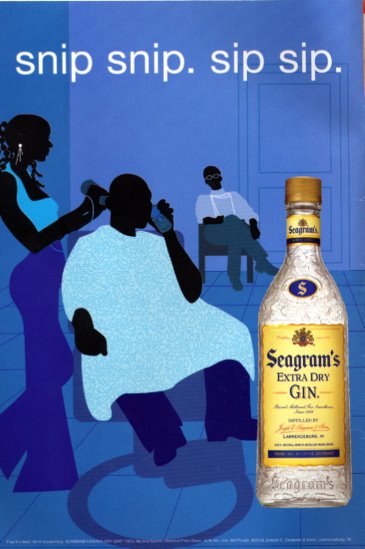
• President Bush announced that he’ll send up to 6,000 National Guard troops to help secure the U.S.-Mexican border. “We do not yet have full control of the border and I am determined to change that,” Bush proclaimed. At this point, Bush can barely claim to yet have full control of his bladder.

Monday, May 15, 2006

Essay 593


Pepsi becomes the latest brand to tap graffiti. Why do advertisers believe integrating their product into urban artwork is a legitimate concept?

Essay 592


A Mini-Monday MultiCultClassics Monologue…

• A USA Today/Gallup Poll showed 51 percent of Americans disapprove of the National Security Agency’s collection of phone records (see Essay 584). Additionally, about two-thirds of the nation’s citizens are worried it will lead to more personal information gathering. And nearly 90 percent probably hope that the NSA can use its sophisticated spy techniques to help people decipher their phone bills.

• Hillary Clinton backed off from her comments regarding the laziness of today’s youth (see Essay 586). “My daughter heard that I’d said that, and she called and she said, ‘Mom, I do work hard and my friends work hard,’” Clinton explained. “And I said, ‘I’m sorry, I didn’t mean to convey the impression that you don’t work hard. … I just want to set the bar high, because we are in a competition for the future.” Bill Clinton also argued with Hillary, pointing out the phenomenal efforts of his interns.

Sunday, May 14, 2006

Essay 591


Yo, G. Check it out. Greyhound has pimped its brand image. What’s next — rims on the buses?

Essay 590


A Mother’s Day MultiCultClassics Monologue…

• Another man in California filed a sex discrimination lawsuit for being denied a Mother’s Day giveaway at a Major League Baseball event (see Essay 584). This time, a San Diego attorney is complaining over not getting a free floppy hat at a 2004 Oakland A’s game. Wonder if these guys will also bring suits against their own families if they fail to receive flowers and presents today.

Essay 589


From The New York Times…

---------------------------------------------------------

A Vision of Pale Beauty Carries Risks for Asia’s Women

By THOMAS FULLER

MAKHAM KHU, Thailand — Neighbors gawk and children yell, “Ghost!” The manager of the restaurant where Panya Boonchun worked simply told her she was fired.

The cream that she applied to her face and neck was supposed to transform her into a white-skinned beauty, the kind she saw in women's magazines and on television.

But the illegally produced lotion she bought in a store near this village in southeastern Thailand turned her skin into a patchwork of albino pink and dark brown. Doctors say her condition may be irreversible.

“I never look in the mirror anymore,” she said, sobbing during an interview.

Whiter skin is being aggressively marketed across Asia, with vast selections of skin-whitening creams on supermarket and pharmacy shelves testament to an industry that has flourished over the past decade. In Hong Kong, Malaysia, the Philippines, South Korea and Taiwan, 4 of every 10 women use a whitening cream, a survey by Synovate, a market research company, found.

The skin-whitening craze is not just for the face. It includes creams that whiten darker patches of skin in armpits and “pink nipple” lotions that bleach away brown pigment.

And while many if not most whitening creams are safe, doctors, consumer groups and government officials are reporting dangerous consequences of the trend. Some involve women who use blemish creams in large, harmful amounts; inexpensive black-market products with powerful but illegal bleaching agents are selling briskly, particularly in the poorer parts of South and Southeast Asia.

“I have a lot of complaints — with photographs — which show that before the cream is used the face is fine and then after it looks like it’s been roasted in the oven,” said Darshan Singh, the manager for Malaysia’s National Consumer Complaints Center, a nonprofit group.

Skin-whitening products work in various ways. Some contain acids that remove old skin to reveal newer, lighter skin underneath. Others inhibit melanin, like those with mulberry extract, licorice extract, kojic acid, arbutin and hydroquinone, an ingredient in prescription creams for blemishes as well as in photo processing materials.

Some of the most effective agents are also risky — and are often the least expensive, like mercury-based ingredients or hydroquinone, which in Thailand sells for about $20 per kilogram (2.2 pounds), compared with highly concentrated licorice extract, which sells for about $20,000 per kilogram.

Hydroquinone has been shown to cause leukemia in mice and other animals. The European Union banned it from cosmetics in 2001, but it shows up in bootleg creams in the developing world. It is sold in the United States as an over-the-counter drug, but with a concentration of hydroquinone not exceeding 2 percent.

Sociologists have long debated why Asians, who are divided by everything from language to religion to ethnicity, share a deeply held cultural preference for lighter skin. One commonly repeated rationale is that a lighter complexion is associated with wealth and higher education levels because those from lower social classes, laborers and farmers, are more exposed to the sun.

Another theory is that the waves of lighter-skinned conquerors, the Moguls from Central Asia and the colonizers from Europe, reset the standard for attractiveness.

Films and advertising also clearly have a role. The success of South Korean soap operas across the region has made their lighter-skinned stars emblems of Asian beauty.

Nithiwadi Phuchareuyot, a doctor at a skin clinic in Bangkok who dispenses products and treatments to lighten skin, said: “Every Thai girl thinks that if she has white skin the money will come and the men will come. The movie stars are all white-skinned, and everyone wants to look like a superstar.”

In Thailand, as in other countries in the region, the stigma of darker skin is reflected in language. One common insult is tua dam, or black body. Less common but more evocative is dam tap pet, or black like a duck's liver.

Advertisements for skin-whitening products promote whiter skin as glowing and healthier. Olay has a product called White Radiance. L'Oréal markets products called White Perfect.

Last year, 62 new skin-whitening products were introduced in supermarkets or pharmacies across the Asia-Pacific region, according to Datamonitor, a market research firm, accelerating a trend that has seen an average of 56 new products introduced annually over the past four years.

Meanwhile, Thailand’s Food and Drug Administration has published a list of 70 illegal whitening creams. Indonesian officials have identified more than 50 banned cosmetics.

Small groups of people in Asia seem to prefer tanned skin. In Japan, young women commonly referred to as Shibuya girls, after the Tokyo neighborhood they favor, have been regular patrons of tanning salons for a decade. But they are an asterisk in Japanese society, and Asia over all.

“Everybody else basically wants white skin,” said Leeyong Soo, the international fashion coordinator at Vogue Nippon. “People might say to you when you come back from a holiday, ‘Oh you have a tan.’ But it’s not necessarily complimentary.”

Thada Piamphongsant, the president of the Thai Society of Cosmetic Dermatology and Surgery, said he believed that about half of all Thai dermatologists prescribed creams with hydroquinone. He stopped prescribing it a decade ago when he noticed patients with redness and itching and with more serious side effects like ochronosis, the appearance of very dark patches of skin that are difficult to remove.

Some patients also develop leukoderma, where the skin loses the ability to produce pigment, resulting in patches of pink like those on Ms. Panya's face and neck.

When she first began using the cream, which was packaged under the name 3 Days and cost the equivalent of $1, she said she was very happy with the results.

Her skin started itching, but she tolerated it because her complexion lightened considerably. She got bigger tips at the restaurant, where she sang folk songs, she said.

But when her face became blotchy two months later, her boss told her she could no longer sing at the restaurant because she was unsightly.

In April, she told her story on a Thai television program, breaking down as she described how she ruined her face and lost her job.

But first, the announcer ran through a list of the show’s sponsors, including a cream called White Beauty. “Use this cream,” the announcer said. “It gives you expert treatment.”

Saturday, May 13, 2006

Essay 588


O.J. and DJs in a MM…

• O.J. Simpson performed a gag on his new show “Juiced” that sparked controversy (pictured above). Simpson pretended to sell his infamous white Bronco, telling the prospective buyer, “It was good for me — it helped me get away.” O.J. hater Fred Goldman called the bit “morally reprehensible.” To use the appropriate comedy term, O.J. killed.

• DJ Star was busted for aggravated harassment and endangering the welfare of a child after threatening the family of rival DJ Envy (see Essay 586). According to on-air transcripts, DJ Star said he wanted to rape his rival’s 4-year-old daughter and referred to DJ Envy’s part-Asian wife as a “slant-eyed whore.” Following his arrest, the DJ proclaimed, “You’re looking at the new Lenny Bruce.” More like the new Lenny Kosnowski of Laverne & Shirley fame.

• The Minuteman Project capped its nationwide anti-immigration tour with a Washington rally on Friday. The crowd size was estimated at 150 people. That’s about 399,850 fewer supporters than the typical pro-immigration rallies.

• President Bush is reportedly considering a deployment of the National Guard to bolster security along the Mexican border. Military officials estimate that 3,500 to 10,000 troops may be necessary for such an effort. The Minuteman Project can offer at least 150 folks available to help.

Friday, May 12, 2006

Essay 587


True Agency CEO Richard Wayner (pictured above) recently spoke out regarding racism in advertising, and AdAge.com later reported on Wayner’s rant (see Essay 582). Below are a few posted comments…

• I ask another question: How global are global agency teams working on global remits. And how global are clients’ marketing teams? — Kuala Lumpur

• Only clients have the power to cut through the excuses, arrogance and lack of cultural clarity that perpetuate the lack of diversity in our industry. — New York, NY

• As an African-American, industry veteran and agency owner, I must agree with Mr. Wayner’s assessment. My reason? Most in the advertising industry don’t believe a black person can do “general market” (read white) work. Plain and simple. So African-Americans with talent are often relegated to working at minority shops or waiting eons for an opportunity to work at a mainstream agency. More often than not, that chance never comes. There are exceptions, of course. People like Jimmy Smith and Edwin Crayton have had and continue to have the opportunity to do work at mainstream agencies. But they’re truly a minority. I’ve learned from experience. As a young creative I possessed a portfolio that would’ve gotten any white copywriter a position at some of the best shops in the country.

I know this because I’ve been told that time and time again by top-of-the-line heavyweights that have seen my book. Creative directors and headhunters alike lauded my book when I sent it in for review. But I could always tell how the tide had changed when they met me in person and saw that I was black. They simply were not ready to deal with the fact that this black guy could do such great work. But the same thought process that goes into segregating the creative workforce is also at work when it comes to comparing the kind of accounts on rosters at general and minority agencies. Clients don’t want to trust black-owned agencies with their brand(s) or their money. Unless it’s for something music (read rap) or sports (read basketball) related. So you’ll find that many of these agencies do only minority work. NEWSFLASH! Not all black-owned agencies want to do strictly minority-oriented work. In fact, for those of us who it makes a difference to, it’s not an option at all. Simply because at most minority firms, there’s no real opportunity to produce original creative work; since the majority of the work requires taking what a white agency has done and making it “black.” It’s a dirty little secret we have in our industry that’s tolerated because some believe it is better to get a small piece of the pie than not to get one at all.

And because many black agency owners believe that they have no realistic chance of landing a piece of general market business. I have gone on to enjoy the experience of working as a copywriter and creative director at a fine shop before starting my own firm a couple of years ago. But that was only because I fought through all of the bull crap. If future generations of minorities, black or otherwise, have to go through what I experienced will there ever be a significant percentage of them to become successful in our business? Advertising is about creating ideas. Not about the color of the person creating the ideas. The longer the industry ignores or refuses to see that, the longer we’ll be an industry divided. — Cordova, TN

• I think Mr. Wayner’s comments were absolutely correct. I’ve worked in this industry for almost 20 years, at both leading general marketing agencies and multicultural. The level of clandestine racism and segregation that I’ve experienced is incredible. A young, educated person of color who wants to get ahead in a general marketing agency has to go through hoops just to get into the pool of interviewees, let alone progressing through the ranks. And there’s always the old standard HR refrain: “We’d like to hire more minorities, but we just can’t seem to find any qualified candidates…” It’s enough to make my stomach turn! — Conyers, GA

• Similar to Richard Wayner, I am a former African American investment banker and now President of an interactive agency. Richard is a friend of mine and he is right to say that how we treat diversity within the industry is shameful! We all need to be held accountable for the lack of diversity within the industry. Accountability starts with the agencies, marketers and editors of the ad publications we follow. Eric Harris Plot Design Group — New York, NY

• It’s sad because this country has based its yes and no’s, likes and dislikes on race. If this industry and others wanted diversity it would have it. White folks are going to do what whites folks want to do...............period! :) Next Panel Andre Holmes Digitaldreus@yahoo.com — Hyattsville, MD

• The very nature of segmented, targeted communication almost requires segmented agencies, or, at the very least, segmented departments within agencies. The thing is, the only agency-related segments to date have been ethnic. There are lots of demographic segments. Men aged 25-35. Gays and lesbians. Motorsports junkies. Why are there only shops specializing in, and operated by, ethnic groups? Of course, if shops began to specialize according to every demographic segment out there, it would be chaos. Or would it? — St. Paul, MN

Essay 586


Trash talking with a MultiCultClassics Monologue…

• Hillary Clinton went on a rant, dissing Generation Y. Clinton claimed today’s young folks “think work is a four-letter word.” She also argued, “Kids, for whatever reason, think they’re entitled to go right to the top with $50,000 or $75,000 jobs when they have not done anything to earn their way up. … We’ve got to send a different message to our young people. America didn’t happen by accident. A lot of people worked really hard. They’ve got to do their part, too.” Hey, Hillary, it takes a village. Bill Clinton, on the other hand, thinks young people are hot.

• Three months ago, a sheriff in Oregon sent Mexican President Vicente Fox a bill for over $300,000 to cover costs for jailed illegal immigrants. To date, Fox has failed to respond. Sounds like a job for Dog the Bounty Hunter.

• The company responsible for producing the offensive ringtone that Cingular Wireless condemned has apologized; however, they insist it was intended to be satire (see Essay 583). “[The creator’s] position is that people of Hispanic background need to maintain a sense of humor about the immigration situation,” said a company official. The company will probably offer black-market copies to The Minuteman Project.

• NBA star Juwan Howard is accused of lifting a $1,600 pair of sunglasses from a Miami Beach boutique. Police are set to hit Howard with grand theft, although he insists the charges are “baseless.” However, law officials claim the incident was recorded on a surveillance camera. Perhaps the TNT broadcast team will provide color commentary on the replay tape.

• A Manhattan prosecutor is investigating a nasty battle between DJs at rival hip-hop radio stations. DJ Star of Power 105 allegedly threatened the family of DJ Envy of Hot 97. “I will come for your kids,” DJ Star said in the excerpt, adding that he would pay $500 to anyone who told him where the rival DJ’s 4-year-old daughter attended school. Hot 97 is already dealing with a ban on rapper posses (see Essay 583). Guess they’ll have to extend the order to DJs too.

• Snoop Dogg confessed to using “threatening words or behavior” during last month’s melee at Heathrow Airport. He now has a record in London, though no further action will be taken against the rapper. However, he’s always welcome at New York’s Hot 97.

Essay 585


Gillette stuffed a mini-magazine into the latest issue of Ebony. The insert features documentary-style b&w photos of Black men and their sons, complemented by introspective copy. It all leads to a colorfully gaudy ad for the new Gillette Fusion razor, 6 Tips for a Comfortable Shave and a Father’s Day special sweepstakes. Plus, the back cover hypes the benefits of prostate exams. Seems like Gillette is covering all its bases, from being emotional to promotional. The pictures are pretty, but there’s something patronizing about the piece. Sample lines include:

When you look at your son, who do you see?

Do you see the person you are on the inside coming though to the outside?

Do you see your vibe?

Do you see your mojo?

Actually, it’s hard to see the true point of this mini-magazine.

Thursday, May 11, 2006

Essay 584


Calls to action in a MultiCultClassics Monologue…

• Big Brother is not just watching, he’s taking notes too. The National Security Agency has been collecting our phone records via Verizon, BellSouth and AT&T — whether you’re a suspected criminal or not. “It’s the largest database ever assembled in the world,” said one anonymous source. The NSA’s goal is “to create a database of every call ever made” in the country. New advertising taglines include:

Verizon — It’s the Spy Network.

BellSouth — Listening. Answering. Recording.

AT&T — Your world. Delivered. (no change necessary)

• In Baghdad, a Shiite official’s cell phone ringer sparked a brawl in Iraq’s parliament. The ringer played a Shiite religious chant, which angered Sunni representatives and assorted bodyguards. Folks were attacked and beaten, and one lawmaker even admitted to joining the fracas. Wait till they learn the entire phone incident was probably recorded by the NSA.

• A psychologist in Los Angeles filed a class-action lawsuit because he didn’t get a tote bag during a Mother’s Day promotion at an Angels baseball game. The suit complaints include age and sex discrimination, arguing the bags were only given to women 18 and over. The psychologist argues that all male and under-18 fans deserve $4,000 each in damages. Which should allow everyone to buy really nice Prada bags.

Wednesday, May 10, 2006

Essay 583


Uncivil actions in a MultiCultClassics Monologue…

• A Manhattan judge is allowing New York’s hip-hop radio station Hot 97 to let rappers visit the studio, but posses will be prohibited from joining them. The landlord of the building where the station is headquartered originally sought to ban rappers from the premises, leading to various legal actions (see Essay 572). The ruling features other restrictions, including advance notice for rapper visits and an armed security guard to be paid for by the radio station. Look for a countersuit to be filed by posses.

• A New York Court of Appeals ruled against P. Diddy, requiring the music mogul to pay over $19,000 per month in child support. Wonder if he’ll also be prohibited from bringing his posse during child visits.

• Cingular Wireless is taking heat for offering a ringtone that is nothing short of racist. Here’s what it said: “This is la Migra (slang for Border Patrol). Por favor, put the oranges down and step away from the cell phone. I repeat-o, put the oranges down and step away from the telephone-o. I’m deporting you back home-o.” A Cingular spokesperson said, “Needless to say, we deeply regret and apologize for it ever being [available on the Cingular Website] in the first place. The ringtone is blatantly offensive.” Talk about raising the bar.

• The Census Bureau released figures showing Hispanics continue to be the country’s fastest-growing minority segment. But the numbers are increasing via births here versus immigration. “Hispanics are here, and they’re part of our future, and they’re a large part of our young population,” said a demographer at the Brooking Institution. “They’re a part of America because they’re born in America.” Hope Cingular can keep up with the demand for ringtones.

• Whirlpool Corp. announced plans to cut 4,500 employees from its Maytag division. It’s about time. That damn Maytag repairman has been sitting around doing nothing for decades.

Tuesday, May 09, 2006

Essay 582


Here’s a story recently posted on AdAge.com…

-----------------------------------------------

Ad Industry Blasted for ‘Sanctioned Segregation’

Comments by True Agency's Richard Wayner Heat Up Panel Discussion

By Alice Z. Cuneo

Published: May 08, 2006

LA QUINTA, Calif. (AdAge.com) -- Advertising agencies remain segregated remnants of the 1950s, in effect casting multicultural agencies aside in virtual “Negro leagues,” said Richard Wayner, CEO of the True Agency, during a heated question-and-answer session after a panel discussion at the Los Angeles Association of Advertising Agencies on May 6.

‘Sanctioned segregation’
“The ad industry is essentially a segregated industry in terms of how people work and think,” said Mr. Wayner, who was seated in the audience at the discussion about agency issues. “It is sanctioned segregation and supported by clients.”

The panel, moderated by Jerry McGee, exec VP-Western Region, American Association of Advertising Agencies, held five Southern California executives. Mr. McGee asked why, after all the years of programs the industry has endorsed to bring more minorities into the business, were there only two African-Americans -- Mr. Wayner and Jo Muse, chairman, Muse Cordero Chen & Partners -- in attendance at the session.

Recruitment troubles cited
Panelist Rick Colby, president-executive creative director, Colby & Partners, Santa Monica, Calif., said he is looking to create a more diverse work force, but has had trouble finding minorities to bring on his staff. Recently, he said, he called a recruiter and the only names she offered were of two white males in their early 30s. Carisa Bianchi, president, TBWA/Chiat/Day, also on the panel, noted that the next generation coming into the work force is truly diverse.

Other panelists pointed out that marketers construct their ad budgets in a manner that allocates a certain percentage specifically to minority or ethnic spending, thus leading to the tendency of minorities to gather in ethnic agencies.

Mr. Wayner, a former investment banker, said marketers have designated 5% of their budgets to African-American and Hispanic advertising. The result is that instead of integrating multicultural employees and management into the work force, the marketing industry as a whole has set up multicultural shops tantamount to asking aspiring agency executives to play in baseball’s “Negro leagues,” he said.

Mr. McGee volunteered to help Mr. Wayner and moved on to another questioner.

Rise to prominence
True Agency came to prominence in July 2002 when it won a pitch to handle urban and African-American marketing for Nissan North America. The agency shortly thereafter moved to Playa del Rey, Calif., where it rented space in the offices of TBWA/Chiat/Day, Nissan's general market agency.

Over the years, a number of True’s campaigns were lauded in the press, among them a tour of a Nissan Armada placed in a glass cube labeled “Break Glass in Case of Adventure.” Others including dressing a New York City street with parking meters and other street furniture appearing to be melted because a “hot” new Nissan was nearby.

The agency, which espouses a concept it has dubbed “transculturalism,” stirred up controversy when it won the Nissan pitch because it did not immediately have minority certification. One competitor, Eugene Morris, chairman-CEO of minority-certified E. Morris Communications, Chicago, complained to the Rev. Jesse Jackson over True’s win.

Although several reports indicated TBWA and its parent, Omnicom Group, had a stake in the agency, Mr. Wayner said True Agency has been 100% independently owned. He said that after three-and-a-half years of on and off discussions, True and TBWA/Chiat/Day were unable to agree on merger terms. One stumbling block was price. He said the other was his desire to have True merged into TBWA/Chiat/Day in a way that the agency would have more of a say in the general advertising, and not be relegated to an African-American focus.

“We are trying to find a strong partner willing to integrate us and take us out of the Negro Leagues and the Latin Leagues,” said Mr. Wayne in an interview Saturday afternoon.

Pulling away from TBWA
The 40-plus employee agency, which still works on Nissan, moved out of TBWA/Chiat/Day’s offices at the beginning of this year. True’s new headquarters is a few blocks away.

Neal Grossman, chief operating officer, TBWA/Chiat/Day, said the talks broke down because True wanted to be “100% independently owned.” He added, “We respect that.” He also said that because TBWA is part of a holding company, “there are certain requirements you have to live with.”

The 4A’s Mr. McGee, in an interview after the session, said, “We absolutely need to do more as an industry to diversify. We have to re-examine our programs and make those work. This is not acceptable. Just as media goes cross-platforms, why don’t we do that culturally ourselves?”

The event, held at the La Qunita Resort & Club, drew 175 registrants and featured presentations by Susan Lyne, president-CEO, Martha Stewart Living Omnimedia, and Stuart Redsun, exec VP of startup mobile phone service Helio. The Los Angeles Association of Advertising Agencies also said it plans to rename itself ThinkLA, and expand representation to include Hollywood and the media in a push to tout the creativity of the region.

Essay 581


Let’s deport immigration myths

May 9, 2006

BY JESSE JACKSON

In the red-hot debate over immigration, myth too often takes the place of truth. It is time to step back, take a deep breath and reflect before we react.

The truth is often distorted in ways that feed our divisions. For example, many contrast this generation of immigrants with the Europeans who came at the beginning of the last century. That generation, we are told, came legally, whereas this generation is coming illegally. That generation learned the language, whereas this one is writing the national anthem in Spanish.

But as Michael Powell of the Washington Post reports, this is mostly nonsense. Until 1918, the United States didn’t even require passports -- the term “illegal immigrant” had no meaning. New arrivals merely had to provide their identity and find a friend to vouch for them. Customs officials tried to weed out the lunatic or those infected with disease or “anarchism.” The Mexican-U.S. border was then unguarded and crossed freely. When finally passed, immigrant quotas exempted northern Europeans and Mexicans.

And all the same fears that exist now existed then. There was a huge backlash against German, Irish and Italian immigrants. White Protestant reformers warned that they weren’t learning English, that they were drunks, dissolute, lazy. Commentators warned of the “mongrelization” of the “white race.” Conservatives warned that immigrants were importing European class warfare into America.

All those fears turned out to be unfounded. The immigrants by and large were immensely hardworking. They learned English and assimilated. Their energy helped fuel America’s rise in the 20th century. And the fears this time are likely to be similarly unfounded. The children of today’s immigrants are learning English. The newcomers are by and large hardworking. If they are competing at low wages now, they are also at the center of drives to raise the minimum wage and to organize low-paid workers.

We ignore the many contradictions of our immigration policy. Cuban immigrants are invited into America, welcomed and subsidized. Immigrants from neighboring Haiti are locked out and shipped back.

Vigilantes hunt immigrants coming over the Mexican border. But the Canadian border is basically unguarded, and undocumented immigrants from Canada raise no interest and are never called “illegals.” Yet, so far as we know, the terrorists coming over the border have come through Canada, not Mexico.

Even as the vigilantes organize to keep undocumented workers out, employers organize to bring them in. They lobby for guest-worker programs, for seasonal exemptions for farm workers, for exemptions for high-tech workers. Or they just routinely hire undocumented workers as a source of cheap labor. But it is also true of liberal, upper-middle-class professionals, happy to have nonunion undocumented workers take care of their lawns, their children or their dogs.

The U.S. military provides an accelerated path to citizenship for legal permanent residents who can present a green card at enlistment. There are some 37,500 foreign nationals from 200 countries in the active-duty and reserve forces. Seventy-one have died in Iraq, three in Afghanistan. Non-citizens perform well; they also tend to serve longer than citizens do.

Undocumented immigrants are not allowed in the military in peacetime. But Section 329 of the Immigration Nationality Act says that an “alien” who “has served honorably” in the armed forces during a period of conflict “may be naturalized” whether or not he or she “has been lawfully admitted to the United States.” This is an old tradition. In the Civil War, some 20 percent of the Union forces were not citizens; many were signed up directly off the boat. The second U.S. soldier who died under fire in the Iraq war had entered the United States illegally. With the Army and Marines having difficulty meeting their recruitment goals, more conservatives call for letting undocumented immigrants gain citizenship by agreeing to serve.

We need comprehensive immigration reform -- reform that removes the discrimination that embraces Europeans and excludes Africans, or hunts Mexicans and hugs Canadians. But we should remember that America is a nation of immigrants – that’s a fact, not a legend.

Essay 580


Pain-in-the-asses and assorted buttholes in a MultiCultClassics Monologue…

• The biggest pain-in-the-ass involving all the immigration rallies? Folks who insist on blaring Neil Diamond’s “America” tune. The Los Angeles Times wrote about it — click on the essay title above to read the full story.

• It turns out rapper Gravy was shot in the ass by a member of his own posse (see Essay 556). A surveillance camera near the building where the shooting occurred apparently recorded the action. Now there’s a rap video sure to gain notoriety.

• A Chicago middle school teacher is being accused of directing racial slurs at Hispanic students. The incident took place during art class, when the teacher believed students had splattered paint on her jacket. The teacher allegedly said that “all Mexicans are criminals” and that Mexicans “were only born to clean floors.” Somebody ought to mop the floors with the teacher’s jacket.

• Chicago Police Supt. Phil Cline held a press conference to discuss tactics the department is initiating to reduce racial profiling. “We want to make sure it is not occurring anywhere in the city, not just in any one neighborhood, but across the city there should be no racial profiling,” said Cline. “I think we’re sending the message from the top down that we won’t tolerate it.” If successful, maybe they’ll extend the tactics to Chicago middle school faculties.

• The president of Iran recently declared women would be permitted to attend soccer matches (see Essay 563). However, the declaration was nixed by the Ayatollah Ali Khamenei, who has the final word on matters. A governmental official said, “The president has decided to revise his decision based on the supreme leader’s opinion.” That and the threat of torture and death.

Essay 579


Pepsi presents “Pop Star!” — a parody of scandal publications like The Enquirer and The Star. In this case, the art direction and copywriting are scandalous.

Monday, May 08, 2006

Essay 578


The Monday Morning MultiCultClassics Monologue…

• Mickey Mouse is dumping Mickey D’s. After a decade of cross-promotional partnering, Disney has decided against renewing its exclusive contract with McDonald’s. One major reason is Disney’s desire to stay clear of fast food and the issues of childhood obesity. “There is value” in fast-food promotions, said Pixar Animation Studios honcho Steve Jobs. “But there are also some concerns, as our society becomes more conscious of some of the implications of fast food.” Heaven forbid we should also criticize the implications of directing movie-based merchandising to kids in general.

• Rap mogul Suge Knight testified at a federal bankruptcy hearing to discuss his debts of over $100 million. Damn, that’s a whole lot of bling.

• Employees at the Ohio Bureau of Motor Vehicles allegedly use Internet search engines, slang dictionaries and input from drug and gang experts to check requests for vanity license plates. “More people are opting for personalized plates, so (off-color plates) are going to go up from that alone,” a BMV official said. “People are always trying to slip things by.” One Ohio resident thought UZADIME was code for drug dealers, but a BMV spokesman says it actually refers to a good-looking woman.

• Last January, Dale G. Caldwell was elected president of the Eastern Section of the United States Tennis Association, becoming the first Black to win the title. But the victory is being challenged in a lawsuit filed by the losing opponent, who happens to be White. The suit claims the election was invalid because certain votes were not properly counted. Some argue it’s another example of racism in professional tennis. Others deny such charges. “I don’t think the motive for the lawsuit is racism, despite tennis’s history of exclusion,” said Harry Marmion, the 1997 president of the tennis association. “They are fighting for position, programs and power.” OK. That stuff has nothing to do with racism.

Essay 577


For only a buck, the Whopper Jr. will make you GO BUCK WILD.

Not wild about this ad.

Sunday, May 07, 2006

Essay 576


Have a nice Sunday with a MultiCultClassics Monologue…

• Wal-Mart is in a legal battle over the use of its smiley face character. The retailer claims to own exclusive rights to the image, at least versus competing department stores. But a Frenchman has been securing worldwide rights to the icon since the 1970s, and now the two smiley owners are not smiling in court. Once the judge rules on this case, someone’s going to have a nice day.

• One point overlooked in the news that multicultural shops would defend their shares of the $578 million Wal-Mart account now up for review (see Essay 572): Adage.com posted the story in its Hispanic Marketing section. In other words, the agency handling the Black portion of Wal-Mart’s business not only receives less money than the Hispanic agency ($30 million versus $55 million), but they also get slotted into another minority’s category. Damn.

• Nationwide Insurance is being accused of racial and gender discrimination by ten current and former agents. Jesse Jackson’s Rainbow/PUSH coalition has been checking things out since the complaints surfaced about one year ago. Nationwide had been attempting to improve its track record on these kinds of issues since at least 2000, when the federal government filed a redlining complaint against the insurance company. Apparently, Nationwide is on your side — provided you’re not a person of color or female.

• New Jersey needs a new slogan. After a contest where residents cast over 11,000 votes to select “Come See for Yourself,” it was discovered that at least one other state is using the line. Next time, come see for yourself that a slogan hasn’t already been trademarked.

• Teachers in Los Angeles are being encouraged to reach students through rap. Workshops indicated that students respond positively when hip-hop lyrics are used to teach writing skills. “Why not use that culture to connect?” one supporter said. “It allows them to engage.” One class compared Robert Frost’s “The Road Not Taken” to Eminem’s “Lose Yourself.” Maybe someone could stage a battle between T.I. and Poet Laureate Ted Kooser.

Essay 575


The Marines take another shot at recruiting through parents (see Essay 565). This time, Mama’s saluted for starting boot camp at an early age. But the photo casting seems off the mark — Mama looks like she ought to be Grandma.

Essay 574


Clear & present danger

Those defending deadly art as free speech add to buffoonery

By Stanley Crouch

I guess it’s hard out here for a rapper. You never know when the lead will fly or when it’s time to die.

Here is an example: Last week, at the infamous Hot 97, yet another rapper, this one going by the name of Gravy, took a bullet in his backside while surrounded by a group of happy hangers-on, all of whom fled screaming while the victim entered the Hudson St. building for an interview.

It’s hard out here.

The police found Gravy, whose real name is Jamal Woolard, bleeding from one of his rear cheeks and limping around inside of the building.

A group of knuckleheads had gotten out of a black Escalade and opened fire shortly after Woolard arrived. The intention might have been to kill him instead of wound the rapper in the buttocks.

Either they were poor marksmen or they couldn’t tell the difference between his head and his backside.

One never knows.

Security had more shooting skills when the rapper known as Proof was shot through the head a couple of times in Detroit last month after blasting a cap into another man’s head at the hottest moment in an altercation.

Proof was never to leave the cooling board; his victim was taken to the hospital in critical condition. He later died. Proof was Eminem’s best friend.

According to 50 Cent, Eminem is recovering.

It’s hard out here.

Yesterday in Cincinnati, in the wee hours of the morning, a member of the entourage of rapper T.I. was shot dead and three others wounded on a highway after leaving the Club Ritz, where a hassle began because some men had money thrown in their faces during an after-party for the Atlanta rapper and his protégé Yung Joc. Like our Hot 97, the Club Ritz seems to be a modern-day OK Corral.

All of this action makes it understandable why the authorities in Las Vegas are trying to prevent the presentation of rap concerts. They fear that people will be shot or killed.

Defenders of this cultural swill pretend it is a censorship issue or an issue about artistic freedom, neither of which is true.

What we have is truth in advertising. In the past, Edward G. Robinson, James Cagney, Humphrey Bogart, Marlon Brando and Al Pacino only pretended to be gangsters; they were actors and their film enemies never fired a real shot at them. The same is true of Bruce Willis and Arnold Schwarzenegger, neither of whom has ever had to duck real bullets.

On the other hand, these men who act out these brutal coon shows in which pimps and gangsters are glamorized find themselves more often than they would like, either killed by bullets or wounded by knuckleheads who have been less impressed by their preposterous claims for artistry than they are by their claims of being rough customers.

Well, it’s hard out here for a …

One wonders just how long an idiom will be able to hide behind arguments for freedom of speech and artistic freedom when neither argument has anything to do with the misogyny, buffoonery and latter-day minstrelsy that so clearly dominates hip hop.

For those who argue that all of the vulgarity and misogyny only represent one part of hip hop, my question is when will this so-called positive hip hop rise in the market and rid us of this destructive drivel? Soon? I wouldn’t bet on it.

Saturday, May 06, 2006

Essay 573


This ad from Pfizer appeared in the latest issue of Ebony. Give the pharmaceutical company some credit for trying to hype good nutrition and healthy living. But the message appeared alongside ads for Burger King, Mickey D’s, Rice-A-Roni, Accent Flavor Enhancer, Miracle Whip, Pepsi, Capri Sun, Oscar Mayer Lunchables, McCormick Season-All Seasoned Salt and Ebony’s Soul Food Cookbook. Seems like pretty tough competition, even for a powerful Black woman.

Essay 572


Public nuisances in a MultiCultClassics Monologue…

• Michael Jackson is reportedly peeved about a GQ photo spread showing an impersonator in arguably hilarious scenarios. One shot has the Jackson-like figure in a movie theatre, sitting in a row filled with kids. The real Jackson is demanding an apology and wants the magazine pulled from store shelves. GQ’s editor-in-chief released the following statement: “It is very clear that the pictures in the story … are satirical, whether it’s a picture of a Michael Jackson imitator sitting in a Bahraini cinema or an image of The Gloved One standing flamboyantly in the desert. … Mr. Jackson may feel that the person in the photographs is an ‘impostor,’ but he is merely an imitator.” Yeah, that’s exactly the apology Jacko is seeking.

• A college in suburban Illinois published the Muhammad cartoons that originally sparked violent riots worldwide. The newspaper editors claimed they decided to show the images “not to incite anger or create news, but rather to cover a story and to allow for open discussion.” These guys sound like GQ-editor wannabes.

• New York’s hip-hop radio station Hot 97 is now suing its landlord, charging the building owner with discriminating against visitors. The landlord originally sued to evict the station, citing too many violent acts taking place on the premises (see Essay 568). Now Hot 97 claims its business is suffering because they’re being banned from conducting live interviews with rappers. The station’s lawsuit reads, “Already, after less than a week of living under [new mandates], the strains on Hot 97’s business are noticeable and growing.” If the suits ever go to trial, the courthouse metal detectors may overload — from firearms and bling.

• Wal-Mart’s $578 million ad review includes searching for new multicultural shops. Lopez Negrete Communications has handled the retailer’s Hispanic marketing for 11 years, while E. Morris Communications has handled Black marketing for 13 years. Both shops intend to defend the account. Wal-Mart spends $55 million per year with the Hispanic market, and about $30 million with Blacks. Wonder if the multicultural shops will have an opportunity to pitch concepts for the retailer’s overall campaign. It wouldn’t be tough to top the efforts of the current general market agency.

Friday, May 05, 2006

Essay 571


MultiCultClassics Monologue munchies…

• Chiquita Brands reported slipping 77 percent in net income. Which makes it tough for the company to remain the category’s top banana.

• An Arizona posse has organized to hunt down and arrest illegal immigrants. The group boasts 100 volunteers and sheriff’s deputies. “We’re going to arrest any illegal who violates [the] law,” the lead sheriff said (pictured below). “I’m not going to turn these people over to federal authorities so they can have a free ride back to Mexico. I’ll give them a free ride into the county jail.” The Minuteman Project is probably green (card) with envy.

Thursday, May 04, 2006

Essay 570


From the latest issue of Marketing y Medios…

-----------------------------------------------------------------------

The Apartheid of American Marketing
May 01, 2006

[Suzanne Irizarry de López has studied Latino consumers for 15 years. Raised in Puerto Rico and a graduate of the University of Pennsylvania, she works for Eastern Research Services in Dallas.]

WE ARE EXPERIENCING a demographic reinvention and movement toward a global community. Generations of transnational mobility, intermarriage and cultural give-and-takes have yielded new arrangements of people, identities and social practices that are challenging the definitions of self and the usefulness of racial categories for marketing purposes.

Not that America — the nation of immigrants — wasn’t diverse before, but before the Civil Rights movement, diversity was not a good thing. Assimilation (melting into the common pot) was the ultimate objective.

Prior to the mid-70s, people suffered for being different. Parents struggled to ensure their children assimilated into the masses, spoke English and rid themselves of “foreign signs,” such as speaking a language other than English.

Today, now that being unique is good, there is no need to shed and forget. And some are even looking back and digging into their ancestral trunks and reviving customs and identifications from their origins.

In the meantime, while we are working to recognize that diversity is good, some structures have not changed to match this trend. Take the segmentation system we habitually use and which simply divides people into color — aka racial categories.

Marketers, researchers, ad agencies and media often treat “Hispanics” as a separate group from whites, blacks and Asians, when “Hispanics” actually include people who also identify with one or more of the aforementioned racial groups.

Additionally, the term “Hispanic” often wrongly classifies people of 23 different nationalities spread out from Europe to the Caribbean, from North America to the South Pole, into a common pool, assuming they all share a language, cultural traits, consumer behavior or degree of foreign identity.

Language is not a racial category, but if a person speaks, understands or should speak Spanish, regardless of their race, he or she gets placed into the Hispanic or Latino category.

The U.S. government — the entity behind the 1980 invention of the term Hispanic — claims the purpose of dividing people into color segments as a necessary (evil?) to “identify and help minority groups.”

Labels, however, tend to bring a set of distinguishing characteristics, so once a person is labeled he or she is expected to be a certain way and behave accordingly to what is known of one of their kind.

The problem with selling a generic “Hispanic” identity is that it often results in overgeneralizing a population that is hardly alike.

And what does labeling people for socio-political advocacy purposes have to do with marketing anyway? Is it useful for a marketer in the 21st century, where micromarketing is the mantra, with a tendency toward segmentation by lifestyle, shopping patterns and media behavior? How useful can it be for a marketer to target a group of highly diverse “Hispanic” people who view different media, have different language preferences, upbringings, cultural backgrounds, socio-economic and educational attainment levels, nationalities, looks, religious beliefs, political views and lifestyles?

A racist outlook assumes that the human species can be meaningfully divided into races. If in marketing, we divide consumers by “race or ethnicity” — and typically ask consumers in survey questions like which of the following do you consider your race to be: white, black, Hispanic or Asian? — doesn’t that come dangerously close to this definition of racism?

Segmenting human beings by race (or ethnic group) has a purpose of dividing people into superior from inferior — majority from minority. This treads into the institutionalized purpose of racism: categorizing people for the purpose of social and economic gain.

While Latin American marketing research organizations are getting together to work toward a standardized consumer segmentation system that is based on socio-economic and consumer behavioral differences, what does that say about the U.S. color-race-based segmentation system?

If there are more consumer behavior and lifestyle similarities across racial and ethnic barriers, why the insistence on practicing a color-race-based system? Something is not right, and it is limiting our ability to reach marketing excellence.

Essay 569


Follow-ups with a MultiCultClassics Monologue…

• The Minuteman Project nationwide tour (see Essay 568; official “Caravan Pacecar” pictured above) launched with a shouting match when the caravan rolled into a predominately Black neighborhood. Hoping to recruit support, Minuteman Project founder Jim Gilchrist proclaimed, “If we are going to be giving preference to anybody ... preference should go to the American-African community that has suffered more than anybody [because of illegal immigration].” But Gilchrist soon faced protesting Blacks chanting, “Minutemen go home” and “KKK go home!” The Minuteman Project tour may not last longer than a minute.

• The Toyota CEO facing a $190 million sex-harassment suit (see Essay 568) is leaving the country to assume another position in the company. The new role will probably involve overseeing bodywork.

• Mexican President Vicente Fox refused to sign a bill to decriminalize possession of small amounts of drugs (see Essay 560). Given all the Mexican drug cartels, it would appear the country already decriminalized possession of large amounts of drugs.

• A member of rapper T.I.’s crew was killed in a shootout near a Cincinnati nightclub. The rapper and his entourage got into an argument with local residents that turned into a car chase that ended in gunfire. Let’s hope they don’t run into The Minuteman Project’s caravan.

Wednesday, May 03, 2006

Essay 568


Pitiful Fools in a MultiCultClassics Monologue…

• It was almost inevitable. Mr. T has signed on to star in a new TV series. “I Pity The Fool” will show Mr. T as a “motivational guru,” offering advice to folks with personal problems. Pity the audience.

• The Minuteman Project is rolling out a nationwide caravan to spread their perspectives regarding immigration. One initiative has the group directing messages toward Blacks. “[Blacks] are the most harmed by illegal immigration, and it’s time that we focused our efforts in our inner cities where help is needed most,” said Minuteman Project founder Jim Gilchrist. Hey, maybe Gilchrist will hook up with Mr. T.

• Former President Bill Clinton announced a new deal whereby soft drink manufacturers will stop selling non-diet sodas at schools. “This is a truly bold step forward in the struggle to help 35 million young people lead healthier lives,” said Clinton. “This one policy can add years and years and years to the lives of a very large number of young people.” CEO of PepsiCo for North America Dawn Hudson remarked, “This is about where we sell our products, not about the products themselves. … We believe that all our products have a place in a well-balanced diet and proper, active lifestyle.” Wonder what she’s been drinking.

• New York hip-hop radio station Hot 97 may soon be evicted from its headquarters. The building’s landlord is suing to banish their tenant, citing the radio station has seen three shootings, two fake bomb threats and 53 “different acts of violence at our building.” Maybe the place should change its name to Shot 97.

• The North American CEO of Toyota is facing a $190 million sex-harassment suit. The old man’s ex-personal assistant accused the CEO of groping her and other lewd and inappropriate behavior. The New York Post reported the CEO “repeatedly asked her to intimate lunches, walks in Central Park and on business trips, where he tried to engage in sexual conduct.” He was probably just hoping to live by the company’s “moving forward” slogan.

Tuesday, May 02, 2006

Essay 567


Forget the product shot that’s way too large. Disregard the corny headline integrating the brand’s logo. Ignore the Colgate Red-toned photography.

It’s the body copy that goes overboard in this ad:

Things become charged when you roll through. … With that kind of mojo, you know you’re ready to be the main attraction.

5 out of 5 dentists agree — this ad sucks.

Essay 566


Marching and more in a MultiCultClassics Monologue…

• Monday featured marches, rallies and boycotts galore. Organizers claimed 70 cities participated nationwide. Over 400,000 folks congregated in Chicago. Two rallies in L.A. attracted another 400,000. Houston and Florida saw 30,000 each, while San Jose tabbed 50,000. At Farragut High School in Chicago, 85 percent of the students didn’t show up for classes.

Of course, the day recorded plenty of sound bites.

“I think it’s only fair that I speak up for those who can’t speak for themselves,” said a Chicago marcher. “I think we’re just too many that you can’t just send them back. How are you going to ignore these people?”

“We have far exceeded our expectations,” said Mahonrry Hidalgo, chairman of the Immigration Committee of the Latino Leadership Alliance of New Jersey. “The events are intended to show solidarity and, at the same time, send a message that injustice against the immigrant community is unacceptable. This is not the end of our struggle. It is the beginning.”

“I cannot fire anybody over this, but I would have liked to see some other way to express themselves,” said one business owner. “It’s the small businesses that are hurt by this.”

“If I lose my job, it’s worth it,” said an immigrant from El Salvador. “It’s worth losing several jobs to get my papers.”

“When the rule of law is dictated by a mob of illegal aliens taking to the streets, especially under a foreign flag, then that means the nation is not governed by a rule of law — it is a mobocracy,” said Jim Gilchrist, founder of the Minuteman Project.

“I want my children to know their mother is not a criminal,” said a worker who came here illegally in 1986 from Mexico. “I want them to be as strong I am. This shows our strength.”

“They do have the right to march, but we’re spending a lot of taxpayers’ money right now with all of the police and firefighters along Wilshire, and all the closed businesses,” said one L.A. resident.

• A federal judge halted enforcement of New York City’s new anti-graffiti law. The law sought to prohibit folks between 18 and 21 to have spray paint and broad-tipped markers. “There is no rational basis to single out 18-year-olds, 19-year-olds and 20-year-olds more than any other group in the adult population,” ruled the judge. Somebody should tag the judge’s bench.

• TGI Friday’s served a diner a hamburger featuring part of a restaurant worker’s finger. The restaurant worker allegedly cut himself, and in the rush to get him to a hospital, no one noticed the finger bit which landed in a meal. “We absolutely acknowledge the seriousness of this incident, and we are very, very sorry that this occurred,” a restaurant spokesperson said. Diners are encouraged to avoid the Chicken Fingers.

Monday, May 01, 2006

Essay 565


For a military branch that boasts high standards, this ad is pretty weak. Looks like the art director paired the dramatic U.S. Marine photo with a royalty-free image from Getty. It’s nothing to be proud of.

Essay 564


This exact concept was used by Sears in the 1990s, right down to the double-page spread layout. It’s pretty sad when a marketer duplicates the efforts of a failed competitor. Plus, why did the Black-targeted ad have to depict folks at a barbecue? Leave it to Wal-Mart to present a stereotypical cliché in a recycled execution.

Essay 563


Let the games begin with a MultiCultClassics Monologue…

• A new video game has appeared on the Internet. “Border Patrol” allows players to kill illegal immigrants, labeling targets as “Mexican nationalist,” “drug smugglers” and worse. The introduction proclaims, “There is one simple objective. Keep them out at any cost.” Activists on all sides of the immigration debates have called the game racist and obscene. However, it should help members of The Minuteman Project pass the time during the May 1 marches and boycotts.

• Ford Motor Company is considering the launch of its own reality TV series. One concept would show aspiring car designers competing to create the next big thing for the automaker. The winner would have an opportunity to actually build the car. The losers would probably join the thousands slated to be fired by Ford in the coming months.

• Sports arenas in Iran have opened their gates to women for the first time in about 30 years. However, women and men will be seated in segregated sections. Which should help the ladies make quicker exits when the men grow unruly and violent during soccer matches.