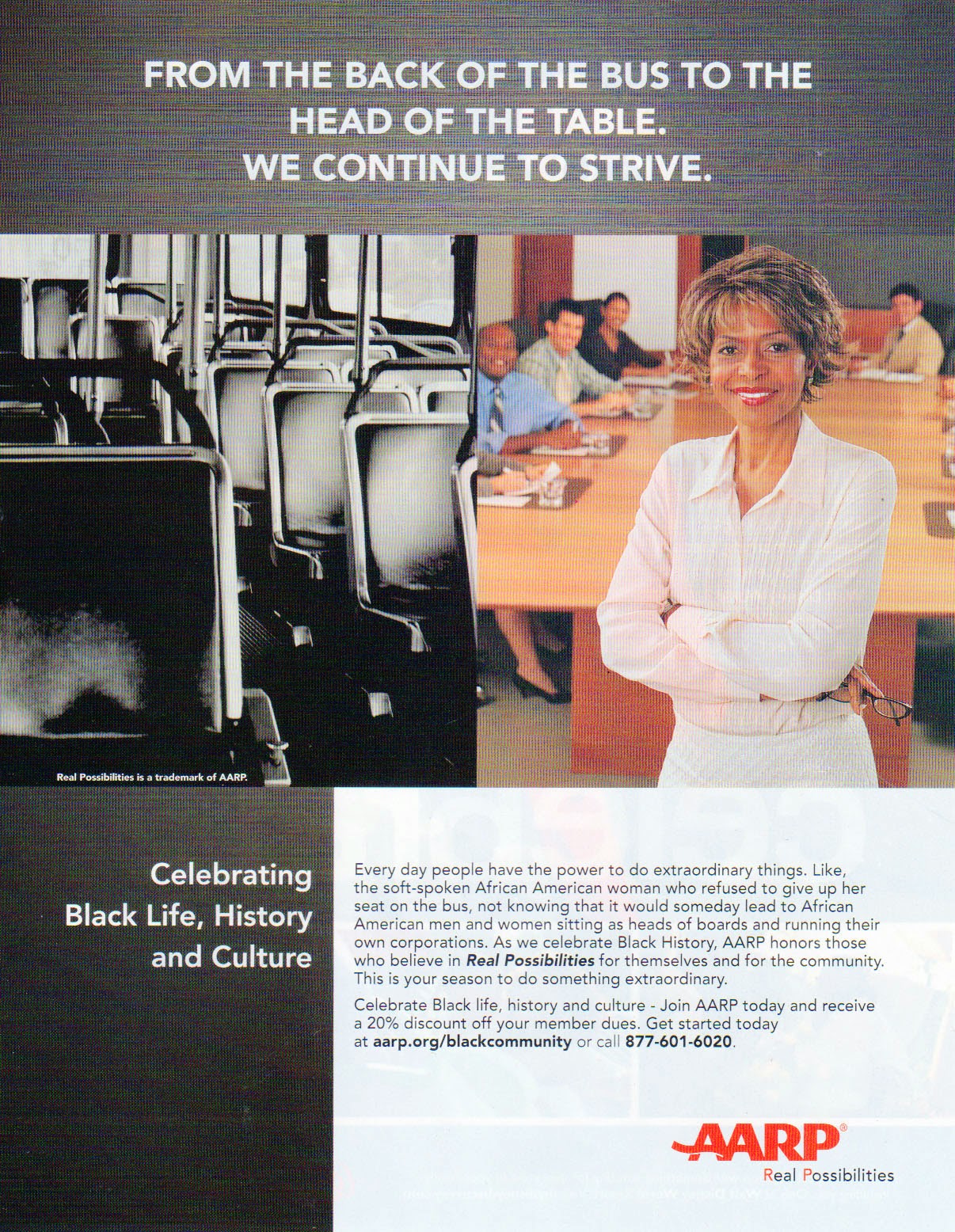
Showing posts with label bhm 2015. Show all posts

Friday, May 15, 2015

12663: The Dicks At U.S. Census.

New York Post columnist John Crudele published a perspective about the U.S. Census booking Dick Gregory for a Black History Month event. After certain workers took offense to Gregory’s routine, the U.S. Census apologized by stating, “We understand [Gregory’s] comments offended some members of the audience. Gregory’s statement and opinions were his own and do not reflect the Census Bureau’s commitment to an inclusive workplace environment free from discrimination and harassment. … We make every effort to ensure that our external speakers represent diverse viewpoints while also respecting the audience.” Okay, but the bigger U.S. Census joke—which turned out to be offensively ignorant—involved letting Draftfcb lead a multicultural campaign in 2007.

Census Bureau paid controversial Dick Gregory to address workers

By John Crudele

The Census Bureau paid comedian Dick Gregory between $15,000 and $20,000, plus expenses, to address workers at its headquarters in February — and now Census regrets it.

The performer and civil rights activist, who is known to use raw language and racial terms that many find objectionable, spoke during Black History Month. But apparently he offended enough of the workers that Census is revising its policy on outside speakers.

The Gregory situation, which I just found out about last week, is a good example of why there needs to be more oversight over how taxpayer money is spent.

First, let’s listen to Census grovel.

“We understand [Gregory’s] comments offended some members of the audience,” Census said in a statement to me that appears to have been sent to irate workers. “Gregory’s statement and opinions were his own and do not reflect the Census Bureau’s commitment to an inclusive workplace environment free from discrimination and harassment.”

Yeah, yeah, sure. Gregory’s spiel is well known. This wasn’t Jerry Seinfeld they were hiring.

“We make every effort to ensure that our external speakers represent diverse viewpoints while also respecting the audience,” it continued.

Sure, diverse viewpoints!

“We will seek to continue to meet this standard in the future and are thoroughly reviewing our procedures for selecting speakers to ensure their views are appropriate for a federal workplace,” the statement said.

How about this? Don’t have speakers! Don’t spend money unnecessarily! Let your workers go to a comedy club for their entertainment like the rest of us do.

Census didn’t get back to me when I asked how much Gregory was paid. But I learned the range of his fee from Celebrity Talent Promotions, which handles his bookings. Hopefully, Census got a discount.

There is no YouTube video of Gregory’s speech that I could find. But included in Gregory’s nuggets of wisdom was apparently criticism of the “crackers” in Census management for not showing up for the talk.

In case you are wondering, “crackers” have nothing to do with Nabisco.

Friday, February 27, 2015

12547: BHM 2015—Savannah.

People of all cultures are invited to discover the Black culture of Savannah.

12545: BHM 2015—Regions.

Regions covers multiple regions—Black, Asian and White—for Black History Month.

12543: BHM 2015—USPS.

United States Postal Service mails it in for Black History Month with a commemorative stamp.

Thursday, February 26, 2015

Wednesday, February 25, 2015

12540: BHM 2015—Apple.

Okay, it’s technically not a BHM event, but Advertising Age reported Apple is introducing racially diverse emoji.

Apple to Feature Racially Diverse Emoji

Users Will Be Able to Choose From Six Skin Tones

Editor’s Pick

It introduced same sex couple emoticons over two years ago, but now Apple is bringing racially diverse emoji to its devices for the first time. According to reports by 9to5Mac and The Next Web, in the future all emoji faces and hands will come in six different skin complexions and users will be able to change skin tone on an emoji, whether it’s a thumbs up sign, face or other “human” symbol, with a simple command. The new emojis, which will also include new “family group” emojis and an Apple Watch emoticon, will appear in OS X 10.10.3 and the beta version of iOS 8.3.

Monday, February 23, 2015

12536: BHM 2015—Howard University.

The New York Times reported Howard University students and faculty are celebrating Black History Month by adding Black history content to Wikipedia. No word if the entries will include commentary showing Black advertising and Black advertising agencies are becoming history. And whatever happened to the professional development and research center that Howard University launched to help diversify the advertising industry?

Howard University Fills in Wikipedia’s Gaps in Black History

By Jada F. Smith

WASHINGTON — Wikipedia is a vast ocean of erudition, with entries on virtually every subject, obscure to earth-shattering, and, it may seem, every human being of even vague renown. It is also, its leaders concede, very white.

“The stereotype of a Wikipedia editor is a 30-year-old white man, and so most of the articles written are about stuff that interests 30-year-old white men,” said James Hare, president of Wikimedia D.C., the local branch of the foundation that runs Wikipedia. “So a lot of black history is left out.”

Students and faculty members at Howard University, one of the nation’s pre-eminent historically black higher education institutions, set out Thursday to fill in the gaps. With Black History Month upon them, they camped out at a Howard research center that houses one of the world’s largest repositories of Africana and African diaspora information and, over coffee and pizza, worked to add some tint to Wikipedia’s white.

“You’d think that, ‘Oh, Wikipedia has articles on everything,’ but for anything having to do with a marginalized community, there’s a lot of gaps,” Mr. Hare said.

Both academics and researchers working with the foundation agree that the online encyclopedia suffers from a dearth of information about black history, too often petering out when the topics extend past the well-known names and events of slavery and the civil rights movement. In the Internet age, this is no trivial matter: To many people, a topic does not exist if it does not have a Wikipedia page.

The foundation is hoping to fill in the blanks by hosting events like the one on Thursday throughout February, soliciting expertise and institutional knowledge from places like Howard; the Schomburg Center for Research in Black Culture, in New York; and National Public Radio.

The organizing team came up with a list of entries that needed to be expanded, like those about Myra Adele Logan, the first woman to perform open-heart surgery, and Mildred Blount, a fashion designer who dressed celebrities in the 1940s and designed the hats worn in “Gone With the Wind.” They also began creating entries for topics that were completely absent from the Wikipedia database, like Beth A. Brown, a former astrophysicist at NASA, and Farish Street, a hub for black businesses in Jackson, Miss., that thrived until the 1970s.

Meta DuEwa Jones, an English professor at Howard who participated in the editing event, often teaches the poems of the Dark Room Collective, a group of poets that scholars have called as significant to the writing world as the New York School and the Black Arts Movement. There are pages on Wikipedia for more than 50 artist collectives, including lengthy entries for the New York School and the Black Arts Movement. The Dark Room Collective is not there, “even though they specifically changed the face of African-American literature and contemporary literature in the ’80s and ’90s,” Ms. Jones said.

“It’s not just a problem that it’s not on Wikipedia — it’s also a possibility,” she added hopefully as the team set out to craft an entry.

She and students from disciplines ranging from fine arts to biology expanded pages about authors, scholars and even the research center they were working in, called Moorland-Spingarn.

Of course, Wikipedia is not always a welcomed presence in a scholarly community tired of research papers crafted more by Google searches than by hard slogs through primary sources. Some professors remain skeptical about the site’s community editing process and criteria for sourcing.

Still, some of those professors, like Joshua Myers, acknowledge that Wikipedia has become an almost inevitable research tool for undergraduate students. He said he had come on Thursday to help make it a good starting point, at least, for more in-depth research.

“They’re using these articles as the beginning and the end,” Mr. Myers said, shaking his head. “If it can be a point of departure, then it can become useful.”

Sunday, February 22, 2015

12534: BHM 2015—Motown.

Motown The Musical capitalizes on Black History Month to boost ticket sales.

Saturday, February 21, 2015

12528: BHM 2015—Malcolm X.

The New York Daily News remembers Malcolm X 50 years after his assassination.

Remembering civil rights giant Malcolm X 50 years after his assassination

The controversial activist, who inspired many and infuriated others, was gunned down Feb. 21, 1965, at the Audubon Ballroom in Washington Heights

By Rich Schapiro | NEW YORK DAILY NEWS

Harlem was ready to explode.

It was just before midnight on April 26, 1957, and at least 4,000 protesters were massed outside the 28th Precinct stationhouse on Eighth Ave.

Hours earlier, 32-year-old Johnson Hinton and two friends had been walking along W. 125th St. when they spotted two cops beating another black man with nightsticks.

“You’re not in Alabama!” yelled Hinton and his pals. “This is New York!”

The officers turned their nightsticks on Hinton, a member of the Nation of Islam, delivering several crushing blows to his head and face.

Hinton, despite suffering lacerations on his scalp and bleeding on the brain, was now being held inside the four-story, red-brick 28th Precinct police station.

The crowd was growing impatient. A race riot seemed imminent.

A ripple of excitement swept through the crush of people when a 6-foot-3 man in a black suit and spectacles showed up and strode inside the stationhouse. The demonstrators, many of whom were Nation of Islam members, knew exactly who he was.

Malcolm X.

The fiery head of the Nation’s new Harlem mosque, Malcolm was allowed to see Hinton. But the cops refused to return the battered man to the hospital.

Malcolm, sensing an impasse, stepped outside the stationhouse and flashed a hand signal to his Nation of Islam followers. They immediately started marching off — silent and stern — like an Army battalion having just received orders from their general.

The rest of the crowd followed.

A group of NYPD cops watched the scene in awe.

“No one man should have that much power,” one officer told Amsterdam News editor James Hicks.

Hinton was released in the morning — after the Nation paid his $2,500 bail — and taken to Harlem Hospital.

The striking show of force introduced the nation to Malcolm X.

Incendiary, influential and often polarizing, Malcolm led the black nationalist movement with a clenched fist and biting tongue.

His rejection of integration and insistence on black liberation “by any means necessary” made him a hero to large swaths of black people.

To many others, he was seen as a villain and a menace. The militant, anti-establishment rhetoric Malcolm preached sent shivers of fear down the spines of many whites and alarmed some African-Americans.

“Other black leaders, Dr. Martin Luther King included, all engaged in tailoring their language to minimize negative reactions from white America,” said Russell Adams, professor emeritus of African-American studies at Howard University. “Malcolm said in his fashion what many blacks thought and said among themselves.”

Fifty years after his assassination, Malcolm X remains one of the most controversial figures of the 20th century.

Read the full story.

Friday, February 20, 2015

Sunday, February 15, 2015

12513: BHM 2015—Verizon.

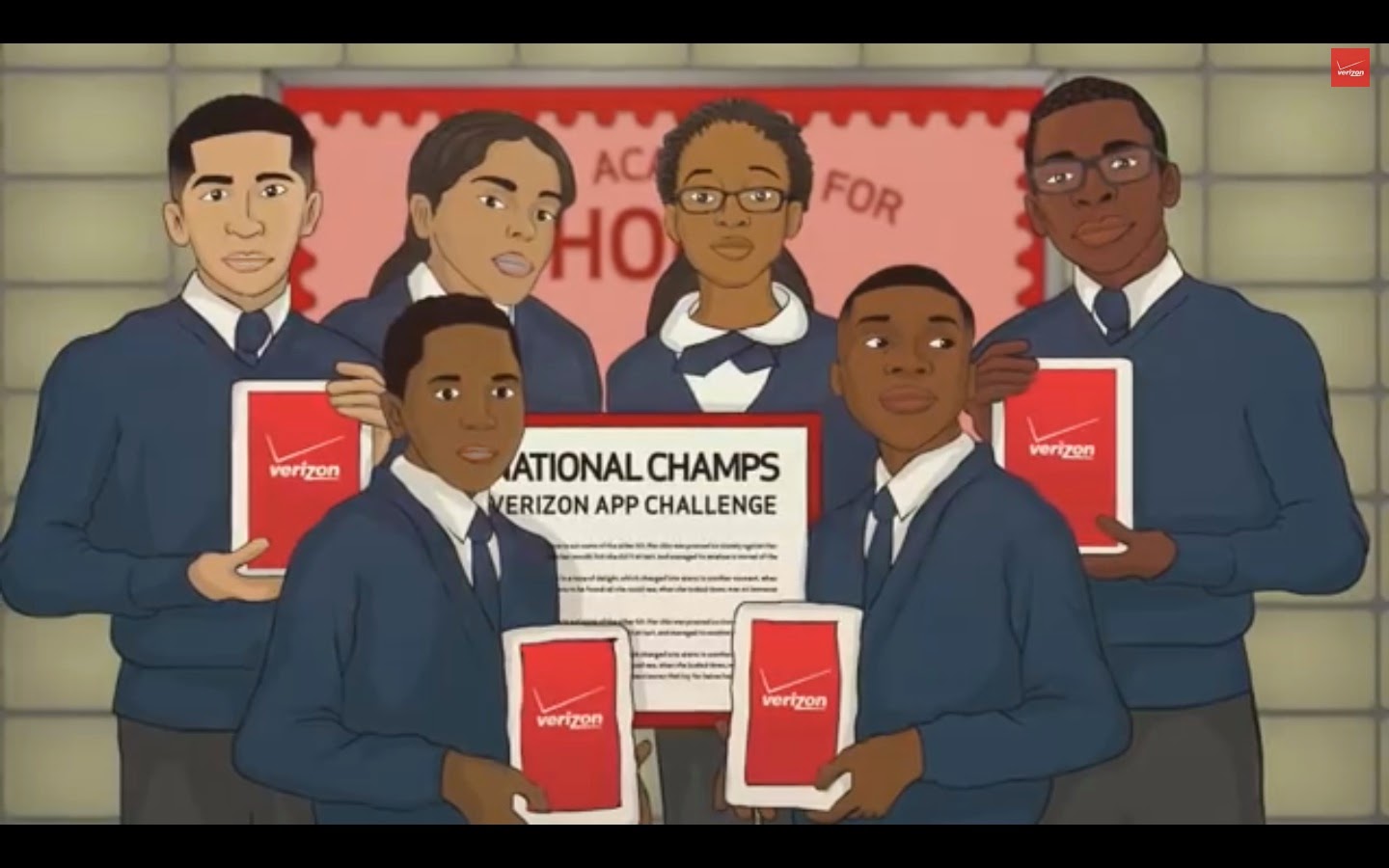
Verizon presents “Power Your Passion With Technology”—spotlighting the story of “Bronx Academy Middle School sixth-graders who collectively applied their creativity and uniqueness to design and build a mobile app that would solve a problem they identified in their school.”

Friday, February 13, 2015

12508: BHM 2015—Omaha STD.

Okay, it’s not for Black History Month, but Serve created this STD campaign for Omaha and two out of three ads feature Black talent.

Thursday, February 12, 2015

12505: BHM 2015—Mickey D’s.

Chicago Magazine published “The Company Man”—the remarkable rise and fall of McDonald’s CEO Don Thompson. Nice. It’s the perfect McBHM tribute.