Monday, July 10, 2006

Essay 798


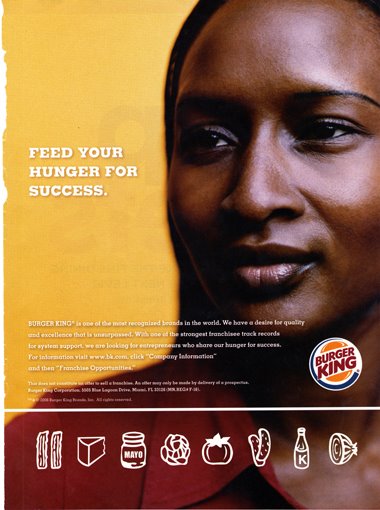
Corporations often run recruitment ads to lure job candidates. Imagine what might be produced if the advertising industry tried similar tactics to address its diversity dilemmas.

Essay 797


From The Associated Press…

----------------------------------------

Slavery Reparations Gaining Momentum

By ERIN TEXEIRA

Advocates who say black Americans should be compensated for slavery and its Jim Crow aftermath are quietly chalking up victories and gaining momentum.

Fueled by the work of scholars and lawyers, their campaign has morphed in recent years from a fringe-group rallying cry into sophisticated, mainstream movement. Most recently, a pair of churches apologized for their part in the slave trade, and one is studying ways to repay black church members.

The overall issue is hardly settled, even among black Americans: Some say that focusing on slavery shouldn’t be a top priority or that it doesn’t make sense to compensate people generations after a historical wrong.

Yet reparations efforts have led a number of cities and states to approve measures that force businesses to publicize their historical ties to slavery. Several reparations court cases are in progress, and international human rights officials are increasingly spotlighting the issue.

“This matter is growing in significance rather than declining,” said Charles Ogletree, a Harvard law professor and a leading reparations activist. “It has more vigor and vitality in the 21st century than it’s had in the history of the reparations movement.”

The most recent victories for reparations advocates came in June, when the Moravian Church and the Episcopal Church both apologized for owning slaves and promised to battle current racism. The Episcopalians also launched a national, yearslong probe into church slavery links and into whether the church should compensate black members. A white church member, Katrina Browne, also screened a documentary focusing on white culpability at the denomination’s national assembly.

The Episcopalians debated slavery and reparations for years before reaching an agreement, said Jayne Oasin, social justice officer for the denomination, who will oversee its work on the issue.

Historically, slavery was an uncomfortable topic for the church. Some Episcopal bishops owned slaves — and the Bible was used to justify the practice, Oasin said.

“Why not (take these steps) 100 years ago?” she said. “Let’s talk about the complicity of the Episcopal Church as one of the institutions of this country who, of course, benefited from slavery.”

Also in June, a North Carolina commission urged the state government to repay the descendants of victims of a violent 1898 campaign by white supremacists to strip blacks of power in Wilmington, N.C. As many as 60 blacks died, and thousands were driven from the city.

The commission also recommended state-funded programs to support local black businesses and home ownership.

The report came weeks after the Organization of American States requested information from the U.S. government about a 1921 race riot in Tulsa, Okla., in which 1,200 homes were burned and as many as 300 blacks killed. An OAS official said the group might pursue the issue as a violation of international human rights.

The modern reparations movement revived an idea that’s been around since emancipation, when black leaders argued that newly freed slaves deserved compensation.

About six years ago, the issue started gaining momentum again. Randall Robinson’s “The Debt: What America Owes to Blacks,” was a best seller; reparations became a central issue at the World Conference on Racism in Durban, South Africa; and California legislators passed the nation’s first law forcing insurance companies that do business with the state to disclose their slavery ties. Illinois passed a similar insurance law in 2003, and the next year Iowa legislators began requesting — but not forcing — the same disclosures.

Several cities — including Chicago, Detroit and Oakland — have laws requiring that all businesses make such disclosures.

Reparations opponents insist that no living American should have to pay for a practice that ended more than 140 years ago. Plus, programs such as affirmative action and welfare already have compensated for past injustices, said John H. McWhorter, a senior fellow at the conservative Manhattan Institute.

“The reparations movement is based on a fallacy that cripples the thinking on race — the fallacy that what ails black America is a cash problem,” said McWhorter, who is black. “Giving people money will not solve the problems that we have.”

Even so, support is reaching beyond African-Americans and the South.

Katrina Browne, the white Episcopalian filmmaker, is finishing a documentary about her ancestors, the DeWolfs of Bristol, R.I., the biggest slave-trading family in U.S. history. She screened it for Episcopal Church officials at the June convention.

“Traces of the Trade: A Story From the Deep North,” details how the economies of the Northeast and the nation as a whole depended on slaves.

“A lot of white people think they know everything there is to know about slavery — we all agree it was wrong and that’s enough,” Browne said. “But this was the foundation of our country, not some Southern anomaly. We all inherit responsibility.”

She says neither whites nor blacks will heal from slavery until formal hearings expose the full history of slavery and its effects — an effort similar to South Africa’s Truth and Reconciliation Commission after apartheid collapsed.

Essay 796


Someone should take serious heat for this ad.

Sunday, July 09, 2006

Essay 795


Two more comments for the story about racism and exclusivity in the industry presented on AdAge.com (see Essays 722 and 708)…

>I am a marketing professional of 11 years, during which I strived to become ad agency professional. I was acknowledged as one of the Most Promising Advertising Students in 2002 by the American Advertising Federation. The Most Promising program presented the opportunity for students to meet with some of the top ad agencies at that time. From my experience, I believe not only race presented an issue, but also gender and age. As far as race being focused on, the definition of minority has been redefined from African American to Hispanic. This is my Opinion. — Akron, OH

>It’s a combination of many of the things you brought up. I was in an ad agency and as a person of color, I just didn’t really feel they were that interested in me staying. Yes, it was partially the pay — why not stick it out and try to make a change within, but when the pay is crap, what’s the point — AND when you can just jump over to the client side for double your pay — why bother? As for the prejudice — it’s there — otherwise we wouldn’t have to have black agencies, hispanic & asian agencies ... but I also understand it because you’re selling hard so your belief is that you need to emulate what the client looks & talks like ... whether you’re selling jets or golf balls — there is that belief ... but it seems out of touch in the 21st century. If a black guy cannot pitch your creative to a client in Louisiana, who’s the idiot now? It’s also because advertising requires people to form close bonds as teams, so of course, people tend to gravitate towards people like them and exclude those not in the clique — it starts subtly like who gets invited to watch a game at their house, a BBQ and goes from there ... so it’s hard to say who should or should not be your after-work friends, but when the agency starts to pick advancements or team projects based on that — it’s not flat-out racism but it certainly is not based on merit or even giving an opportunity to someone while someone else gets mentoring or many opportunities to get it right. If agencies out there now haven’t fixed it — they need to, but that’s why advertising is fast becoming irrelevant and out of touch with today’s society — because 90% of the ads are white frat boy ads based on humor of Dave Letterman, Mad magazine & SNL ... and the rest have to be filled in with “specialized” agencies ... who “really” understand anyone who’s not Johnny Knoxville. Just look at the client side marketing managers — ad agencies are still in the 1950’s when America was homogenized, so it was okay for agencies to be homogenized, but everyone else (even hockey) has moved beyond the old boys network ... — Danville, CA

Essay 794


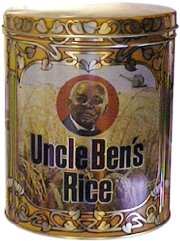
Aunt Jemima. Rastus. Uncle Ben. The Pine Sol Lady.

And now, The Honey Bunches of Oats Factory Worker. Are you hungry?!!!

(Click on the essay title above for more.)

Essay 793


It takes a village to raise a MultiCultClassics Monologue…

• Annapolis is celebrating the 30th anniversary of the integration of women in the Naval Academy. This year’s class set a new record with 22.4 percent female participation. However, problems still arise, as a recent survey revealed 59 percent of female midshipmen and 14 percent of men reported sexual harassment; plus, 93 percent of women and 50 percent of men reported sexist behavior. Village People should have been invited to perform “In the Navy” at the swearing-in ceremony. (Click on the essay title above to read the full story from The Washington Post.)

• The show must go on. Chappelle’s Show will open its third season tonight without its star, as Comedy Central has pieced together three episodes from sketches produced before the infamous departure. At least the network didn’t try to replace Chappelle with DL Hughley.

• Snoop Dogg is embroiled in legal battles, hoping to get out of his contract with music publisher EMI-Blackwood. The rapper has only produced two albums for the label, and the contract calls for four. Who does Snoop think he is — Dave Chappelle?

• Liverpool officials were initiating efforts to rename streets with historical ties to the slave trade, until they realized it would include the famous Penny Lane. The street was named after James Penny, an 18th-century slave ship owner. “I don’t think anyone would seriously consider renaming Penny Lane,” said the city council member behind the renaming effort. “My proposal is to rename several of the streets and to replace them with the names of people who have done something positive.” Bet if you play Beatles tunes backwards, you’ll hear slavery messages.

Essay 792


Ford’s new Bold Moves campaign features an inane commercial with a woman picking up her laundry at a drive-through dry cleaner (Hey, the scenario had to showcase the car!) and ultimately paying for the laundry of the guy in the car behind her. The woman in the spot is White, but Ford chose to depict a Black woman in the corresponding print ad. Seems odd that Ford didn’t use the same actress for both messages. Or maybe there’s research showing a trend in women paying for men’s laundry services. If so, when can we expect a hottie to pick up our drawers?

Essay 791


Residents of the historically Black community of DeBerry, Texas, insist they are victims of “environmental racism.” Folks have been unable to use water from the town’s wells ever since the Environmental Protection Agency found the groundwater to be contaminated with arsenic, lead, benzene, mercury and more. A lawsuit filed in June accused the Texas Railroad Commission, the organization charged with regulating the state’s oil and gas industry, with “intentionally giving citizens false information based on their race and economic status.” The Rev. David Hudson, whose aunt and uncle live in DeBerry, said, “I look at this as poisoning the only source of groundwater as tantamount to lynching.”

The New York Times story can be viewed by clicking on the essay title above.

Essay 790


MultiCultClassics recently observed that Tanqueray spokesperson Tony Sinclair rarely shows up in Black media (see Essay 636). Lo and behold, he’ll now be appearing at the 36th Annual Indiana Black Expo Inc. Summer Celebration. Book your travel arrangements today.

Essay 789


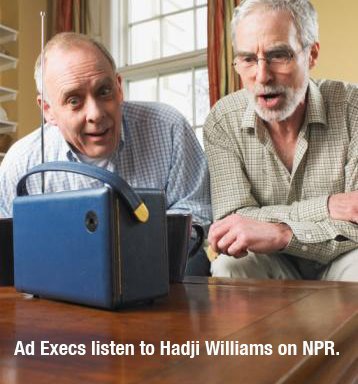
A recent segment of NPR’s “News & Notes with Ed Gordon” featured VNU Media’s Deborah Patton and Knock The Hustle’s Hadji Williams. Although the topic title was “Teen Consumers and the Trials of Youth Marketing,” Williams still managed to blast the ad industry for its racist tendencies. Click on the essay title above to hear it all.

Saturday, July 08, 2006

Essay 788


A super-quick MultiCultClassics Monologue…

• Certain illegal immigrants caught sneaking into the country are being flown back home. According to a report from the Associated Press, the flights are “part of the Homeland Security Department’s so-called repatriation program, [designed] to reduce the chances of migrants recrossing the porous Arizona border by flying them deep into the interior of Mexico.” Sounds like a job for Superman.

• The former associate suing Michael Jackson (see Essay 785) now claims the King of Pop asked him to adopt boys in Brazil. Even the associate’s lawyer was surprised by the new allegation made on the witness stand and said, “It’s not really relevant to this case. … I thought we were not going to go there. We’ve tried to be upstanding.” Hey, trying to be upstanding during a Michael Jackson trial will never lead to victory — or inevitable book and made-for-TV movie deals.

Essay 787


MultiCultClassics presents mo’ diversity ads…

Verizon applauds its own diversity. But if you bring up the topic with Verizon’s advertising agencies, the response will probably be, “Talk to the hand.”

Friday, July 07, 2006

Essay 786


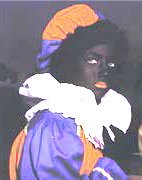
Sony Playstation Portable has inspired new controversy with ads appearing in the Netherlands. The images depict conflicts between a White woman and a Black woman, and critics have called it all racist. These ads would probably not be embraced in the States. But it’s no big deal in Holland, where they still celebrate December holidays with Saint Nicholas and Black Peter.


Essay 785


Showing our pride with a MultiCultClassics Monologue…

• Gay Games VII is set to start on July 14 in Chicago. “Chicago is a great gay and lesbian destination, but it’s never been seen globally the same way as San Francisco or Amsterdam or New York,” said a spokesman. “The Gay Games puts in the minds of the international traveling public that Chicago is a great gay and lesbian destination.” All visitors are encouraged to catch a White Sox game (see Essay 757).

• The highest courts in New York and Georgia ruled against gay marriage. Can anyone guess where they won’t be holding Gay Games VIII?

• Michael Jackson said he was surprised to learn a former associate produced gay porn. The King of Pop made the statements during a videotaped testimony played at his latest court drama. When asked how he knew it was gay pornography, Jacko said, “Because it was. I was shown a videotape. [The former associate] … was directing two guys naked from head to toe telling them what to do with each other. They were touching their penises. I was surprised that was what he was doing. It was inappropriate, knowing what my agenda is.” Gee, it sounds almost as inappropriate as sleeping with young boys.

• A watchdog group reported that the military’s recruiting troubles have resulted in “large numbers of neo-Nazis and skinhead extremists” joining our armed services. A Defense Department investigator was quoted as saying, “Recruiters are knowingly allowing neo-Nazis and white supremacists to join the armed forces, and commanders don’t remove them from the military even after we positively identify them as extremists or gang members.” Guess the “Don’t Ask, Don’t Tell” policy applies to hate groups too.

Essay 784


MultiCultClassics presents mo’ diversity ads…

Sprint weaves technology and diversity to enhance everything. But does Sprint have the technology to reprogram the workforces of its advertising agencies?

Essay 783


From The Washington Post…

-------------------------------------------

A Multi-Hued National Team Thrills Racially Uneasy France

By John Ward Anderson
Washington Post Foreign Service

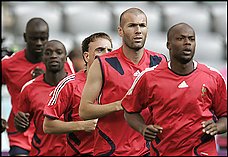
PARIS -- In the French National Assembly, 11 of the 577 members are minorities. In French boardrooms, white men are the rule. But on the French national soccer team, 17 of the 23 players are minorities, and that gave the black and Arab population here added cause for celebration when France beat Portugal this week to advance to the World Cup final match on Sunday in Berlin.

“I think the French team reflects the cultural diversity of France,” said Amely-James Koh-Bela, 42, who immigrated here from Cameroon in 1985 and has been seeking French citizenship ever since. “There’s nothing like it in the social, political or business fields. This is why I love the French team.”

France endured weeks of rioting last fall by minority youths protesting deep-seated discrimination and lack of opportunities, particularly in housing, employment and education. But when it comes to supporting the national soccer team, many minority members said they set hard feelings aside, because the team represents multiethnic France at its finest -- even if it underscores the country's failures in other areas.

“I like what they stand for, and I love France,” said Salah Zerouki, 38, who was born in France to Algerian parents. But, he said, “It’s racist to have the feeling that minorities can only make it in sports” and not in fields such as politics. “That showcases the reality of France -- a mixed sports team but not mixed politics.”

The French national team had to confront the issue of its racial mix when a former presidential candidate from the far-right National Front party, Jean-Marie Le Pen, told the daily sports newspaper L’Equipe that “perhaps the coach went overboard on the proportion of colored players.”

“The French don’t feel totally represented, which surely explains why the crowds are not as supportive as eight years ago,” when France won the World Cup, he said. The rallying cry of the ‘98 team was “black, blanc, beur” (black, white, Arab), to celebrate its broad racial mix.

“Hurrah for France -- not the one he wants, the real one!” responded Lilian Thuram, 34, a black member of the national team from the French Caribbean island of Guadeloupe.

“Mr. Le Pen is not aware that there are black, blond and brown French people,” he told L’Equipe. “It’s like looking at the U.S. basketball team and being shocked that there are black people in the U.S.A.”

Following the riots last fall, French philosopher Alain Finkielkraut created controversy by telling Israel’s Haaretz newspaper that despite its earlier slogan, “the French national team is in fact black-black-black.” He added: “France is made fun of all around Europe because of that.”

“I think a lot of work remains to be done for this France called ‘black-white-Arab’ to be a reality, beyond the moments of national gathering like great soccer victories,” French government spokesman Jean-Francois Cope said this week on Radio J. “That is our goal.”

In France, it is illegal to collect data on race and ethnicity, and affirmative action is frowned upon. According to unofficial estimates, about 10 percent of France’s 61 million residents are of Arab or African descent.

But few people dispute that discrimination is rampant across society -- French-born children of immigrants suffer unemployment rates as high as 40 percent, double those of whites -- and that was one reason why many said they took special pride in the French team.

Koceila Bouhanik, 21, a French student from north of Paris whose parents came from Algeria, noted the large number of minorities on the team “who speak and think like me” -- including the captain, Zinedine Zidane, also of Algerian descent. He called the team “a model of integration and success.”

But Nicolas Bonachera, 21, a semi-employed white man from western Paris, doubted what practical influence the team could have. “This team has the power to make a nation dream of diversity and success, but I think it's an illusion,” he said. “I can’t believe that everybody feels united over soccer, whereas nobody is [united] on other issues the rest of the year.”

“The French football team shows the mix and the diversity of French society as a whole, but it doesn’t represent what is occurring in French society today,” said Dogad Dogoui, 42, president of Africagora, a group that promotes racial integration and diversity. Especially in business and political spheres, he said, “Power is in the hands of a small ruling minority that doesn’t represent France as a whole. A real cultural revolution has to occur here for the situation to change.”

Camille Gauthier, 23, a white business school student in the city of Lyon, sees racial progress in how the team has been received. In Gauthier’s view, people haven’t made as much of the racial composition of this year’s national team as they did for the one eight years ago because French fans are now accustomed to having a mixed squad.

“It takes more time in society than in sports” for integration to take hold, Gauthier said. “In soccer, if you are good, you are on the field no matter how you look.”

Racist incidents among fans have waned in French stadiums in recent years, even as they proliferated in other European countries, particularly Germany, Italy and Spain. There, spectators have pelted black athletes with bananas and screeched at them like monkeys. Analysts say this kind of behavior mirrors growing concern about immigration across Europe.

A U.N. report last year criticized “the comments and behavior of coaches of famous teams who trivialize racist or xenophobic incidents” and said meager sanctions “do not reflect the seriousness of the situation.”

Though not specifically cited in the report, the most widely publicized example was a $3,760 fine levied in 2004 against Spain’s national coach, Luis Aragones, after he was caught on TV using a racial expletive in reference to France’s star striker Thierry Henry. Aragones later explained that he was trying to motivate one of his players.

This year’s World Cup has been largely free of racist incidents. An exception was monkey chanting by Spanish fans before France’s June 27 game against Spain. France won it, 3-1.

“This is a fight against the devil which still exists, unfortunately, in our sport,” Sepp Blatter, president of FIFA, soccer’s international governing body, said in response to the incident.

Researcher Corinne Gavard and special correspondent Habibou Bangre contributed to this report.

Thursday, July 06, 2006

Essay 782


Fast food for thought in a MultiCultClassics Monologue…

• USA Today reports companies are ditching junk food in employee vending machines, opting for healthier alternatives. Additionally, corporate cafeterias charge more for unhealthy stuff, and some places have banned cakes and candy at company celebrations. “For years, we did doughnuts. Doughnuts are great, but we wanted to avoid the mixed messages of doughnuts and weight loss,” said one human resources manager. Time to make changes to the “America runs on Dunkin’” tagline.

• A new study shows folks will eat whatever is put in front of them, regardless of the portion size, because of a “culturally induced” belief that the presented portion is appropriate. So there’s clearly a connection between America’s super-sized servings and super-sized humans. Other countries with smaller portions tend to have smaller citizens. “It is our belief that a small percentage change in portion size would change consumption by the same percentage,” the study stated. Too bad American fast feeders realize bigger percentage changes lead to bigger profits.

• Is Western Union discriminating based on customers’ names? Arab money transfers have allegedly been delayed or rejected when recipient names included Mohammed or Ahmed, fearing there were links to terrorists. A company official said, “We have an obligation to do all we can to keep money out of the hands of terrorists.” You would think the outrageous fees would be enough to dissuade criminals and crazy people.

• Three people were charged with stealing confidential information from Coca-Cola in the hopes of selling the stuff to rival Pepsi. Remember the good old days, when spying and selling secrets were activities confined to terrorists?

Essay 781


MultiCultClassics presents mo’ diversity ads…

PricewaterhouseCoopers does some deep thinking on diversity. Maybe it’s time for the company to question its advertising agencies’ position on the issue.

Wednesday, July 05, 2006

Essay 780


A meaty MultiCultClassics Monologue…

• Moo & Oink, a Chicago meat company, has a new jingle. Chicagoans have listened to the original quirky jingle for 24 years, but now there’s a new tune to enjoy after a contest let customers offer ideas. A young rapper from suburban Country Club Hills — Kent Jones, a.k.a. Kenlo Key — penned the winning entry. Click on the essay title above to hear the top finalists.

• Hip-hop producer Dallas Austin won’t have to cook in a Dubai prison after all. The producer was caught carrying cocaine at the country’s airport, and he received a sentence to serve four years behind bars. But Dubai ruler Sheik Mohammed bin Rashid Al Maktoum granted Austin a pardon. Not sure what the ruler gets in return, but it will probably involve a recording deal or a plane full of chickenheads.

• Another celebrity caught with drugs at an airport is also off the hook. Rush Limbaugh was detained at Palm Beach International last month when authorities discovered a bottle of Viagra in his bag, and he potentially faced prosecution. But the drugs turned out to be legit, as Limbaugh’s doctor had prescribed the erectile dysfunction pills. So Limbaugh will not face any punishment. However, the same can’t be said for the females who may encounter Limbaugh on Viagra.

Essay 779


MultiCultClassics presents mo’ diversity ads…

Hewitt proudly hypes its commitment to diversity. Maybe the HR company could help its advertising agencies figure things out too.

Essay 778


The New York Times spotlights a gift shop in Harlem selling memorabilia of racist America. “The main reason that Black people collect” this stuff, said owner Glenda Taylor, is “that they love that item and hate that item at the same time. … It’s like the ‘n’ word. African-Americans are very good at turning a painful thing into something else.” Click on the essay title above to check it out.

Tuesday, July 04, 2006

Essay 777


It’s safe to say that Barbara Walters would have a field day with this magazine cover.

Essay 776

The lengthy article below originally appeared in the April 2006 edition of diversityinbusiness.com. A lengthy MultiCultClassics response immediately follows…

-------------------------------------------


by Matthew Jones

Diversity has proven to be a very complicated issue in the advertising industry — depending on whose lens you are using, the views are quite different. The advertising industry exists to assist clients in reaching current and potential consumers, but a subset of the industry, comprised primarily of minority-owned agencies, has carved out a successful niche helping clients to reach diverse racial and ethnic communities. Although these communities comprise the fastest growing segments of the U.S. population, most general market agencies have been slow to embrace diversity. However, general market agencies command most of the dollars spent by industry clients.

In the midst of these dual and complex realities is Don Richards who started his advertising career 40 years ago. During his career, Richards has worked for some of the largest and most prestigious agencies in the business, and on some of the most visible accounts. He began his four-decade journey at Leo Burnett Company, where he was the agency’s first African American account executive and, many years later, the agency’s first Black vice president.

Today, Richards serves as the Senior Vice President, Agency Diversity Programs at the American Association of Advertising Agencies (AAAA), an organization that advocates for greater diversity in the advertising industry. Richards’ considerable career experience helping agencies to achieve greater diversity among their ranks made him an ideal choice to help lead the associations’ efforts to promote diversity throughout the advertising industry.

Pressure on Madison Avenue

Richards took the post at the AAAA in September of 2005, and has established a solid footing in his new role. However, pressure on the advertising industry to reflect greater diversity has only intensified since Richards assumed his current post. New York City Councilman Larry Seabrook and New York City’s Human Rights Commission have launched a potentially embarrassing diversity probe among the city’s top advertising agencies. Seabrook is determined to examine all aspects of the industries activities and has even threatened to subpoena agencies’ clients.

The investigation points to a common perception of minimal diversity among advertising’s elite agencies. While declining to comment on the subpoenas, Richards has a lot of valuable insights into the state of diversity in today’s advertising arena.

Richards has what he regards as a realistic and pragmatic view of diversity in advertising. He acknowledges that there are not large numbers of minorities in upper or middle management at leading general market agencies. But he argues that that reality does not reflect the entire picture of what is happening in the industry as a whole.

“We have to be very precise when we talk about the lack of minorities in the business,” said Richards. “I don’t want to marginalize the Tom Burrells, the Carol H. Williams and the Don Colemans of the business.”

According to Richards, ethnic and urban marketing are big business, and there are minorities making good money doing it. In the eyes of many industry observers, this is a good thing for minority marketers because the multicultural arena creates greater opportunity for people of color to own their own agencies and run their own businesses.

While Richards highlights a significant and positive development within the advertising industry, the problem for the industry is not that Council Seabrook is ignoring the success of established minority agencies, the problem is Councilman Seabrook is concerned with the lack of diversity within New York City’s most distinguished advertising.

Why is it so hard to embrace diversity?

What Councilman Seabrook and many others want to know is why general market agencies are unwilling or unable to achieve acceptable levels of diversity among their employees. From Richards’ perspective, that’s a very difficult problem to define, and even more difficult to answer. According to Richards, the reasons are not as simple as most people might imagine.

“I’m not working in a discriminatory industry,” said Richards. “It certainly has its problems — and that’s what we’re focusing on. I think the problems that we have are more complex than just being discriminatory.”

One of the greatest complexities of the advertising business is that it is both a political and subjective arena. Who gets hired, who gets promoted, who gets fired — these questions are generally clouded by a political fog. Within this political landscape, it can be very difficult to separate the politics that run the business from decisions that are racially based. There can be a thousand reasons why someone is not hired or promoted in advertising — race is only one of them.

Add in the fact that, in advertising, much of the work — and the evaluation of the work — is subjective, and the problem magnifies. “In accounting, there is a right answer. If you can find the answers, you got a job,” said Richards. “There are no right or wrong answers in advertising. There is only the perception of right or wrong answers.”

The Efforts of the AAAA

For all the complexities with diversity in advertising, there are some points of clarity, and Richards spends much of his time focusing on where he knows the AAAA can make a difference.

The most influential arena is at the recruiting and entry levels. To that end, the AAAA has one of the most effective and longstanding efforts in the industry with its Multicultural Advertising Internship Program (MAIP). MAIP has been a mainstay of advertising diversity for decades, and it shows no sign of slowing down.

“We placed 97 interns (at major general market agencies) in 2005, which was our highest level to that point,” said Richards. “We have more than 100 interns already placed this year, which will again be our largest effort.”

The MAIP interns will work in more than 50 advertising offices around the country.

“We have the premiere diversity internship program in the industry,” said Richards. “It’s a huge initiative. INROADS (a very well-regarded effort that places minority graduates into corporate internship programs) has a comprehensive internship program, but they span a lot of industries, not just advertising.”

The strength of the program is reflected in the number of students trying to get in — a number that seems to be growing each year. “We get lots of applications from students from across the country,” said Richards. “We probably get more than 250 applications each year.”

When a program has been around as long as MAIP, word tends to get around. “Most colleges know (about our programs). Students hear about it in the campus career centers, through word-of-mouth — a variety of ways.”

The application process is challenging. Applicants must qualify by submitting their GPAs, application essays, letters of recommendation and undergo initial interviews. To aid in the selection process, the AAAA teams up with participating agency representatives who also evaluate the resumes.

“Then it comes down to the finalists,” explained Richards. “At that point, we do a one-on-one interview with the finalists.

Since applications come from all regions of the country, the AAAA makes good use of its national influence and agency partners. “If (an applicant) is in California, we’ll find someone from one of our member agencies in California to do the interview. This is a very structured program. Applicants are screened very carefully.”

The success of the program does not rest solely on the shoulders of the AAAA, or even the students that apply for internships. “In order for a program like this to work, we need a commitment from our member agencies. And we’ve been getting more and more commitments from them,” said Richards.

It is important to the AAAA that students have some support at the end of their internships. Each year, the AAAA and its member agencies host a grand finale for the students that successfully complete the program. The interns are flown to an official “graduation” program at New York University (NYU).

“And here’s the best part — after that, there’s a job fair,” explained Richards. “We host about 30 to 40 agencies, and they come in and interview the interns. Some students actually get hired on the spot.”

Richards is also looking at new ways to help keep in contact with the program alumni — maintaining relationships with past interns helps to extend the AAAA’s relationship with different agencies around the country. To further the relationships, Richards is creating a web site where participants can more easily keep in contact. The site will also feature relevant news and information on the industry.

“We want to give them a reason to keep visiting the site,” said Richards. “We’ll stay close to them that way.”

Operation Jump Start

Since MAIP concentrates on the client service and media sides of the advertising field, AAAA created a special effort to increase diversity among the creative ranks through an initiative called Operation Jump Start. As industry insiders know, creative recruitment is a completely different than the account services side, and it has presented some additional challenges to diversity over the years.

“Agencies don’t recruit that much at the entry level — and the few times that they do, they typically concentrate on the portfolio schools,” explained Richards.

The advertising portfolio schools are small in number, and can be relatively expensive to attend. Top agencies look only at the cream of the crop, and tend to limit their recruiting efforts to institutions like The Miami Ad School in Florida, the Portfolio Center in Atlanta, Georgia, or the Art Center in Pasadena, California.

In an effort to infuse greater diversity into the creative pool, the AAAA offers 20 minority scholarships to the industry’s top schools. To date, the program has worked well, with nearly 100 percent of the scholarship recipients eventually landing creative jobs at ad agencies.

“No one else is doing that (kind of scholarship program)” said Richards of Operation Jump Start. From his perspective, the success of the program shines a ray of hope on the issue of racial prejudice in advertising. “If the industry was truly discriminating as a rule, I don’t think you’d have those kinds of numbers.”

Operation Success

Although the advertising industry has had some success in getting minorities into the advertising industry, the larger challenge involves retention and development. As time goes on, an increasing number of rising stars drop out of the industry, and for a variety of reasons — some redefine their life’s goals and switch industries all together, some move into the multicultural area of the business, some become full-time parents, and some people just aren’t a good fit for the industry.

“There’s a lot of attrition in the advertising business,” said Richards. “People come and go all the time. That’s part of the business. I don’t think that’s going to change.”

But just because “churn” is part of the industry, does not mean that initiatives cannot be implemented to increase the retention rates for minorities. AAAA’s third initiative, Operation Success, may be the most challenging — and also the most important of the association’s diversity initiatives.

“The diversity problem in the advertising industry is not at the entry level,” said Richards. “It’s when you look six years down the road, and (candidates) are no longer in the industry.”

Developing solutions for the diversity retention has not been a focal point of the advertising industry, so the AAAA sought more ideas from advocates outside the industry. “AAAA put together an Advisory Board from outside the marketing industry that seem to demonstrate best practices,” Richards explained. “There is also a steering committee to work with the board, which is comprised of leaders within the advertising industry.”

The two groups worked together extensively to develop a compendium of what they regarded as the best and most effective ideas, which they named The Principles and Best Practices for Diversity and Inclusion in Advertising Agencies.

“In May of 2005, we sent a document to all of our member agencies, summarizing the work of the two committees,” said Richards. “Part of my job is to come in and oversee the implementation — help the agencies implement the initiatives contained in the document, to find additional best practices, and to find minority-owned companies that can help agencies implement their diversity plans.”

Such efforts are needed to help advance diversity within the advertising industry, particularly among the big New York agencies that are now the target of Councilman Seabrook’s investigation. Whether they are sufficient to satisfy the demands of Councilman Seabrook remains to be seen.

The End

-------------------------------------------

Don’t mean to play the hater, as Don Richards deserves much respect for his personal and professional milestones. But there are many points that warrant careful consideration and even rebuttal.

Richards is the Jackie Robinson of Leo Burnett, having been the company’s first Black suit and first Black vice president. Most of us would be damned lucky to retire with just those two titles on our resume. Yet how many minorities followed him? After all, Leo Burnett is not exactly the Mecca of Diversity. And despite the online references claiming Richards ultimately headed up Leo Burnett’s global diversity efforts, there are virtually zero published examples of his success in the endeavor. No doubt the man made contributions. But how the historical accomplishments might be leveraged in his current broader role has yet to be seen.

Richards’ advertising career included stints with Marschalk (now Lowe & Partners) and DDB. Not sure what he did at these shops, but neither one has positive records with diversity.

As it turns out, Richards left Leo Burnett and spent a brief time running his own multicultural agency — D.C. Richards & Associates. There’s little online information about the shop, except a short blurb revealing Richards worked for the U.S. Army, an ex-client of Leo Burnett. One can only imagine what Richards learned in the experience, as operating a minority agency must have been quite a culture shock compared to Leo Burnett.

Richards also became associate national director, affirmative action and diversity, with the Screen Actors Guild. Heaven knows what he developed at SAG, an organization that may rival the ad industry with its own diversity dilemmas.

Given the preceding biographical data, it’s tough to understand why the diversityinbusiness.com writer penned, “Richards’ considerable career experience helping agencies to achieve greater diversity among their ranks made him an ideal choice to help lead the [4As’] efforts to promote diversity throughout the advertising industry.” The alleged achievements are hardly considerable or visible. And so far, it appears that Richards has essentially helped organize existing 4As internship programs.

“We have to be very precise when we talk about the lack of minorities in the business,” said Richards. “I don’t want to marginalize the Tom Burrells, the Carol H. Williams and the Don Colemans of the business.” No, the 4As and ad industry in general continue to do a fine job of marginalizing those folks.

The article stated, “According to Richards, ethnic and urban marketing are big business, and there are minorities making good money doing it. In the eyes of many industry observers, this is a good thing for minority marketers because the multicultural arena creates greater opportunity for people of color to own their own agencies and run their own businesses.” Well, besides Tom Burrell, Carol H. Williams and Don Coleman, you’d be hard-pressed to name more Blacks making good money. Hell, some might insist Burrell, Williams and Coleman still struggle to stay in the black. And who are these industry observers championing segregation?

“I’m not working in a discriminatory industry,” said Richards. “It certainly has its problems — and that’s what we’re focusing on. I think the problems that we have are more complex than just being discriminatory.” No kidding. However, proclaiming he’s not working in a discriminatory industry is downright ludicrous. In recent months, the critics of our industry have included Patricia Gatling, Larry Seabrook, Earl Graves Jr., Richard Wayner, Renetta McCann and a host of online commentators responding to stories on AdAge.com. Ann Fudge was disturbed by the “dearth of diversity” she witnessed when joining Y&R. Neil French exposed the bias aimed at women in our ranks. A current lawsuit against McCann Erickson highlights the real potential for ageism discrimination. Yes, Mr. Richards, the problems are complex. But if you’re not working in a discriminatory industry, well, you’re just not paying enough attention.

Richards’ arguments surrounding the subjective nature of our business are tired, outdated and bullshit. “In accounting, there is a right answer. If you can find the answers, you got a job,” said Richards. “There are no right or wrong answers in advertising. There is only the perception of right or wrong answers.” Hey, if that’s true, the accounting departments in agencies should have plenty of minority representation. Show me the money minorities, Mr. Richards.

The internship programs Richards gushed about are worthy of praise. But those initiatives should have been orchestrated and executed without 4As intervention. That agencies today require guidance in such areas clearly underscores the deep mess.

Don Richards is certainly a man of honor and great accomplishments. Attacking him is absolutely not the goal here. At the same time, the majority of his background is connected with general market agencies, where excuses flourish and diversity remains a dream deferred. Plus, some of his diversity-related comments have been pretty peculiar, hinting at clueless and out-of-touch positions. We should respect Richards — but think twice before accepting his perspectives as gospel.

(Everyone is encouraged to review Essays 710 and 763 for more on this topic.)

Essay 775


MultiCultClassics presents mo’ diversity ads…

Hess Corporation understands the power of seeing things from diverse perspectives. But finding diversity at Hess’ advertising agencies would probably require using the Hubble Space Telescope.

Essay 774


Depressing news in a MultiCultClassics Monologue…

• A new study showed a link between obesity and depression. A researcher for the study said the results “suggest that the cultural stereotype of the jolly fat person is more a figment of our imagination than a reality.” Maybe Mickey D’s should change the name of Happy Meals to Bipolar Disorder Meals.

• General Motors announced its U.S. sales dropped 25.9 percent in June. Last year, the automaker experienced increases of 41 percent when it gave consumers the same discounts as GM employees. Maybe they should offer folks the same buyouts being doled out to exiting workers.

• An Illinois study showed minority drivers still get stopped at a higher rate than White drivers. Plus, the percentage of minorities involved in consent searches statewide actually increased. GM could probably halt their sales skid by offering to pay for consumers’ traffic tickets.

Monday, July 03, 2006

Essay 773


Here are more comments posted on AdAge.com in response to the Jay-Z vs. Cristal article featured in Essay 747…

--------------------------------------------

>If Jay-Z chooses to boycott Cristal, more power to him! Jay-Z is not concerned with the history of Cristal, he is concerned with his investment and support he made to Cristal and the company’s standards. If I feel a certain company that I have supported and invested in for years has made a racist comment, I would no longer support the company no matter the history. It boils down to ethics and support. I must say, if companies don’t adjust to the shift in the power of the ethnic buyer, they will sink, slowly but surely. — New York, NY

>I wonder if the writer of the original story — as well as the writer of the subsequent comment (Sydney below) — mistakes hurting the brand for hurting the sales. Consider Jay-Z’s global following, and his ability to create demand for say, a type of sneakers, by simply wearing a pair onstage. Then double that ability by factoring in girlfriend Beyoncé. That’s more "influencer" firepower than most advertisers can muster with full-blown ad campaigns. A limited product like Cristal may not suffer damage to sales. But one can only imagine the short- and long-term collateral damage inflicted upon the brand. — Anytown, NY

>Although some may disagree with much of hip-hop music and its content, one cannot deny its influence on popular culture over the last 20 years. Whether it was Run DMC mentioning Adidas in their songs in the 80s or Jay-Z talking about Cristal recently, certain people listen to those statements and buy according to the popular culture brands. Celebrity sells and Jay-Z is arguably one of the greatest lyrical geniuses to ever rap and an influencer among youth and other celebrities alike. Cristal did not just offend Jay-Z by those comments but every person who listens to hip-hop, especially African-Americans. — Chicago — Cincinnati, OH

>After living in France and visiting fine champagne houses, you soon realise they are not interested in Jay-Z and how or what champagne he guzzles with no regard for the quality and principles in place for the production of fine champagne. He is not a good figurehead for the brand and getting pissy-pissy is not what Cristal is created for. — Sydney

Essay 772


Beating the rap with a MultiCultClassics Monologue…

• Lil’ Kim is free (pictured above). She was released today after spending about 10 months behind bars. The original sentence called for incarceration for a year and a day, but the rapper was let go for good behavior. Lil’ Kim will remain under house arrest for 30 days. Although in her case, it will probably be house party arrest.

• Michael Jackson appeared in his latest court drama via videotaped testimony (see Essay 745). A former business associate is suing the King of Pop for $3.8 million he claims Jackson owes him. Prior to hooking up with Jackson, the associate worked in the adult entertainment field. Jackson’s lawyer claimed the King of Pop cut ties with the associate when he discovered the man had connections with gay pornography — but probably because Jacko’s interests are more in the child pornography category.

Essay 771


MultiCultClassics presents mo’ diversity ads…

Harrah’s proclaims, “Even our chips are diverse.” MGM Mirage makes similar statements. Bet the same can’t be said for the employees at the entertainment companies’ advertising agencies.

Essay 770


Bad habits and bad ideas in a MultiCultClassics Monologue…

• Experts are arguing over the best way to tell kids they have obesity problems. The Center for Disease Control and Prevention opts to avoid the word “obese,” fearing it carries too much of a stigma. But others think dealing with things more openly — that is, telling kids they’re fat — is more effective because it prohibits denial of a serious problem. Wonder how many cases of obese children involve obese parents. It must be rough in these cases of the pot calling the kettle black — especially when everyone’s overeating from both of them. Then again, obese children are probably already hearing it on the playground.

• LG Electronics invented the first cellphone that deals with drunk driving and drunk calling. The model features a real Breathalyzer. Plus, users can shut off access to certain numbers at specific times to prevent intoxicated calling and text messaging. So far, LG has sold over 200,000 cellphones. There’s got to be a TV commercial concept involving the Budweiser “Whassup” characters here.

• The latest Ariel Mutual Funds/Charles Schwab Black Investor Survey showed high-income Blacks save far less for retirement than their White counterparts. “[Blacks have] been banking on the pension promise. That’s why we’ve saved less,” said financial expert Mellody Hobson. “It’s a national crisis that will hit Blacks especially hard because we’ve bought all the promises.” And probably bought most of it on credit too.

Essay 769


MultiCultClassics presents mo’ diversity ads…

Given Denny’s continued struggles with discriminatory treatment of diners, it’s hard to imagine the restaurant chain could be named among the Best Companies for Diversity by Black Enterprise. Nonetheless, it would be interesting to learn how Denny’s advertising agencies might rank with Black Enterprise.

Sunday, July 02, 2006

Essay 768


From the latest issue of XXL magazine…

----------------------------------------

Hey Lady

The country’s most influential woman hates hip-hop, and a lot of people aren’t happy with that.

Dear Oprah,

We’ve been debating whether we should get at you for hating on hip-hop and your treatment of Ludacris when he was plugging Crash on your show or just let it go. It’s not like your dislike for rap is breaking news. Yet, as the weeks have rolled by, some of our favorite MCs like Luda, 50 Cent, Ice Cube and Killer Mike have spoken out against your disdain for the culture. That’s odd, since for the most part hip-hop has loved you. Rappers have rhymed about you, wished to conquer you (Chappelle’s Show style) and begged behind the scenes to be on your show. Hell, it’s practically Jay-Z’s life goal. But you just keep having his boo, Beyoncé, on.

The only MC who gets any love is Kanye West, the most nonthreatening rapper alive. Still, you had to justify Kanye’s appearance by making the show about surviving a car crash then becoming a superstar. Now you started as a journalist, tell us, who has a better rags-to-riches, I-almost-died story of survival: the college dropout or 50 Cent? Must be Fif, even though you don’t want to admit it. Because as soon as he said you catered to old White women, you ran to New York radio station Power 105 to assure everyone you had hip-hop on your iPod. “Hip-hop is like jazz and gospel music, evolved from the people, a form of protest, a form of expression. So you can’t deny that, nor would I try…,” you explained. Forget trying, it’s what you’re doing.

Maybe you don’t realize that some Americans still live in hoods where they have to fight to survive. The things you don’t like to hear in rap music are real. There are areas of the U.S. where drugs and guns are a part of life and men get shot every day. Probably not far from Harpo Studios, ’cause we all know Chi-Town is gangsta. Maybe you can explore the criminalization of a generation of young men who identify with these rappers.

Like Cube said, you’ve had rapists, child molesters and fake writers on your show. You’ve had some of the lowest people as guests. Rappers are worse? You do a show with Superhead, talking about the issues with girls trying to be video hoes, yet you won’t talk to the rappers themselves. Not even a video director or a casting agent. Real investigative work, ma.

The truth is, Oprah, hip-hop is not going anywhere. It’s the music your audience’s kids are listening to. Maybe you should help educate and enlighten them. Go ahead and challenge it, but don’t ignore it. We’re too big for that. Some of us are making close to Oprah dollars. And one day we might be giving you a run for your money.

Peace, Love & Respect,

XXL

Essay 767


MultiCultClassics presents mo’ diversity ads…

ARAMARK boasts about being a great and diverse company, consistently ranking high in various industry surveys. But do ARAMARK’s advertising agencies extend a welcome hand to minorities?

Essay 766


Legal briefs and other dirty laundry in a MultiCultClassics Monologue…

• Rosa Parks’ relatives and the folks she appointed to handle her affairs appear to be headed to court over the validity of the civil rights icon’s will. Wonder if they’ll take a bus to the courthouse.

• The Los Angeles Times reported that the LAPD is having trouble recruiting Black cops. “I used to want to be a police officer, but now I’m just afraid of them,” said one citizen whose brother was killed by sheriff’s deputies. A 2004 survey showed only about 39 percent of Blacks had positive feelings about the LAPD, and nearly 65 percent said they would not want their children to join the force. Wonder what the LAPD could do to beat those figures.

• Officials in Tennessee are seeking to oust a small-town mayor who allegedly used racial slurs and targeted Hispanic drivers for tickets. One incident happened when the mayor swore in a new cop on Martin Luther King Day and allegedly said, “Happy James Earl Ray Day.” The mayor also ordered cops to ticket Hispanics for traffic violations because they’re “mostly illegal anyway.” “I’ve done nothing wrong,” insisted the mayor in a recent interview. “They better be able to prove every word in that [17-page complaint filed by citizens].” The mayor then probably tried to pass a measure officially recognizing James Earl Ray Day.

Essay 765


MultiCultClassics presents mo’ diversity ads…

The issues involving the lack of minorities in advertising agencies continue to heat up. Meanwhile, advertisers employing the agencies continue to hype corporate commitments to diverse workplaces. To further complicate matters, a fresh crop of diversity-hawking ads appeared in the latest issue of Black Enterprise — the publication whose president-CEO recently proclaimed the advertising industry is “licensed to practice racism” and called for consumer and political activism to address the problems (see Essay 687).

This week, MultiCultClassics will once again examine diversity ads — and wonder why advertisers don’t demand the same commitment from their advertising agencies.

American Airlines plays off its own name, creating a graphic statement on diversity. Wonder if there are any African Americans, Asian Americans, Hispanic Americans and Native Americans working at American’s advertising agencies.

Saturday, July 01, 2006

Essay 764


At last, the real reason so many Blacks failed to evacuate during Hurricane Katrina.

Essay 763


The New York Public Radio broadcast on segregation and exclusivity in the advertising industry (see Essay 759) demands further study. Anyone who missed it is strongly encouraged to click on the essay title above and listen carefully.

Host Danyel Smith led the talks, joined by Advertising Age reporter Lisa Sanders, True Agency President/CEO Richard Wayner and 4As Senior Vice President of Agency Diversity Programs Don Richards.

The conversation was (stereo)typical of nearly every attempt to discuss the continuing drama; that is, it was too unfocused, too imbalanced and too short.

The show even featured the standard Black-folks-complaining-about-the-cultural-clichés-prevalent-in-Black-advertising. Heaven forbid a White person would have been permitted to air such grievances.

Lisa Sanders offered insights based on her journalistic inquiries, stating that New York advertising agencies have submitted their employee statistics for inspection, and the numbers are very bad.

Richard Wayner explained his recent contention that the advertising industry practiced “sanctioned segregation,” ultimately managing to back his position in a calm and thoughtful style (see Essay 582).

Don Richards’ performance on the panel was downright disturbing.

At one point, Richards tried to argue the industry’s lack of diversity was not the fault of advertising agencies; rather, it was rooted in clients’ decision to hire minority shops to handle multicultural initiatives. Additionally, minority shops have greatly benefited and profited from the specialized arrangements.

Richards proclaimed, “If you ask the owner of an African American agency whether he’s done well, many of them have done well in that environment because they were the experts.”

Say what? The Black agencies in America that have “done well” could probably be counted on a single hand. ET’s hand, that is. And these enterprises certainly don’t enjoy profit levels equal to general-market agencies in any fair proportion. Behind closed doors, most minority shop officers salivate at the prospect of making “general-market money.” These folks aren’t pursuing general-market assignments just for the bragging rights.

Richards’ apparent unfamiliarity with Wayner and the True Agency was also very odd. Wayner’s aforementioned observations on “sanctioned segregation” were highlighted in the trade press. And while MultiCultClassics has criticized the work of the True Agency in the past, the shop has received a lot of attention — including almost merging with TBWA\Chiat\Day. How can the man tapped by the 4As to champion diversity programs not be aware of Wayner and the True Agency?

When he proceeded to give Wayner advice on creating advertising, Richards was nothing short of condescending and clueless. Based on published records of Richards’ career, the man has never toiled at a minority shop. But like most general-market dinosaurs, Richards is quick to assume an authoritative and all-knowing stance. What an arrogant jackass.

The current investigations of Madison Avenue have agencies and the 4As scrambling to hook up with lawyers and lobbyists. The excuses Richards served up — including the nonsense contained in a recent AdAge.com story (see Essay 710) — may hint at the new smokescreens being concocted by industry officials. One can only imagine what role Richards has played in all these actions. The 4As obviously knew what they were doing when they hired this guy.

Essay 762


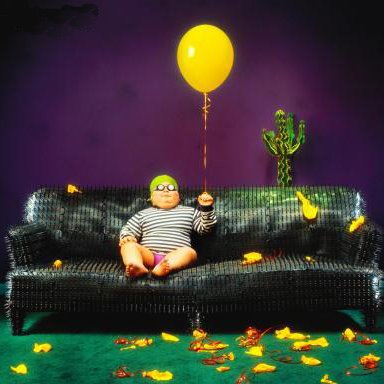
Xenadrine orders Americans to “Lighten Up” with its weight-reducing benefits. Not sure what drugs were taken by the advertising creatives responsible for the X Man character depicted here. Click on the essay title above to check it out.

Essay 761


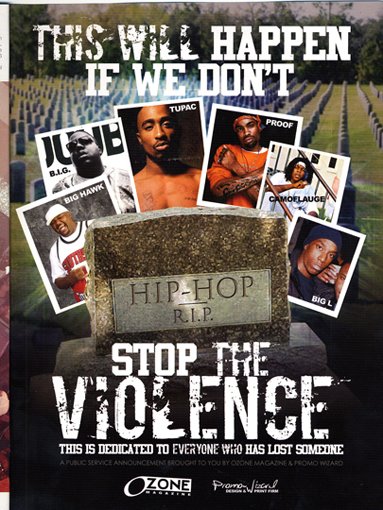
MultiCultClassics presents hard-core Hip Hop hype…

Who says Hip Hop doesn’t have a heart? This public service announcement speaks “to everyone who has lost someone.” Given the frequent rap-related shootings, they may already need a double-page spread for this message.

Essay 760


Being a man with a MultiCultClassics Monologue…

• The Los Angeles Times presented the story of Torrence Brannon-Reese (pictured above), who runs a program for fatherless students called “See A Man, Be A Man.” The program teaches young men a host of things including responsibility, cleanliness, the importance of caring for family and more. Click on the essay title above to see a man worth checking out.

• Rapper-actor DMX spent the night in jail before posting $25,000 bail. A judge had ordered an arrest warrant after DMX failed to appear in court for recent speeding and traffic charges (see Essay 757). Upon posting bail, DMX probably sped off in a fancy sports car.

• USA Today admitted it cannot prove key elements in its story accusing telecommunications companies of providing customer records to the National Security Agency (see Essay 606 and more). An article in the newspaper stated, “Members of the House and Senate intelligence committees confirm that the National Security Agency has compiled a massive database of phone call records. … But some lawmakers also say that cooperation by the nation’s telecommunication companies was not as extensive as first reported by USA Today on May 11.” USA Today should know better than to use members of the House and Security intelligence committees as sources, as these intelligence committees rarely exhibit intelligence.