Monday, April 09, 2007

Essay 1975


From Newsday.com…

-------------------------------

Imus trades barbs with Sharpton

BY VERNE GAY
Newsday Staff Writer

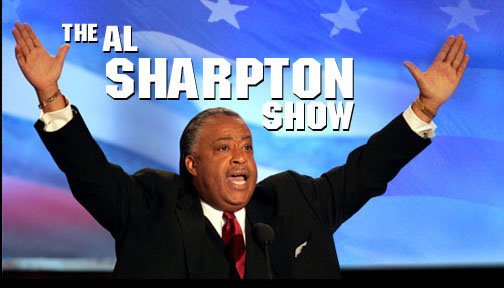
Embattled radio jock Don Imus continued his mea culpa tour Monday afternoon when he traded sharp and occasionally angry comments with Rev. Al Sharpton and his guests during Sharpton’s nationally syndicated radio program.

“I didn’t come here to get slapped around,” Imus snapped at one point to a journalist who questioned his avowed commitment to battling sickle cell anemia.

At another point, Imus angrily exclaimed to Congresswoman Carolyn Cheeks Kilpatrick — a Michigan Democrat and member of the House Appropriations Committee who is black and criticized Imus during the call-in portion of the program — “I can’t get anywhere with you people.”

Sharpton then jumped in saying, “Who is ‘you people…?’”

Imus testily countered: “That’s jive — I mean you two people. You said you were going to be fair. Keep your word.”

Voice rising, Sharpton then replied, “I’m in charge here. I asked you a question…”

Imus later even referred to himself as “an old cracker,” and Sharpton interrupted him, saying: “I’d prefer you’d respect your own race on my show.”

Alternately contrite and combative, Imus clearly didn’t study the standard playbook that’s been well-thumbed by any number of celebrities over the years caught in verbal indiscretions, most recently Michael Richards. Hatless and hair neatly combed, he spoke Monday morning during his own radio program — simulcast on MSNBC — when he said he was “embarrassed” by comments last week — a reference to his now-notorious “nappy-headed hos” slur directed at the Rutgers women’s basketball — while later noting, “I’m not a bad person. I’m a good person, but I said a bad thing. But these young women deserve to know it was not said with malice.”

But from the outset, Sharpton attempted to push Imus off-message, and he appeared to succeed at several points during the two-hour long show. There was little doubt about Sharpton’s intention — prior to Monday afternoon’s show, he called for Imus’ resignation, and repeated the demand several times during the program, while at the outset noted, Imus “made statements that we find deplorable and inexcusable, and over the last two or three days, as the controversy grew, several people that knew him reached out to me [to] say he’s a good guy [and] asked me to meet with him. I refused to meet with him in private but said that if we had any discussions, it would be in public.”

During the interview, Sharpton kept pushing him for accountability, saying “It can’t just be glossed over, if you walk away from this unscathed, the next guy can.”

“Unscathed!,” Imus responded sharply. “Don’t you think I’m humiliated? Don’t you think I’m embarrassed? Don’t you think I understand?”

He then referred to his ranch in New Mexico, where he has cared for underprivileged children over the years: “Our job at that ranch is to restore the dignity of these young people. What made me think I could make fun of these young women?”

Imus, who joined the show around 1:30 p.m., spent the first few minutes explaining the context of last week’s comment — that it was meant to be “funny” though added that in hindsight, it clearly was not. He defended his producer, Bernard McGuirk, who referred to “jigaboos,” saying he was actually referencing Spike Lee’s “School Daze.” “I was thinking like ‘West Side Story’…”

Sharpton later wondered “Why do you think we’re out of order” asking for a resignation.

Said Imus, “You have the right to do whatever you want, but anyone who called me a racist or a bigot or said ‘I don’t know anything about him’ or ‘I’ve never heard him’ but ‘I want him fired,’ that’s an ill-informed decision.”

Bryan Monroe, the president of the National Association of Black Journalists, who also appeared on the show, and at one point abruptly challenged Imus while he was talking about the work he had done raising money for sickle cell anemia research, said that the magazines he works for had been calling for sickle cell research back when Imus “was doing car commercials.”

Imus then angrily responded, “Sir, sir, you can keep talking all you want [but] don’t insult me. Don’t talk to me about used car commercials….You don’t have to get in my face with this. I don’t have to put up with this man getting in my face.”

Within seconds, Sharpton broke for a commercial.

Essay 1974


From Adweek.com…

----------------------------------

Barbara Lippert’s Critique: Uncle Ben’s Problem

By Barbara Lippert

Lately, just like real celebrities, many of our beloved ad icons have been forced into rehab.

Orville Redenbacher, who passed away in 1995, was reanimated for advertising thanks to some digital magic. The resulting resurrection is a horror show, made even creepier because we knew him as a living, breathing human being.

Last week, in a non-digitally imposed action, and after retiring the actor some time back, Maytag selected a new repairman from thousands of applicants clamoring to wear the hat. (This time the company might give him something to do.)

Fictional cooking doyenne Betty Crocker is a perennial; she gets a makeover every decade or so. In the ‘80s, General Mills turned her into a corporate executive and as such she’s gone from looking like Betty Ford to channeling Laura Bush. (Not a stretch, if you think about it.)

Obviously, advertisers want to keep the characters alive to cash in on all that brand equity. But why do consumers get so attached? My theory is that we first come into contact with these icons in childhood kitchens, and when we hold the boxes in our hands they loom large. (I thought my mother was the bonneted lady on the Sun-Maid raisins box.) They remain in our hearts and brains to an irrational degree ever after.

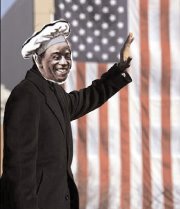
Then there’s Uncle Ben of Uncle Ben’s rice fame. He first appeared on rice boxes in the mid-1940s, 80 years after the Civil War. The name came from an actual African-American rice farmer known for the excellence of his crop, and suggests a holdover from slave and then segregated days in the South, when elderly black men were denied the honorific “Mr.” and instead were called “Uncle.” And then there’s the beaming image: the portrait was based on an African-American maitre d’ at a hotel in Chicago in the 1940s, and the bow tie suggests an old-time butler or porter—a person in a position of deference.

Similarly, Aunt Jemima, developed in the 1880s, was a racist “Mammy” stereotype. But she was quietly updated by removing the head wrap, subtracting substantial poundage and adding pearls. But at this moment in our truculent interactive culture, nothing is done quietly. Can the corporation (unfortunately named Masterfoods) proudly reclaim the Uncle Ben character, and change and defuse the negative connotations?

Well, much as I was ready for a “What were they thinking?” cri de coeur (and kind of cringed at the earnest announcement of a “fully integrated campaign”), the reality is that so far, the Web site, at least, is innocuous.

At unclebens.com, Ben (no last name, but at least it’s not Benson) has been elevated from some sort of server to chairman of the board. Users are invited to go behind the double mahogany door for a tour of his office. A clever kitchen-timer graphic device (the kind used for rice) pops up, as we get a 360-degree look at the executive inner sanctum, complete with the doodads on his desk. Users can even fool around with the chess set on the sideboard, although each click results in a word balloon in which Ben links chess to rice.

My favorite part is Rice 101, where I learned a lot of nice rice facts (“rice is naturally sodium- and gluten-free, and hypoallergenic”; “whole grain brown rice contains the germ and bran layers, wherein lie the majority of beneficial nutrients like antioxidants, phytonutrients, vitamins and minerals”). I thought the coolest thing was the “Rice Wall of Fame,” featuring a medical-type illustration of a blown-up grain of rice. You click on a microscope and learn the names of the various parts (like “endosperm,” the actual inside of the rice grain).

There’s a tone problem with the print, however, that doesn’t seem to match Ben’s new executive role. It comes across as less CEO-ey and more throwback folksy. Combined with the original portrait, this is a bit unfortunate.

Indeed, Ben’s image is unchanged from previous incarnations (including blue jacket, bow tie and smile). It sits on a yellowish-gold background alongside his aphorisms, or many “Benisms”—which are promoted, cleverly, as “common sense ‘grains’ of wisdom about rice.” But these tend to sound less informational and more like the funny, sassy statements on the bright yellow billboard promotions ABC did a decade back.

One of Uncle Ben’s print ads declares, “Rice. Because 6 billion people can’t be wrong.” Ba-bum. They can be wrong, if they’re starving. I realize there’s a limit to the information you can put in a print ad, but why not make them more instructive or helpful?

“How about some respect for the meat-and-rice man?” another asks. I get the wordplay (on meat and potatoes), but I find it awkward, first with the asking for respect thing (even if it’s jokey), and then suggesting as it does a song-and-dance man.

By the way, there are all different kinds of CEOs, including those who fancy themselves stand-up comics, who prepare and issue one-liners. We tend to find them annoying, regardless of race.

Essay 1973


From The New York Times…

-----------------------------------

Contrite Don Imus: ‘I’m a Good Person’

By THE ASSOCIATED PRESS

NEW YORK (AP) -- Calling himself “a good person” who made a bad mistake, radio host Don Imus said Monday he would check his acid tongue after being lambasted for making racially charged comments about the Rutgers University women’s basketball team.

“Here’s what I’ve learned: that you can’t make fun of everybody, because some people don’t deserve it,” he said on his nationally syndicated radio show Monday morning. “And because the climate on this program has been what it’s been for 30 years doesn’t mean it’s going to be what it’s been for the next five years or whatever.”

Imus said he was “embarrassed” by the remarks, in which he referred to the mostly black team as “nappy-headed hos.” He said he had made the comments in the course of “trying to be funny,” but he was not trying to excuse them.

“I’m not a bad person. I’m a good person, but I said a bad thing. But these young women deserve to know it was not said with malice,” he said.

Imus said he hoped to meet the players and their parents and coaches, and he said he was grateful that he was scheduled to appear later Monday on a radio show hosted by the Rev. Al Sharpton, who has called for Imus to be fired over the remarks.

“It’s not going to be easy, but I’m not looking for it to be easy,” Imus said.

Sharpton has said he wants Imus fired and that he intends to complain to the Federal Communications Commission about the matter.

[Click on the essay title above to read the full story.]

Essay 1972

Essay 1971


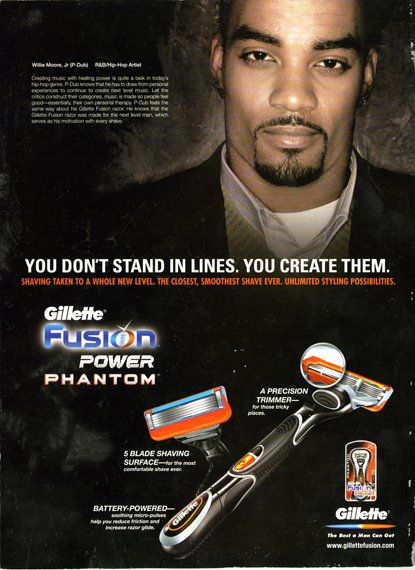
Shaving taken to a whole new level. But a hip-hop spokesperson is not exactly advertising taken to a whole new level.

Sunday, April 08, 2007

Essay 1970


From The New York Times…

---------------------------------------

Imus Set for Sharpton’s Radio Show

By THE ASSOCIATED PRESS

NEW YORK (AP) -- Don Imus will appear on the Rev. Al Sharpton’s radio show Monday, five days after Imus made racially charged comments on his own show about the Rutgers women’s basketball team, Sharpton and MSNBC announced Sunday.

Despite Imus’ scheduled appearance, Sharpton said his position was unchanged: He wants Imus fired and intends to write the Federal Communications Commission about the matter.

“Somewhere we must draw the line in what is tolerable in mainstream media,” Sharpton said Sunday. “We cannot keep going through offending us and then apologizing and then acting like it never happened. Somewhere we’ve got to stop this.”

The Rev. Jesse Jackson said his RainbowPUSH Coalition plans to protest Monday in Chicago outside the offices of NBC, which owns MSNBC, over the remark Imus made last Wednesday during his show.

Imus said members of the mostly black Rutgers University women’s basketball team were “nappy-headed hos.”

[Click on the essay title above to read the full story.]

Essay 1969


Actual Ad versus Actual Intentions…?

Essay 1968


From The New York Post…

------------------------------------

SHARPTON RAGES OVER IGNOR-IMUS

By PATRICK GALLAHUE, Wire Services

After years of offending just about everybody, Don Imus — radio’s original shock jock — may have finally gone too far by calling players for a beloved women’s basketball team “nappy-headed hos.”

Black leaders turned up the heat on Imus yesterday, dismissing his public apology for hurling the racial epithet at the mostly black basketball squad as tepid and vowing to picket his studio if he’s not kicked off the airwaves this week.

“If he’s still working there by Friday, we’re going to start picketing,” the Rev. Al Sharpton told The Post.

In his apology last Friday, Imus called his remark “insensitive” and “ill-conceived.”

“We can only accept his apology if we accept his resignation,” Sharpton said.

Imus has a history of racially-charged remarks — he called PBS journalist Gwen Ifill a “cleaning lady” and The New York Times’ William Rhoden “a quota hire.”

But Sharpton said the latest barb was the worst.

“I think that he has done things before in an opinionated way,” Sharpton said. “But to attack a whole group of people in the most ugly graphic terms [is] straight out racist.”

Essay 1967


The Bling of Beers.

Essay 1966


From The Chicago Sun-Times…

---------------------------

English only, please

IMMIGRATION: Despite himself, Newt Gingrich has a good point about how to teach native Spanish-speaking students. This writer ought to know; she speaks Spanish and has taught bilingual education.

BY ESTHER J. CEPEDA

Newt Gingrich stuck his foot in his English-only-speaking mouth last week in a speech to the National Federation of Republican Women when he said Spanish was “the language of living in the ghetto.”

Not good.

But what drove me nuts is that his dumb comment invalidated his original point. He started off with “We should replace bilingual education with immersion in English so people learn the common language of the country and they learn the language of prosperity.”

That I can get behind.

For a few years, I was a bilingual teacher, the kind old Newtie would have liked. The kind who insisted on getting my students out of their Spanish comfort zone and into that language of prosperity he so values. The kind other bilingual teachers hated.

My parents -- like many parents who come here to give their kids a better education -- wanted me to speak perfect English; they’d take care of the Spanish part themselves. So off I went to kindergarten knowing only what Big Bird had drilled into me. Guess what? I, like all my other classmates, soaked that English up like a sponge and spoke only Spanish at home.

I vowed that as a bilingual teacher I would push my students hard to become fluent in English, hard enough to get them out of the bilingual education ghetto and into mainstream classes where they could start their lives with U.S.-born peers.

Yes, I used the word “ghetto.” It’s true: Kids who stay in bilingual education year after year end up getting short shrift. Illinois law says that if a school has 20 or more students who speak the same language, they get “support” in their native language. That support is defined by each school and could range from a fully certified teacher teaching in a certain language to a paraprofessional with special language skills.

The Illinois Resource Center, an organization that supports school districts that provide second-language services, estimates that 150,000 to 175,000 kids all over the state get some form of bilingual or English-as-a-second-language services, with Chicago Public School kids comprising a little less than 50 percent of the total. Spanish, at 80 percent of services provided, is by far the most common native language.

I taught both first grade and high school, and it shocked me how willing some bilingual teachers were to adamantly and passionately keep kids in self-contained Spanish-speaking classes. I’d ask them, “Well, if you keep teaching them in Spanish, when are they going to learn English?” I’d usually get a blank stare. Yet, there I was, teaching algebra to 17-year-olds, including a few who, although born here, had been in bilingual education their entire academic careers and still couldn’t speak English!

I was always the weirdo bilingual teacher who was looked at sideways by the other bilingual teachers because I insisted on speaking and teaching primarily in English with some Spanish explanations. And -- can you believe it -- my students picked up English!

First-graders were no problem, but my high schoolers hated it. They’d whine constantly for me to speak in Spanish like all their other teachers. “You’re supposed to be talking to us in Spanish,” they’d demand. But I wasn’t buying it. I’d tell them, “If you want to make it here and not end up mowing lawns or waitressing at Tacos El Norte for the rest of your lives, you’d better start learning.” More than a few of them thanked me at the end of the year.

Keeping Spanish-speaking kids in separate but equal programs kept them from interacting with English-speaking peers, further isolating them from the culture they eventually have to be able to navigate for that “better future” their parents sought.

In high school, it was too late. All the bilingual ed kids were so self-segregated they didn’t even hang with the U.S.-born Spanish speakers. Homecoming? Prom? Those events were not for them, they believed, they stuck to their own and spoke Spanish to each other.

So, I have to hand it to Newt, even with his foot in his mouth. He’s right.

The prevailing wisdom is transitioning students to English through Spanish while giving them core curriculum such as language arts and math in their native language -- often remediating poor Spanish language skills first -- is best. Maybe in a perfect world, with well-run bilingual education programs with high-quality teachers, that would be true. But that's not what I saw. More often than not, when students had to sink or swim, with a little help, they swam.

Saturday, April 07, 2007

Essay 1965


From The New York Daily News…

-------------------------------------

Imus spews hate, should be fired

BY FILIP BONDY
DAILY NEWS SPORTS COLUMNIST

Of all the very dumb and nasty things screamed on sports TV and radio these last few years, by everyone from Rush Limbaugh to Sid Rosenberg, what Don Imus said on Wednesday about the Rutgers women’s basketball team was the very worst, the most hateful of all.

What he said was terrible not only because of its content, which was despicable in its own right. It was even worse because of its target, a group of 19- to 21-year-old, largely African-American women from a nearby state university who had just accomplished something wonderful and unexpected by reaching the Final Four. What do you tell these women now, who did absolutely nothing to deserve such shameful scorn, to face such horrendous racist remarks?

And though this never will happen in a million years, Imus should be fired for it today — actually, yesterday — just as the National Association of Black Journalists demands.

He should be axed for one of the most despicable comments ever uttered on the air. If Limbaugh can be dumped by ESPN for an ill-informed opinion about Donovan McNabb, if Rosenberg can be dropped by WFAN for his vile comments about Kylie Minogue’s battle with breast cancer, then Imus deserves the same treatment, despite his status.

Of course, there are enormous profits to consider, and so the cowards at MSNBC and WFAN are simply standing back, distancing themselves from Imus, reminding viewers and listeners that the man speaks only for himself — even though he does it on their time and networks. The fact that he was even on the air yesterday, two days after his comments, was in itself a disgrace.

Here’s the deal, or what the deal ought to be: You don’t get to say these things, even if you finally decide to change your mind and apologize, nearly 24 hours later. You just don’t call young college women “nappy-headed hos.”

If you do, you should lose your microphone, whether or not you are the bread and butter and honey and cash cow of the local sports station.

You can talk about Imus just being Imus, about how he’s doing a shtick and should never be taken seriously. But even if you grant him the Charles Barkley exception, even if you want to say, “That’s just Imus,” you just can’t with this one. That’s how bad it was. Rutgers officials called his comments “unconscionable,” and that is exactly the right word for them.

Here’s how it went again, this mean discussion among four white men. Imus started it:

“That’s some rough girls from Rutgers. Man, they got tattoos,” he said.

Bernard McGuirk, his producer: “Some hardcore hos.”

Imus: That’s some nappy-headed hos there. I’m gonna tell you that now, man, that’s some — woo. And the girls from Tennessee, they all look cute, you know, so, like — kinda like — I don’t know.

McGuirk: A Spike Lee thing.

Imus: Yeah.

McGuirk: The Jigaboos vs. the Wannabes — that movie that he had.

Imus: Yeah, it was a tough —

Charles McCord, a co-host: Do The Right Thing.

McGuirk: Yeah, yeah, yeah.

Imus: I don’t know if I’d have wanted to beat Rutgers or not, but they did, right?

Rosenberg (a guest commentator): It was a tough watch. The more I look at Rutgers, they look exactly like the Toronto Raptors.

Imus: Well, I guess, yeah.

Anybody who listens to the Imus show regularly knows how this usually works. It is McGuirk who is supposed to utter the basest kind of racist innuendo. Then Imus goes tut-tut, wink-wink, and McGuirk is left out there as the chastened hatchet man.

This time, Imus foolishly diverged from the script. He brought up the subject himself, then confirmed McGuirk’s crudest remarks.

It is impossible to imagine WFAN discovering a conscience on this matter. Here is the only reasonable hope. Those politicians who go on Imus’ show, those who pander to him during his “serious” segments, need to turn down the guest appearances. Maybe they will, at least until he launders himself. Those politicians he considers friends have been using Imus, every bit as much as he has used them.

Today, he is useless to them. He is worse than useless. He is McGuirk.

Essay 1964


Al Gore warned us about advertisements like this.

Friday, April 06, 2007

Essay 1963


From DiversityInc.com…

----------------------

‘Nappy-Headed Hos’: Don Imus Apologizes for Slur Aimed at Rutgers Team

By Aysha Hussain

Don Imus has apologized—and has put his apology at the top of his web site—for calling the Rutgers women's basketball team "nappy-headed hos" after they lost in the NCAA finals.

Just when it didn’t seem possible, Imus, host of MSNBC’s “Imus in the Morning,” managed to reach a new low. While discussing the NCAA women’s basketball game between Rutgers University and the University of Tennessee, Imus openly described the Rutgers team, which has eight black and two white women on it, as “nappy-headed hos” after the show’s producer, Bernard McGuirk, called the team “hardcore hos.”

This all happened Thursday morning during an on-air discussion between Imus and three others, including McGuirk, that was filled with both sexist and racist commentary. Other comments added to the thread included a characterization of Rutgers’ black team members as “jigaboos and wannabees,” a reference from the 1988 film “School Daze” written and directed by Spike Lee.

MSNBC tried to distance itself by issuing a statement late Thursday night, declaring Imus’ comments not its responsibility but admitting that the comments were offensive.

“While simulcast by MSNBC, ‘Imus in the Morning’ is not a production of the cable network and is produced by WFAN Radio. As Imus makes clear every day, his views are not those of MSNBC. We regret that his remarks were aired on MSNBC and apologize for these offensive comments,” MSNBC’s statement said.

What about Imus’ apology? On his web site, he has placed this apology prominently in the upper-right-hand corner: “[I] want to take a moment to apologize for an insensitive and ill-conceived remark we made the other morning regarding the Rutgers women’s basketball team. It was completely inappropriate, and we can understand why people were offended. Our characterization was thoughtless and stupid, and we are sorry.”

In an interview with The New York Times, Imus said people should relax and “not worry about some idiot saying something meant to be amusing.” But the disrespectful and degrading comments made by Imus and others neither relaxed nor eased listeners. Instead, they spawned an immediate response from Rutgers University, stating: “We agree with Mr. Imus that this was, in his own words, an ‘idiot comment.’ We are very proud of the success of the Rutgers women’s basketball team. Coach (Vivian) Stringer and the Rutgers players are outstanding ambassadors for this great institution.”

The show, which is produced by New York City’s WFAN radio station and syndicated by Westwood One, did not provide any statements. The show reaches an estimated 3.5 million listeners each week, according to Arbitron, a radio-audience research company.

Bryan Monroe, president of the National Association of Black Journalists, said Imus should be fired. “Those comments were beyond offensive,” said Monroe on the NABJ web site.

Essay 1962


The item above appeared in the Letters section of Adweek. The writer makes some interesting points; however, he’s technically wrong on a few notes.

Richard Smaglick asks, “Are ad agencies really so fearful of patriarchy that they can’t show a respectable father or husband?” The answer is no, but not for the reasons Smaglick might suspect. Ad agencies probably do a lousy job of showing respectable fathers and husbands for the same reason they do a lousy job of showing respectable minorities: cultural cluelessness.

Sadly, the industry that thrives on perpetuating stereotypes can’t even manage to accurately and/or positively depict the group comprising its own majority. Although to be fair, being male does not necessarily translate to being a father. And being a father — especially in a business where professional demands can lead to neglecting your family — does not mean you know how to be a respectable one.

To elaborate, many of the men in advertising may not yet be fathers. So these young turks more than likely create images based on sitcoms or perhaps even their own dysfunctional relationships with Daddy. Just as they’ll present racist stereotypes of minority groups based on a lack of personal insight, understanding and sensitivity, men in advertising have managed to let their narrow perspectives result in trashing father figures too. The same basic premise applies to the admen clocking 70+ hours per week on Madison Avenue — these sad patriarchs may be equally unaware of healthy parental characteristics.

Smaglick also charges “Madison Avenue is abusing its power because it has an agenda and because it sees itself as accountable to no socially accepted standard.”

The writer may be half right with this contention. As we’ve seen with the industry’s lethargic response to initiating diversity — opting instead to continue with blatant lies and covert racism — there is indeed a lack of accountability to socially accepted standards.

However, it’s unlikely Madison Avenue has an agenda. The truth is, the boys in charge are just plain ignorant.

Perhaps Richard Smaglick should team up with the New York City Commission on Human Rights and give admen a much-deserved spanking.

Essay 1961


Will Asian women find this ad twice as offensive?

Essay 1960


Junk news in a MultiCultClassics Monologue…

• 2,000 items from Michael Jackson’s personal collection will go up for auction in May (select items pictured above). Jackson family members are selling the memorabilia in order to pay off debts to a New Jersey delivery company. Jacko is reportedly “extremely upset” that his stuff is being included in the sale. Wonder how much of the merchandise belongs to Tito and Jermaine.

• A city councilman and conservative radio talk-show host in Texas has apologized for remarks he made about Native Americans. The guy said Native Americans don’t deserve the “incredible” amount of federal assistance they get. “We conquered them,” said the moron. “That’s history.” He also said Native Americans were “whining” because they had been “whipped in a war.” The councilman posted an apology online stating he was sorry “not because I offended people, but because I was wrong. … My facts were wrong, and the basis of my facts was wrong.” Somebody should check the last election’s results — let’s hope the vote count was wrong.

• Disney will now allow gay couples to participate in its popular Fairy Tale Wedding program. No clever commentary necessary here.

Essay 1959

Essay 1958


Is it wise to take shoe advice from a barefoot sensei?

Essay 1957


Carmen Van Kerckhove of New Demographic, an anti-racism training company, has launched a new blog: Race in the Workplace. Per Carmen’s introduction, “This is a blog that explores how race and racism influence our working lives. You’ll find a mix of practical advice, personal stories, interviews with experts and authors, recommended resources, and much, much more. But perhaps most importantly, you’ll find a space in which you can discuss these issues with like-minded people.”

With New Demographic, weekly podcast Addicted To Race and a network of blogs featuring Racialicious, Anti-Racist Parent, Race Changers and now Race in the Workplace, Carmen’s dealing with more race issues that Danica Patrick.

Click on the essay title above to catch the all-new Race in the Workplace.

Thursday, April 05, 2007

Essay 1956


Fighting words in a MultiCultClassics Monologue…

• Forget about any truce between rappers in New York. The Game unleashed a song dissing 50 Cent and Tony Yayo, who was charged with beating up a 14-year-old kid. “What kind of a bitch nigger puts his hands on kids?” raps Game. Look for the Rev. Al Sharpton to make good on his threats (see Essay 1944). As soon as he can think of a few words that rhyme with boycott.

• Forget about any truce between Bobby Brown and Whitney Houston. Brown was a no-show in court, prompting an Orange County judge to grant Houston a divorce, along with custody of the couple’s 14-year-old kid. Houston dissed Brown by saying, “He’s unavailable. … He doesn’t keep his word. … If he says he’s going to come, sometimes he does, usually he doesn’t.” Brown would probably respond, “It’s my prerogative.”

• Ohio Dominican University, a Roman Catholic liberal arts college in Columbus, will be offering more diversity courses to students after racist graffiti appeared on campus last fall. Swastikas, racial slurs and obscenities were carved into elevator doors; plus, a “Whites Only” sign appeared outside of a men’s bathroom. Maybe they should sponsor concerts for The Game and Bobby Brown.

Essay 1955

Essay 1954


Free Legal Advice to Immigrants: Avoid immigration lawyers whose ads are filled with typos.

Wednesday, April 04, 2007

Essay 1953


From Adweek.com: Tom Messner discusses three books, including Hadji Williams’ Knock The Hustle…

-------------------------------

Art & Commerce: Back in Business

By Tom Messner

“The problem with socialism is socialism; the problem with capitalism is capitalists.”

So said Herr William Schlamm some 50 years ago.

I didn’t overhear Willi getting off his mot, but I have read it enough times quoted by William F. Buckley Jr. in his column not only to remember it, but also to have the time for the reflection necessary to affirm its truth.

(Which is about five or six seconds each time, I’d say.)

Buckley, in fact, says he only used to quote Schlamm annually. But with the recent litigations, U.S. Attorney raids, RICO filings, SEC investigations, excessive avarice reports on ET, and random displays hither and yon of porcine corporate troughing, Buckley has come to quote Schlamm’s line so much, it’s become as well known as Buckley’s about the first thing he would do if elected mayor of New York when he was running in 1965. (“Demand a recount.”)

So what am I going to do about errant capitalists who give economic freedom a bad name? Darned if I know.

But three guys—one from academia, one via an ad agency in Chicago and another who pops up ofttimes in Rolling Stone and Forbes—have written books that caused me to break my business-book fast imposed after a binge-reading session last year which caused my hat size to go from 7 5/8 to Mardi Gras dimensions, with little of the joy of Bourbon Street in February.

The first, by former copywriter Hadji J.S. Williams, is Knock the Hustle: How to Save Your Job and Your Life From Corporate America. This is a true testament to the free enterprise system: Williams avoided the agent-publisher-editor route by starting his own publishing company, Prodigal Pen. Knock the Hustle is now in a second edition. The copy I read came with a cover warning: “This exclusive Promo Copy contains some occasional misspellings and other minor grammatical flaws.” I noticed none of them, but don’t go by me. It is the sort of book that is best read before you go into business, as it mixes the truly heroic with the truly pernicious in precisely the proportion you are likely to find in the world of commerce.

Williams, it appears to me, is trying to argue for a Christian-Jewish-Islamic-Pagan Capitalism, as he draws upon St. Luke, the Psalms, Malcolm X and Gore Vidal for inspiration. MBA programs should buy the book in bulk; it’s more valuable in the long run than Money and Banking or The Managerial Revolution. Flaws? Sure, but what the heck, I don’t even agree a month later with everything I write.

The second book, Selling the Dream: Why Advertising Is Good Business, is by John Hood, who is president of the John Locke Foundation, a “think tank.” To be a real contrarian, try to defend junk mail, jingles and telemarketing.

Show that they are good for business and good for the consumer, and you have a refreshing argument, at least. For the second year in a row, the 4A’s is devoting its major conference to ROI (return on investment), and several ad/marketing blogs are inundated with debates about ROI. Advertising’s critics never question the return on investment that advertisers garner; they question whether advertisers, to achieve their massive returns, manipulate the young, the old, the naive, to do things their nature otherwise wouldn’t do, like buy a home air conditioner or use underarm deodorant. The “Good” in Hood’s title is more moral than practical, and Hood has written a book that absolves you of any guilt if you’ve ever worked on Fedders or Sure.

Those books are as helpful today as Adam Smith’s Inquiry Into the Nature and Causes of the Wealth of Nations was in the 18th century to give a moral and practical foundation for an economic system that would bring prosperity to the masses. Oddly, just as I was writing this, I came across a review of a new book about Smith’s work, a sort of abbreviated Wealth of Nations by P.J. O’Rourke.

It’s 200-some-odd pages versus 900-some-odd pages, in 10-point type, albeit with beautiful, helpful serifs. Even before O’Rourke’s light-handed approach to Smith, the book had been undergoing a revival: a revival that extended to a product placement in the last episode of season three of the HBO series The Wire. Seems the late Russell (aka Stringer) Bell—drug dealer, graft bagman, arranger of hits in bars and behind bars and, worse, a real estate developer-had a well-worn leather-cover copy of The Wealth of Nations in his bookcase. Stringer Bell had been taking business courses at a community college, but he had certainly seen the effects of the visible hand of the state in his city, Baltimore.

The O’Rourke edition of Smith is part of a series of contemporary, shortened versions of great books that are forbiddingly long for the modern reader who is not a specialist or a masochist. With a good illustrator like Carmine Infantino or George Euringer, this could even bring a return of Classics Illustrated, a series without which I might not have graduated from high school.

Essay 1952


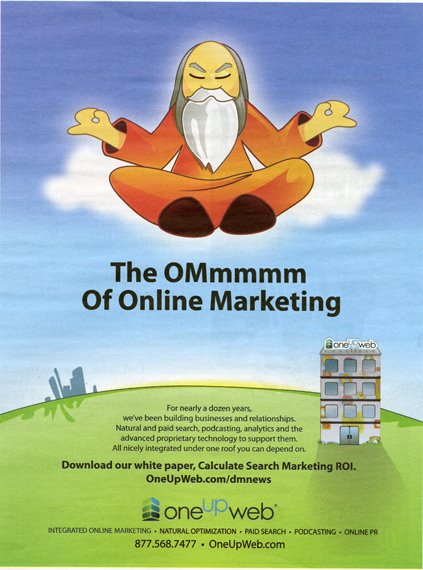
OMmmmmG! This ad sucks.

Essay 1951


Tasteless news in a MultiCultClassics Monologue…

• Mmmm…Toasty! A coyote wandered into a Chicago Quiznos on Tuesday, causing a minor stir. The animal inevitably left the restaurant, probably unimpressed by the prime rib sandwich.

• The mayor of New Castle, Indiana had to backpedal after approving a proclamation designating April as “Confederate History and Heritage” month. Surprised to learn the original decision caused controversy, the mayor repealed the act and said, “I don’t think there was any racial intent in this at all.” Perhaps the mayor needs a history lesson.

Essay 1950


From The New York Times…

--------------------------------------

Another Dr. King Auction, and His Heirs Are Unhappy

By BRENDA GOODMAN

ATLANTA — Less than a year after a dramatic eleventh-hour deal by a coalition of civic leaders saved a large trove of the Rev. Dr. Martin Luther King Jr.’s papers and personal items from the auction block, a new cache of his documents has surfaced for sale to the highest bidder.

The owner of an Atlanta auction house, Paul Brown, said he was given the papers by an elderly Maryland woman who wished to remain anonymous. Mr. Brown said the woman told him she had accepted a large file folder of Dr. King’s letters, speeches and other writings to settle a debt she was owed by a radio station in Atlanta, where she once lived.

Mr. Brown said his auction house, Gallery 63, planned to put them up for bid on April 15.

Dr. King’s heirs say the papers belong to his estate, and they want the auction stopped.

“You can’t auction off what’s not yours,” Isaac Newton Farris, Dr. King’s nephew and the chief executive of the King Center in Atlanta, said Tuesday. “There could potentially be something improper or illegal about to happen.”

Mr. Farris said lawyers for the family were working to learn the woman’s identity so they could contact her to find out more about how she got the papers. He said that unless the woman had some sort of written transfer of ownership signed by Dr. King, the papers belonged to his family.

“The matter was only recently brought to the attention of the estate, which is looking into it and will proceed accordingly,” said Joe Beck, an intellectual-property lawyer in Atlanta representing the King family.

Last June, in a deal brokered by Mayor Shirley Franklin of Atlanta, the King family sold a collection of some 10,000 of Dr. King’s papers and personal items to a coalition of civic leaders for $32 million. A description of the papers on the gallery’s Web site, www.gallery63.net, says there are about 25 previously unknown documents, dated from July through September 1964, including speeches, position papers and interview requests. The papers’ existence was reported Tuesday in The Atlanta Journal-Constitution.

Mr. Brown said that the documents had not been authenticated but that he had no doubt they were genuine.

“I’ve read every word,” he said. “It’s humbling to have them in your hands.”

While Mr. Brown said the market would determine the documents’ value, he guessed they would sell for as much as $300,000. He plans to display them starting on Monday.

Mr. Brown said his client, who is now in her 80s, was given the folder of Dr. King’s papers along with vinyl records and equipment from WERD, the first black-owned radio station in the United States.

“The station needed a few bucks to pay a bill or something,” Mr. Brown said. “She and her husband were friends with the station owners and loaned them some money.”

Mr. Brown said the woman’s husband worked as an engineer for WERD, which shared a building with the Southern Christian Leadership Conference, a civil rights group started by Dr. King. WERD was sold to white owners in 1968.

Essay 1949

Essay 1948


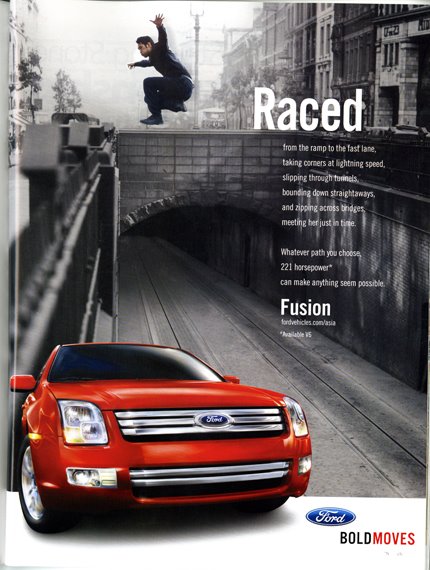
Ford inspires bold moves — like recklessly leaping over a tunnel.

Tuesday, April 03, 2007

Essay 1947


Here’s the classic Calgon spot with the “Ancient Chinese Secret” line. Click on the essay title above to check it out.

Essay 1946


One more online response to the story presented in Essay 1937…

Get at me Brandon! Holla back! We up here in NY (yes, that was ebonically correct!) have also developed opportunities for marketers to reach the ‘urban’ consumer with greater impact than they might be able to have on their own; the problem occurs because too many marketers become scared to innovate, waiting instead to adopt a ‘me too’ attitude that they hope will resonate with the ‘urban’ audience but which more often than not, has lost its ‘cool’ factor. ‘Street cred’ with urban consumers BEGINS with innovation and NOT with copycatting, co-opting or purchasing one’s way ‘in.’ ‘Cool’ in this community has a defined timeline :- INNOVATIVE & NEW/I’VE GOTTA GET THIS!/MY ‘PEOPLE’ AND I HAVE THIS AND IT’S THE ‘JUMP OFF!’ (aka — It’s really cool!)/BEEN THERE, DONE THAT/IT’S OLD (aka — Y’all just finding out about that???!!). Too many major brands seeking to connect to this market, always end up at the ‘IT’S OLD’ stage, thinking that they’ve arrived at the INNOVATIVE&NEW stage! The so called ‘street cred’ is a much sought after asset that CAN be developed but only by understanding and then working within the parameters of how this ‘hotness’ is actually built in this community. First, gaining ‘street cred’ PERIOD, with a non luxury car (or even one that doesn’t look like one) with ‘urban consumers’ is all about innovating in ALL aspects of the product e.g. — design, functionality, aftermarket accessories or add-ons, cool new hi-tech applications and so on. (Can Ford develop a ‘Wi-Max’ on board accessory that allows us to stay connected online so we can e-mail, IM and do productive work while we’re on the highway — in the back seat of course!) Now, Flex is going to move (sell) some cars for Ford, but will the ‘cool factor’ Ford seeks last long enough for the impact to have an ‘umbrella effect’ on Expedition over a long enough period? Will Expedition suddenly begin to be a challenger to Escalade? No and no to both questions. Given that ‘urban’ consumers want to ‘trade up’ in looks, brand ‘feel,’ image and perception, much of the success of Escalade (apart from its great design) is the fact that it embodies a greater luxury brand status/heritage and it shows in every aspect of the vehicle. (Did Ford consider developing a brand extension, mid-luxury truck aimed at this market with better design, materials and positioning?) To make this product ‘cool’ will require a well planned evolution of this current strategy to offer the target consumer something that’s REALLY cool and not just a celeb endorsement. Can anyone say (a) consumer generated design contest (b) consumer generated soundtrack contest hosted by Flex and winning soundtrack gets used in all Expedition ads? (c) take the contest mobile via mobile content company/network Ndustrimobile, so that all submitted soundtracks can be heard and judged in real time by listeners on their mobile phones along with images of Expedition upgrades etc.? I hope someone from Ford is reading this! Holla back at me Brandon! — (RB - CEO, The Quantum Group - Jamaica, NY - creative1.think@gmail.com) — Jamaica, NY

Essay 1945


Three more online responses to the story presented in Essay 1937…

Jamaica, NY, you are absolutely correct about catch phrase, fad and face-of-the-week. Credibility, respectability, understandability and more can take 50 years in some cases and in some industries. For legal release, I currently own a Ford Mustang. Big deal. Ford is currently running at $10 billion a year MINUS for several years now. The idea that this company has vast resources may need to be re-examined? This is an opportunity to hit a gold mine with advertising Ford’s great new cars, trucks and choices. To promote a company’s product with digital and video…these corporations are soon going to own the medium and produce everything themselves. It will be the end of certain media companies like Fox or CNN, for example. What if Ford gave away 2 cars a day tax-free by watching their channel and shows? The announcement to call or email the Ford station for the car/truck/van could appear even during a commercial break??!! You will love Ford’s programming, which [gives you] special invitations to events if you actually purchase or recommend a purchase towards a Ford product (nagging your parents is acceptable — kids are allowed to call on a legal guardian’s behalf!). Now…take the word Ford away and replace it with any other company in the world in terms of video ownership (leave off the minus $10B part). Ford can produce and distribute shows and music with its cars worldwide if it chooses. — Brandon, FL

In spite of the no doubt great amount of research done before signing this deal, this comes across to the ‘urban’ community as a ‘knee jerk’ reaction. I agree wholeheartedly with Mr. Zimmerman! He's right on point with his assessment! Any hip-hop aficionado, African American or so called ‘urban’ individual can tell you that ‘street cred’ (itself, not an ‘urban’ catchphrase) is ‘earned’ and not bought. One cannot buy credibility within this market and certainly cannot gain it by co-opting the most visible ‘face’ to attach to your brand/product. How is it that Ford, with all of their resources, has not seen the evidence of this played out with so many other brands in the past? Evidently, Corporate America STILL ‘gets to the party late’ by recognizing the ‘hot’ personalities/trends/etc. well after they’ve already been made popular in the ‘urban’ community; a strategy that invites ridicule for the brand and widespread applause for the celeb involved for having negotiated such a deal. Does Corporate America not understand that with the ‘urban’ community, the media/marketing tenets of mass market metrics to validate your marketing ROI does not apply to identifying/developing/adopting the trends quickly enough to lend your brand some ‘cool’? Actually, the ‘urban’ market gives more props to Flex in this deal because he’s ‘gettin’ his paper’ by exercising his popularity and this isn’t necessarily going to give Ford the status it’s looking for. Actually, all this proves is that Ford and brands like them are still far off from having a meaningful dialogue with the urban community and even further away from beginning to understand it. Poor move by Ford, excellent move by Flex! — Jamaica, NY

HEY FORD…LISTEN UP. This is exactly what street cred is all about. Now…have a Rap version of American Idol. Make it kind of “underground” yet accessible by everyone. Ford loves music and entertainment! I think they proved that with radios in their cars and the #1 music show in TV history. Get this new DJ to get a huge national contest and star on the stage. Ford can allow downloads from its website of new acts and performers from around the world. Forget simply signing people up for cred…Ford has an opportunity to DEFINE what cred really means just like defining what an Idol can mean. Immediately announce this new music contest and you will receive millions of hits worldwide within a week for this star-making opportunity in the Rap music field. Oh by the way…sell some cars and trucks. — Brandon, FL

Essay 1944


Seeking spiritual guidance in a MultiCultClassics Monologue…

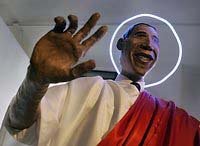
• A student artist in Chicago raised hell with his sculpture depicting Sen. Barack Obama as Jesus Christ (pictured above). “All of this is a response to what I’ve been witnessing and hearing, this idea that Barack is sort of a potential savior that might come and absolve the country of all its sins,” said the artist. “In a lot of ways it’s about caution in assigning all these inflated expectations on one individual, and expecting them to change something that many hands have shaped.” The kid sounds like a goddamn moron.

• Meanwhile, spiritual leader Rev. Al Sharpton continues to play politics, getting involved with the feud between rappers in New York that led to Tony Yayo assaulting a 14-year-old kid (see Essay 1905). Sharpton has threatened to launch a boycott against The Game and 50 Cent unless the battles end. “We put the i-n-g in your bling-bling,” said Sharpton. “All of us have children who listen to your music. Some of us listen ourselves. But we don’t want to feel like we’re investing in the demise of our community.” The worst part of this scenario will be the lame rhymes and rhetoric generated by folks like Sharpton.

Essay 1943

Essay 1942


There should be a bilingual caption beside the woman that reads: Here’s how much it will cost to wire one dollar overseas.

Monday, April 02, 2007

Essay 1941


One online response to the article presented in Essay 1937…

1) I do agree with the name “Fairlane” being much too “suburban” for a vehicle seeking an “urban” audience. But Flex? How desperate to pander is that marketing department; how bereft of ideas? Something tells me FF “licensed” his name; hence, of course he’s “fine” with its usage… 2) I will submit that Funkmaster Flex as a “showman” for the vehicle is much too transparent for so-called “street cred.” What Ford is forgetting is that Cadillac has a history in the so-called Urban demographic; and thus, an Escalade can be seen as “real.” Ford will always have connotations of truck-driving ‘necks for that same audience; and hence they will find it hard to find “crossover” appeal, commercial DJ endorsement or not. 3) Mr. Perry’s quote on FF sums up the article in a nutshell. A “multicultural” marketing manager, asserting FF is “multicultural,” and hence the soundness of this strategy. Disturbingly humorous… — Kreig Zimmerman, New Britain, CT

Essay 1940


From The Miami Herald…

-------------------------------------

‘Our young men are dying’

BY ANDREA ROBINSON

Dwight Jackson longs for those days 30 years ago when young black men settled their disputes the old-fashioned way: with loud trash talk and occasional fisticuffs. When the dust-ups were over, the combatants walked away and went home.

Not anymore. Simple disputes now too often turn deadly.

Jackson, 47, sees it in the back room of the Liberty City mortuary where he makes mangled bodies presentable for public viewing. Jackson, owner of Richardson Mortuary, receives at least 10 young, black homicide victims a month; that’s more than there were, say, 20 years ago, other longtime employees there remark.

“Inner-city [boys] are being killed over silly stuff … built on hate and envy,” he said, shaking his head.

Forty years after the Kerner Commission report -- in the wake of the Watts riots in Los Angeles -- tried to sort out why young black men were killing each other, Jackson keeps wondering how things could have gotten so bad in South Florida and the nation.

A new, first-time Florida initiative seeks to find the answers and save at-risk black males -- who state Sen. Frederica Wilson, D-Miami, calls “an endangered species.”

“This goes beyond public safety and prevention. It’s public health. It goes to our mental condition,” said state Rep. Frank Peterman, a St. Petersburg Democrat.

Peterman and Wilson sponsored legislation to create the Council on the Social Status of Black Men and Boys, which former Gov. Jeb Bush signed into law last June and which first met in February. The council, located in the Attorney General’s office and budgeted at $200,000 per year, will study a litany of conditions that negatively affect black males: escalating homicide, arrest and incarceration rates, poverty, violence, low income, the breakdown of the family structure and school performance and health issues.

And it will produce yet another report -- like so many other commissions have done around the nation over the past 40 years -- that will propose ways to change the driving forces that have left so many black males in prison or dead from Miami and Fort Lauderdale to Orlando and Jacksonville.

Wilson said the council will recommend legislative action to address the issues of concern. The first report is due by the year’s end.

Peterman promises the Florida commission won’t be a “touchy-feely exercise” and said it will examine the breakdown in the black family and the heavy toll it is taking on males. To do that, it will need solid information of the sort requested by council chairman Levi Williams last week. In a teleconference on Wednesday, Williams, a Fort Lauderdale attorney, asked the heads of state agencies for data on racial and ethnic disparities.

SCOPE OF THE PROBLEM

Black males, Wilson said, are like Florida’s panthers and manatees: dying young and at the mercy of human predators.

“We’re so disproportionately affected by all of this [black-on-black male violence]. There are no men available to teach black boys how to become responsible men,” Wilson said.

That sentiment is echoed by Beverly Colson Neal, executive director of the Florida NAACP office in Orlando: “Our young men are dying. This didn’t just start.”

Florida is among a handful of states, including Ohio and Indiana, to have panels looking for ways to stop the rising violence that is a festering national problem, one the U.S. Conference of Mayors also hopes to tackle. The mayors’ meeting was held last month in Miami -- an appropriate venue to discuss violence because South Florida is a region under siege.

[Click on the essay title above to read the full story.]

Essay 1939

Essay 1938


Why would you need a sport utility vehicle if you had the superhuman ability to walk on water?

Essay 1937


From AdAge.com…

---------------------------------

Ford Hopes DJ Signing Cranks Up Cred, Sales

Names Expedition after Funkmaster Flex, Eyes Caddy’s Path to Success

By Jean Halliday

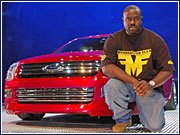
DETROIT – Ford’s got escalade envy. The automaker has been watching the sales escalation of GM’s Escalade, which has become the ride of choice for big-name rappers, professional athletes and hip-hop trendsetters. It wants those influencers driving its SUVs too -- and it’s starting with Funkmaster Flex.

Ford’s hoping to co-opt his cool by introducing editions of its Expedition and Mustang named after the DJ, as well as ditching the Fairlane name for its upcoming concept crossover vehicle and redubbing it Flex. (There will also be a limited-edition Funkmaster Flex version of the Flex). The DJ told Advertising Age he advised Ford that the name Fairlane name suggests a soccer-mom-mobile instead of the “urban vehicle” it is. “So when they asked if they could call it that, I was cool,” he said.

The move aims to win Ford more of the urban street cred owned by Escalade. The Cadillac SUV has been featured in numerous rap videos, popped up in song lyrics by everyone from Jay-Z to J. Lo, and was once piloted onstage by Ludacris at the MTV Video Music Awards.

That limelight led younger consumers to covet the brand once driven by doddering grandfathers. Some 19% of Escalade buyers are black, according to USA Today, compared to 6.5% for the total Cadillac brand. And the average age of consumers who say they would someday like to buy an Escalade is 27. Compare that to the average age of 48 for Ford Motor Co.’s Expedition, as reported by CNW Marketing Research.

In January and February, Ford sold 13,644 Expeditions, or 8.2% more than during the same period a year ago. By comparison, GM sold 4,826—or 15% more—of its Escalade model during that time, though its sticker price starts at $20,000 higher.

In addition to the new models, Ford will be the main sponsor of the second round of “Car Wars,” which is hosted by the DJ and hits cable’s ESPN2 in late May as a weekly, six-episode reality series in which specialists from around the U.S. will trick out 2007 Ford Expedition SUVs.

Funkmaster Flex, who has solidified his car-guru reputation with his six-year-old “Custom Car and Bike Show” tour, will also appear in a Ford Expedition spot to air during the show, created by Uniworld Group, New York. The first seven-week installment of “Car Wars” started yesterday and is backed by BP’s Castrol Syntec motor oil.

The 2008 Expedition Funkmaster Flex Edition will be unveiled by the DJ at the New York Auto Show this week. The automaker, which once told consumers they could have any color as long as it was black, is offering the Flex Edition in a unique red-and-black paint scheme with orange pinstripes. The version of the Ford Mustang will also carry a black-and-red color scheme, plus a six-cylinder engine that will produce more horsepower than Ford’s standard V-6 Mustang thanks to a special air-intake system, Funkmaster Flex said.

Although Mark Perry, multicultural marketing manager for Ford, Lincoln and Mercury, wouldn’t confirm the co-branded Mustang or Flex name, he hinted more Funkmaster Flex Fords could be coming. “We’ll march down the model line and see where he fits.” An executive close to the automaker said Ford’s research of the Flex name tested very well.

Funkmaster Flex’s main demographic is men in their early 20s to late 30s, and the celeb “brings coolness to the line,” Mr. Perry said. CNW President Art Spinella said the affinity of hip-hop urban males often trickles down to younger people in the suburbs.

What might be on the Expedition’s side is price. The Ford SUV starts at $29,995, a bit more affordable than the Cadillac Escalade, which starts at $54,000. Even so, most 25-year-olds aren’t likely to shell that out to buy the Ford, said Jeff Schuster, an exec director of auto consultant J.D. Power & Associates. Ford’s co-branded SUV can “create more of an image and awareness” among younger buyers, he added.

But that may just be the point. “Ford is doing this not for sales but for image,” said Mr. Spinella. A lot of 20-something males are buying used Cadillac Escalades to customize, especially in urban markets, he said. A used Escalade stayed on the lot for 12 days in Chicago and eight days in Los Angeles in the first quarter of 2007, compared to 39 days in Chicago and 32 days in L.A. for the Expedition, CNW data showed.

He added that virtually the only buzz the Ford brand gets among people under 30 is for its popular F-150 full-size pickup. Younger people perceive the brand as stodgy. “Ford needs to do something to get the attention of a significantly younger audience.”

But is Funkmaster Flex the one to do it? The Escalade was pretty much “discovered” on its own by the urban audience without a blatant association with a single celebrity. And then there’s the suggestion that Funkmaster Flex may be too mainstream to carry the same urban credentials as Escalade’s elite.

“Absolutely not,” said Ford’s Mr. Perry. “He crosses over very well, and that’s part of the attraction. He’s multicultural.”

Essay 1936


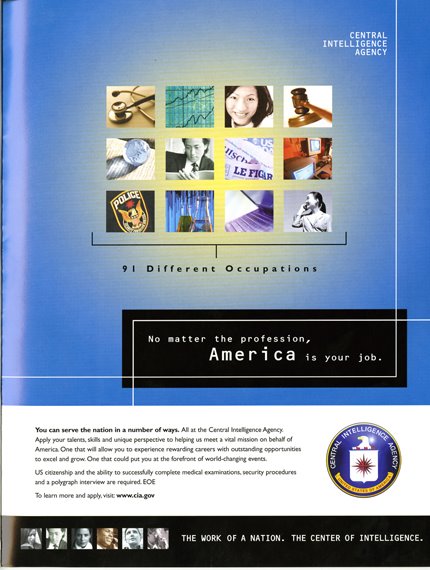
The CIA recruits Asian Americans by offering 91 different occupations — a veritable employment Chinese menu.

Essay 1935


From AdAge.com…

-------------------------------

Mars to Give Uncle Ben Ad Icon Greater Role

No Longer an Image on a Box of Rice, Character to Star in Print, Web Effort

By Stephanie Thompson

NEW YORK -- Long relegated to a mere picture on the package, Uncle Ben is once again playing a starring role in Mars’ new campaign for the rice brand.

Promoted to CEO of the fictional Uncle Ben’s Inc., Ben will gain full mobility as a modern-day executive wise in the ways of life (and rice) in a print campaign and online efforts that breaks this month. Omnicom Group’s TBWA/Chiat/Day, Playa Del Rey, Calif., handles.

Post-modern moment
“It’s a very post-modern moment,” said Robert Entman, Shapiro Professor of Media and Public Affairs at George Washington University and co-author of the University of Chicago Press’s “The Black Image in the White Mind: Media and Race in America.” Mars, he said, has taken the Uncle Ben icon to the “extreme opposite, making him a busy executive vs. the faithful, loving slave in the house serving your meals” -- a clever approach to salvaging a brand they have invested money in for decades. Otherwise, he said, it would “require retiring the brand.”

“Uncle Tom characters designed to invoke the spirit of the South but not upset white values and dispositions don’t play a part anymore,” agreed Robert Passikof, founder and president of Brand Keys, New York. But that is hardly an issue for many of today’s consumers, he said, most of whom won’t remember when the Uncle Ben character was featured on the radio in a portrayal that today would be considered highly offensive. The new effort, Mr. Passikof said, “seems like a seamless way of migrating from the trade character on the box to something that allows [Mars] to create a better emotional bond between customers and the product.”

An initial first wave of “Ben knows best” print ads in publications such as People and Real Simple will feature “Benisms” such as “My rice is perfect with a side dish, like beef, chicken or fish.” Then Uncle Ben will become a walking, talking boss who welcomes employees to his office to share his knowledge about rice. According to Mars research, consumers said they saw Uncle Ben as a self-taught, self-made man who is witty, intelligent and wise, with a common-sense approach to solving problems and life in general.

Awareness vs. equity
Although Uncle Ben may be familiar to consumers, David Altschul, president of the Portland, Ore.-based agency Character, warned that “awareness is certainly not the same thing as equity.” But, he said, “it’s a great place to start.” Mars faces a situation, he said, not unlike Maytag, whose repairman character had “a lot of awareness and fondness but stood for something that was no longer motivating.”

Uncle Ben has a lot of heritage because he’s been on the package a long time, but Mars will need to use him to communicate something real and authentic about the brand today, Mr. Altschul said.

Mars aims to do that through a redesigned Unclebens.com, which offers a virtual tour of Ben’s office and will be updated to feature evolving aspects of the character.

Mars spent $181 million on Uncle Ben in the 52-weeks ended Feb. 25 in food, drug and mass stores excluding Wal-Mart, according to IRI.

Sunday, April 01, 2007

Essay 1934


Masterfoods USA recently updated the Uncle Ben’s Rice icon as Ben the Corporate Chairman. Such a brilliant marketing move should inspire other brands to consider similar rebirths.


Introducing Rastus Ocreama! Rastus is not just running the premier hot breakfast cereal enterprise — he’s also running for President of the United States. Mark 2008 as the year America votes the first Black man into the Oval Office, while Cream of Wheat enjoys unprecedented approval ratings.


Reacquaint yourself with The Frito Bandito! The corn chip crusader is back, bringing a powerful voice to immigration rallies. The Frito Bandito draws the entire country together with tasty snack foods and a stirring speech titled, “Ay Yi Yii Yiii Have A Dream.”


Presenting Jemima! A media mogul and philanthropist, this bold heroine leads a breakfast foods company with heart and soul. Jemima built a $40 million waffle house for children in South Africa; plus, she’s funding research for the development of a maple syrup designed to eliminate diseases worldwide.

Essay 1933


Appealing to Asian Americans with Zen-like tonality plus Yin and Yang imagery is bad enough. But from Toyota?

Essay 1932


From The Chicago Sun-Times…

--------------------------------------

Are civil rights groups still relevant today?

BY MAUDLYNE IHEJIRIKA Staff Reporter

Chicago has long been a bastion for civil rights groups.

But are the Urban League, the NAACP and Rainbow /PUSH -- venerable foot soldiers in the decades-old battle for racial justice -- still relevant?

“It’s an insulting question,” the Rev. Jesse Jackson retorted. “It doesn’t reflect an analysis of what’s happening. Does voter registration matter? Does inequity in education matter? Of course it does.

“Those who ask that seek to diminish the historical significance of the relationship between protest and progress. Yes, things change,” Jackson said. “But they change because of protest. Then there is regress.”

The NAACP made headlines March 4 after the resignation of Bruce S. Gordon, its president of 19 months. Gordon and the board chaired by civil rights icon Julian Bond disagreed over his efforts to take the NAACP in a new direction. Bond had introduced Gordon with accolades in June 2005, and Gordon, at the outset, had proclaimed his goal of finding a new direction.

“It’s a family thing. Every family has its issues, and you don’t need to air it. But the NAACP is still very much relevant,” said Karl Brinson of the NAACP’s West Side chapter.

“I would have thought we would be out of business by now, but we still face the same issues. Instead of lynchings, it’s police brutality. Instead of segregated schools, it’s the quality of education …” Brinson said.

‘Crisis of divisiveness’
Confrontation used to be the weapon of choice to effect change. It was protests, press conferences and picket lines. Today, it’s negotiations and bridge-building. And when you talk to folks on the street, most feel disconnected to entities they once saw as champions.

“Civil rights organizations may not have the same profile we did 30 years ago, but that’s because, to a great extent, there’s a broader community of African-American leaders today,” said National Urban League President Marc Morial. “You have a large community of elected officials, many more nonprofit organizations, and mainstream organizations with African-American business and labor leaders. To a great extent, that was one of the objectives of civil rights.”

But to at least one observer, the apparent disconnect fuels the question of relevancy.

“We must become proactive about our own internal crisis of divisiveness; otherwise, it really doesn’t matter what the Urban League does, or the NAACP, or PUSH,” said the Rev. Hycel Taylor, professor emeritus at Garrett Theological Seminary in Evanston and a former national board president of Rainbow/PUSH. “We’re still going to be in the same predicament.”

Essay 1931


Say I Do … to the marriage of contrived and clichéd.

Essay 1930


From USA Today…

----------------------------

Report: Tuskegee Airmen lost 25 bombers

MONTGOMERY, Ala. (AP) — At least 25 bombers being escorted by the Tuskegee Airmen over Europe during World War II were shot down by enemy aircraft, according to a new Air Force report.

The report contradicts the legend that the famed black aviators never lost a plane to fire from enemy aircraft. But historian William Holton said the discovery of lost bombers doesn’t tarnish the unit's record.

“It’s impossible not to lose bombers,” said Holton, national historian for Tuskegee Airmen Inc.

The report released Wednesday was based on after-mission reports filed by both the bomber units and Tuskegee fighter groups, as well as missing air crew records and witness testimony, said Daniel Haulman, a historian at the Air Force Historical Research Agency at Maxwell Air Force Base in Montgomery.

The tally includes only cases where planes were shot down by enemy aircraft, Haulman said. No one disputed the airmen lost some planes to anti-aircraft guns and other fire from the ground.

The 25 planes were shot down on five days: June 9, July 12, July 18 and July 20, 1944 and March 24, 1945, the Montgomery Advertiser reported.

“All of these records have been here all along,” Haulman said. “It was just a matter of putting them together.”

The surviving members of the Tuskegee Airmen, the first group of black fighter pilots allowed into the U.S. Army Air Corps, received the Congressional Gold Medal on Thursday from President Bush in Washington.

With nearly 1,000 pilots and as many as 19,000 support personnel ranging from mechanics to nurses, the group was credited with shooting down more than 100 enemy aircraft and — for years — with never losing an American bomber under escort.

Haulman told the Advertiser he had discovered the claim that the Tuskegee Airmen had never lost a bomber they escorted to enemy fire first appeared on March 24, 1945, in an article in the black newspaper Chicago Defender. The newspaper’s headline read “332nd Flies Its 200th Mission Without Loss.”

The information was attributed only to “the 15th Air Force, Italy.”

“In fact, on the very day the claim was published, more bombers under 332nd Fighter Group escort were shot down,” Haulman wrote.