Showing posts with label dennis haysbert. Show all posts

Thursday, July 26, 2018

14235: Fake Facts & Non-Truths.

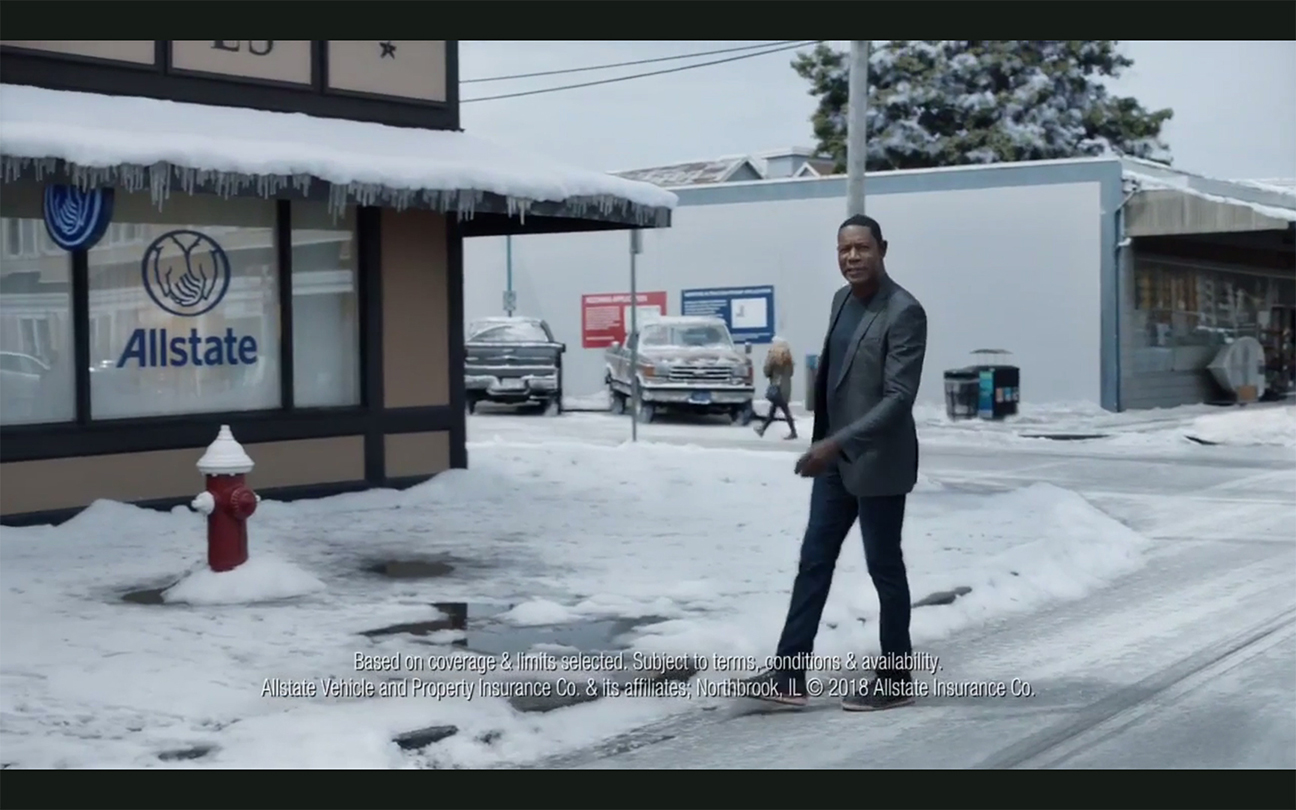
Advertising Age spotlighted a new Allstate campaign starring Dennis Haysbert talking about facts and truth. First of all, does anyone really believe an insurance company—co-conspiring with a White advertising agency—is even capable of delivering facts and truth? Secondly, given the hoopla surrounding gender pay gaps, it’s time to also address compensation inequities experienced by racial and ethnic minorities. Specifically, is Haysbert receiving the same amount of money as the hackneyed White actor playing Mayhem for Allstate? Haysbert is actually doing the heavy lifting, being called upon to clearly communicate the insurance company’s messages. It would be nice to get the facts and know the truth.

Ahead of new CMO, Allstate refreshes tagline and puts Dennis Haysbert back into spotlight

By Adrianne Pasquarelli

Last week, Allstate announced it has a new CMO; Kohler marketing exec Elizabeth Brady, who joins the company in August. But before she starts, the insurer will have a refreshed campaign and tagline that puts Dennis Haysbert back into the spotlight.

On Monday, the Northbrook, Illinois-based brand begins a new series of TV spots. In the commercials, Haysbert appears and gives a fact, e.g., there are 9,600 roads named “Park” in the U.S. He then notes that they are, however, in different regions with vastly different conditions. Some, for instance, could be where excessive winds ruin the siding on houses, others where ice dams could cause water damage. And who knows all about the different potential conditions you need to protect against? Allstate, of course. Haysbert, who has appeared in Allstate marketing since 2003, then asks, “Now that you know the truth, are you in good hands?”

It’s another lengthier variation on Allstate’s six-decade-old slogan “You’re in good hands,” originally developed by a brand employee in 1950, and which evolved to “It’s good to be in good hands” in a push two years ago. At that time, Haysbert had taken a backseat, doing only voice work for the brand, which had tapped trendy celebrities such as Adam DeVine, Tim Gunn and Leslie Jones in an effort to better connect with younger customers. Allstate faces increased competition from startup insurers, such as home insurance provider Lemonade, for that consumer segment.

“Having an asset like Dennis who’s so immediately and universally associated with our brand is a huge advantage,” says Gannon Jones, senior VP, marketing at Allstate. “Our focus has been around the best ways to leverage him that present Allstate in a contemporary way that ... reflects how we’re transforming.”

The brand will still use Mayhem, the mischief-making character played by actor Dean Winters, in marketing and has increased the character’s use in 2018, Jones notes.

Leo Burnett, which has worked with Allstate for 61 years, created the new push. Allstate has recently broadened its roster to include other specialty shops such as 72andSunny. The company declined to provide budget specifics for the new push, which will include TV, radio, outdoor and digital, but Jones says Allstate is increasing its overall marketing investment this year. In 2017, Allstate spent $296 million on measured media, a 14 percent decline over 2016, according to Ad Age’s Datacenter.

Of course, more changes are surely on the horizon for Allstate, given Brady’s arrival next month. She replaces Sanjay Gupta, who left the brand last fall after five years.

Tuesday, July 19, 2016

13263: Keeping Up With The Joneses.

Did Allstate replace Dennis Haysbert with Leslie Jones? The smarter move would have been to let her complement Haysbert—and replace the mediocre and moronic Mayhem.

Friday, February 19, 2016

Sunday, January 04, 2015

12361: Anti-Social Mayhem Bullshit.

Advertising Age published a story on the freshest Mayhem bullshit from Allstate and Leo Burnett. For the advertiser and its White advertising agency to keep hyping and extending this campaign only underscores the fact that insurance salespeople and ad executives are among the least-trusted professionals ever. After all, positioning the work as cool—especially in a category where competitors run breakthrough and iconic concepts—demands peddling serious lies to oneself and others.

The new Mayhem and Dennis Haysbert commercials warn viewers about burglars tapping social media to target victims. It’s mind-boggling how Allstate and Burnett continue to use both characters—Mayhem and Haysbert—to deliver the same messages. Is it an admission that Mayhem does not communicate clearly, requiring Haysbert to explain matters in a more straightforward style?

Equally mind-boggling is the rationale behind the latest campaign. “We’re not saying don’t use social media,” said Allstate VP-Integrated Marketing Communications Pam Hollander. “We’re saying use it smartly. There are people out there posting everything about their lives and they leave themselves vulnerable. … This is just the beginning. The whole intent of the campaign is to launch into what we’re calling ‘Project Aware Share’… educating people about what they can do to be smarter about having the right home protection.” People can be smarter by opting for GEICO or State Farm over Allstate. Plus, Allstate should use social media smartly versus polluting the Internet with lame banner ads and native advertising starring Mayhem.

Friday, June 28, 2013

11249: Allstate’s Mayhem Is A Major Fail.

Advertising Age reported GEICO is about to jump over Allstate for the second-place position among insurers. The impotence of Mayhem had previously been noted by the trade publication—and by this blog too. In fact, MultiCultClassics has hated the lame campaign from the start. Is it a coincidence that world-class liar Mark LaNeve boasts having overseen the creation of the mess? Time for Dennis Haysbert to take over.

Geico Poised to Drive Past Allstate

Biggest-Spending Insurer Closes in on No. 2 Slot Behind State Farm

By E.J. Schultz

Geico might soon cause a little of its own mayhem in the auto-insurance market.

The marketer—which spends some $1 billion a year on gecko and pig-filled advertising—is poised to surpass Allstate as the nation’s second-largest auto insurance company, according to business data company SNL Financial.

Geico has already passed Allstate for the first-quarter period, writing $4.72 billion in auto direct premiums compared with $4.53 billion for Allstate, according to SNL, which noted in a report this month that it is the first time Geico has surged ahead of its rival in a single reporting period.

For the year, Allstate still leads—but barely. The insurer, whose advertising includes the “Mayhem” campaign, kept the No. 2 spot in auto insurance for the 12-month period ended March 31 by a narrow margin, with $17.65 billion in premiums to Geico’s $17.16 billion. The Chicago Tribune first reported the numbers.

State Farm remains the leader, with $8.43 billion in direct premiums in the first quarter.

SNL noted that Geico’s business has more seasonality than Allstate’s, meaning that the “Good Hands” company could regain its familiar second-place position in the second quarter. But in a separate report, SNL projected that “after years of consistent premium growth, Geico is in position to become the second-largest U.S. personal auto writer in 2013.”

In an interview with Ad Age, Geico Chief Marketing Officer Ted Ward said the company is “a little shy” about talking about No. 2 until the annual tally is published. (And for that, the company looks to data from A.M. Best.) But “we’ve been the fastest-growing for the last 10 [years],” he added, noting that if trends continue “we will remain the second-largest.”

Allstate declined to comment.

Geico has fueled its growth by spending big on multiple ad campaigns that relentlessly push a savings message. Geico’s ad-spending rise has been astronomical, jumping from the 87th-biggest spending brand across all industries in 2003 to No. 7 in 2011, according to the Ad Age Data Center. Ad Age will publish 2012 brand data on July 8, but Geico seems poised to keep climbing. According to SNL, the marketer spent $1.1 billion on property and casualty insurance advertising last year, up 12.45% from the year before, ranking ahead of Allstate ($828.8 million) and State Farm ($777.9 million).

Geico’s newest campaign, called “Did You Know?” will debut Monday. The ads, by Martin Agency, have some fun with the notion that “everybody knows” Geico’s long-running tagline: “15 minutes could save you 15% or more on car insurance.” In classic Geico-style, each spot ends with a one-liner. In one ad, a man replies to his wife that, “Yep, everybody knows that” after she repeats the tagline. Then she says: “But did you know that some owls aren’t that wise?” In the next scene a female owl tells her “husband” about her plans for having lunch with a friend tomorrow. But all the male keeps saying is “Who?”

The savings tagline is “arguably the longest-running call-to-action tagline in advertising, going over 19 years,” said Wade Alger, Martin’s creative director for the Geico account. “We are the only ones who could question [our] own tagline.”

Sunday, November 04, 2012

10692: More Proof Allstate’s Mayhem Sucks.

At Advertising Age, Rance Crain pondered the true value of advertising campaigns that generate hype—mostly for the responsible ad agencies—but don’t lead to sales. Crain spotlighted the Allstate Mayhem campaign as an example of the phenomenon. No surprise here, as MultiCultClassics has always questioned its effectiveness, criticized its awfulness and recognized its inherent weaknesses. Leo Burnett has successfully conned others into believing Mayhem is special, which might be the most skillful marketing associated with the campaign. As long as the ad agency’s PR efforts continue, actor Dean Winters is ensured a job. Ditto Dennis Haysbert, as the brand needs someone to sell the services.

Advertising Serves Many Masters, Creating Unintended Results

Famous Campaigns for Allstate, Burger King Have Done More for Agencies Than Marketers’ Bottom Lines

By Rance Crain

Advertising is getting to be a pretty complicated transaction these days. It serves many masters, and sometimes selling goods and services is the least important.

Often popular ads do more for the agency than the client. Or the messages are created with a higher purpose than just moving the merchandise. Or the ads serve as a jumping off place for a post-agency career.

Take Allstate Insurance’s “Mayhem” campaign as an example of ads that help the agency more than the client. It’s attracted a great deal of attention, but it hasn’t really moved the needle for Allstate. The insurer has lost market share for the past five years. As Crain’s Chicago Business pointed out, more ad spending puts more pressure on profits, “a fact not lost on investors wondering how ‘Mayhem’ can garner so much buzz (500,000 Facebook fans and nearly 10 million YouTube views) without boosting Allstate’s sales.”

The ads were intended to create doubt in people’s minds about cheaper competitors. But the endless display of one catastrophe after another drowns out any mention of the claim that the cut-rate boys don’t provide equal protection against mayhem or that there’s any advantage selecting Allstate over anybody else. That edge always goes to the category leader, which Allstate is not.

The commercials did have some beneficial effects. They entered the realm of popular culture, generating lots of publicity for Allstate. And they heightened the profile of the actor who plays Mayhem, Dean Winters.

But the biggest payoff might be for the agency that created the ads, Leo Burnett. When the commercials hit the airwaves in 2010, clients started asking for the agency that did “Mayhem.”

Off the mark

That’s the same reaction CP&B got from its Burger King ads. The campaign—really a series of viral promotions such as “Subservient Chicken”—did far more for CP&B than it ever did for the fast-food chain.

Ad Age named it the Agency of the Decade.

At the time, I thought CP&B’s stuff was off the mark. “The agency prides itself on being media-agnostic, which I’m beginning to think means that it would rather play around with cute little viral promotions than concentrate on one big idea that works powerfully across all media,” I wrote then. I wondered if the agency was a one-trick pony.

But now that former CP&B partner Alex Bogusky has made the move from a “brand advocate to a consumer advocate,” using those cute (if nothing else he always goes for cute) Coca-Cola bears as his foil, I can’t help but wonder if he ever had his heart in creating big-selling ideas for Burger King and other clients.

Burger King pretty much gave the agency carte blanche to do anything it wanted, and Bogusky took advantage of it. Back in 2006, marketers liked to talk about how they were turning over their brands to consumers. Russ Klein, then marketing boss at Burger King, said at an Association of National Advertisers confab that such a move enables “social connectivity” as a means of empowerment.

Can you imagine the mischief agencies can get into with those kinds of squishy directives? And it got squishier still at last month’s ANA conference when one speaker proclaimed that, “We have to stop looking at consumers as armpits that need deodorizing.”

But what, I ask you, could be a nobler mission, than for a product designed to please one’s olfactory nerves, and what could be a more noble cause than a company dedicating itself to anatomical rejuvenation?

What really caught my notice was our online survey indicating that 50% of respondents found Bogusky’s three-minute spot featuring the cola bears going to pot after guzzling sugar-laden soda pop “inspiring.” The other half called it hypocritical.

But if our readers really support such subversive tactics, look for even more mischief-making and nonproductive advertising to complicate the advertising transaction.

Sunday, July 29, 2012

Friday, June 08, 2012

10190: Allstate Seeks Multicultural Manager.

Target Market News reported Allstate is seeking a Multicultural Manager for African American segments. The job listing features at least two points warranting commentary:

• Stay ahead of Multicultural consumer trends and insights and apply knowledge to current programs and new opportunities

• Serve as a Diversity liaison to other areas of Allstate that collaborate on Multicultural and Diversity initiatives

Stay ahead of Multicultural consumer trends and insights? When has Allstate—or any other advertiser, for that matter—ever applied forward-thinking trends and insights towards minority efforts? In the end, the clients and agencies opt for perpetuating all the category stereotypes including gospel choir competitions and hip-hop celebrity endorsements.

As for serving as a Diversity liaison, are Caucasian candidates required to cover such duties too? Feels like another example of delegating diversity within predominately White corporate settings.

Hell, just award the gig to Dennis Haysbert.

Allstate signals changes in African-American marketing with job posting

According to a recently posted position, The Allstate Insurance Company, based in Northbrook, Illinois, is looking for a Multicultural Manager for the African American segment. Responsibilities include leading the African American marketing strategy and planning and executing all consumer communications targeting African American consumers. The new hire may signal a new strategy in the insurer's plan for targeting Black consumers.

The manager will work with Allstate's Multicultural Marketing team, which is responsible for driving profitable growth among key Multicultural segments, including Hispanic Americans, African Americans, Asian Americans and Lesbian, Gay, Bisexual and Transgendered (LGBT) adults. The team plans and executes marketing and consumer communications and sponsorship programs, working collaboratively with Marketing partners and Advertising/Media agency partners.

According to figures from Nielsen's AdViews, Allstate spent $16.6 million last year in advertising to African-American targeted media. In the past it has worked with the Burrell Communications and Carol H. Williams ad agencies.

African-Americans spent more than $22 billion in insurance, according to the Target Market News' "Buying Power of Black America" report.

Specific responsibilities for the Multicultural Marketing Manager will include:

• Develop new marketing strategies and find business opportunities for driving profitable growth among the African American segment;

• Manage strategic development, approval and execution of all African American targeted integrated marketing communications; primary responsibilities will be for communication strategy and advertising development;

• Lead cross-functional teams for key African American sponsorships and promotional programs;

• Oversee and consult in consumer research, allstate.com content/application development, collateral and media to ensure work is developed on strategy and implemented on time;

• Manage outside marketing agency partners (Ad Agency);

• Stay ahead of Multicultural consumer trends and insights and apply knowledge to current programs and new opportunities;

• Analyze and report monthly and quarterly business results;

• Coordinate and lead monthly cross-functional Multicultural business meetings and monthly Regional Marketing meeting;

• Serve as a Diversity liaison to other areas of Allstate that collaborate on Multicultural and Diversity initiatives.

The successful candidate will have a minimum of 10 years of related business experience in Multicultural Marketing and demonstrated increasing levels of responsibility. A bachelors degree is required, but an MBA is preferred.

Saturday, January 21, 2012

9700: Overreaction Of The Week.


Another futile search for the KFC Hot Wings/Wingman commercial drew a bunch of fried chicken videos—and a banner ad featuring Dennis Haysbert.

Thursday, November 24, 2011

9535: Insuring Clichés And Crappiness.


Allstate and State Farm must really be suffering, as the insurance companies’ campaigns are all over the map. From Dennis Haysbert mimicking Progressive’s Flo to big-budget bullshit, the advertising smacks of corporate desperation. This new State Farm commercial features high-priced production values and copyrighted music. But does using the theme song of 1980s sitcom Cheers make the brand contemporary or outdated?

Saturday, July 09, 2011

8985: The Meaning Of Mayhem…?


MultiCultClassics has never been a fan of the Allstate Mayhem campaign, contending it is clumsy, heavy-handed bullshit—especially when compared to the comedic work in the category routinely produced by competitors Aflac and GEICO. Anyway, it looks like the campaign might not be effective, as Dennis Haysbert continues to play a leading role for the brand. Indeed, this particular commercial feels as if Haysbert is explaining to consumers what Mayhem even means. Somebody should pack the campaign concept into the trunk of a car and drive it over a cliff.

Sunday, May 08, 2011

8773: Mayhem Doesn’t Work For Allstate.


It looks like when actual disasters strike, Allstate trots out Dennis Haysbert versus the lame Mayhem character. Guess the insurance provider realized it wouldn’t work for Mr. Mayhem to announce, “I’m the twister that decimated your community and killed your neighbors.”

Monday, January 21, 2008

5016: Black Presidents in U.S. History.


From The Los Angeles Times…

A black president? We’ve already had the pleasure

By Joel Stein

A lot of liberals say they’re not supporting Sen. Barack Obama in the presidential primaries because an African-American can’t carry the South in the general election -- which is a liberal’s clever way of saying that he won’t vote for a black person.

But, it seems, they’re wrong. Although Iowa and New Hampshire aren’t in the South, they are full of hicks, which is what rich liberals actually mean when they refer to “the South.”

You have to live among rich liberals to understand what they’re saying. You’ll never believe what they mean by “middle class.” They mean themselves.

America is ready for a black president because we’ve seen them before. Black presidents, in fact, have been our awesomest presidents ever: Morgan Freeman in “Deep Impact” and Dennis Haysbert in “24.” And their approval ratings -- box office grosses and Nielsen ratings, the only approval that matters in the U.S. -- have been huge. The Freeman and Haysbert administrations, which endured Carter-level challenges such as a comet headed toward Earth and working with Kiefer Sutherland, have specifically prepared us for Obama. Like him, they confront without being confrontational. They’re calm, earnest, utterly decent and way, way cooler than white presidents -- which is what I’m sure Joe Biden was trying to say when he called Obama “articulate” and “clean.” If only I had translated for him sooner.

If there is a choice between winning a culture war or a political war, take the cultural one. Sure, the blunt force of the law can make something happen quickly -- unless the law equivocates to make only three-fifths of something happen, or to just not ask and not tell -- but culture affects how people think, which is how real change occurs. You can only send the 101st Airborne Division to Little Rock, Ark., so many times, but Norman Lear can make people see the absurdity of racism every week.

The creators of “24” were totally misguided in their reasoning for casting a black presidential candidate. They thought the threat of his assassination would up the stakes because it might spark a race war. But viewers didn’t care about his race. Haysbert knew by the second season that America was ready to elect a black president because white people would stop him on the street to say they wished he were the real president.

Obama is strikingly similar to Haysbert’s character, President David Palmer: Both were senators, both campaigned in their mid-40s and both deliver JFK-style speeches in a cool, jazz baritone. “I think we both have a similar approach to who and what we believe the president is. Barack doesn’t get angry. He’s pretty level. That’s how I portrayed President Palmer: as a man with control over his emotions and great intelligence,” Haysbert says.

In fact, it’s weird to imagine the two of them in the same room, as they were during a small fundraiser at which Obama pointed him out and said, “I see we have a former president in the room.”

Freeman, another Obama campaign contributor, was born in 1937 and grew up in Mississippi, never thinking we could possibly have a black president. But after 1998’s “Deep Impact,” Freeman says, white people told him, too, that they wished he were really president. “If you think of these roles and how the country reacted, you kind of get the notion that perhaps they could handle it,” he says. In fact, he started to sense that in 1984 -- when Jesse Jackson sought the Democratic nomination, and, more important, when Bill Cosby’s sitcom made him the highest paid entertainer in the country -- that we’d one day have a black president. Maybe one similar to the one he portrayed. “It remains to be seen if Barack Obama would be the same kind of president as Bob whatever-his-name-was,” Freeman says.

It’s not completely insane for America to have tested out, in fiction, the idea of a black commander in chief. Because, really, all presidents are fictional characters. Sure, the president has very tangible effects on some people: soldiers, Iraqis, welfare recipients, guys facing a prison sentence named Scooter.

But for the rest of us, the president primarily influences how we feel about the country. We love Ronald Reagan not just for helping end the Cold War but for smiling like a used-car salesman and convincing us that morning had broken. Haysbert, Freeman and Obama can do that without even smiling.

If you think about it, Barack Obama wouldn’t stand a chance if Geena Davis had been a little more compelling in “Commander in Chief.”