
The Medical Advertising Hall of Fame—which sounds like an oxymoron—named the performative propaganda depicted above DEI Social Media Challenge Winner. Side effects include eye-rolling nausea.

The Medical Advertising Hall of Fame—which sounds like an oxymoron—named the performative propaganda depicted above DEI Social Media Challenge Winner. Side effects include eye-rolling nausea.

The recent news about Clorox prompted peeking again at a 2011 post featuring the company’s diversity advertising.
Clorox claimed a commitment to inviting people “to be part of an organization that improves the world around us with the unique ideas and innovation that only you can bring.”
Today, the corporate website declares, “For Clorox, that’s why inclusion, diversity, equity and allyship are cornerstones of our strategy—an approach we refer to as IDEA.”
Okay, but Clorox continues to conspire with White advertising agencies where inclusion, diversity, and equity are not among the big ideas being generated—or even being addressed.
All of which makes the performative and patronizing propaganda from Clorox feel like, appropriately enough, whitewashing.


USA TODAY reported on the departure of Walgreens Boots Alliance CEO Rosalind Brewer, which leaves the S&P 500 without a single Black woman holding a CEO title. This reflects the extraordinary underrepresentation of Black women in Adland too. Although it doesn’t prevent Walgreens from producing performative propaganda like the diversity recruitment advertisement depicted below.
No Black women CEOs left in S&P 500 after Walgreens CEO Rosalind Brewer resigns
By Jessica Guynn, USA TODAY
And then there were none.
Walgreens Boots Alliance said Friday that its CEO, Rosalind Brewer, had stepped down.
Brewer, 61, was the only Black female CEO currently running an S&P 500 company.
Her departure from the drugstore chain – and the absence she leaves – underscores the slow progress for diversity at the top of the nation’s largest companies.
Before Brewer, a former Starbucks and Sam’s Club executive, joined Walgreens, the last Black woman to command an S&P 500 company was Ursula Burns, who left Xerox in 2016.
“I am grateful to have had the opportunity to lead Walgreens Boots Alliance and to work alongside such talented and dedicated colleagues,” Brewer wrote in a note on LinkedIn.
Though corporate leadership has always been an exclusive club, it has gotten even more exclusive in the past two generations.
White men dominate the ranks of named executive officers, those corporate leaders who are listed on federal regulatory forms and include CEOs, chief financial officers and others who serve in a handful of top-paid roles.
Of the 533 named executive officers across these corporations, white men represent 7 in 10, according to a USA TODAY analysis. And of those companies, about 1 in 7 had executive teams that were made up of only white men in 2022.
Meanwhile, women – just 90 of them – make up 17% of named executive officers. Only 17 women of color were named executive officers in 2022, according to the analysis. Black women account for just 1% of top leaders. They are even more sparsely represented at the CEO level.
Brewer took the top job in March 2021 and was charged with transforming the company. Walgreens stock has lost half its value since then. The company has faced hurdles as it pivots from its pharmacy and retail business to focus on health care services.
Brewer will be replaced by board member Ginger Graham, who has been tapped as interim CEO.


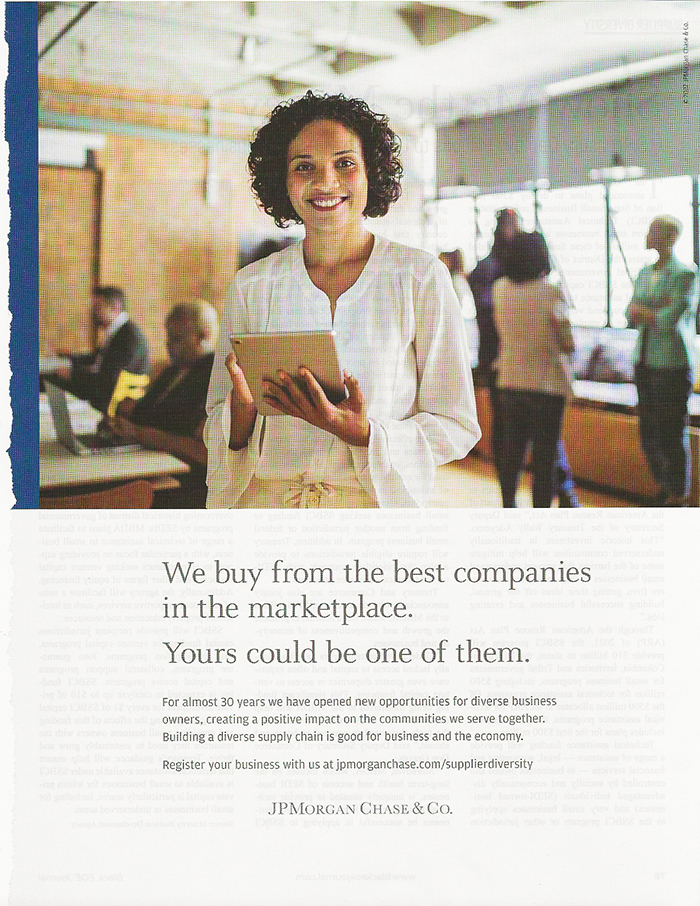
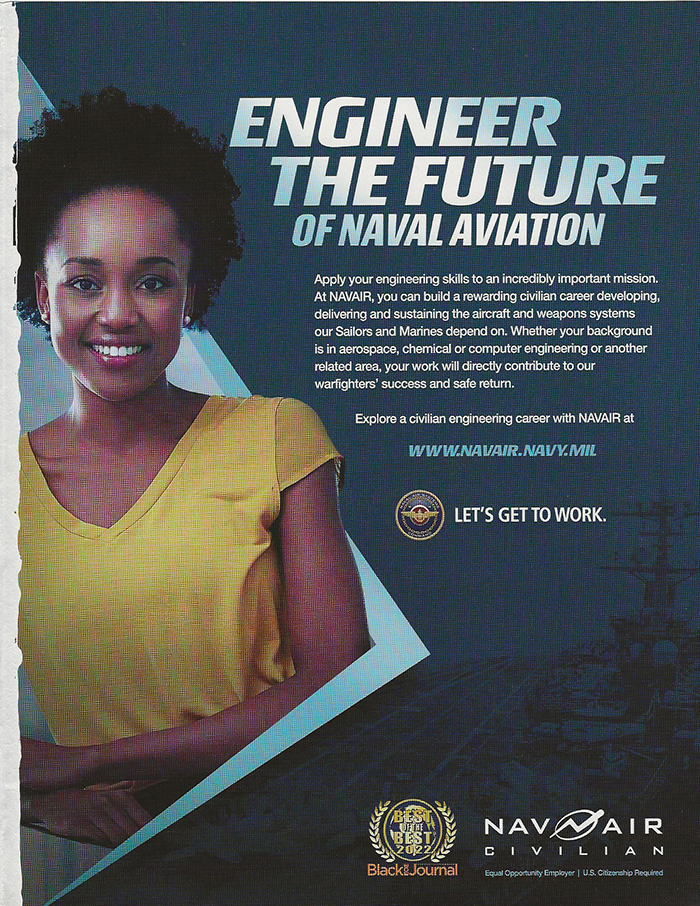
The diversity advertising depicted here—published in the Summer 2022 edition of Black EOE Journal—perfectly reflects the current state of affairs for DE&I in Adland.
In the past year—as well as the past 70+ years—DE&I has received infinitesimal interest, insufficient investment, insignificant intent, inferior innovation, and inadequate initiative.
The industry that awards itself for breakthrough thinking addresses DE&I with clichéd and contrived cookie-cutter executions that have historically proven ineffective.
The next original idea for DE&I will be the first. It didn’t appear in 2022—and don’t expect its arrival in the years ahead.






Campaign reported the latest IPA Agency Census showed BAME representation actually decreased in adland. This is not surprising, as legitimate interest in diversity has diminished too—replaced by overwhelming enthusiasm for divertsity and the promotion of White women. Dame trumps BAME every time.
BTW, the photo accompanying the story (depicted above) being caption-less probably means it’s a royalty-free stock image—an appropriately pathetic indicator of the industry’s inability to identify, hire and retain actual minorities.
Behind the disappointing decline in adland’s BAME representation
With agencies far off the IPA’s targets for BAME diversity, many are overlooking issues such as retention and progression.
By Brittaney Kiefer
Five years ago, the IPA set a challenge to ad agencies to improve black, Asian and minority-ethnic diversity among their workforce. But as the deadline for hitting those targets approaches, the industry’s progress is stuttering, revealing a massive disconnect between its intentions and the realities for BAME staff in adland.
The IPA’s latest Agency Census, released last week, found that the proportion of staff in UK agencies from BAME backgrounds has fallen at each of the three highest levels of seniority. Just 4.7% of C-suite executives were from a BAME background on 1 September 2019, down from 5.5% in 2018. People from BAME backgrounds also make up a slightly smaller proportion of the overall workforce, down 0.1 percentage points to 13.7%. The figure rose 0.8 point to 17.7% at junior level.
These numbers are still a long way off the IPA’s targets. The organisation has said that agencies should achieve 15% BAME representation in leadership roles and 25% among new starters by 2020. The figures for this year will be revealed in the census in around 12 months from now.
It raises the question: why is BAME representation dropping at agencies despite the increased focus on diversity in recent years? And what can adland be doing better?
Answering these questions is even more pressing as the Covid-19 pandemic threatens to divert businesses’ attention away from diversity to surviving this crisis. Yet diversity should still be top of mind for leaders, especially as recent data shows that the coronavirus is having a disproportionate impact on BAME communities — a fact that has prompted an inquiry by Public Health England. The situation underlines a lack of deep understanding among government and other sectors of the challenges faced by BAME groups.
“This pandemic is revealing structural inequalities in society that advertising is not immune from,” Asad Dhunna, founder of The Unmistakables, says.
Those “structural inequalities” within advertising start early. The industry’s approach to recruitment still leans too heavily on what Ali Hanan, chief executive of Creative Equals, calls the “network-ocracy”, with professionals tending to draw from their insular circles to find talent.
To counter this, agencies should “make sure all your recruitment slates are balanced and interviewers are trained in unconscious bias,” Hanan advises.
While the IPA Census suggests that some progress has been made in recruiting junior employees from BAME backgrounds, there are still major challenges in keeping them for the long term and changing the face of industry leadership.
“Agencies have taken huge strides to attract talent from BAME communities over the last few years, which is great to see. But we’re not seeing this effort translate into more BAME individuals making it into the industry and staying for the long term,” Amina Folarin, international people director at Oliver, says.
The figures “show there are problems with retention and progression, which signal a much deeper issue than a lack of intent”, Rania Robinson, chief executive and partner at Quiet Storm, observes. “Somewhere along the line, people from BAME communities are being held back or choosing to opt out of the industry — potentially to an industry where they feel a greater sense of belonging or opportunity.”
That word, “belonging”, is key to how many leaders explain the drop recorded by the census. Breaking into adland is challenging enough, but new recruits may also struggle to find their place and see a clear path of progression in an industry where they are in the minority.
“The lack of BAME representation in our industry, especially in leadership, makes it less attractive to BAME talent, which then affects talent acquisition. The situation perpetuates itself and you get ‘diversity churn’,” Ete Davies, chief executive of Engine Creative, explains.
While there are some schemes in place to attract diverse talent, more can be done within agencies to support those recruits and help them establish their careers after they get in, Leonie Annor-Owiredu, a cultural strategist and writer, suggests.
“When entering the creative industries, there’s an expectation to be caught up in terminology and standards that are rarely made explicit for new talent,” she says. “Establish a system which acknowledges the barriers BAME talent have to navigate and provides support and training, where they can give voice to concerns without repercussions.”
Robinson suggests that more workplaces should introduce “progression programmes” to help those who “feel a lack of understanding and support within their organisations”. Put simply, businesses need to “create more role models” for BAME staff — and this could start with elevating the voices of that talent within organisations, Robinson adds.
BAME people may struggle to have their voices heard, Folarin says. She sums up the situation: “Imagine for a second being the only person of colour in your team, on your floor, perhaps in your entire place of work. This has been my reality throughout my career in TV and advertising.
“Lucky for me, I could talk openly about it with my boss at Oliver. Most people don’t have that privilege; they feel at odds with adland and, to avoid being misunderstood, leave the business or the industry altogether.”
This is an industry where “confidence is everyone’s secret weapon”, Sarah Jenkins, managing director at Saatchi & Saatchi London, says. But if you are the minority in the room, that currency can be harder to come by and build.
“Being different often makes being confident harder and BAME talent will almost certainly be the most visible ‘different’ in many of their agency cohorts,” she explains. “The feeling of exposure, the weight of expectation and sense of representation can make confidence a horribly fragile commodity. And what hope is there to reach the boardroom without a bucketload of self-belief?”
To understand these underlying issues within workplaces, Folarin proposes instituting “more cognitive, emotional and human needs-based training” for senior management – something that could then trickle down the ranks and foster greater inclusivity.
“Management must be able to understand the unique experiences of people from BAME communities (or any under-represented group, for that matter), so that they can really support them as individuals and help them feel part of this picture whenever challenges arise,” Folarin says.
More broadly, Dhunna thinks agencies need to treat this issue as a business priority, rather than an add-on, and “take it out of HR”. He advocates for making diversity one of the metrics for evaluating senior leadership performance, “so that there are real consequences to inaction”.
Davies, too, believes that “accountability should sit on the desks of chief execs, chairpeople and founders — not just HR teams”, adding: “Nothing would lead to a faster realisation of change than making these targets part of every CEO’s objectives and tied to their bonuses or remuneration.”
Clients should also hold their agency partners to account for their lack of progress in this area by pushing for greater representation in teams and in the work, he says.
Ally Owen, founder of Brixton Finishing School, echoes this idea: “Brands should ask those tendering for their business what steps they are taking to make their workplaces more inclusive and give clarity on their statistics (including pay) in order to be awarded a contract. After all, why would you choose an agency partner that can’t represent your consumers?”
Brixton Finishing School recently conducted a survey among entry-level talent on their views of future employment prospects in the ad industry. One respondent’s answer captured the heart of the issue, highlighting a common perception that the industry’s progress on diversity has so far only been skin-deep.
“They talk a big game, but when you walk in it’s just a white wash,” the student said.

Wells Fargo is re-affirming its commitment to communities—while everyone else is re-affirming Wells Fargo is a culturally clueless criminal.

Advertising Age reported American Airlines is launching a global agency review. Before choosing its next White advertising agency, the client ought to consider making good on the message in the advertisement above.
American Airlines Launches Global Agency Review
Carrier Has Been With McCann, TM For More Than Two Decades
By Maureen Morrison
American Airlines is putting its global account into review.
The carrier has been working with Interpublic’s McCann Erickson and its agency TM in New York and Dallas for more than 20 years, an American Airlines spokeswoman said. McCann is invited to participate in the review, which is being handled by AAR.
“We remain deeply committed to American Airlines here and globally and will participate in the review,” said a McCann spokeswoman in a statement.
American expects to select an agency in early October.
American Airlines and U.S. Airways merged in December 2013, though some operational issues are still being dealt with. Just a few days ago, the company announced that it is merging all U.S. Airways reservations into the American computer system, with a targeted completion date of Oct. 17. Other steps that still need to be completed include the combining of labor groups, the painting of U.S. Airways’ planes to show American Airlines signage and the selection of uniforms. The $11 billion merger was first announced in February of 2013.
“As part of a broader objective since we entered our merger with US Airways, we have begun to do our due diligence to evaluate all major partners to ensure we are receiving competitive and effective service provisions,” said the company in a statement. “This includes advertising and marketing plans. The competitive landscape of our industry and the advertising industry has changed since the last time we put our business out for bid. We want to ensure we align ourselves with the right agency who understands our goals as the world’s largest airline and can provide the best resources and services to meet our needs globally.”
The statement continued: “We have had a partnership with TM and McCann Worldgroup for more than 20 years, and value all of the great work they have done worldwide for American Airlines. McCann and its office in Dallas, TM Advertising, continues to be an excellent global partner for American, helping us with the recent “Going for Great” campaign launched in New York, Los Angeles and Chicago, as well as Europe, Asia and Latin America with local agency teams engaged on our business.”
American Airlines’ U.S. measured media spending plummeted last year, according to Kantar Media. In 2014 the company spent $27.8 million on U.S. measured media, down from $59.7 million in 2013.

The 2014 Official Guide for Advertising Week features a diversity advertisement from IPG—whose flagship agency, FCB, once declared, “…by 2014 we will be an organization that no longer uses the term ‘diversity and inclusion.’” Oh well.

Advertising Age reported that Draftfcb may dump the first part of its masthead and return to being called FCB or Foote, Cone & Belding. So much for former Draftfcb President and CEO Laurence Boschetto’s proclamation “that by 2014, we will be an organization that no longer uses the term ‘diversity and inclusion.’” Not only is Boschetto history, but the entire shithole is reverting back to a stodgy, old, White advertising agency.


In this ad for the Thurgood Marshall College Fund, why is the White bulb more prominent than the dark bulbs?

Kraft shows its commitment to diversity by proclaiming, “Everyone’s invited.” Yet the food company continues to dine with White advertising agencies where exclusivity is the main course. Does Kraft invite its minority shops to the table when major marketing decisions are served up—or do the minorities receive leftover crumbs on an empty plate?

Walmart literally and graphically highlights helping Hispanics—which kinda looks discriminatory. Plus, the retailer’s “commmitment” doesn’t include hiring a proofreader.

Gee, it looks like Verizon offers more opportunities for Black women than the entire advertising industry.

L’Oréal declares, “True beauty knows no boundaries.” Okay, but critics charge L’Oréal is known for beauty bias.


BlueCross BlueShield declares, “It’s easy to stand out when your ideas are as diverse as your employees”—with an ad that doesn’t stand out at all.

Exelis boasts, “Great minds don’t think alike.” Yes, but mediocre ones do.


How does a brand with a history of generating iconic creative campaigns produce one of the worst diversity ads of all time?


