Tuesday, October 31, 2006

Essay 1271


One more comment responding to the latest Marc Brownstein perspective presented in Essay 1245…

> While I know this is a hot button issue for most and we all want to come up with revolutionary ideas that help solve these problems, what about putting support behind those solutions that are already out there? One such solution is called the MAIP internship program or Multicultural Advertising Intern Program run by AAAA. Every year this program screens, accepts and places qualified and motivated multicultural candidates into agencies all across the country. Last summer they placed about 99 interns in upwards of 20 agencies. This program is well respected, long running and successful. While most of the interns end up in New York, I spent the summer in Minneapolis, a place not known for its diversity of color; thankfully, not for its lack of trying but due in part to the lack of interest and also the weather. (I’m sure you’ve all heard about Minnesota winters.) But I digress. This program allowed me to test the waters of the advertising world, receive the support and wisdom of my peers and ultimately lead me to a career path that I’m sure I will find personal satisfaction from. Plus, it showed me that there are agencies outside New York who are worthy of looking into. A relief to me since for good or bad I don’t particularly want to work in New York (please hold the gasp of horror and looks of shock and amazement till the end, thank you). If agencies want to find diversity, here’s the place to go. Any agency big or small can be a sponsor. Campbell Mithun (the place where I interned) sponsored 8 interns, others just one. And while this program may be a bit pricy — host agencies cover a portion of living and travel expenses, plus a weekly salary for each intern — it allows individuals who might otherwise be unable to intern outside their own city to participate. After all, we want to encourage diversity of location as well as diversity of skin color. If you fill an agency with a minority group from say Chicago, won’t they have a different viewpoint than an agency filled with minorities from Arizona, Boston, Colorado and California? Programs to encourage minorities in advertising are already out there established and accepted, and while some of us might argue what the definition of a minority truly is (I myself was accused of not “being a real minority” due to my half Pilipino, half white heritage), I think that MAIP comes as close as anyone has or ever will to getting the job done. For those of you who can’t afford to be part of this program, MAIP also sends out mass email to its alumni posting job opportunities from agencies big and small. If you are truly serious about hiring minorities, this is the place to advertise it. This list includes present interns and past alumni. The program has been running for 32 years, so I imagine that’s a pretty long list. And for those of you who are wondering, I’m not on any MAIP board or Alumni commit. I don’t even work at an ad agency and have yet to leave college. I graduate in May, double major double minor. I just had a wonderful eye opening experience that solidified my desire to work in advertising. An experience I wish others could share. — Glendale, AZ

Essay 1270


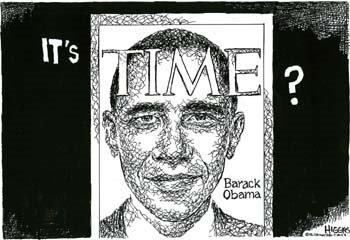
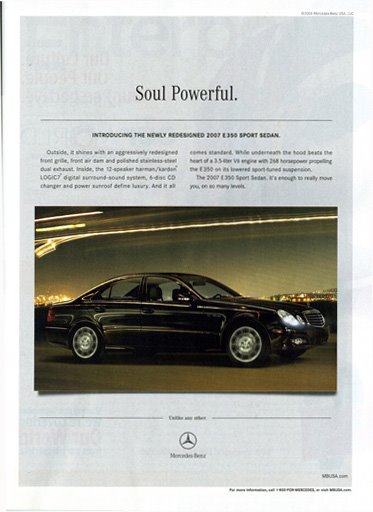
This ad’s got soul. Too bad it’s got no concept.

Essay 1269


The New York Times reported on Proposition 2, a controversial Michigan ballot initiative challenging the affirmative action policy at the University of Michigan. As expected, the issue has divided people.

“We have a horrible history when it comes to race in this country,” said Jennifer Gratz, a key figure in the debate. “But that doesn’t make it right to give preference to the son of a Black doctor at the expense of a poor student whose parents didn’t go to college.”

The president of the university opposes the proposition, fearing it would reach lower school levels too. “It would make it illegal to have our program targeting girls in junior high school, and having them come to campus to learn about science and engineering,” said Mary Sue Coleman. “I’m a woman scientist, and I know how fragile our gains are.”

“We need to keep affirmative action because it’s still not a level playing field for women or minorities,” said one resident.

“I don’t know a lot about Proposition 2, but I do know a neighbor kid, a good kid, a local kid with a 3.7-3.8 average, who didn’t get into the university and he should have,” said another resident. “I do think there’s something wrong with [the University of Michigan’s] admissions.”

“If voters think about it as being about race, black and white, support goes up,” said the vice president of a Michigan polling firm. “So the opponents are trying to show that it’s not just race, that it would hurt women, hurt Michigan’s economy, and they’re having some success with that.”

Click on the essay title above to read the full story.

Essay 1268


Tricks and Treats in a MultiCultClassics Monologue…

• A Salem woman has been fighting for witches’ civil rights. The efforts include opening the door to defamation lawsuits when posters depicting witches as broomstick-riding old hags are hung on government property. “If they don’t protect us and take care of us like everyone else, then they could be sued,” warned the witch. Or worse, have a nasty spell cast upon them.

• KFC’s announcement of eliminating trans fats in its food has Mickey D’s scared. Especially since Burger King and Wendy’s have also presented plans to change their menu items. However, officials at the Golden Arches insist they’re still struggling to find solutions that won’t jeopardize taste quality. Not sure when taste quality became a concern at Mickey D’s.

• There were more tricks than treats along the U.S.-Mexican border, as immigration officials booted a record 187,000 illegal aliens from the country in 2005 — including deporting 3,700 violent gang members over the last two years. “That’s more than 3,700 gang-bangers off the streets and not preying on members of communities,” declared Homeland Security Secretary Michael Chertoff. Yeah, but you still can’t eject trans fats from Mickey D’s menu.

Monday, October 30, 2006

Essay 1267


Top Ten $1,000 Charitable Donations That Would Really Piss Off Oprah (see Essay 1266).

10. Rifle Gear For The Minuteman Project.

9. Dry Cleaning For The Ku Klux Klan.

8. Senator George Allen Re-Election Fund.

7. Author James Frey Creative Writing Grant.

6. Duke Lacrosse Booster Club.

5. The Snoop Dogg Youth Football League.

4. The Ludacris Foundation.

3. Buying Ice Cube’s “Are We There Yet?” On DVD — A Truly Charitable Act.

2. 50 Cent’s G-Unity Foundation.

1. The Hermès Charity Ball.

Essay 1266


Monkey business in a MultiCultClassics Monologue…

• A fan who allegedly called NBA star Dikembe Mutombo a “monkey” has been banned for the season by the NBA and Orlando Magic. And no, it wasn’t Senator George Allen (see Essay 938).

• Goodyear is not having a good year, announcing plans to shut down a Texas plant and cut about 1,100 jobs. “We must take the steps necessary to reduce our costs and improve our competitive position,” said a company official in a statement. “While this is an extremely difficult decision for everyone involved, it was required to help turn around our North American business.” In the tire business, when sales go flat, you have to reinvent the wheel.

• Oprah Winfrey gave about 300 audience members $1,000 debit cards to use toward charitable causes. Bank of America, an institution that last year admitted to having ties to slavery, sponsored the giveaway. “You’re going to open your hearts, you’re going to be really creative, and you’re going to spend it all at once on one stranger or spend a dollar on every person,” said Oprah. “Imagine the love and kindness you can spread with $1,000.” Um, Oprah probably drops a grand just to get a pedicure. For one foot.

Essay 1265


From The Associated Press…

-----------------------------------

Funeral held for hateful words

BELOIT, Wis. — More than 200 people attended a symbolic funeral to lay to rest the offensive term for blacks: the N-word.

“I didn’t know it was possible to be happy to go to a funeral,” said Milele Chikasa Anana, publisher of Umoja magazine in Madison. “Hallelujah! I am delighted that we are having a funeral!”

The Oct. 21 funeral was part of an event organized by the Black Star Project of Beloit, which was recently formed to pursue educational and job opportunities for blacks in Beloit and strengthen spiritual growth for families.

Before the funeral at New Zion Baptist Church, there was a ceremony at Bethel AME Church and a rally at Merrill Elementary School.

The N-word’s coffin was buried at East Lawn Cemetery, along with other hateful words that attendees wished to bury.

Wanda Sloan, a member of the Black Star Project and one of the funeral’s organizers, said she is bothered that some in what she called the hip-hop generation use the word as a term of endearment.

“It’s disturbing because it shows that the educational system is still being negligent at teaching African-American children and majority children about the true history,” Sloan said.

Essay 1264


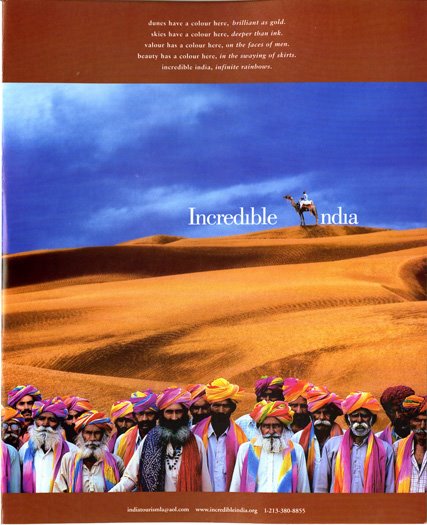
Not sure what the hell is going on here. Looks like India is holding a gay pride festival.

Sunday, October 29, 2006

Essay 1263


Black Sunday in a MultiCultClassics Monologue…

• Animal shelters nationwide have banned the adoption of Black cats during the Halloween season, fearing idiots will mistreat the animals in holiday pranks. However, critics argue the measure does more harm than good. A 2002 study published in the Journal of Applied Animal Welfare showed Black and Dark Brown cats were less likely to be adopted than White cats. “Black cats already suffer a stigma because of their color,” said an official at the American Society for the Prevention of Cruelty to Animals shelter in New York City. “Why penalize them any more by limiting the times when they can be adopted?” Madonna will probably appear on Oprah’s show to argue her opinion on this topic.

• Bill Cosby took his road show to Los Angeles, serving as keynote speaker at a forum titled, “Education Is a Civil Right.” The entertainment icon blasted parents and teachers equally. “We’ve got parents who won’t check the bedrooms of their children to see if there’s a gun,” said Cosby. Teachers were spanked for not providing a good answer when students ask, “Why do I need this?” when considering the application of algebra and English to future jobs. “I’m not asking you to entertain the children,” Cosby preached. “If you teach English, and you can’t answer this child … then you’re in trouble, and we’ve been in trouble. We can’t answer these children, because nobody’s given them any goals.” Even churchgoers received criticism, as Cosby quipped too many folks rely on the belief, “The Lord will find a way. … So I’m just going to wait for Jesus to find a way.” He declared, “Too many people are waiting for Jesus to come along and cut your grass. And Jesus isn’t going to come along and cut your grass.” What would Jesus do — in response to Cosby’s rants? Additionally, there are probably quite a few Los Angeles landscapers named Jesus.

• An 18-year-old kid in New Jersey sparked controversy by mimicking myspace.com with a website titled, “NiggaSpace.com.” The creator goes by the name Tyrone, and insists the site title is not intended to be racist; rather, he hopes to change the connotation of the infamous word. The kid can probably expect an IM or email from Cosby soon.

• An ex-employee from Vons grocery chain received an $18 million jury award after winning a wrongful termination lawsuit that charged he was sexually harassed by his female supervisor. The former worker testified the supervisor made sexual remarks, and even simulated sex with a feather duster. Vons plans to appeal. Or maybe offset the damage award by staging a special promotion on feather dusters.

Essay 1262


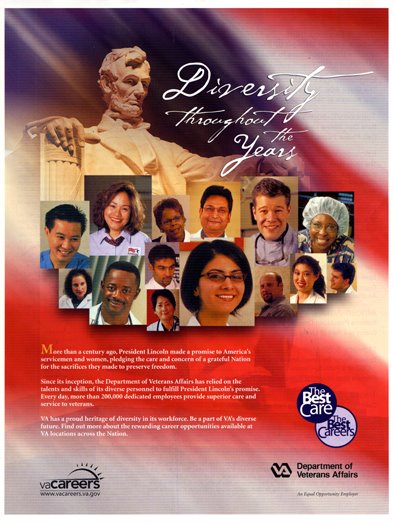
The Department of Veterans Affairs presents Abraham Lincoln to deliver its diversity message, reflecting on the dead president’s promises from over a century ago. Wonder if it’s inspirational — or sobering to realize the issues persist after more than 100 years.

Saturday, October 28, 2006

Essay 1261


From The Chicago Tribune…

------------------------------------------------

Reverse discrimination gets another look

By Steve Chapman

Time travel, long a staple of science fiction, has so far amounted to nothing more than a fantasy. But anyone interested in paying a visit to the past may soon get the chance. On Nov. 7, voters in Michigan will decide on a ballot initiative banning racial preferences in the public sector, and if it passes, opponents say, it will put the state back into the Dark Ages.

Proposal 2 represents a reaction to the University of Michigan’s use of racial double standards in selecting its students. In 2003, the U.S. Supreme Court ruled that the preferences used in undergraduate admissions were unconstitutional but those used for law school admissions were not. The court said it was OK to favor minority applicants--and discriminate against whites--in order to promote diversity, as long as the school wasn’t too blatant about it.

The outcome didn’t satisfy losing litigant Jennifer Gratz, who was rejected despite credentials that would have virtually assured admission to a black or Hispanic applicant. She organized a campaign to put affirmative action to a referendum. The resulting measure, similar to one passed in California in 1996, would amend the state constitution to bar the use of racial or gender preferences by public universities and government agencies.

If it passes, no one would be penalized or rewarded for their skin color or sex. That was the point of the 1964 Civil Rights Act. Today, though, colorblind policies are denounced as a form of oppression.

The critics foresee the direst of consequences if Proposal 2 becomes law. The Michigan Catholic Conference invokes memories of Jim Crow while warning that the measure would kill or cripple “any program in Michigan that aims to create access for women and minorities.” The University of Michigan says that it would no longer be able to “pursue the educational benefits of a diverse student body.”

But Proposal 2 does not deny access to anyone--it merely mandates that everyone be assessed according to criteria (grades, test scores, personal accomplishments, and so on) other than race or sex. The measure also wouldn’t prevent universities from promoting diversity by favoring students from poor families, or children who have overcome special challenges, or kids from high schools where few graduates go on to college.

At the University of California at Berkeley and at Los Angeles, California’s most selective state schools, the percentage of students qualifying for need-based federal aid has risen sharply since 1996. In socioeconomic terms, those campuses have become more diverse, not less. But in Michigan, the concept of diversity begins and ends with race.

The claim that women would suffer without special help in college admissions is a particularly outlandish invention. At Berkeley and UCLA, women increased their numbers after gender-based preferences were scrapped.

There is not much doubt that Proposal 2 would reduce the number of black and Latino students at the University of Michigan, the flagship public institution. But in California, the top schools have not become replicas of Ole Miss, circa 1960. The biggest gainer has been another racial minority--Asian-Americans.

Nor have African-Americans and Hispanics been exiled from higher education. The total number of blacks at all University of California campuses has fallen only slightly, and Hispanic numbers have risen substantially. The chief difference is that many (though certainly not all) minority students have been shifted from the most selective state schools to somewhat less selective ones.

Are these students worse off for not getting into Berkeley or UCLA? Quite the contrary. In the old days, black and Hispanic students generally got worse grades and flunked out at much higher rates than whites and Asian-Americans. But that is changing.

At the University of California at San Diego, the state’s third-most selective, an internal report found “no substantial [grade point average] differences based on race/ethnicity.” The four-year graduation rate for African-Americans at UCSD has jumped by 44 percent in the last decade.

Which is better--being a UCLA dropout or a UCSD graduate? Attending a more prestigious school is valuable only if you get a degree, which far too many minority students did not in the era of racial favoritism. By putting many of these students in schools whose academic standards they couldn’t meet, affirmative action set them up for failure.

Racial preferences, always a clear detriment to whites and Asian-Americans, have now been exposed as a false friend to those they are supposed to help. Michigan will have a better future if its voters abandon this relic of the past.

Essay 1260


Saturday morning cartoons and more in a MultiCultClassics Monologue…

• Wal-Mart, bowing to pressure from Black leaders and union groups, fired an adviser who created the controversial commercial dissing Representative Harold E. Ford Jr. of Tennessee (see Essay 1256). The man was originally hired by the mega-retailer to help deal with organized labor and liberal groups. Somebody should have alerted the adviser that Wal-Mart hypes low prices, not lowdown dirty tactics.

• KFC changed its cooking oil to eliminate trans fats, and plans to officially announce the switch on Monday. Most of the fast feeder’s restaurants made the change weeks ago, and customers don’t seem to notice any difference. Then again, do KFC fans really have any taste standards?

• Vice President Dick Cheney sparked controversy when discussing interrogation techniques during a radio show interview. The flap involves whether or not Cheney was commenting on a technique known as “waterboarding” — where a prisoner has his feet bound above his head while water is poured on a cloth over his face. “Would you agree a dunk in water is a no-brainer if it can save lives?” an interviewer asked Cheney, who replied, “Well, it’s a no-brainer for me.” Cheney defenders insist the veep wasn’t aware of which specific technique the interviewer was referring to. Actually, to conclude that Cheney supports all forms of torture seems like a no-brainer.

Essay 1259


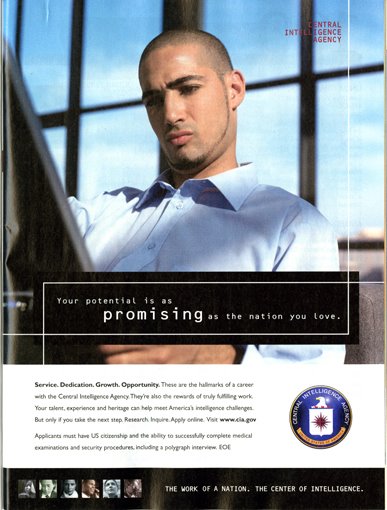
Your potential is as promising as the nation you love. Just don’t believe any potential promising from the CIA.

Friday, October 27, 2006

Essay 1258


Strip, searches and more in a MultiCultClassics Monologue…

• A former teacher’s aide from Indiana accused of stripping in a classroom full of students and touching herself in seductive ways was sentenced to 9 years in prison. The 28-year-old woman maintained her innocence throughout the sentencing and declared, “I still say that I’m innocent, regardless of what victims said I did. … I did nothing to those children and I still say that.” Sounds like a Clinton-style defense. The school will probably have to bring in special counselors to help the kids cope with the grief of losing this instructor.

• Snoop Dogg was busted at Burbank’s Bob Hope Airport for possessing a pistol and marijuana in his vehicle. Does Snoop ever travel without a gun and drugs? He probably refers to the reefer as a carry-on nickel bag.

• Hip Hoppers Prodigy and The Alchemist were busted in Chelsea for possessing a pistol in their vehicle. Given all the rappers and artists currently hawking vehicles in advertisements, maybe the automakers should start designing rides with gun racks.

• Supermodel Naomi Campbell visited with cops in London after her alleged involvement in a recent altercation. At this point, there are probably more photos of Campbell in police stations than fashion magazines.

Thursday, October 26, 2006

Essay 1257


Delivering a Eulogy for a Magazine.

--------------------------------------

Hasta la vista, baby.

Barely a week after the conclusion of Hispanic Heritage Month, media conglomerate VNU announced its decision to dump Marketing y Medios, the trade magazine dedicated to Latino advertising and more.

The new scheme involves rolling the magazine’s content into monthly special reports that will run in sister publications Adweek, Brandweek and Mediaweek — sort of a business burrito for the professional masses.

The VNU spin was typically corporate: “The growing Hispanic market has evolved from a niche to the mainstream and our audience is asking for forward-thinking, broad-based coverage. … This move provides Marketing y Medios a prominent presence in our three core brands while offering Hispanic advertisers a voice among mainstream brand marketers and media buyers.”

The Spanish translation for the VNU statement: Caca Grande.

Actions like this are always financially motivated. Except in cases of blatant racism. But let’s take the high road and presume that Marketing y Medios failed to generate the requisite profits to satisfy VNU accountants.

Its demise, however, inspires some disturbing observations.

For starters, one must wonder if VNU spent enough time and money promoting their product. It seems like Adfreak.com receives greater hype than Marketing y Medios enjoyed. Plus, to recognize “the growing Hispanic market has evolved from a niche to the mainstream,” then eliminate the publication reporting on the subject, makes little sense.

From a publishing perspective, the Latino marketing community literally goes from star to minority status. When considering players like Advertising Age, where “Multicultural” news is relegated to an occasional partial page, it does not bode well for the future of Marketing y Medios’ voice and spirit. Has Adweek ever displayed a single decent article on anything not targeting White Baby Boomers? And does anyone even read Brandweek and Mediaweek?

It would be ideal if VNU actually integrated the Marketing y Medios content, creating diverse editorial environments. But that’s probably too “forward-thinking” to comprehend. Instead, it appears VNU will ultimately reflect the advertising industry by segregating the minorities. Better to keep these guys in their place — in the back sections alongside the classified ads featuring job opportunities that Blacks, Asians and Latinos will continue to be denied.

Marketing y Medios awarded a unique platform for the Latino marketing community to showcase its stuff. Editor Laura Martínez and her team served up opinions, insights, facts, fiction, creative critiques and more with passion, intelligence and humor. Everyone was welcome, whether Martínez agreed with you or not. Forgive the cliché, but it was a cultural celebration. And of course, it helped the Latino marketing community build credibility, prominence and power. There’s a lot of cool and progressive activity taking place — and Marketing y Medios provided an unparalleled spotlight. Folks would be hard-pressed to find another business magazine in any category to match its distinctive personality.

Muchos kudos to Laura Martínez and compadres for blazing breakthrough, pioneering achievements.

What’s the biggest tragedy of all? MultiCultClassics recently renewed its subscription to Marketing y Medios for two years. So VNU is bound to offer credit in the form of a substitute magazine from its stable of hackneyed dreck.

In the words of Bart Simpson, “¡Ay, caramba!”

--------------------------------------

Special Bonus! Click on the essay title above to view MultiCultClassics’ first mention of Marketing y Medios, written in March 2005.

Essay 1256


Calling out nonsense in a MultiCultClassics Monologue…

• The Senate race in Tennessee turned ugly with a Republican-backed commercial attacking Representative Harold E. Ford Jr., a Black Democratic candidate. The commercial presents mock man-on-the-street interviews, with folks making snarky comments about Ford. The spot closes with a White woman claiming that she met Ford at a “Playboy party,” who then winks and says, “Harold, call me.” Critics charge the message plays off racial stereotypes. Mark Foley probably doesn’t see a problem with it.

• American Greetings is teaming up with Johnson Publications to create a line of greeting cards to launch during Black History Month. The cards will feature classic covers from Ebony magazine, along with inspirational copy. No word yet if Oprah will create a series of cards featuring O magazine covers.

• The investigation surrounding a threatening letter sent to California Hispanic residents about the upcoming elections (see Essay 1228) has led to accusing an LAPD officer of being involved. And you wonder why the LAPD is struggling with diversity in its ranks (see Essay 1253).

• Sony’s profit dropped 94 percent for the July-September quarter, thanks mostly to the worldwide battery recall. The Energizer Bunny vehemently denied any involvement.

Essay 1255


What I do matters. Looks like this ad’s art director and copywriter don’t live by those words.

Wednesday, October 25, 2006

Essay 1254


One more comment responding to the latest Marc Brownstein perspective presented in Essay 1245…

> Dear Marc -- I am a Jamaican female marketing professional working on the agency side. And I am marketing grad of Temple University. There are students of color at great colleges like Temple and also HBCUs who majored in marketing, communications, etc., and who want to work in advertising (general market, multicultural and otherwise). However, when we start knocking on those doors, we are offered admin positions and not promoted. I graduated in 1993 and even with a referral from a professor who worked at Ketchum, wasn’t admitted into account management training programs at BBDO, Ogilvy or any others. Individuals with art history degrees were accepted into these programs. Thank God for multicultural agencies, otherwise people of color (Black/Hispanic/Asian/Native American/etc.) might not get opportunities to get into the marketing industry. I also applaud Verizon, McDonald’s and Coca-Cola for diversifying their marketing ranks, so that we younger professionals can see that marketing is a viable profession and we can succeed at it. Marc, if you need someone to speak at schools in Philly, I would be more than happy to come on down from NYC to help out. Talented and skilled minorities are out there, and we want the same opportunities afforded to Whites within this industry and throughout the disciplines — acct management, interactive, media, creative, production, exec management. All the best with your efforts — JAMAICA ESTATES, NY

Essay 1253


Examining the body of evidence in a MultiCultClassics Monologue…

• Foxy Brown (pictured above) was sentenced to three years on probation for beating nail salon workers with her cell phone. The hip-hop diva fought hard to reverse her guilty plea, but the judge wasn’t buying it. Ms. Brown rapped, “I just feel like I was coerced into a guilty plea! … I was tired! I felt rushed! It was late in the day. I was threatened with going to jail! … [Her ex-lawyer] told me they’re out to get you — to put you away — that I needed to plead guilty to get this over with. … If this was any other girl except an entertainer, this would never happen. … I can walk and talk with a smile on my face, and a Bible in my Louis Vuitton bag, because I know what this is.” Sounds like the lead track for her next music collection.

• Busta Rhymes was in court too, refusing a plea deal stemming from allegedly beating up a fan for spitting on the rapper’s ride. Unlike Foxy Brown, Rhymes remained silent. It’s a sign that the apocalypse is upon us when one rapper can serve as a legal role model for another rapper.

• The LAPD is still struggling to promote minorities in its ranks, despite creating official diversity objectives and programs. Goals were not met for Blacks, Hispanics, Asians and women. “When we talk about … coveted assignments, if you talk to most African Americans they really don’t feel it is equal,” said a police official. “Most African Americans on this department will tell you our White counterparts promote two or three times faster than we do.” The White counterparts will probably tell you they get promoted ten times faster.

• Reports show Whites pursued more Hurricane Katrina complaints than minorities. According to an Associated Press analysis, while poor and minority communities suffered the most damage from the hurricane, folks from White neighborhoods have been three times as likely as folks from Black neighborhoods to seek state help with insurance problems. Experts believe the reluctance to ask for assistance may be rooted in lack of trust and lack of connection with government agencies. Or maybe, contrary to popular belief, White folks are more inclined to look for handouts.

Essay 1252


Which group has benefited the most from affirmative-action-style initiatives? Do the math.

Tuesday, October 24, 2006

Essay 1251


Presenting two obituaries for Marketing y Medios.

-----------------------------------------------------

From HispanicBusiness.com…

Marketing y Medios Magazine Ending Separate Publication

Marketing y Medios, one of the smartest journals in the Hispanic-oriented English-language publication niche, will no longer be published as a separate magazine, its parent company announced Monday.

The magazine’s founding editor, Laura Martinez, will leave the company on Dec. 15 “to pursue other opportunities,” according to VNU Business Media, although other editors will remain on staff. Its Web edition will not change.

Marketing y Medios debuted in September 2004 with Ms. Martinez, a veteran journalist who had helmed creation of the weekly Wall Street Journal en Espanol, in charge.

VNU said the print content that made up Marketing y Medios — a bimonthly look at marketing to Hispanics — will appear as a monthly special report in the journal’s sister publications Adweek, Brandweek and Mediaweek.

VNU pitched the switchover as a positive.

“The growing Hispanic market has evolved from a niche to the mainstream and our audience is asking for forward-thinking, broad-based coverage,” Mike Parker, president of the Marketing, Retail and Design Group at VNU, said in a release. “This move provides Marketing y Medios a prominent presence in our three core brands while offering Hispanic advertisers a voice among mainstream brand marketers and media buyers.”

But others were less enthusiastic. “Marketing y Medios folds …” the Web site HispanicAd.com headlined. “Marketing y Medios did not enjoy the traction with either readers and advertisers, thus suffering from severe sales under-performance and cost containment issues,” it wrote in a brief announcement.

That contrasts with the high hopes that accompanied the magazine’s debut. “The launch issue has been an overwhelming success among Hispanic media companies,” Publisher Michael Hatherill was quoted when the journal first came out. “We premiered with 19 1/2 ad pages and marketers are recognizing that this is the place to be to reach this important demographic.”

VNU said after the announcement of the Marketing y Medios demise on Monday, “ad agencies, media companies, readers and advertisers have expressed a genuine feeling of loss for the standalone magazine.”

-----------------------------------------------------

From HispanicAd.com…

Marketing y Medios folds…

VNU has announced that it will no longer publish their dedicated US Hispanic industry trade journal Marketing y Medios. They have decided to publish a monthly selection in select copies of Adweek, Brandweek and Mediaweek.

Editor Laura Martinez will leave the publication after the November/December issue is put forth.

Marketing y Medios did not enjoy the traction with either readers and advertisers, thus suffering from severe sales under-performance and cost containment issues.

“We at HispanicAd.com are sorry to hear about VNU’s decision to cut back drastically in their involvement in servicing the US Hispanic advertising, marketing, media and sales professionals,” stated Gene Bryan, CEO of HispanicAd.com. “We continue to believe in the viability of covering our industry daily and that there is enough critical mass and revenues to support efforts from Ad Age, Hispanic Market Weekly and ourselves.”

Essay 1250


More comments responding to the latest Marc Brownstein perspective presented in Essay 1245…

> Dana and Mark — In my previous post, I offered kind words to Mark for the effort before I explained why, though valiant, the effort is misguided. Here’s an attempt to clarify: First, while Mark did not specifically label the kids he wishes to target as “underprivileged,” this is exactly who he is going after when he says he wants to seek out student bodies “primarily of color.” Let’s pretend for a second that I was merely being assumptive and there was no intention to associate minorities with the needy — regardless, a minimum amount of research about primarily minority communities will lead you to statistics that will make that connection for you. Second, nevertheless, doing something good for minorities, the colored, underprivileged, or whatever you want to call them is great. Those kids will learn something about an exciting industry and will hopefully be inspired. However, diversity in advertising is beyond this sort of help — it’s about hiring qualified individuals from all backgrounds and experiences to feed an industry that lives and breathes on diverse insights and creative ideas. Mr. Brownstein’s middle-school-aged targets won’t even be old enough to work for another 10 years. What are we going to do until then? Third and last, when these children are of age, they will STILL be faced with the ad agency culture issues I already spoke about. You can do good things for them while they’re young and give them internships when they get older, but when they graduate and are on the job hunt, they will STILL face an industry that promotes hiring clones of current employees. How can this be fixed? Step out of your comfort zone and hire different people. If you can’t find them, LOOK. While it may be more difficult to find a qualified candidate on the senior level, it certainly is not on the junior level. Mr. Brownstein is in Philadelphia, home of several institutions of higher learning. I suggest that he contact some university career centers and find out when and where he can set up a booth at a career day or recruiting fair. Create some materials that promote advertising as an exciting career choice full of diverse experiences and people. That would be a good start until the middle-schoolers graduate next decade. P.S. Dana — the whole “it’s about the students, not us” thing is a poor excuse for neglecting to take a look at what the real problem is. It’s these excuses that people use to make themselves feel better that keep real progress from happening. — Chicago, IL

> Mark, you can’t seem to catch a break! I commend you for putting actions behind your words, even if some people disagree with your approach. Brandon, you are obviously very close and passionate about this issue. The unfortunate thing is that I believe you have misinterpreted Mark’s words. I cannot see where Mr. Brownstein mentions “the underprivileged” or “inner-city dwellers are minorities.” Mark mentions schools whose student body is primarily of color, but I think it is a bit assumptive on your part, don’t you think? Don’t get me wrong, Brandon, I agree with searching for qualified candidates of color, but Mark’s point is that he’d like to see more. I don’t see his efforts as a charity, it seems like a conscious effort to educate an untapped market of talent. Let’s be honest, the people who are going to [benefit] the most from his efforts are the students, not him. Thanks, Mark! — Minneapolis, MN

> What happens when you’re not the average “white” guy? Where does that person go? Where can he fit in? You know…the white guy who grew up in black/hispanic communities and has a strong sense of what would work and what wouldn’t. Should he/she go to the “ethnic” agencies where there is a slight chance of getting in or go to the GM agencies where he he/she might not fit in? — Philadelphia, PA

> bravo to brandon burns. well put. i would also add the following based on 15 years at big and mid-sized and small agencies in Chicago, NYC and out west: hiring is only part of the problem. as a black male, when I was at GM shops i always had the luxury of knowing that our budgets and treatment was 10 times that of what every ethnic shop received. it wasn’t [clear] until i went to ethnic/targeted shops. imagine, mr. brownstein being told that no matter how good your shop’s work is, no matter how valid your research and insights may be, that you are not even allowed to compete for AOR status. why? because you are white. that’s what it is to work at black and hispanic agencies--to be relegated to the “ethnic” business even when your ideas and insights outperform the GM shops. hiring is just the tip of a very big, ugly and entrenched iceberg. as for the internship program, i tried launching a minority internship program while at several GM shops in the 90s and 2000s. in each case i was accused of “reverse discrimination.” the programs had to be open not just to blacks and hispanics and asians but also to whites. guess what the companies did: hire all white interns. please don’t do this with your program, mr. brownstein. you seem like you want to do better, so let’s see you do better. — chicago, IL

Essay 1249


Rushing to judgment with a MultiCultClassics Monologue…

• Rush Limbaugh dissed Michael J. Fox for starring in a political ad and speaking in favor of stem cell research. In the commercial, the Parkinson’s-afflicted Fox appeared to be physically suffering from the disease. The ever-sensitive Limbaugh charged that Fox was “either off his medication or acting” in the spot. “Michael J. Fox is allowing his illness to be exploited and in the process is shilling for a Democrat politician,” declared Limbaugh. Gee, maybe Limbaugh could offer Fox some illegally-acquired painkillers.

• Wesley Snipes is ignoring the warrant for his arrest stemming from charges of ripping off the IRS, opting to continue filming a movie in Africa. “As far as we understand, Wesley is not going to be arrested in Namibia,” said the film’s producer. “We are shooting and we are continuing to shoot. … We are aware of the issue around the tax charges but we are not discussing it.” Somebody call Tommy Lee Jones to hunt down Snipes pronto.

• Coca-Cola is donating land for a civil rights museum in Atlanta. Wonder if the museum will include an historical diner set that refuses to allow Blacks to order Cokes. Just kidding.

Essay 1248


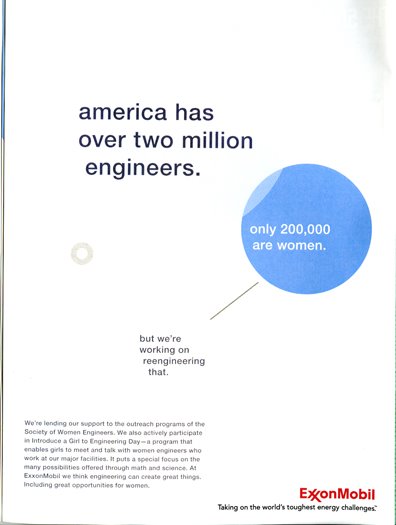
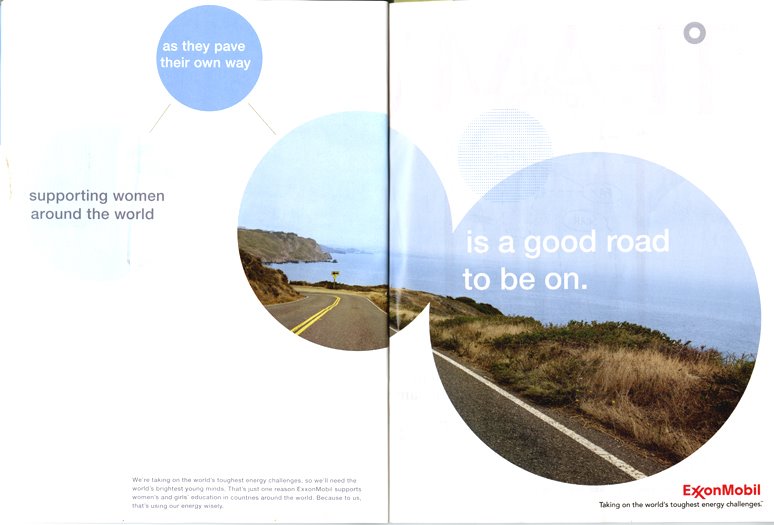
These women-targeted ads are part of a series designed to improve ExxonMobil’s image. Moms, tell them to clean up their oil spills first.

Essay 1247


Jen Chau and Carmen Van Kerckhove introduced a new blog — Conscious Media Maker. According to their hype, “This is a blog for entertainment, media, advertising and public relations professionals who are committed to bringing about more realistic, three-dimensional representations of people of color.”

Based in New York, Chau and Van Kerckhove lead the New Demographic anti-racism training company, produce the “Addicted To Race” podcast and publish the “Racialicious” blog. They’re proactive, provocative and sexy smart too.

Click on the essay title above to catch their latest creation.

Monday, October 23, 2006

Essay 1246


Initial comments responding to the latest Marc Brownstein perspective presented in Essay 1245…

> Brandon makes a very good point. I also find it almost insulting when these “white guys” who need a dose of culture turn to Jay Z as their man to get them into the Black community. See the new Budweiser Select campaign, he gets to be co-brand director while guys like Brandon who work their butts off get the cold shoulder… just not cool. — New York, NY
> If you need a person of color (and a 4A MAIP alum) to guest speak in NJ, you know where to reach me. Heck, I might even go down to Philly to help out. — Branchburg, NJ

> What you’re doing is great and all, but I, as a black male, can say you’re still partially missing the mark. The typical, and utterly wrong response to doing something about diversity is to do something for the underprivileged. Not all inner-city dwellers are minorities, and not all minorities are inner-city dwellers. I have a B.S. in Communications from Northwestern University, one of the best schools in the nation, and there are other qualified candidates such as myself who do not come from the ghetto and still experience the negative effects of the lack of diversity in advertising. Your gut is telling you the wrong thing — instead of telling you to find some charity cases, it should be telling you to attempt to highlight what is intrinsically wrong with advertising agency culture and put an end to it. Giving an internship to an underprivileged high school student does not help the industry (beyond possibly making you feel better); but seeking out highly qualified minorities and awarding them jobs will. They attend the same schools white America attends. They get jobs comparable to their white counterparts in other industries. Other industries do not seem to have as much of a problem finding them. However, advertising, an industry that is supposed to be about groundbreaking ideas, looks to hire clones of its current employees. It is assumed that the only people who will understand the beer commercial with the average guy as hero is an average white guy. Thus the majority of those who work on these accounts are — you guessed it — average white guys. (Being from Chicago, home of Budweiser, Miller and Coors’ ad agencies, I can assure you that this is true.) Who understands the average woman’s hygiene issues? The average white women. This type of Neanderthal thinking runs rampant in general market agencies. It is assumed that minorities are somehow foreign and a separate agency is needed to cater to them; thus minorities get funneled over to the minority agencies and are not considered a good “fit” for the general market.

This problem not only affects diversity in advertising, but also advertising in general — which is probably why the industry in general attracts less people than it used to. Commercials suck. Why? Because you have a bunch of average white guys sitting in a room trying to figure out what’s cool to a diverse, socially conscious generation of 20somethings. That is the part that needs to be changed; and while doling out presents to inner-city charity cases is nice, it does not get to the root of the advertising diversity issue. — Chicago, IL

Essay 1245


Marc Brownstein is back and blogging (see Essay 1222). The following appeared at AdAge.com…

---------------------------------------------------------

What Our Agency is Doing About the Diversity Hiring

Organizing a School Road Show and Underwriting a Scholarship

Well, I think I now know what one of the most contentious issues in the advertising business is. My post on diversity certainly stirred debate. I received a record number of emails, voicemails and responses online. If I offended some of you, I apologize; that was not my intention. I did intend to move the dialogue forward about this sensitive topic -- something that’s always going to be difficult, given the fact I’m a white male.

Reactions poured in: “You’re either a genius or a crackpot;” “I want to scream;” and “You’re dead on about television’s influence on diversity recruiting… and no one wants to admit it.” Regardless, I want to use this week’s content to propose actionable solutions.

Last week, I discussed the need for more awareness within the advertising industry, and that agencies -- either individually or collectively -- target schools whose student body is primarily of color. We should create a presentation highlighting what our industry is all about; we’re good at dog-and-pony shows, so let’s bring one to the kids. Help them understand where TV commercials are created, web sites are designed and coded, reputations are managed via public relations campaigns, direct mail waves are planned and launched. I still believe a pitch to kids is the right idea, and will inspire a new generation to consider entering our industry.

To put substance behind my words, my agency is going to create such a road show, and bring it to middle and upper schools in our Philadelphia, New Jersey and Delaware region. I hope it will encourage some students to apply for an internship at our agency, or one of the many agencies in our community. I also hope it will shed light on career opportunities in the marketing field. We’re going to start right away by lining-up the schools, and I plan to report back to you the results of our “campaign.”

In addition, Brownstein Group is going to underwrite a scholarship for students of color who show promise in our industry. While this is still in the early stages of planning, and we do not have all of the details worked out, our goal is to provide an incentive for minority students to excel in the language or graphic arts, as well as for aspiring strategic planners, account executives, and interactive professionals.

I’m excited about putting action behind these ideas. I’m a gut guy, and have little patience for personally galvanizing an industry to make a difference. But the good thing about running your own agency is that if you think it, you can do it. It’d be pretty cool if we landed an intern from one of the schools we visited. Or, better yet, hired some of the students down the road.

Essay 1244


Exposing the truth in a MultiCultClassics Monologue…

• A 40-year-old California mom accused of indecent exposure had the charges dropped when a judge ruled the law only applies to men. The judge declared the law just referred to someone who “exposes his person.” Neighbors said the woman showed their 14-year-old son full-frontal nudity while he was playing basketball. Somebody please book this lady for Lakers halftime shows pronto.

• A new research study shows the Freshman 15 should actually be called the Freshman 8. While students are gaining less weight than expected, health officials still view it as a problem. “Nobody at home is cooking like a dining hall. They don’t have five different entrees and five different desserts at home,” said the director of sports nutrition at the University of Pittsburgh Medical Center. “And we know that the more variety people are offered, the more they eat.” Yes, Mickey D’s undoubtedly has decades worth of research to prove this point.

• Health experts are questioning New York City Mayor Michael Bloomberg’s proposed ban on restaurants serving foods with trans fat. While the National Academies’ Institute of Medicine agrees trans fats are really bad, the organization presented a report that opposed bans as being “impractical” since trans fats are in lots of foods, and restrictions would make it “extremely difficult to get a nutritionally adequate diet.” Plus, a ban would probably effectively put Mickey D’s out of business, not to mention every street vendor in Manhattan.

• Ford Motor Company posted a quarterly loss of $5.8 billion, citing factors including declining sales on its most profitable trucks. Wonder how many Ford trucks it would take to haul $5.8 billion.

Essay 1243


Dude, you’re getting a Dell diversity pitch!

Sunday, October 22, 2006

Essay 1242


Is the new Chevrolet Silverado commercial patriotic — or patronizing and potentially racist? As John Mellencamp belts out his original tune (which he probably spent half an hour to conceive and produce), there are images of Muhammad Ali, Rosa Parks and Martin Luther King Jr. Oddly enough, few White heroes appear during the anthem, with the exceptions of the obligatory golfing astronaut and Richard Nixon (?!). Chevy even includes references to New Orleans and the World Trade Center. Yet despite song lyrics proclaiming, “This Is Our Country,” the spot is virtually devoid of Hispanics, Asians, Native Americans or any other minority group. Guess this is not their country.

Click on the essay title above to view the commercial via YouTube.

Essay 1241


Seeking street cred with a MultiCultClassics Monologue…

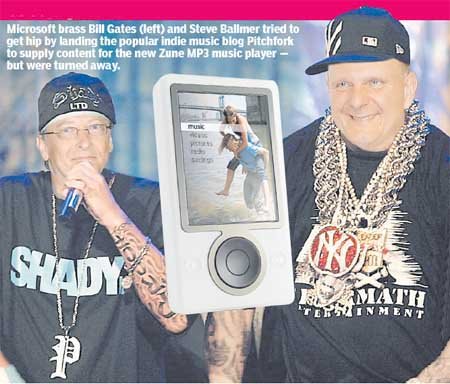
• Microsoft honchos Bill Gates and Steve Ballmer (pictured above) were dissed in their proposal to team up with the popular Pitchfork blog. “They asked us about generating new content with them or creating a new section on our site specifically for Zune visitors, but it wasn’t something we were interested in pursuing,” said Pitchfork’s editor-in-chief. Can’t imagine why anyone would reject the Microsoft executives in their B-boy gear. Next time, just show up with bags of loot.

• Demographers predict new diversity for America in 2043: The U.S. will be 15 percent non-Hispanic Black, 8 percent Asian and 24 percent Hispanic. Plus, the number of multiracial citizens will continue to rise. “The racial lines will basically be blurred,” said a Brookings Institution demographer. “It’s hard to say what the different classifications will be. … The stark racial categories now won’t hold.” However, experts believe there will be zero changes in the advertising industry.

Essay 1240


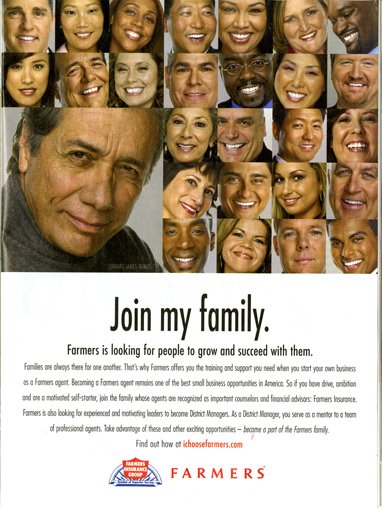
Here’s a twist — diversity advertising with a celebrity endorsement. Wonder if the Black-targeted version features Philip Michael Thomas.

Saturday, October 21, 2006

Essay 1239


Jimmy John’s proclaims to sell the World’s Greatest Gourmet Sandwiches. Maybe this explains the international slant to the sub maker’s television campaign, which features Asian, Hispanic and European scenarios. Or maybe Jimmy John’s is just an insensitive, bigoted, demented advertiser. Click on the essay title above and judge for yourself. And be sure to catch the other spots available on YouTube.

Essay 1238


Riding the subway of culture in a MultiCultClassics Monologue…

• Here we go again. A California woman claimed to discover part of a human finger in her Subway sandwich. The local health department is investigating, while the restaurant manager — who was at the store when the accusing woman presented the alleged digit — disputes the charge. “It looked like a thick piece of fat,” said the manager. “It doesn’t look anything human to me.” A thick piece of fat? Isn’t that how the ladies used to refer to Jared?

• Rapper Fabolous has hired investigators to determine exactly what happened when he and his posse were attacked outside a Manhattan nightclub (see Essay 1228). It’s all part of an effort to clear the artist of weapons charges that stemmed from the incident. “He was shot,” said Fabolous’ lawyer. “I think that’s the classic definition of a victim.” Then again, he’s a rapper. That’s the classic definition of a bullet magnet.

• Charges were dropped against a 42-year-old California mom accused of driving her two teen kids and their pals around Silver Lake and Echo Park in an SUV so they could tag buildings and property. However, she was sentenced to 90 days for violating her probation stemming from a drug bust — plus, one son was given jail time and more for felony vandalism. Wonder if the local prison offers family plans.

• Afro-In Books, Miami’s only Black-owned bookstore, reopened in Liberty City after closing last December (see Essay 305). The store has been revamped to include a new kitchen and dining area. Visitors and residents are encouraged to support the business. Click on the essay title above to learn more.

Essay 1237


This ad is funky — that is, it stinks.

Essay 1236


From The New York Times…

----------------------------------------------------

Bias Episodes Rattle a University’s Diverse Student Body

By KAREN W. ARENSON

For many Muslim students, Pace University had seemed to be a comfortable haven with a diverse student body that included hundreds of Muslims and offered an easy give and take among students of all races and ethnicities.

“It’s an awesome school, absolutely amazing,” said Naida Jakirlic, 20, last year’s president of Pace’s Muslim Students Association, who is a refugee from Bosnia.

Faiza Ali, 21, a political science major in her senior year who has also been active with the students association, said that even though she commutes to her home in Bensonhurst, Brooklyn, from the campus in Lower Manhattan, she spends all her time at the university, and it is like her second home.

That was until late September, when a student discovered a library copy of the Koran, the holy book of Islam, tossed in a men’s room toilet at the downtown campus. And last week, a second Koran was found in a toilet there.

In the days since, a slur aimed at African-Americans was found scrawled in the dew on a car window at Pace’s campus in Briarcliff Manor, in Westchester County, and a swastika and other slurs were found on a bathroom wall at the Manhattan campus.

The events, now being investigated by the police, have rattled Pace, a comprehensive university with 14,000 students and six campuses, the largest one near City Hall. “What is most scary is that no one knows who the perpetrator is,” said Rakshan Khateeb, 19, a freshman from New Jersey, who is secretary of the Muslim Students Association.

Ms. Khateeb, who wears a traditional head scarf, added: “The perpetrator could decide to do something to a person next. And especially for women, it is obvious we’re Muslims.”

That sense of insecurity is not limited to Pace’s Muslim students.

“When one minority is the victim of a hate crime, it certainly provokes fear in other groups, because you cannot help but think, ‘Am I next?’ ” said Ashley Marinaccio, a senior majoring in sociology-anthropology and theater, who founded an AIDS awareness group. “I’ve had discussions with quite a number of people who are worried and do not feel safe because of these incidents.”

David A. Caputo, Pace’s president, said he was shocked when the first Koran was found, but believed it was an aberration in a community that was “not only tolerant, but accepting.” But when the second Koran was desecrated and the slurs were discovered, “it was a clarion call,” he said.

Dr. Caputo estimated that more than 5 percent of Pace’s students were Muslim. He has issued numerous statements condemning the events. At a town hall meeting this month, he called them “despicable” and asked people to be vigilant. And Thursday evening, he announced an anti-hate campaign that will include sensitivity training for students and senior administrators, a program to train people in the proper protocols for handling bias incidents, public forums to discuss the hate crimes that have taken place, and the issuing of wallet cards with phone numbers for people to call in emergencies.

Yesterday, Lisa Miles, a Pace affirmative action officer who has been appointed to lead the anti-hate campaign, met with student leaders on the Pleasantville campus in Westchester. She said she hoped the campaign would become “the core of what we do, not just a matter of responding to this.”

Whether the efforts will be enough to regain students’ trust remains to be seen. Muslim students and others have criticized Pace, saying it initially underplayed the seriousness when the first Koran was found, did not file a formal complaint with the police about the matter and did not respond forcefully enough in general.

“If it had been any other group, any other religious text, it wouldn’t have happened this way,” said Ms. Jakirlic, the former students association president.

Pace officials say they initially decided not to file a report after talks with the police led them to conclude that the first finding of a Koran had been an act of vandalism rather than a hate crime, thus making a formal complaint discretionary. They say they hope the training they are providing on the handling of bias will help. And they note that Dr. Caputo has now directed that any incidents involving race, ethnicity or sexual orientation be formally reported.

Ms. Ali, for one, would like to see Pace do more, like hiring a campus chaplain; it now calls on a group of clergy members on an ad hoc basis. She also wants a world religions course to be required for all students. Both are suggestions Pace officials say they will consider.

“We have science, computers, public speaking as requirements,” Ms. Ali said. “Especially in New York, you are exposed to so many people. A world religions course would be a great way to prepare students for what they’re in store for.”

Friday, October 20, 2006

Essay 1235


One more comment (sorry, couldn’t decipher the typo near the end) responding to AdAge’s Jay-Z story presented in Essay 1232…

> In response to “Now it wants to be in the hood where outcasts grow up to make good on the american dream?” What makes you think Bud wants to be “in the hood” -- because Jay is Black? And what makes people in the hood outcasts? You must be White -- or have an identity crisis. Jay-Z is brand amongst MANY ethnicities and social classes -- White, Black, Hispanic and Asian -- upper, lower and middle. He doesn’t present a “hood audience” brand just because he raps. And being from the hood doesn’t make you an outcast. Long gone are the days of the “good ole’ boy” advertising where you stick a cowboy on a horse and call that shit “American” branding -- Wake up and realize the likes of Jay-Z is what is the of advertising today. It’s a very smart move by B-S to pick up Jay-Z… consumers buy according to association. Damn idiots, I tell you. — New York, NY

Essay 1234


Mickey D’s ad for its Monopoly promotion presents the iconic car sporting rims. Pretty funny. Are there other versions with a basketball shoe, pit bull and pimp’s hat?

Thursday, October 19, 2006

Essay 1233


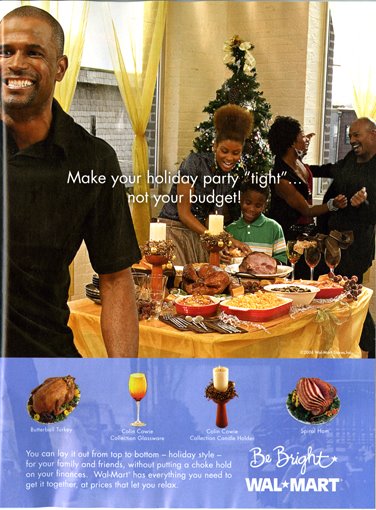
Only 66 days of contrived, clichéd headlines from Wal-Mart until Christmas.

Essay 1232


AdAge.com published the story below, which inspired interesting responses…

--------------------------------

Jay-Z Gets a Marketing Title at Anheuser-Busch

Rapper Named ‘Co-Brand Director’ for Budweiser Select

By Jeremy Mullman

CHICAGO (AdAge.com) -- Anheuser-Busch is hoping Jay-Z can bring Budweiser Select beer the kind of blingy success Courvoisier and Cristal have enjoyed.

‘His unique spin’
A-B named the aspiring hip-hop mogul -- aka Shawn Carter – “co-brand director” for Bud Select today, noting, in a press release, that the rapper “will participate in Budweiser Select planning sessions to provide his unique spin, thoughts and insights on various brand programs.”

The release added: “Jay-Z also will be involved in providing direction on other upcoming Budweiser Select television ads, radio spots, print campaigns and several high-profile events.”

A-B’s VP-brand management, Marlene Coulis, was unavailable to immediately answer questions about the extent of Jay-Z’s role on the brand.

In sales slump
But clearly, the No. 1 brewer is hoping the rapper can restore momentum for the upscale light-beer brand, which has seen sales slump following an $84 million launch in 2005 that turned the brand into the No. 13 beer brand in the U.S.

In a TV spot airing during tonight’s baseball playoff game on Fox, Bud Select product placements will be incorporated into scenes from a video from Jay-Z’s upcoming album, “Kingdom Come,” which is scheduled for release Nov. 21. The spot, by Cannonball, St. Louis, also features car-racing stars Dale Earnhardt Jr. and Danica Patrick.

It’s not known whether Jay-Z -- a onetime pitchman for Heineken -- will supplement or supplant A-B’s incoming CEO, August Busch IV, as the brand’s primary spokesman. It was also unclear whether the rapper intends to drop references to Bud Select into song lyrics, as other hip-hop artists have done with brands such as Courvoisier, Hennessey, Cristal and Don Perignon.

According to San Francisco consulting firm Agenda, which tracks brand mentions in song lyrics for its annual “American Brandstand” survey, no beer brands were mentioned in hip-hop lyrics during 2005, although import brand Corona did land three mentions during 2004.

--------------------------------

> We have always been taught to think outside the box. A-B is doing just that. Jay-Z is a brand on himself. Let him help A-B with his Midas touch and the results will tell us whether it was a worthwhile venture. — LONDON, UNITED KINGDOM

> Bud is an old brand with an old taste. this is like the old guy in the club trying to act young. too late. Bud’s always been the “grown up, all-american guy” beer. now it wants to be in the hood where outcasts grow up to make good on the american dream? sure, pass me one, i’ll buy this. and so will every other brother/sister. because Auggie has always been soooo down. lookit, you drink beer you like, you vibe with liquor brands that vibe with you. A-B needs to figure out how to vibe with the drinkers they’ve always cared about--mainstream “all-american” types, not the ones whose money they want just because their core audience ain’t checkin’ for their heavy-ass dry tasting beer like it’s 1985 anymore. i like Jay, he’s smart. but given this industry’s wonderful embrace of ethnic talent and perspectives, the chances they’ll listen to anything dude has to say other than, “i’ll do a free show for A-B/mention you on Kingdom Come” is slim and none. — chicago, IL

> Rap isn’t music, it’s just a huge corporate marketing ploy, and this is only another example of that. Just give me a good microbrew and call it a day! — Seattle, WA

> It’s crazy how far Jay-Z has expanded on hip hop music. He’s paving the way for all musicians and artists to break out of their small box mindset. — Kansas City, MO

> This is complete garbage. I will now tell everyone I know about this sad display of humanity. — PORTLAND, OR

Essay 1231


Getting Brownie Points With a MultiCultClassics Monologue…

• A committee at Brown University recommended the institution atone for its 18th-century ties to slavery by creating a center for study of slavery and boosting recruitment efforts for minority students. The report stated, “We cannot change the past. But an institution can hold itself accountable for the past, accepting its burdens and responsibilities along with its benefits and privileges. … In the present instance this means acknowledging and taking responsibility for Brown’s part in grievous crimes.” The university should also consider changing its name from Brown to Black. (Click on the essay title for more details.)

• A recent report indicated that immigrants living in the U.S. will send $45 billion to family members in Latin America this year, up from $2 billion in 1980. Actually, folks are probably only sending about $5 billion, with $40 billion added through Western Union fees.

Essay 1230


From The Chicago Tribune…

-------------------------------

Mayberry I.N.S.

Back in August, the mayor of Arcadia, Wis., proposed a local crackdown on illegal immigrants. “They are not welcome here!” Mayor John Kimmel wrote in a column in the hometown newspaper. He said he’d create a task force to report undocumented workers and would levy fines against landlords who rent to illegal immigrants. English should be the official language of Arcadia, he said.

Within weeks he’d changed his mind. His plan divided residents, angered local businesses and raised the specter of a lawsuit by the ACLU. Saying he found the reaction “surprising and humbling,” Kimmel withdrew his proposal.

We bring this up because the Village of Carpentersville has stepped on the same hornet’s nest. Two trustees have drafted an ordinance that sounds a great deal like Kimmel’s plan. They were going to introduce it Oct. 3, but more than 3,000 people showed up for a meeting in a room that holds 212. The meeting was postponed.

The fallout in Carpentersville has been a lot like that in Arcadia. Some residents say the ordinance is a slap in the face to Hispanics, who make up about 40 percent of the village’s 37,000 population. Others wonder aloud how many of their neighbors are here illegally; they complain that immigrants are straining village services and not paying their share of taxes. Businesses say that if it weren’t for immigrants, they’d have to close for lack of employees or customers. And the village’s insurer has warned that the ordinance would invite a lawsuit.

Trustee Paul Humpfer says he co-wrote the ordinance because federal agencies charged with enforcing immigration laws “haven’t done a very good job.” He’ll get no argument about that here. Dozens of communities across the country, frustrated by the broken immigration system and Congress’ failure to fix it, have tried to take matters into their own hands. But that’s a mistake. It costs a lot of money to try to do the federal government’s job for it, especially if you trash your local economy in the process. Asking landlords to enforce immigration laws makes about as much sense as requiring grocers to demand a green card before selling a gallon of milk. And if one town applies immigration laws scrupulously and the town next door doesn’t, guess which town gets the labor shortage?

We haven’t quite despaired of the idea that Congress will enact meaningful reforms. In the meantime, individual towns should resist the urge to set up municipal versions of the old Immigration and Naturalization Service. The federal government took over the regulation of immigration more than a century ago precisely because the states were setting up a quilt of rules. The feds are having a hard time getting it right, but the patchwork approach doesn’t help.

Essay 1229


The story below appeared at AdAge.com — a MultiCultClassics response immediately follows…

-----------------------------------------

The Flavor of Stepin Fetchit

VH1’s Ratings Sleeper is a Cable Minstrel Show

By Bob Garfield

Poor Bill Cosby.

He didn’t like HBO’s Def Comedy Jam, because he thought it was a stereotype engine, allowing mostly white viewers to gawk at one raunchy ghetto “comic” after another.

“These people come out and they just start to yell at the audience and from that point on they begin to describe what orifices you’re going to put your extension in,” Cosby once complained. “There’s got to be more.”

Oh, there’s more. Now there’s The Flavor of Love.

This would be the VH1 “reality” show starring rapper Flavor Flav -- the clownish, alarm-clock-necklace guy from Public Enemy -- sorting through various sluts and hos in search of a mate. It’s so over-the-top appalling that you can’t take your eyes off of it. Which, of course, is the point.

Congratulations to VH1, Sunsilk hair care products and all the other advertisers. Just when you thought black culture couldn’t be degraded and exploited any more comes this, the mutha lode. At least Stepin Fetchit blazed a trail for black film actors. All Flavor Flav is blazing a trail for is Viacom’s trip to the bank.

-----------------------------------------

When did Bob Garfield decide he was Stanley Crouch?

One day he sees racist overtones in an Oreos promotion starring American Idol’s Randy Jackson. Now he’s taking on Flavor Flav, peppering his viewpoint with hos, mutha and Stepin Fetchit — references he probably collected via Google and Wikipedia.

Thank you, Bob, for sharing your insightful and informed cultural perspectives with the masses.

Although you really should stick to critiquing the latest Glade Plug-Ins campaign.

Essay 1228


Sniping with a MultiCultClassics Monologue…

• Wesley Snipes is facing an arrest warrant for allegedly cheating the IRS out of $12 million. White men can’t jump, but Black men can’t get away with ripping off the IRS.

• Chris Rock’s mom charges she faced racial discrimination at a Cracker Barrel restaurant in South Carolina. Mrs. Rock and her daughter — the only Blacks in the restaurant at the time of the incident — sat for over half an hour, being completely ignored by the waitresses. A Cracker Barrel spokeswoman said the company doesn’t “tolerate any form of discrimination.” Yeah, right. Maybe it’s just that Everybody Hates Chris’ mom, too.

• Somebody hates Hispanic voters in California. Hispanic residents in Orange County received a letter warning it was illegal for immigrants to vote, and they could face jail or deportation if they showed up at the polls in November. Hey, let’s hold a Hispanic voters drive at the local Cracker Barrel.

• Rapper Fabolous was shot in the thigh, and later arrested for carrying unlicensed firearms. The artist and his posse were attacked after leaving a Manhattan nightclub and jumped in a car to flee. Police stopped the vehicle for running a red light, and found the guns while searching the ride. “He’s been shot,” said the rapper’s lawyer. “I don’t know why he’s under arrest. Obviously he didn’t shoot anyone.” Um, nothing’s ever obvious when rappers pack heat.

• A Democratic leader in the House of Representatives apologized for saying a Black candidate for the Senate “slavishly” supported the Republican Party. House Minority Whip Steny Hoyer made the comment about Maryland Lt. Governor Michael Steele. Hoyer has a history of dumb remarks, having once referred to Steele as a “token” candidate. Hoyer issued a statement to say, “I should not have used those words.” He probably minimally wanted to use the N-word.

Wednesday, October 18, 2006

Essay 1227


Does anyone else see hypocrisy in the Ad Council’s long-running UNCF campaign and the ad industry’s long-running inability to promote Black minds?

Essay 1226


One more comment responding to the AdAge perspective presented in Essay 1205…

> Hold on. How does recruiting and hiring minorities in itself make an agency “edgy”? Recruiting and hiring creative people with amazing portfolios who can display a versatile range of skills makes an agency edgy. It’s just that agencies and recruiters could do a much better job of reaching out to a wider variety of talent, i.e. thinking beyond just the portfolio schools and more well-known collegiate programs like U. of Texas. Additionally, colleges need to do a better job of getting with the times and bringing in real-world talent from agencies as guest instructors -- not just using professors who used to work in an agency 20 years ago shoveling history about Burnett and Bernbach. How about having students work on campaigns for real (or fake) clients so they can build up their books when they go out into the real world for a job? There are some great ideas here and I completely agree that the ball is in the agency/recruiter/university’s court for finding, nurturing and hiring talent. However, excuse me for saying something that may or may not be considered politically incorrect, but I feel obligated to extend myself as much as possible to seek out and hire TALENT first and foremost -- regardless of a person’s skin color. And guess what? I’ve still got myself quite the diverse agency anyway. — Boca Raton, FL

Essay 1225

Belated Hispanic Heritage Month ads…


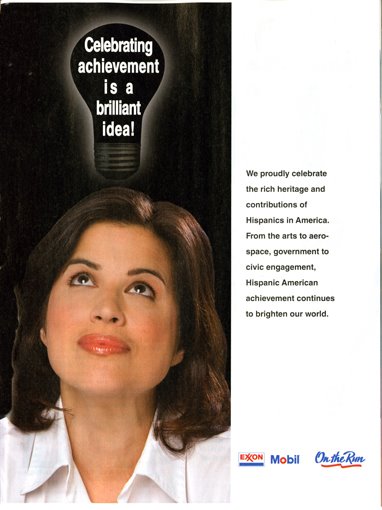
ExxonMobil presents this peculiar ad to commemorate Hispanic Heritage Month. What’s with the black light bulb?


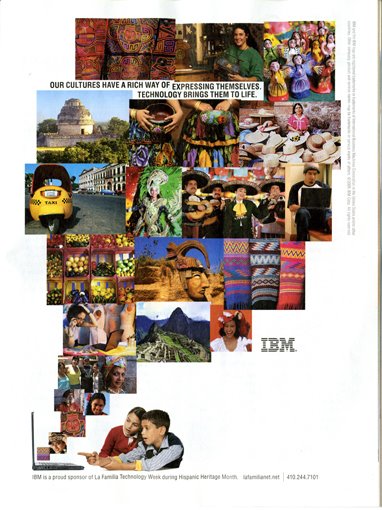
IBM celebrates Hispanic Heritage Month and Black History Month with identical ads. Guess they think all minority holidays look the same.

Tuesday, October 17, 2006

Essay 1224


News to digest in a MultiCultClassics Monologue…

• Walt Disney Company has decided to go healthy, planning to introduce new menus at theme parks and change licensing tie-ins. French fries and soda pop will be swapped for vegetables and juice at the parks, while licensing deals will follow specific guidelines based on the healthiness of products. “Sugary things like Lucky Charms and Sugar Frosted Flakes wouldn’t make it,” said a child nutrition expert who teamed with Disney on the new initiatives. “Cheerios and Rice Krispies would.” The Lucky Charms Leprechaun will probably file a discrimination lawsuit.

• Boxer and lunatic Mike Tyson wants to get in the ring against female boxer Ann Wolfe, victor in 17 of her 18 professional fights, 12 by knockout. No word yet if Wolfe will seek fighting advice from Robin Givens.

• California Governor Arnold Schwarzenegger recently apologized for calling Assemblywoman Bonnie Garcia a “very hot” Latina. Now Garcia is apologizing for telling a group of high school seniors that she wouldn’t kick the Governor out of bed. However, she also insisted the attacks against her were sexist. “If anyone was offended by the silly questions asked and the joking answers I gave, I sincerely apologize,” said Garcia. “If something truly offensive occurred, why did the adults in the room not stop the discussion … or contact my office in the days following my visit?” They were probably too busy thinking Garcia is very hot.

• Teens are getting into a dance style called “freaking,” and adults are freaking in response. The moves incorporate a lot of provocative grinding and gyrating, leading school officials to complain at homecoming dances and events. “The ‘dancing’ of our youngsters today is one step from events that should be occurring on wedding nights,” a California high school principal emailed to parents. No word yet from Assemblywoman Bonnie Garcia and Governor Arnold Schwarzenegger.

• The Census Bureau released a study showing married couples are the new minority in America. However, the number of married couples working in advertising still exceeds figures for Blacks and Hispanics.

Essay 1223


Palmer’s Cocoa Butter Formula finally updated its advertising imagery — to look just like Oil of Olay.

Monday, October 16, 2006

Essay 1222


Advertising agencies consistently introduce characters that symbolize the cultural cluelessness, insensitivity and even racism so prevalent in the industry. Classic examples include Aunt Jemima, the Frito Bandito, and the Calgon Couple conspiring with their “ancient Chinese secret” (sorry, couldn’t find a good image of the Asian duo, and settled for a shot from Saturday Night Live’s parody of the iconic commercial starring Maya Rudolph and Jackie Chan). MultiCultClassics is proud to present the latest such character: Marc Brownstein.


Anyone unfamiliar with this new character is cordially encouraged to read the AdAge perspective presented in Essay 1205.

Just to be clear, this commentary is not intended to be a direct attack against Marc Brownstein. After all, it’s highly likely that Brownstein is a decent fellow and upstanding citizen. And he’s probably not a mean-spirited racist. Therefore, let’s avoid being haters regarding the true Marc Brownstein.

Rather, readers can think of Marc Brownstein as a label for actions and attitudes. Based on recent events (many of which have been detailed on this blog over the past months), it seems safe to conclude that every major Madison Avenue shop has a bunch of Marc Brownsteins on staff.

So what exactly is a Marc Brownstein?

When confronting issues of diversity and exclusivity, a Marc Brownstein openly displays passive bias. (Click on the essay title above to read the MultiCultClassics kickoff essay, which serves up the phenomenon of passive bias.)

For guidance on race-based questions, a Marc Brownstein seeks counsel from a Black friend (who is often the only Black person in the Marc Brownstein social network). Of course, this Black friend will be a class act, unlike the majority of minorities featured on evening news broadcasts and regular installments of The People’s Court and Cops. Plus, the Black friend’s viewpoint will completely represent the opinions of every dark-skinned individual on Earth.

A Marc Brownstein will refuse to believe discriminatory hiring practices exist in the advertising industry. Yet Marc Brownsteins are never able to adequately explain the lack of color in the Ivory Towers of Madison Avenue. In fact, a Marc Brownstein will inevitably place the bulk of the blame on minorities for failing to pursue opportunities in the field. “We’re just not getting any résumés from Jamal and LaQuita,” is a normal Marc Brownstein complaint.

Mirrors are obviously in short supply with Marc Brownsteins, as they don’t connect their personal job histories with the global problem. That is, a Marc Brownstein enters the business via nepotism, cronyism and a host of isms rooted in privilege. Heaven forbid a Marc Brownstein should be judged solely on talent.

The standard Marc Brownstein definition of minorities includes adjectives like “inner-city” — as if minority recruitment must start in the mean streets of urban America, the veritable undiscovered country for a Marc Brownstein.

The Marc Brownsteins of the world love to jump on pedestals and unload cool solutions for the diversity dilemmas, incorporating the insights of the Black friend and a perusal of the nearest Shelby Steele book. Oddly enough, the plans usually offer a lot of common sense and keen tactics that could lead to success. However, a Marc Brownstein will never prove the theories by attempting to execute them. Better to let another agency serve as the ceremonial guinea pig.

On the flipside, a Marc Brownstein will also suggest ignorant concepts like creating “a TV show in an agency environment with a cast that’s truly diverse.” Now there’s an innovative way to entice potential candidates — let’s show folks a totally fictional scenario that doesn’t currently exist anywhere. Somebody call BET pronto.

And that, in a nutshell, describes a Marc Brownstein. Feel free to develop mnemonic devices or jingles for the critter.

Essay 1221


This ad’s copywriter should have his/her street cred revoked.

Sunday, October 15, 2006

Essay 1220


An international comment responding to the AdAge perspective presented in Essay 1205…

> It amazes me how many of us “minorities” can’t talk enough of how unfairly this industry treats us. Look folks, if you think growing up in suburban America as a minority was tough, you’ll get no argument from me. As Ms. Vargas said, times are changin’. Hispanics will have their say, so will Asians and so will blacks. It may not happen all at the same time, but I’m already seeing the benefits of the influence of Asian cultures in the world and all I can say is, “it’s about time”! Marc, regardless of what everyone here is saying about your poor choice of words, I do know where you’re coming from. I worked for Philadelphia’s very own George Beach back in the early 90’s when his office was a mix of Indian, Pakistani, Afro-Caribbean, Korean, and white. George actively recruited minorities to keep his agency edgy. If Hollywood is any indicator, I think we’ll see more minorities in creative agency positions before too long. — Ken Hong from Hong Kong

Essay 1219


Like so many other diversity ads, this one says the same thing — in stereotypically mediocre fashion.

Essay 1218


One more comment responding to the AdAge perspective presented in Essay 1205…

> Marc Brownstein, you’re either a genius or a crackpot, I haven’t decided which; you’ve made statements that are decades weary (the old black friend thing) followed by your assessment of how ‘inner-city kids being majority black, must have better television ad-related roles to motivate them’… who do you think you’re foolin’? You can’t be that vacuum-packed from social interactions to make such extraneous claims! Since I was a kid, I enjoyed watching the reactions of people at movie theatres to certain action or horror scenes more than watching the movie itself: many such situations caused me to realize early on that this was what I wanted to do with my life. To be able to create a package design or word combination promoting that product or service so well that the target consumer just couldn’t say no. I feel I’m in like company here… As a black art director, I find it a lonely but challenging arena, always having to prove my worth more so than ‘the other guy’ in the agency. Too many memories kicked up by reading all the previous notes to go into here, but I really believe you were testing the waters by throwing in a few ‘shark fins’… — tell these folks the truth, compadre! — Chicago, IL

Essay 1217


From news sources nationwide…

-------------------------------------------------

Good job, Buck

By Ken Burns

We mourn with deep, deep sadness the passing of our brother John Jordan “Buck” O’Neil. We experience a void in our lives that is so great and wide that it is difficult to countenance how we will carry on without this large and generous man, guiding us always to that which was best in ourselves, what Abraham Lincoln called “the better angels of our nature.”

We are so grateful for his skill as a ballplayer: his love of the game and the joy he took at its innermost workings. We are grateful for his confident swing, his sure fielding, that he once hit for the cycle, that he led his league in hitting, that he played with Satchel and Jackie and Josh and Cool Papa and hundreds more, and that his certainty of their greatness helped the rest of the world to know it too. We are grateful for his understanding of men, an understanding that identified and matured great talent like Ernie and Lou and Ozzie, imparting in them a sense not only of the fundamentals of the best game that’s ever been invented, but of its inside joys, its transcendent moments, and the debt we all owe to the men who played for too long in the shadow of Major League Baseball as our country and our national pastime wrestled with stubborn and pernicious prejudice.

We are grateful for Buck’s patience and forbearance and Christian example in the face of that dehumanizing racism. He never let it get to him and never stopped fighting it, fighting it not with the weapons of the enemy--the assassins’ guns, cowardly bombs, fiery crosses and withering rhetoric--but with the gentle language of your savior, with grace and stoicism, and above all a tolerance that goes way beyond the narrow confines of our current politically correct, politically constipated world. Buck liberated himself, not an easy thing to do, and then turned around and for the rest of his life helped to liberate the rest of us: white and black, female and male, young and old, red state and blue. And Buck, we are so grateful.

We are grateful for Buck’s service to those black baseball players who did not have a voice, or did not live long enough to exercise their voices, and therefore could not shout outside of the Man’s House, the Man’s Hall of Fame, to be let in, to share rightfully in the glories of those who occupy the pantheon of the best in the baseball business. Buck shouted for them, and today so many of them are there, safely home, there in that now integrated sanctuary which Buck helped to purify.

We are grateful for that but saddened by the fact that Buck is not among them. We know the sad story, confident its sad secrets will one day be out, but we pledge today that we will not rest until Buck rests, as he so richly deserves, in that quiet village by the banks of that beautiful lake in Cooperstown, N.Y. In the meantime, as we beg forgiveness from Buck for his temporary purgatory, we hope that Buck's many friends and admirers take comfort in the fact that without a doubt, by unanimous vote, on the first ballot, Buck is in our hall of fame--at the top, near the door, his statue an exclamation point of joy and an example for all who have had to wait, all who have been told “no.”

We are grateful for that unbelievable forbearance that Buck showed. He made this--his life and the Negro Leagues--a story not about baseball, but of all of human life, a story that will reverberate down the corridors of history as almost biblical in proportion, And each day of his life he also let us know, every one of us here, that we indeed did have that strength within us, that we merely didn’t ask of more of ourselves, no, demanded more of ourselves; that is to say, what is required simply to live a good and healthy and holy life on this planet. We are grateful for his gentle reminders and vow, Buck, that we will try to be better.

Buck, our angel. We can see him now, rounding third, heading for home, the cheers echoing off the walls, drowning out our sorrow, the congratulations of your teammates--Jackie and Satchel, Oscar and Josh, Cool Papa and Double Duty--bright in your ears: “Good Job, Buck. Welcome Home. Good Job.”

Saturday, October 14, 2006

Essay 1216


Money matters in a MultiCultClassics Monologue…

• Friday was officially proclaimed as “Diddy Day” in Chicago, with Mayor Richard J. Daley honoring Sean Combs (pictured above). The artist was recognized for his many humanitarian efforts. “I truly appreciate it. I don’t take it for granted. It’s not every day that somebody young and African-American gets to have their own day in the great city of Chicago. This is definitely an honor — especially coming from New York — for y’all to … show me such hospitality and recognize that, what I do, I … do to inspire and to motivate,” said Combs. “I’m not motivated by money.” He then probably drove off in a fancy car, sipping Dom Pérignon from a bling-encrusted goblet.

• O.J. Simpson requested that a California court dismiss the lawsuit seeking the publicity rights to his name, image and likeness. Fred Goldman had filed the lawsuit last month in an effort to get Simpson to pay the estimated $38 million he owes from the 1996 wrongful-death suit. Simpson’s court papers argued that the action would give Goldman the power to “disparage [Simpson’s] image on billboards across the country… This is absurd.” At this point, is anything involving O.J. Simpson NOT absurd?

• The New York Post reported that Michael Jackson will pay his ex-wife $750,000 annually to keep his kids, which translates to installments of $62,500 per month. Seems like a low amount of money to carry the stigma of having had sex with Jacko.

• Wal-Mart must pay at least $78.5 million for violating labor laws in Pennsylvania. Michael Jackson must be thankful his ex-wife didn’t have the same lawyers that beat the mega-retailer.

Essay 1215


Some think exclusive. We think inclusive.

Everyone thinks this ad sucks.

Friday, October 13, 2006

Essay 1214


Still more comments responding to the AdAge perspective presented in Essay 1205…

> Hey, Mark from Ridgefield. Stop screaming. Here’s a job spec: I am looking, right now, for a mid-level media planner/buyer to work on very cool account and on some new business. I will hire that person today if they’re qualified. If you can send me a candidate, regardless of skin color, who is qualified, and I have the chance to check references, I will hire them. Send any resumes to keith@rethinkgroup.com — Stamford, CT

> Hmmm…couldn’t they let this post be the most recent one until Monday? I doubt anyone is going to jump on Bart’s latest post until this here post gets rode out a little bit more. FWIW, if you visit Mint's site (www.mintadvertising.com…seems to be down right now, better get on that), I’m the short one. — Branchburg, NJ

> I feel like I want to SCREAM! The problem is not awareness. There are more than enough minorities who are aware of advertising as a career (at least as well as anybody else). The problem is not recruiting. All the white guys who have jobs at ad agencies never got recruited. Minority candidates aren’t asking to be recruited. They are happy to do the legwork and come knocking on your door. The problem is HIRING (or the lack thereof). That’s the problem. About 10 years ago, in response to hearing all the excuses other companies were making about why they weren’t hiring enough minorities, the Sr. Vice President of HR at Xerox wrote an article in the NY Times entitled, “Just shut up and hire.” I think that says it all. — RIDGEFIELD, CT

> Hey Gabriel, You bring up some good points. I appreciate the issues you take with my opinions as well as your passion. Hopefully the industry will change as fast as we would all like it to. In the meantime, in your professional excellence and personal determination, make yourself impossible to ignore—and an example of why the industry must change. All the best. — Stamford, CT

> Hey Keith of Stamford, Conn. I don’t think anybody who’s posted thus far is missing the point regarding Marc’s naive assessment. Sure your points are valid but nobody likes to talk about the race/diversity issue because everyone is trying to be so P.C. or pseudo progressive about their own perceived lack of racism or ignorance. We all carry it and it’s not the Bull Connor redneck variety either—so don’t be so quick to want to dismiss it under all this economic blah blah blah. Maybe your comment reflects how much a part of the problem you are. Hopefully, Ad Age will allow Marc to respond to the comments his blog generated. I think it’s ironic in taking a cursory look at Marc’s own company website, I did’'t see any notable diversity(janitors and or cleaning ladies not included) or was there anything mentioned about what his company is doing to address the issue or be a part of the solution. So if you’re gonna talk the talk, walk the walk. — Brooklyn, NY

> I think everyone who has been piling on Brownstein is missing the point. Whether or not he has a “black friend” who is a “class act” is irrelevant—and attaching those parts of his comments is a symptom of why things never get resolved. First off, advertising as an industry is currently so crippled, low-paying, and murky-futured, it’s having trouble attracting any new blood right now—Caucasian or otherwise. (I also wonder why anyone, of any background, would want to work in it.) That said, let’s start with recruiting…with holding company ownership sucking the cash away from agencies, with drastic cost-cutting, layoffs, slashing of virtually all training programs, when was the last time you heard of an agency willing to spend money on serious college recruitment, or showing up at any college to recruit alongside the banks, accounting firms, and pharmaceutical companies? The irony is, smaller agencies would love to do this but simply can’t afford to shell out recruiting dollars when they need them to create impressive, unpaid new business pitches against their much larger (and cheaper) rivals. Let’s talk awareness…it’s the cobbler’s shoes…agencies are legendary for not practicing what they preach to clients. Ask a group of college students to tell you what the following companies are and what they do: BBDO, JWT, Y&R. Probably the same number who can tell you who Spiro Agnew was. Let’s also talk college curriculum…economics is a defined major where learning can be quantified as are chemical engineering, law, pre-med, you get the picture. In short, what you learn makes you minimally ready to grasp your responsibilities for your next step, be it an entry-level job or grad school. Now take a look at the advertising and/or communications programs at schools…pedestrian, boring, and they bear absolutely no resemblance to what is required to work in this field in the real world. What’s more, the placement offices of most schools, when it comes to advertising, have irresponsibly underserved their students by not doing their jobs and keeping up with where the jobs are and who might be offering them. There’s plenty of blame to go around. — Stamford, CT

Essay 1213


The creative team responsible for this ad should be run out of town.

Essay 1212


From The New York Daily News…

--------------------------------------------------------

Voces Latinas gives women with HIV voice

By Clem Richardson

Rosa Bramble Weed and Nathaly Rubio-Torio are getting immigrant Latinas to talk.

They’ve heard some amazing stories, been able to reconnect themselves with their heritage, and done a lot of good to boot.

Weed and Rubio-Torio are founders of Voces Latinas, a Woodside, Queens, program aimed at curbing the rate of HIV and AIDS infections among immigrant Latinas in the city.

Once a week, women from countries across South America, many of them living with HIV and AIDS, gather at Voces Latinas’ office to talk.

“They talk about their lives, what they left behind in their home countries, how they got infected, what life is like here,” said Rubio-Torio.

That is a welcome relief for many women living with the disease.

It’s not easy.

Latina women with HIV struggle to keep their illnesses secret. That means many are in the later stages of the disease, or have developed full-blown AIDS before they seek treatment.

“This is a very difficult population to reach because of the stigma HIV and AIDS carries in our community,” Rubio-Torio said. “It makes it more difficult to give them the information they need.”

The stigma makes Weed and Rubio-Torio’s jobs that much more difficult. Even when they want the information, women are often reluctant to be seen taking pamphlets for fear people will think they have the virus. “It makes handing out the literature difficult at times,” Rubio-Torio said.

When Voces Latinas had a news crew attend one of its meetings, many of the women, alerted beforehand, showed up wearing disguises.

There is an urgent need for Voces Latinas services.

HIV and AIDS are at “crisis” levels in minority communities, Weed said.

“When you look at the numbers of people who have been most recently infected, they’re mostly Hispanic and African-American,” she said. “The numbers aren’t stagnant; they’re increasing.”

African-Americans and Hispanics make up the majority of new HIV and AIDS cases in the city, according to city Department of Health and Mental Hygiene statistics. The percentage of women and young people contracting the disease through heterosexual sex continues to skyrocket, making women one of the most at-risk groups for HIV infection.

Weed and Rubio-Torio said many Voces members contract HIV from their partners, many of whom don’t know they have the disease. Other women may know their partner is HIV-positive, but are unable to get him to wear a condom - and, in homes with domestic violence, cannot safely refuse to have sex if he doesn’t wear one.

“One woman who comes to Voces keeps checking her watch because she has a curfew,” Weed said. “You can see she is afraid of what will happen if she misses it.”

Immigrant Latinas, especially those in the country illegally - Voces Latinas’ core group - often have no idea how to access the realm of services available to people with HIV or AIDS. Many face language barriers, think they have to pay for treatment, or fear they will be deported if their immigration status is revealed while they are being treated.

None of that is true.

Voces helps women access the services they need to treat their HIV/AIDS. Just as importantly, Rubio-Torio said, “This is the place where they can come and get the information they need. It’s a safe place to talk, and to find the support they need. It’s therapeutic for them to be here.”

“We’re telling them they have a choice,” Weed said. “For many of them, coming here is the first time they feel like they are not alone, that together they can make themselves be heard.”

Weed and Rubio-Torio both hold master’s degrees in social work - Weed from Hunter College, Rubio-Torio from Columbia University. Both work full-time jobs and don’t draw a salary for their work with Voces, which won them a 2005 Union Square Award.

Weed immigrated to the U.S. from Venezuela when she was 7 years old. Rubio-Torio was 3 when her veterinarian father, Sergio, came to the U.S. because “a friend told him that Americans would do anything for their pets.”

Weed’s family - father, Ivan, an electrician, and mother, Dora, a businesswoman - settled in the South Bronx, where they immersed themselves in Puerto Rican culture.

Rubio-Torio’s father, Sergio Rubio, and mother, Carmen, settled in Elmhurst, Queens, but would, over the years, moved to Minnesota and places in the West before returning to the city for schooling.

The two worked for a variety of social service agencies across the city, including Covenant House (Rubio-Torio) and the Woman’s Health Alliance (Weed).

Weed now directs the Positive Life Program of the Child Center of New York, based in Woodside. Rubio-Torio is a fellow in New York University’s Robert F. Wagner Graduate School of Public Service.

The two met in 1999 while coordinating an AIDS education forum as part of the Western Queens HIV Care Network, a group that no longer exists. They formed Voces shortly afterward, having seen how HIV was devastating immigrant women.

Rubio-Torio said her work has given her even more appreciation for her Latin heritage.

“I was a little mixed up about who I was and where I was from when I was growing up,” she said. “We were usually the only Hispanics in our neighborhood. This work has really helped me get in touch with my roots.”

For information about Voces Latinas, call (516) 322-1959 or (718) 593-4528 or check their Web site, www.voceslatinas.org.

Thursday, October 12, 2006

Essay 1211


Is it legal for lawyers to recruit minorities so blatantly?

Essay 1210


A few more comments responding to the AdAge perspective presented in Essay 1205…

> Are you ready to put some action behind the talk? Join Wise Connection as a mentor to 14-year-old students in both Chicago and Baltimore school districts as they write, develop and execute their experiential marketing plan. We need mentors... Chicago is one of the largest Hispanic communities and Baltimore is Afro American. Some of you must be ready to act, or are you all watching reruns of Bewitched? — Michele Tummino, 650-814-4071 Mobile, www.wiseconnection.org, SCOTTS VALLEY, CA

> I agree that awareness of advertising careers is a big issue for people of color. However, I think that a tremendous amount of diversity awareness needs to happen. Even Marc’s message points out that “many inner-city kids love to watch TV commercials -- but they have no idea how the commercials are made.” I would contend that there is plenty of opportunity to inform and recruit people of color who live outside of those communities. Moreover, the agencies and the industry’s associations need to take as prominent a role in recruiting on diverse campuses and at conferences held by organizations like NBMBAA and NSHMBA, among others. When it comes down to it, people of color want to make good livings. The story needs to be told that the ad industry allows you to make a really good living and that you can have a hell of a lot of fun doing it. That’s what keeps all of us here and that’s what will make it compelling to a more diverse group. — ROSELLE, NJ

> Dang! I’ve been tied up with work, otherwise, you know I would put in my two centavos much sooner. A shout out to all the Fil-Ams out there. I dig that people are letting Mr. B have it. That’s all part of the dialog, right? And I think it’s telling that Marc hasn’t tried to defend his post (but this could be simply an issue of not having the time, see my opening para). Because, from what I know, Marc is a white male who assumed the helm of his father’s ad agency (and it’s HQ’d in Philly, BTW) after a sojourn at other agencies. No worries, Marc. I still have much respect for you and what Brownstein has done creatively in our area. Two quick anecdotes before I step off this particular soapbox. The first goes back to my days as an undergrad at Penn. While I was interning at a small shop (SG Horn…thanks again for giving me a chance, Steven!), I found out that the local ad club was holding a student contest for an Anti-Drug billboard (sponsored by Thrift Drug, IIRC). And they were looking for volunteers to go out and speak to the schools (middle school?) about “what makes a good ad.” And so out I went…speaking to a few schools armed with very little besides my internship and any wisdom I could glean from David Ogilvy’s books. One of those schools was Little Flower, a racially diverse girls Catholic school. And darned if I didn’t get a phone call a few months later from the ad club…a few of the young women I spoke to had won the contest! I was invited to the award ceremony, one of the highlights of my college experience. I wonder if any of those young women went on to advertising careers. As for an advertising TV show…I’m a Gen Xer and watched my share of “30 Something.” To my recollection, there were no minorities on that show (based in Philly, right?). But I can still recall small-agency Michael’s confrontations with the fictional large-agency head Miles Drentell…and went on to have a few similar experiences on my tour of duty in NYC. Great stuff. If any producers out there want my input on a new version of that show (now featuring minorities!), give me a call. And while I’m on the self-promotion tip, hey Ad Age…if you need a minority small agency principal (50% ownership) to literally add some color to this blog or a future one, I happen to know this guy in Branchburg… — Branchburg, NJ

> Wow! Interesting discussion. — COLUMBIA, MO

Essay 1209


Delta celebrates the endless possibilities of many cultures. Check out the body copy — looks like the airline couldn’t find a proofreader familiar with the English language.

Essay 1208


Standard fare in a MultiCultClassics Monologue…

• Muslim cabbies in Minneapolis sparked controversy by declaring their faith forbids them from driving passengers with booze. These cabdrivers at the Minneapolis-St. Paul International Airport have been refusing to accommodate folks packing liquor from duty-free shopping or wine country visits. Backers think the airport should support the Muslims. Critics insist the protesting Muslims discriminate against people of other faiths and are trying to impose Islamic law. As if traveling to Minneapolis wasn’t depressing enough already.

• R.J. Reynolds agreed to stop U.S. sales of flavored smokes like Twista Lime and Mocha Taboo, which critics insisted were targeting youth. Funny, Muslim cabbies in Minneapolis probably had no problem with driving folks smoking these products.

Essay 1207


The only innovation in this ad appears in the headline.

Wednesday, October 11, 2006

Essay 1206


Wow. The comments were quick and brutal in response to the AdAge perspective presented in Essay 1205…

----------------------------------------------------

> Television... And to think, all this time, I thought it was the combo of unchecked greed, white-skin privilege, nepotism and insulated myopic world views coupled with generations of clients who’ve insisted on awarding the lions’ share of their accounts to White agencies irregardless of their abilities, capabilities or results they deliver while subjugating ethnic agencies to subcontractor roles or no roles at all? Who knew the answer was really a lack of interest in the ad business driven by mass media images, specifically TV? And since Mr. Brownstein has a Black Friend (never heard that qualifier before) he must be wrong. Thanks for clearing things up. So, I guess the solution then is for White agencies to do better commercials and for Hollywood to create better and more diverse images that will plant seeds of interest in the minds of our young Black youth, huh? 15 years in the ad world and now I’ve officially heard it all. — Chicago, IL

> Unbelievable. “Back in the 60’s and 70’s” while millions of households were watching “Bewitched,” millions of Blacks and Latinos were watching their heroes assassinated, arrested and, at the very least, systematically marginalized. When will ad executives own up to their shortcomings and recognize that more than 40 years after the Civil Rights revolution, the advertising business is still appallingly white? Shame on Marc for his bromidic pronouncements. — Eric Shorter, Maplewood, NJ

> This is the second article on this topic that could have benefited from cultural editorial review. Do you have minorities in your editorial department? It’s difficult to take these missives seriously. Is it your intention to kick up dust about this topic or to show leadership and progress on it? There are no arguments, excuses, or explanations that support the disparities that exist. No amount of comment by racial minorities (mine included) moves the industry toward closing the gap. If this is helping some industry executive make changes, great, but I’m inclined to believe these articles are all talk no action. — Wendy Manning, Chicago, IL

> This post looks like putting the blame on anyone but the agencies. I’m a Hispanic creative and I’ve been turned down from many agencies. I finally found work in a Hispanic shop. I think it’s a tribal thing. People hire who they feel most comfortable with. — Chicago, IL

> It is sad and embarrassing that someone who is a New York ad agency principal could be so horrifically clueless. It speaks volumes about the state of our industry today. Let’s put aside the fact that Mr. Brownstein feels compelled to tell us that he has a black friend; one who is a “class act.” Let’s just go to his thesis. He says, “It’s been my experience that many inner-city kids love to watch TV commercials.” Oh really? Is that his personal experience hanging out with inner-city kids, or his years of professional experience in multicultural marketing? Or is it just a glib, meaningless statement? And since when does the “inner-city” represent all African Americans? Millions of blacks live in the suburbs. I live in a small Connecticut town. These kinds of careless -- indeed thoughtless -- generalizations belie a point of view that “I know all I need to know about black people.” There is absolutely no research evidence to support that assertion that black kids know any less about the ad business than white kids. I’ve looked. I have interviewed dozens of kids (black and white) trying to get their first job in advertising, including the nephews of ad executives. None of them know anything about the business. Zero. So awareness is not the problem. This is a false argument. But it is typical of ad agency executives to suggest that they are not at fault for their own lack of diversity. It’s black people’s fault for not wanting ad agency jobs. If mainstream agencies can’t find any minority professionals, how come minority agencies — with LESS glamour, LESS money and LESS resources — don’t have any trouble finding and hiring minority talent? Mainstream agencies can’t find any minority professionals, but if they need a copywriter with six or more years of light beer experience, they can find him and hire him in less than a week, if the client is big enough. Mainstream agencies have no trouble finding what they want to find. Perhaps the height of Mr. Brownstein’s laughable naivete is his suggestion that all we need is for some copywriter to create a TV show about advertising with a diverse cast. Assuming for a moment that you could even get the show made, which is extraordinarily unlikely, the only networks that would air a show about an ad agency with a diverse cast are BET or the SciFi Channel. Expecting a TV show to transform an industry is like expecting The West Wing to magically transform the White House from Republican to Democrat. — RIDGEFIELD, CT

> I think it’s amusing that you immediately link “blacks and Hispanics” to inner-city kids without a segue explaining why you immediately linked the two together. — LOS ANGELES, CA

> You know, this issue about diversity is sooooo tired with this typical lame response. Of course there’s no “racial conspiracy” of a bunch of white ad agencies explicitly saying that we must keep people of color out of our workforce. How do people get hired? It’s who you know. Just like in life for the most part, people get hired/promoted, etc. based on relationships. If you don’t have a social network that includes people of color and you stay in your own pool then of course you are not going to be thinking about diversity unless you are forced to when issues like this “rear their ugly head” or someone realizes that there’s money to be made of off Black and Hispanic consumers. People are comfortable in choosing things they are familiar with, and given the fact that race in this country is still a factor in all aspects our society to various degrees — what make you naively think that Ad agencies are not affected??? Here’s another subtle racial qualifier that you even don’t realize you are saying — your black friend who is “smart and a class act” (as opposed to what?) said it diplomatically… He said it diplomatically because HE KNOWS how hard it is to get accounts that are not just the special market/niche ones or to be considered for mainstream accounts. He’s not stupid nor is he going to be “Malcolm X” about this lack of diversity so that it affects his relationships and his bottom line. So in the end it’s all about who you are comfortable with and it doesn’t have to be imagined as some smoke-filled conspiracy room. So if you want to feel good about hiring people of color, then start an outreach program at a nearby inner-city school or with a historically diverse school or university, form strategic partnerships with minority ad agencies, go to minority job fairs, hire a diversity consultant — just be proactive and quit with this tired lip service cause it’s late in the day. — Gabriel Tolliver, Brooklyn, NY

> Yes, indeed growing up in the suburbs of Detroit, there wasn’t much interest in my own high school and college to give me options. I remember in high school they promoted me to be a model, and when I took the AP test for the school and I won 2nd place nationwide, they were shocked. The staff at that time knew little about the Hispanics. I was the only Mexican in a nice neighborhood in the suburbs of Detroit. At college, I remember so well when I took a test to guide me on what I wanted to do; it was very ironic that the results were the typical answers of jobs that Hispanics do — like farm work or a funeral director or a bus driver. Give me a break, I thought. How is it that as a female Hispanic, these are the jobs that they were promoting for me? I didn’t feel any connection to any of these suggestions. High school was hard for me, being the only Mexican around almost 98% white students and the rest African American. Many things have changed for the Hispanics and I am grateful that now there are good positions for those of us who can do better than what was suggested in a college test. As a business owner in a white market world, it is amazing to see the change of the people and interest in the Hispanic Market. I matter, my services matter and most importantly, my culture matters. Diversity is the answer. We are in a world that is changing dramatically. GLOBALIZATION, to be clear. As a Hispanic Young Female, I am amazed by these people in the advertising market who are taking the time to get to know me and my market. I know for a fact 15 years back this would have never happened. Everyone wants to hire a Hispanic and I know why. The Hispanic Market in the USA is growing tremendously and that means money in their pocket. Major corporations are investing alone in advertising millions per year to grab the attention of the Hispanic Market. But for you to be able to grab the Hispanic Market, you must hire people who can identify with the customer. Therefore, companies everywhere are hiring Hispanics to represent their companies because Hispanics represent big profit for their companies. How ironic is that? Back when I was in college, they advised me to look into being a bus driver or a funeral director. If they only knew I own my very successful business. Now for advertising agency, you do have to go to high schools such as mine in the suburbs or in Detroit, because there is a lot of talent out there, meaning $$$$$ lots of money for your company. There is one agency in Detroit who hired me, and they knew I didn’t have any experience in the market and promised to train me. Well, they were overwhelmed by work and no one had the time to train me. I felt like I wanted to learn but I also felt lost. In my opinion this is not the way to work or hire people to begin with. Major advertising agencies, especially Hispanic-owned, need to promote these jobs first in the schools, so enough students get the interest and actually go to college and have the experience to do the job. It is frustrating when you are hired and promised training and then they tell you don’t have experience and we have to let you go. You simply don’t do that. If you promise to train someone, do it; and if you need someone with experience, hire with experience. Thankfully, that gave me the courage to be my own boss and never ever do that to someone else. Detroit advertising agencies, especially Hispanic Agencies, need to see the entire picture. Just because you are growing tremendously, you can’t mistreat your own people, as that can also be bad for your image as a company. If you are growing, it is because us Hispanics are consumers in this market. Hispanic Agencies must remember to be kind to your own people because thanks of us you have a job in the first place. And for the non Hispanic agencies, we encourage you to promote education. There are thousands of students with many talents and all they need is someone to give them the option. Host events where kids can learn about advertising — all of this will bring $$$$$$$$$$$ in your pockets, you will be surprised by the talent that has been given the option to be a bus driver or a funeral director. Let these people make $$$$$$$$$$$$$ for your companies. — Claudia V, Birmingham, MI

> I completely agree that agencies need to be more proactive in reaching students who will be the future minds of this colorful world. Formerly in an ad agency, I think the true problem is not just hiring but promotion. I will not say the agency’s name, but is it is one of the power players in the industry. Repeatedly, minority employees were not promoted or fired for doing the same job as the Caucasian co-workers who were promoted. This is what we should also worry about. If there is an increased hiring, what happens after their first day, month, or year on the job? Are they promoted or are they fired for no reason? — Detroit

Essay 1205


Published on AdAge.com…

--------------------------------------------------------

Small Agencies and the Diversity-Hiring Issue

Agency Chief and Ad Age Blogger Marc Brownstein Weighs In

By Marc Brownstein

A lot has been written about diversity and the advertising business in recent months and the discussion became particularly intense during the run up to this year’s Advertising Week event.

A friend of mine, David Brown, who is African American and himself an ad agency owner, recently asked me why I thought agencies are so white. Well, he didn’t exactly put it that way. David is a class act, and a smart pr guy, so he phrased it more diplomatically. But the question remains. The answer, I believe, lies in awareness. Or lack thereof.

I fundamentally do not believe that there is a racial conspiracy among agency owners. In fact, if my agency is any indicator, we simply do not receive many job applications from blacks and Hispanics. Why? I just think we don’t have the awareness in the black and Hispanic communities that we should. It’s been my experience that many inner-city kids love to watch TV commercials -- but they have no idea how the commercials are made. Or who makes them. Same holds true for other forms of advertising, interactive and pr. Many suburban kids, on the other hand, know someone who’s in the advertising business, and they get internships when they’re in high school with the family friend/acquaintance.

So, if there’s a generation that doesn’t know about us, that feeds future generations. I believe there are some things we (as an industry or in our respective communities) can do about it. For one, if inner-city kids don’t know who or where we are, then we should take our show on the road and go to them. Imagine the kind of impact we could make if we went to middle and high schools and made presentations about how brands are built, campaigns are created, and what the various types of jobs are in an agency. We would open eyes, and possibilities. And, over time, we would inspire a new generation of black and Hispanic kids to want to enter our industry.

I also believe that television influences behaviors and helps shape careers. Back in the 60’s and 70’s, millions of households tuned in to “Bewitched,” and watched Darren Stevens earn a living in his very white ad agency. What would happen if a black version of that show aired back then? We would certainly have higher levels of awareness of the advertising industry among blacks and Hispanics than we currently do. And, as we all know, awareness leads to action... like sending a resume for a job. Perhaps there’s a copywriter out there who wants to turn screenwriter, and create a TV show in an agency environment with a cast that’s truly diverse. Something tells me the resumes would start flowing in.

Essay 1204


Ford declares, “We’re committed to our employees’ success…” Um, somebody remind the automaker about its plans to terminate around 38,000 workers.

Essay 1203


Suppressing amusement in a MultiCultClassics Monologue…

• From The New York Times:

U.S. Says Blacks in Mississippi Suppress White Vote

By ADAM NOSSITER

MACON, Miss. — The Justice Department has chosen this no-stoplight, courthouse town buried in the eastern Mississippi prairie for an unusual civil rights test: the first federal lawsuit under the Voting Rights Act accusing blacks of suppressing the rights of whites.

The action represents a sharp shift, and it has raised eyebrows outside the state. The government is charging blacks with voting fraud in a state whose violent rejection of blacks’ right to vote, over generations, helped give birth to the Voting Rights Act of 1965. Yet within Mississippi the case has provoked knowing nods rather than cries of outrage, even among liberal Democrats.

The Justice Department’s main focus is Ike Brown (pictured above), a local power broker whose imaginative electoral tactics have for 20 years caused whisperings from here to the state capital in Jackson, 100 miles to the southwest. Mr. Brown, tall, thin, a twice-convicted felon, the chairman of the Noxubee County Democratic Executive Committee and its undisputed political boss, is accused by the federal government of orchestrating — with the help of others — “relentless voting-related racial discrimination” against whites, whom blacks outnumber by more than 3 to 1 in the county.

His goal, according to the government: keeping black politicians — ones supported by Mr. Brown, that is — in office.

(Click on the essay title above to read the full story.)

• Five people trying to sneak into the U.S. from Mexico were thwarted when a 200-pound member of the group got stuck in a narrow tunnel. Rescue workers used jackhammers to free the man, who failed to gain freedom in the States. Wonder if Justice Department officials will charge him with suppressing illegal immigration.

Essay 1202


GM salutes Hispanic Heritage Month by celebrating Latino art. Along with the full line of available vehicles. What a display of heartfelt sincerity.

Tuesday, October 10, 2006

Essay 1201


Comments posted in response to the AdAge article presented in Essay 1193…

> Technology has had a curious impact on our business. During the dot com boom, it lured talented young people from the ad biz in droves. In those days, it was hard to find anyone with little more than a pulse that really wanted to work in an agency. But today, post boom, technology now serves as the great leveler. And it may be the solution to the industry’s diversity problem. If they have the technical skills -- coupled with the creativity -- needed, the crop of kids coming out of schools like City Tech, should find the doors to be far more open than they ever were before. Our industry needs talented, driven people who want to work in the business. Diversity among them can only make the agencies themselves better at what they do. Anyone who doesn’t realize this need only look at the changing face of the people we’re all selling to in order to see this is true. — ATLANTA, GA

> I totally agree with the last comment that minorities are not looking for handouts. My question is to the senior creative director who has a very interesting comment on this topic. Would they go in front of a group of Board of Directors of a major brand and say, “the reason why there are not more minorities in the Ad industry is because they want handouts.” Again, it is only a matter of time before major brands will address this issue with major agencies. Comments like that I am sure will not be tolerated by large brands who answer to their shareholders. — new york, NY

> The person from Chicago is a better example of why minorities leave advertising. Who really wants to come into an industry that has a culture of hazing the new people? Then on top of that, you have to work with or for someone who believes that as a minority you want a handout. No one wants a handout — they want the same opportunity to shine others in this industry are given. Yet still nepotism is the norm in our business and companies wonder why all their people look alike and even worse...think alike. There are HUNDREDS of schools out there that have quality students that are diverse. Most are city schools. And unlike many that went to NYC or Syracuse, the students there are working to put themselves through school and actually know the value of hard work. They won’t be the ones to complain when planning is here and it’s time for 1 am nights. Funny, for an industry that is fixated on the changing demographics of the country, there seems to be a lot of push back in letting those same changes happen in the industry. — New York, NY

> Stamford is right. Minorities run screaming from the ad world. Have been doing so for 80 years now. Nothing else would explain the 95% white staffs... nationwide. After all, only Anglos would be willing to bring their ample talents to an industry, start at the bottom and work their way up, with a long-term vision of success. That’s the problem with minorities, Blacks in particular--always looking for handouts and quick fixes. That’s why I as a senior-level creative from ethnic and GM shops left. After 15 years. — chicago, IL

> City Tech is known for its computing and technology orientation, a lot different focus than the “portfolio schools” that teach softer creative subjects. You wonder if the future of advertising -- more interactive, more tech-driven, more direct, more “urban” -- fits better with the Brooklyn curriculum than with the Ivy League. — Brooklyn, NY

> Once again the advertising press takes a simplistic approach to the issues facing the industry. Is the problem that the industry isn’t more heavily recruiting from colleges like New York’s City Tech? Not by a long shot. The problem is that the most well furnished minds–from colleges such as Columbia to University of Chicago to UCLA–look upon advertising as a crippled industry that, compared with others, offers limited financial rewards, minimal respect from peers, and murky long-term prospects. Want to save the industry? Make the industry attractive for minority students (and all students) with the greatest potential and there will be no recruiting problem. — Stamford, CT

Essay 1200


Talk about segregation via Photoshop. Hilton’s diversity messaging in Black publications presents a variety of folks. In Hispanic publications, bodies are rearranged and Blacks are eliminated. Heaven forbid a strong family should include dark-skinned people.

Essay 1199


The latest issue of Advertising Age salutes Omnicom on its 20th anniversary. This colorful chart detailing the company’s multicultural resources boldly labels certain shops as a “Certified Minority-Owned Business.” Seems like certified segregation.

Essay 1198


A little giddyup in a MultiCultClassics Monologue…

• The New York Times published a piece on the Federation of Black Cowboys. Based in Queens, these urban cowboys preserve the heritage of Black horsemen from the old West. “Yes, we do a lot of riding in the streets, and traffic is dangerous,” said federation president Edward J. Dixon. “A horse can bolt anytime, so you always got to have your guard up.” Click on the essay title above to lasso the full story.

• The U.S. Army is unveiling its new campaign built around the tagline, “Army Strong.” Sounds like something President George W. Bush might have written. Army Strong. War Good. Osama Evil. Taxes Bad.

• P. Diddy signed a multi-year contract to hawk Burger King, with plans to serve as a pitchman and entertainment marketing consultant. BK’s president of global marketing, strategy and innovation declared, “We’re thrilled to be able to collaborate, using the breadth of his talents as an artist, entrepreneur and change agent to impact and inspire our guests.” Wonder how Diddy might evolve the “Waking Up with the King” concept.


Essay 1197


Honestly, there ought to be a ban on using “bling” in a headline.

Monday, October 09, 2006

Essay 1196


For anyone unfamiliar with Racialicious.com, you’re strongly encouraged to visit the blog immediately.

Written by Jen Chau and Carmen Van Kerckhove, Racialicious.com is “about the intersection of race and pop culture.”

Chau and Van Kerckhove run New Demographic, an anti-racism training company based in New York. Additionally, the duo produce a podcast titled, “Addicted To Race.”

These women offer a lot of progressive and proactive thinking — and they serve it all up with entertaining style.

The latest episode of “Addicted To Race” features an interview with Advertising Age writer Matthew Creamer, who has reported extensively on the industry’s diversity issues.

Click on the essay title above and listen up.

Essay 1195


Talking trash in English with a MultiCultClassics Monologue…

• USA Today reported that more cities and states are pushing to make English the official language. “This is the most action we’ve seen in about 10 years,” said one spokesman for a group promoting English as the mandatory language. “People are split on immigration. But on matters of assimilation, they agree immigrants should be on the road to learning English.” Critics insist the proposals are anti-immigrant. “They’re a way of putting immigrants in their place,” said a sociology professor at the University of California, Irvine, who has been studying the issue. It might be interesting to see how many members of The Minuteman Project could actually pass a Basic English exam.

• Bill Cosby returned to Detroit last Saturday for his continuing efforts to lift the Black community. Cosby told the audience, “You’re about to listen, absorb and to challenge yourself to move in a positive direction.” At that point, folks should have moved for the exits. But the group probably remained out of respect for the entertainment legend. “When I come back and come back and come back,” said Cosby, “I’m making a statement that this is for real.” Look for the Bill Cosby “Keepin’ It Real” Tour in your neighborhood soon.

Essay 1194


LATINOS LOVE SOCCER!


When Sports Illustrated Latino celebrated the 2006 FIFA World Cup, advertisers scored a slew of clichés.


Some of the advertisers will probably run the soccer-themed messages throughout the year, whenever the goal is to connect with Latino audiences.


Oddly enough, Ford Motor Company (which is currently running Latino-focused messages with soccer imagery) opted to disrupt the monotony by presenting the next most popular Latino ad cliché — a boxer. The automaker continues to deliver (b)old moves.

Essay 1193


From AdAge.com…

---------------------------------------------

The Best Hires the Ad Industry Never Discovered

A Visit to Madison Ave.’s Potential Future at Brooklyn’s City Tech

By Andrew Hampp

NEW YORK (AdAge.com) – It’s only four miles from Madison Avenue, but the New York City College of Technology is a world away -- which is odd, considering that it has something that the ad industry desperately needs.

Diversity issues
Diversity issues have plagued the major ad agencies but have never been a problem for City Tech, located in downtown Brooklyn. The ethnic makeup of the school, including its Ad Design & Graphic Arts division, is almost the direct opposite of the advertising industry: 11% Caucasian, 15.6% Asian, 28.2% Hispanic and 38.5% black. More than 40 native languages are spoken among the students, including 5% who speak Chinese. In fact, U.S. News and World Report named City Tech the most diverse school in the country for two consecutive years beginning in 2003.

But in lacking the reputation and name recognition of its Manhattan contemporaries -- NYU, Parsons, Pratt -- City Tech has overcome as many obstacles as its students to establish itself in the industry.

Recognition gap
“Even though our students are working in key positions in every facet of this industry, nobody waves the City Tech flag, nor does it have any kind of recognition,” said Lloyd Carr, City Tech’s director of graphic arts. “I worked for four years next to a person that graduated from this college and I never knew he even went here until I gave my resignation.”

Said Sopheap So, 21, a student who lives in the Bronx: “My dad thought I went to Brooklyn College. He was filling out a tax form, and I had to remind him I went to City Tech.”

While City Tech students may not brandish their school’s letters, their job placement speaks for itself. The ad division has students working everywhere from The New York Times to Draft FCB to Leo Burnett -- and not always as interns.

Color-Blind Approach
Senior Karen Padavatton, 22, was able to parlay her design internship with Chloe Foods over the summer into a job, working part-time until she graduates in June. “I couldn’t ask for anything more right now,” said Ms. Padavatton, who came to New York from Guyana in 1998.

Those who don’t have anything lined up remain hopeful. Sophomore Nigel McBean, 19, has dreams of being an art director for a major publication and knows his hands-on experience should land him a good internship. The fact that he is African-American doesn’t even factor into his job outlook.

“It’s all based on skill. If you’re a good designer, I don’t feel your [ethnicity] is going to affect you personally,” he said.

Plus, he said, with the advent of e-portfolios, agencies aren’t aware of an applicant’s ethnicity until they show up for an in-person interview.

That color-blind approach is one that seems to be shared by the school’s student body. Sophomore Athena Valentine, 19, read in the Times about the diversity controversies faced by agencies but hasn’t seen any employment struggles in her neighborhood.

‘Can be done’
“Everybody I know or live nearby is colored,” said Ms. Valentine, who is African-American. “I believe breaking into the industry can be done.” Ms. Valentine’s greatest worry isn’t her skin color but how her skills measure up to those of other talented designers. “People are always going to need a graphic designer. There’s no need to really worry about that.”

Agencies, while quick to wave off charges of discrimination, are willing to acknowledge the lack of diversity plaguing the industry.

“We believe as an industry we could be doing better at attracting and retaining a broader mix of talent,” said Lisa Rascona, senior VP-director of human resources at Draft FCB, New York, in an e-mail. “Diversity -- whether in culture, education, background or experience -- allows the broadest thinking that translates into the most innovative and relevant solutions for our clients.”

FCB’s recruitment
Long before merging with Draft Worldwide this year, FCB hired City Tech student Nasser McMayo as an intern in 1996 after much coaxing from professor Bob Holden. Mr. McMayo’s semester-long internship led to a full-time position as an art director with the agency and helped forge an active recruitment relationship with City Tech.

Senior Ayesha Mahmood works as an intern in the production department among a “very diverse” staff. “I haven’t seen that it’s all male, white employees, which is nice,” said Ms. Mahmood, who is from Pakistan. She is much more focused on excelling at her job. “Everything I do here I learned from my graphic-arts classes, and little by little I’m learning more. I can apply this.”

“We just need the door to be open,” Mr. Holden said.

The ‘portfolio schools’
While more opportunities are available to City Tech students than ever before, they still have a ways to go in establishing an identity to recruiters. Amy Hoover, exec VP of advertising recruiter Talent Zoo, said she never heard of City Tech when called by Advertising Age.

“When it comes to the creative side of business, the schools that get the most attention are the portfolio schools,” said Ms. Hoover, citing Miami Ad School, the School of Visual Arts in New York and the University of Texas-Austin as prime examples. She typically considers a student’s school and portfolio simultaneously when reviewing job applicants. “You almost know what to expect based on the school when looking at the portfolio. But if it’s exceptionally better than what you're used to getting from the school, that would be noteworthy.”

If it’s not on every recruiter’s radar just yet, City Tech is willing to take at least part of the blame. Joel Mason, chair of the school’s Department of Advertising Design & Graphic Arts, said the school has been involved with the American Association of Advertising Agencies’ internship program in the past and should probably look into working with it again, in addition to establishing deeper relationships with other agencies that have provided students with job opportunities.

Outreach on both sides
“I think there needs to be more of an outreach on both sides,” he said. “The agencies are tougher to crack and seem to want several years of experience. Some students will come back and say they’re having a hard time, but again, sometimes students who have stronger portfolios may get a stronger response.”

“New York is really competitive,” said Cesar Ferrand, 26, who is originally from the Dominican Republic and who now lives in Laurelton, N.Y. “I might move to a smaller city or maybe start work here and work my way up.”

It can be done -- with a little coaxing. “Getting through all the red tape is hard enough,” Mr. Holden said. “These students are hard workers; they have so much energy. Some are immigrants, some come from poverty or broken families. It makes them tougher, makes them work harder.”

Ms. Valentine, for one, is steadfast. “I know to make it in this industry: I’ll have to work hard. But agencies know beautiful when they see it.”

Essay 1192


Enticing minorities with standard clichés plus expensive office furniture: priceless.

Essay 1191


What do black people think of reparations? Time for honest talk

BY LAURA WASHINGTON

Reparations. Lately there’s been a lot of chatter. If there is one true thing that nobody, but nobody agrees on, it’s slave reparations. Is it valid? Is it too late? What form should it take? Is it just for African Americans? What about Native Americans, Chinese Americans, Latinos, Jews?

My intuition says that most African-American leaders have no clue about what their constituents think on the issue. Conversely, they know the consequences of their advocacy of reparations. Just ask U.S. Rep. Harold Ford, the Democratic U.S. Senate candidate from Tennessee. Just don’t ask him now, unless you’ve got a stopwatch handy to time how many milliseconds it takes him to sprint for the door.

Just ask the eloquent and loquacious Sen. Barack Obama about reparations and wait for the double-talk and obfuscation. He’s way too smart and ambitious to give you a straight answer on that one.

So what do black folks on the street think? An unscientific sampling last week supports my supposition: Reparations mean very different things to different people.

“I feel more job opportunities should be given to blacks and Hispanics,” said Dechaun Grant, an African-American youth on his way home from school one recent sunny afternoon.

Riding the No. 74 CTA bus, Susan Watts argued that “you have to compensate all groups if you compensate one.” Stylish and 40-something, Watts added, “Black leaders should be more forward-looking, policy-wise.”

“I think we’re entitled, but I don’t know what we’re entitled to,” said North Side doorman Robert “Hamp” Hampton, 70.

O-Neal Banks has been driving a Chicago cab since 1963. On a cross-town ride the other day he told me to forget about reparations. “It will never happen,” he said. Banks, 68, adds that he would settle for an “‘I’m sorry’ from the president -- any president -- of the United States. If he would say, ‘I am sorry this happened to you.’”

That won’t happen either, he says. “You’ll never get a white president to say it.”

So who are the real leaders on this issue? Is it the elected officials? Are the Joe Blows of the world behind the issue? My take is that a vague and amorphous group of self-appointed and to some extent self-interested people are coming together to drive this issue. Regardless of the larger consequences, this national network of advocates has coalesced around the belief that some form of compensation is due African Americans for their sufferings and tribulations.

That’s fine. If, however, we are to have an intellectually honest debate about reparations (and we must), we have to first ensure that the cause is not hijacked by opportunists who think that getting a few thousand bucks will wipe away the socio-political crisis in black America.

There are scholars and activists who have done diligent research and asked probing questions on the issue. Harvard Law School Professor Charles Ogletree has donated much time to the cause. Randall Robinson, the internationally known founder of TransAfrica, has been toiling away on the reparations territory for decades.

Yet it’s the “20 acres and a Lexus” crowd that, fairly or not, is creating the perception that the reparations movement is just about one more government cheese handout.

It’s clear that African Americans are not united on the issue. How can we expect, as a multifaceted minority group, to persuade the Powers That Be to seriously consider the cause when we are not together on it? When many of us cannot acknowledge that the maladies that haunt our community are often perpetrated by us?

After all, it was black African tribes -- not just our long-ago “slave masters” -- who participated in and profited from the abominable slave trade. Maybe we need to know a little bit more about our history before we try to get compensated for it.

I suspect that if we honestly discussed this, without thought to personal profit or gain, we might learn that as William Shakespeare says, “It is not in the stars to hold our destiny but in ourselves.”

Or as the cabbie-poet O-Neal Banks puts it, “I already got my reparations. I sent my kids to school.” One daughter is a teacher, another is a lawyer. His son is a military man. “That’s my reparations.”

Sunday, October 08, 2006

Essay 1190


According to the TV commercials, the 2006 Black Movie Awards will be sponsored by Pine-Sol. The Pine-Sol Lady will probably pick up a lifetime achievement honor.

Essay 1189


Politicians and other people full of shit in a MultiCultClassics Monologue…

• The New York Times reported on Keith Ellison, the Democratic candidate for Congress in Minneapolis (pictured above). Ellison is poised to become the first Black representative from Minnesota — plus, the first Muslim in Congress. To make things more interesting, the Republican opponent is Jewish. Click on the essay title above to read the full story.

• Boxing promoter Don King plans to launch a line of disposable diapers. The diapers will be called “Little Star,” and they’ll feature slogans persuading parents to vote. Seems like the perfect venture for a man who’s always been full of shit.

• Rapper Jadakiss was busted for having a loaded pistol in his ride. It’s his second gun-related arrest since 2004. Which actually makes him downright tame among rappers.

Essay 1188


This item appeared in last week’s edition of Advertising Age. It’s interesting to note that the best writing on the advertising industry’s diversity issues consistently appears in Letters To The Editor.

Essay 1187


Magazine Publishers of America declare, “What makes us UNIQUE makes us Extraordinary.” Too bad the message and layout — especially when compared to the sentiment from Cargill — is not unique or extraordinary.

Essay 1186


From The New York Times…

-----------------------------------------

Rosa Parks Won a Fight, but Left a Licensing Rift

By JEREMY W. PETERS and JULIE BOSMAN

DEARBORN, Mich. — IN the gift shop of the Henry Ford Museum, just steps away from the brightly painted city bus that Rosa Parks defiantly rode into history books 51 years ago, there are tributes of a very different sort to the woman who helped tear down the walls of racial segregation in America.

A T-shirt bearing an image of Bus 2857 from Montgomery, Ala., will set you back $24. For a mere $4.99, you can buy a refrigerator magnet with a picture of the bus. A poster of the famous, albeit staged, 1956 photo by United Press International of Mrs. Parks sitting in front of a white man on a different bus goes for $16. The word “Destiny” is written above the photo.

There are no fewer than five biographies of Mrs. Parks on sale in the gift shop, including a glossy hardcover picture book and a small paperback, “Don’t Know Much About Rosa Parks.”

And as far as Rosa Parks memorabilia goes, this is the tasteful stuff.

On eBay, one seller recently offered commemorative dog tags with her picture for $5.99, not including shipping. Also for sale online were a dishwasher-safe coffee cup bearing a likeness of Mrs. Parks — $11.21, shipping included — and an 8-by-10-inch photo of her in an open coffin after her death in October last year. “The rarest photograph of all,” boasted the caption on this $10 snapshot. The cemetery in Detroit where Mrs. Parks is buried recently raised prices for crypts near her grave to $60,000 from about $45,000.

Rosa Parks — civil rights symbol in life, marketing phenomenon in death — has become the centerpiece of the kind of posthumous peddling usually associated with athletes and Hollywood stars. While licensing experts estimate the current value of selling Mrs. Parks’s image at only six figures a year, they say that over time millions of dollars will be made by those who control her likeness. Mrs. Parks’s courage and standing have also made her one of the few recent African-American political figures, along with the Rev. Dr. Martin Luther King Jr. and Malcolm X, whose image can generate handsome profits.

(Click on the essay title above to read the full story.)

Saturday, October 07, 2006

Essay 1185


Junk news in a MultiCultClassics Monologue…

• Kraft Foods Inc., Mars Inc., Campbell Soup Co., Dannon and PepsiCo Inc. agreed to discourage schools from selling junk food in vending machines, and instead start hyping snacks that adhere to new nutrition guidelines supported by the American Heart Association. “This is voluntary; they don’t have to do it,” said former President Bill Clinton, who brokered the deal. “But they recognize the challenge we face and they are helping us take the first step.” Clinton then probably inhaled a bag of Nacho Cheese Doritos.

• Big Tobacco is running an ad campaign in California denouncing Proposition 86, a measure designed to more than quadruple cigarette taxes. The cigarette makers’ strategy involves accusing hospitals and HMOs of using the proposal to boost their own bottom lines. It’s always interesting to watch greedy liars accusing others of being greedy liars. And besides, shouldn’t all advertising backed by Big Tobacco carry Surgeon General’s warnings?

• A group of illegal immigrants is suing Wendy’s, charging they were terminated after the hamburger maker failed to file paperwork for a federal program that would have helped the workers gain legal status. Upon discovering the failure to join the program, Wendy’s was forced to fire the immigrants. Now the ex-employees are seeking unspecified damages. Wendy’s tagline is, “Do What Tastes Right.” Wonder if the fast feeder will figure out how to do what’s right in this case.

Essay 1184


MultiCultClassics presents auto brands seeking street cred…

When compared to the all the competitive ads featuring hip-hop imagery, this Yukon Denali ad — which has been running for a few months — is starting to feel mighty lame. Oh, wait a minute. It was mighty lame even before the competitive ads appeared.

Essay 1183


Negro League Legend Buck O’Neil Dies
Baseball Great Became Ambassador for Sport

By DOUG TUCKER, AP Sports

KANSAS CITY, Mo. — Buck O’Neil, a batting champion in the Negro Leagues before becoming the first black to serve as a major league coach, has died. He was 94.

The beloved national figure as the unofficial goodwill spokesman for the Negro Leagues died Friday night in a Kansas City hospital, eight months after he fell one vote short of the Hall of Fame.

O’Neil was admitted on Sept. 17 with what was described as extreme fatigue. Bob Kendrick, marketing director for the Negro Leagues Hall of Fame, said O’Neil passed away about 10 p.m. EDT with close family members nearby. No cause of death was given.

A star in the Negro Leagues who barnstormed with Satchel Paige, O’Neil later signed Hall-of-Famers Lou Brock and Ernie Banks as a scout. In July, just before he was briefly hospitalized for fatigue, he batted in a minor league All-Star contest and became the oldest man ever to appear in a professional game.

“What a fabulous human being,” Hall of Famer Reggie Jackson said. “He was a blessing for all of us. I believe that people like Buck and Rachel Robinson and Martin Luther King and Mother Teresa are angels that walk on earth to give us all a greater understanding of what it means to be human. I’m not sad for him. He had a long, full life and I hope I’m as lucky, but I’m sad for us.”

O’Neil was readmitted to the hospital on Sept. 17 after he had lost his voice as well as his strength.

A huge celebration of his 95th birthday has been planned for Nov. 11, with a guest list of about 750 that included many baseball greats as well as other celebrities and political leaders.

Kendrick told The Associated Press the party would still be held, only now as a tribute.

Always projecting warmth, wit and a sunny optimism that sometimes seemed surprising for a man who lived so much of his life in a climate of racial injustice, O’Neil remained remarkably vigorous into his 90s. He became as big a star as the Negro League greats whose stories he traveled the country to tell.

He would be in New York taping the “Late Show With David Letterman” one day, then back home on the golf course the next day shooting his age, a feat he first accomplished at 75.

“But it’s not a good score any more,” he quipped on his 90th birthday.

Long popular in Kansas City, O’Neil he rocketed into national stardom in 1994 when filmmaker Ken Burns featured him in his groundbreaking documentary “Baseball.”

The rest of the country then came to appreciate the charming Negro Leagues historian as only baseball insiders had done before. He may have been, as he joked, “an overnight sensation at 82,” but his popularity continued to grow for the rest of his life.

“He brought the attention of a lot of people in this country to the Negro Leagues,” former Washington Nationals manager Frank Robinson said. “He told us all how good they were and that they deserved to be recognized for what they did and their contributions and the injustice that a lot of them had to endure because of the color of their skin.”

Few men in any sport have witnessed the grand panoramic sweep of history that O’Neil saw and felt and was a part of. A good-hitting, slick-fielding first baseman, he barnstormed with Paige in his youth, twice won a Negro Leagues batting title, then became a pennant-winning manager of the Kansas City Monarchs.

In 1962, a tumultuous time of change in America when civil rights workers were risking their lives on the back roads of the Deep South, O’Neil broke a meaningful racial barrier when the Chicago Cubs made him the first black coach in the major leagues.

Jackie Robinson was the first black with an opportunity to make plays in the big leagues. But as bench coach, O’Neil was the first to make decisions.

He saw Babe Ruth hit home runs and watched Roger Clemens throw strikes. He talked hitting with Lou Gehrig and Ichiro Suzuki.

“I can’t remember a time when I did not want to make my living in baseball, or a time when that wasn’t what I did get to do,” he said in an interview with The Associated Press in 2003. “God was very good to old Buck.”

Born in 1911 in Florida, John “Buck” O’Neil began a lifetime in baseball hanging around the spring training complex of the great New York Yankee teams of the ‘20s. Some of the players befriended the youngster and allowed him inside.

In February 2006, it was widely thought that a special 12-person committee commissioned to render final judgments on Negro Leagues and pre-Negro league figures would make him a shoo-in for the Baseball Hall of Fame. It would be, his many fans all thought, a fitting tribute to the entire body of his life's work.

But 16 men and one woman were voted in and O’Neil was left out, one vote short of the required three-fourths.

Several hundred of his friends and admirers had gathered at the Negro Leagues Museum for what they thought would be a celebration. Instead, they stood in awkward, restless silence as the old man once again — (for how many times in his long, eventful life?) — brushed bitterness aside.

“Shed no tears for Buck,” he told them. “I couldn’t attend Sarasota High School. That hurt. I couldn’t attend the University of Florida. That hurt.

“But not going into the Hall of Fame, that ain’t going to hurt me that much, no. Before, I wouldn’t even have a chance. But this time I had that chance.

“Just keep loving old Buck.”

But among his close friends, few believed that his heart wasn’t really broken.

In the months that followed, O’Neil embarked on an exhausting schedule that had him flying to California, Ohio, Arizona and New York among other stops. He spoke at the induction ceremonies in Cooperstown. In July, he batted in the top and bottom of the first inning of the Northern League All-Star Game.

Friday, October 06, 2006

Essay 1182


The shifting debate over illegal immigration

By Victor Davis Hanson, a senior fellow and historian at the Hoover Institution at Stanford University: Tribune Media Services

When I wrote “Mexifornia” more than three years ago, much of the criticism came from the academic and open-borders left. The memoir was considered insensitive in our politically correct age for complaining that it was not wise or moral that millions were here illegally from Mexico.

But lately I have heard far more fault-finding with “Mexifornia” from the grass-roots middle and right over both my advocacy for some sort of earned citizenship for most hardworking illegal aliens and my objections, on practical and ethical grounds, to mass deportations.

Why the shift in public opinion?

Broad class considerations are now transcending particular party, racial and ethnic views of illegal immigration, pitting the well-off few against the less-fortunate many. Many of the more privileged Americans who frequent fancy restaurants, stay in hotels and depend on hired help for lawn and pool maintenance, home repair and child-care don’t think illegal immigration is that big a deal.

Those in the higher-paid professions do not fear low-wage competition for their jobs in law, medicine, academia, the media, government or the arts. And many who have no problem with the present influx live in affluent communities with good schools insulated from the immediate budgetary consequences of meeting the needs of the offspring of the 11 million here illegally. These wealthier people aren’t so much liberal in their tolerance of illegal immigration as they are self-interested and cynical.

In contrast, the far more numerous poor and lower-middle classes of America, especially in the Southwest, are sincerely worried--and angry. Indeed, it is no longer possible to caricature opponents of illegal immigration as part of a small nativist fringe.

For the broad middle class, the poor and minorities--people who dine mostly at home, travel infrequently, mow their own lawns and change their children’s diapers--inexpensive service labor is not seen as much of a boon to them. Plus, lower- and middle-class Americans live in communities where schools are more impacted by an influx of Spanish-only speakers. And as janitors, maids, groundskeepers, carpenters, factory workers and truckers, they fear competition from lower-wage illegal alien laborers. Legal immigrants who wait years in line to enter the United States legally can be particularly unsympathetic to others who cut in front--in violation of the law.

The public is also growing uneasy with three decades of multiculturalism while developing a new appreciation of the old multiracial melting pot. Other minorities don’t understand why the Latino immigrant community needs bilingual ballots and special government translation help.

Because the United States is increasingly less a majority of whites of European ancestry and more a mixture of dozens of races and ethnicities, the need for a common unifying language and culture has never been more important. When Americans look abroad at the violent messes in the Balkans, Rwanda, Darfur and Iraq, the notion of emphasizing separation here at home by race, tribe, language or religion makes absolutely no sense. But the idea of letting only enough legal immigrants in who can be easily assimilated surely does.

So how does this new popular worry over illegal immigration play out among a variety of working-class groups and minorities?

While there remains controversy over amnesty and a guest-worker program, there is now little disagreement over first enforcing the law and closing the borders--whether through periodic fortification, more Border Patrol officers, tough employer sanctions or viable identification cards.

In the last three years, while I haven’t changed my views about the need for an earned-citizenship program or the impracticality of deporting 11 million illegal residents, an angry public has passed “Mexifornia” by. Once caricatured as illiberal for calling for an end to illegal immigration, the book now reads as middle of the road, if not passe.

Indeed, if extremists continue to demonstrate for open borders, blare out ethnic and linguistic chauvinism and flout the law, then this current public anger against illegal immigration will unfortunately appear mild in comparison to what is on the horizon.

Essay 1181


MultiCultClassics presents auto brands seeking street cred…

Looks like Lincoln couldn’t afford to hire a hip-hop hawker, so the brand settled for a dreadlocked designer.

Essay 1180


NASCAR betting Hispanic flavor flows into Cup with Montoya’s arrival

By Nate Ryan, USA TODAY

NEWTON, Iowa — Only four days after his previously announced move from Formula One to NASCAR became official last week, and Juan Pablo Montoya seemed to have bitten off more than he could chew.

At the Okoboji Grill, across from Casey’s General Store, the Bogota, Colombia, native who has tamed some of the world’s most dangerous racetracks is tackling a slab of ribs — hold the sour cream and chives on the potato, please — and struggling. “It’s spicy,” he yelped, unable to quench the heat between gulps of a diet cola. “It’s burning my mouth!”

For someone accustomed to sampling sushi on the streets of Monte Carlo, the standard fare for a night out in this sleepy Midwestern town might be an acquired taste. NASCAR, though, is salivating over the foreign flavor Montoya, 31, will bring as the first driver to leave the highfalutin, worldly environs of F1 for a full-time ride in the Nextel Cup Series. Montoya will pilot the No. 42 Dodge in 2007 for Chip Ganassi Racing with Felix Sabates.

Hopes are high Montoya will succeed where many have failed in making the difficult transition from the lighter open wheel to the heavier stock cars. Even if he doesn’t, his impact could be enormous on NASCAR, which has made a priority of diversifying its fan base and making inroads internationally to shed its lily-white roots.

Montoya, making his stock car debut in an ARCA race at Talladega Superspeedway in Alabama on Friday, has amassed a large following in North America with a résumé that includes a dominant victory in the IRL’s 2000 Indianapolis 500, a title in the rival Champ Car World Series and seven F1 wins.

“He already has a great fan base in the Hispanic market, and 9% of NASCAR fans are Hispanic,” NASCAR spokesman Ramsey Poston said of his organization’s research.

“There’s very encouraging signs both short and long term that Juan Pablo could have an impact. Short term, you’ll have more Hispanic fans tuning in and becoming fans. Long term, we'll have many wanting to get involved in the sport, and we want lots of drivers from lots of backgrounds. This is another good step.”

Public relations and marketing representatives from NASCAR and Ganassi will meet for a “Montoya summit” in the sport’s hub of Charlotte this month. On the docket is not only managing the exposure and hype surrounding Montoya’s arrival but how to assimilate a new wave of media his presence is expected to attract — Spanish-speaking TV networks such as Univision and Telemundo and Hispanic publications. (Univision and Telemundo could not be reached for comment.)

The team hasn't announced plans but has said Montoya will get a head start this year competing in NASCAR’s Busch Series and Nextel Cup. The final three races of 2006 for both are in three of the biggest Hispanic markets: Dallas-Fort Worth, Phoenix and Miami.

The Cup season finale at Homestead-Miami Speedway on Nov. 19 sold out three months ago, but the track can add as many as 4,400 temporary seats. Track president Curtis Gray thinks an appearance by Montoya would fill many. Montoya attracted so many flag-waving Colombians to an Indy-car race at the track years ago, Gray said it resembled a World Cup soccer match.

“We have a whole marketing plan ready to go,” Gray said. “They’re going to come if he races.”

As the largest U.S. minority group (42.7 million), Hispanics represent one of NASCAR’s best hopes for growth. According to the U.S. Census Bureau, Hispanics will number 102.6 million, or a quarter of the population, by 2050.

“Montoya plays right into the cards that NASCAR seems to be dealing with diversity,” said Jon Ackley, a professor at Virginia Commonwealth University who teaches a class on NASCAR. “Attendance is down across the board, and I think NASCAR has plateaued a little. But if they’re able to diversify their fan base, they’ll be able to increase interest. I think they’re overjoyed Montoya is coming.”

So are many fans around the world. The Ganassi website last week began selling a specialized line of Montoya-themed gear and merchandise designed to appeal to “a worldwide fan base.”

When four-time NASCAR champion Jeff Gordon chartered a boat for cruising around Europe shortly after Montoya’s announcement in July, the captain made a point of telling Gordon he would be watching him race Montoya next year.

“I’m hearing from people I have never known to be interested in NASCAR in any way,” Gordon said. “It’s going to be huge, and I wish him success. I want to see him have success.”

Finding a welcoming community

News of Montoya’s arrival has been greeted warmly by his new peers. When his Ganassi deal was announced at Chicagoland Speedway, Montoya got a deluxe garage tour from Jimmie Johnson. Dale Earnhardt Jr. invited Montoya last month to “Whiskey River,” a replica of a Wild West town that sits in the backyard of his Mooresville, N.C., mansion. “It was pretty wild,” Montoya said.

During a test last week at Iowa Speedway, retired champion Rusty Wallace leaned into Montoya’s cockpit and offered a tip that shaved a few tenths of a second off his lap time.

“It’s been amazing,” Montoya said. “Everyone has been ready to help.”

Johnson said his generosity is motivated as much by Montoya’s infectious personality as a desire for international credibility. “F1 fans, drivers and teams don’t have the respect they should for our sport. I hope this brings some.”

Wallace said: “He’s going to build a lot of friends with drivers because they all want him around. They really appreciate his talent.”

Montoya seemed to fit in immediately at the Iowa test, exchanging high-fives and smiles with new crewmembers. Brad Parrott, Montoya's crew chief, jokes that he tells people his team hired “JPM from Columbia” — as in South Carolina, not South America.

“Because he’s like a guy from Columbia, S.C.,” Parrott said. “He’s fun and full of himself, but he’s determined to do good. He’s said ‘thank you’ a lot more than a lot of drivers from F1 probably would. He’s a personable guy who likes guys around him who like to laugh.”

Camaraderie was missing in F1, a callous and cutthroat series where teammates easily can become enemies.

Montoya ruffled some with an aggressive, fearless style. Although he had offers to stay in F1, Montoya opted for NASCAR and a likely pay cut. The Chicago Tribune reported Montoya made $14 million in his final year with McLaren Mercedes. Top NASCAR drivers make about $5 million in base salary plus a percentage of winnings and merchandise sales.

NASCAR is “a more relaxed ambience,” said Montoya's father, Pablo. In F1, “Everyone is their own person. Nobody talks with anybody. It’s completely different here, and he needs that.”

Trading a jet-setting lifestyle of exotic F1 locales such as Malaysia, Montreal and Melbourne for NASCAR weekends in such places as Martinsville, Va., Darlington, S.C., and Watkins Glen, N.Y., doesn’t bother Montoya.

During the Iowa test, he stayed at a Holiday Inn Express in Newton adjacent to a square filled with sidewalk stores that seemed unchanged from the 1950s. It was a stark contrast to ultramodern F1, whose chic garages resemble trendy European sidewalk cafes with stainless-steel coffee makers and plates of smoked salmon at the ready.

“The culture here is not a big shock,” said Montoya, who lives in Miami with his wife and their two young children. “I’m more of an American anyway. Being in Europe, it was never like home. Every time we had holidays, we were in Miami.”

Steep curve to making the grade

When he drove Gordon’s No. 24 Chevrolet on the road course at Indianapolis Motor Speedway during an exhibition three years ago, Montoya quickly learned the difference between a 1,600-pound F1 car and a 3,600-pound Cup car. The bulkier stock car was much less nimble and responsive in navigating the turns, forcing Montoya to make radical adjustments in how cautiously he pushed the car to its limits.

“I was braking at the 300-meter mark” before the corner, he said. “In F1, you brake on the 50-meter mark. (The change) was massive.”

More weight and skinnier tires make Cup vehicles a handful compared to the precision handling of an F1 or Indy car, which employs space-age technology to stay glued to the track at high speed.

The trade-off is passing is difficult, and contact causes crashes. NASCAR’s slam-bang nature is more appealing to Montoya. “In F1, the car is exciting, but the racing, I wouldn’t be so sure,” he said. “I wasn’t enjoying it, and I race because I love it. The racing here is so much more close and exciting.”

Others have tried. Several Indy-car winners, such as Christian Fittipaldi, Paul Tracy, Scott Pruett, Max Papis and Jimmy Vasser, dabbled in NASCAR with limited success (although none has Montoya’s credentials).

“Most drivers find it’s a lot harder to go lighter to heavier,” said Kyle Petty, whose team gave Fittipaldi a 15-race Cup stint in which the Brazilian finished no better than 24th. “If you do spins in a rental car in a parking lot and then you do it in a go-kart, you’ll say, ‘Wow, this is a lot better.’”

Petty said open-wheel drivers also are accustomed to getting quicker with each lap on the track. “Over here, the best lap is the first, and it’s all downhill,” he said. “They wait for it to get better, and it gets worse and worse.”

Car owner Ray Evernham said “sometimes the fastest way in Cup is to drive a little slower.” Evernham believes Montoya will excel “if he’s smart enough to know that he’s got to block out everything he’s ever learned and start over.”

Wallace said: “He’s got the right open mind that he wants to succeed. This is one of the best drivers, if not the best driver, in the entire world.”

The early returns have been promising. At Iowa, Montoya’s speed consistently improved over the course of an eight-hour session. “It’s like he’s been in the car a couple of years, not a couple of tests,” said John Fernandez, managing director at Ganassi. “I’m amazed how quickly he’s come up to speed. He’s not come in like, ‘I’m a great Formula One driver in a lesser series.’ He’s said, ‘I’ve got a big learning curve.’”

Montoya said: “Are we going to get the job done soon? No. It’s going to take time. I’m in it for the long haul.”

Thursday, October 05, 2006

Essay 1179


I Believe I Can Lie in a MultiCultClassics Monologue…

• A longtime associate of R. Kelly filed a lawsuit claiming he was beaten by the singer and his posse last February. The associate insists the R&B star always viewed him as an uncle, but Kelly allegedly kicked his ass even after the man cried uncle. “R. Kelly… grabs me, hits me upside the head and takes me into the basement [of R. Kelly’s estate],” said the accuser, claiming the assault continued downstairs. A Kelly spokesman denied the charges and declared, “His lawsuit is a pathetic collection of half-truths, distortions and outright lies.” Hey, accused child pornographer R. Kelly is no stranger to half-truths, distortions and outright lies.

• The U.S. Department of Transportation reported a record high for air travelers’ luggage problems in August. 437,000 checked bags were lost, delayed, damaged or stolen, which averaged to about 14,100 per day. R. Kelly vehemently denied roughing up anyone’s stuff.

• An Illinois high school coach was suspended for a game after taping a Nazi phrase on players’ lockers. The phrase — “Work will set you free” — became infamous after Nazis posted it at the entrance of death camps like Auschwitz. The apologetic coach insisted he was unaware of the phrase’s origin. However, next preseason he plans to hold practices called, “Mein Training Kampf.”

Essay 1178


MultiCultClassics presents auto brands seeking street cred…

Chrysler tries to gain street cred by simply using the word “Street” in the headline. Hit the road — that’s weak.

Wednesday, October 04, 2006

Essay 1177


Voters must give Va. pol another N-word: No

By Stanley Crouch

After years of protests against an ethnic insult traditionally used to demean black people, the contemporary update of minstrelsy that we call rap has made constant use of the N-word nearly acceptable in both high and low circles. It is even discussed on college campuses and defended as an “authentic” part of black culture. But now the noise level has gone up because Virginia politician George Allen is accused of having used the slur 20 years ago in college and after, while climbing the political ladder. Wow.

Before this controversy arose, the Republican Allen was thought to be a shoo-in when the senatorial election came around in November. Now he and his opponent are neck and neck. As one commentator pointed out, the black people of Virginia, due to civil rights legislation, now have the vote and have made their feelings about the matter quite clear.

The question, however, is why did the whistleblowers choose to remain mum until now? Did they suddenly become conscious of how much of a monster using that insult makes Allen?

Whatever Allen is, by his own admission he has obviously not spent much time paying any attention at all to things that have happened in this country along color lines. He seems to have lived his life unaware of what happened after the Civil War in the form of redneck terrorists who controlled the civilian population with well-documented murder and violence.

Somehow, Allen had no understanding of the impact of the anti-constitutional laws that were passed and used to both disenfranchise black Americans and validate Southern segregation. I assume he slept through the civil rights movement, the race riots of the ‘60s, and the voluminous amount of television time, magazine space and book-length discussion of this issue so central to American life. “Rip Van Allen” might be a good nickname for him. Or maybe, “Long Snooze Allen.”

Only such nicknames could explain Allen’s recently saying to officials from historically black colleges that he has, over the past three years, been capable of understanding “how completely different, and incredibly difficult, the journey traveled by African-Americans has been in this country.” Things do move more slowly in the South.

Of course, I don’t believe any of that and neither should you. His statement did have consequences, however. The Sons of Confederate Veterans repudiated Allen for backing away from the Confederate flag and the spotless glories of the Old South.

“The denunciation of the flag to score political points is anathema to our organization,” said one of those men who should, in good conscience, move to have the organization's name changed to Sons of Confederate Veterans and Other Scum. I think that says it.

Part of the complexity of our time is that, in our decadent popular culture where ALMOST anything goes, a black man with a mouth full of gold teeth can become a millionaire by perpetuating minstrel stereotypes of the sort that the Ku Klux Klan used to justify its actions.

But a white man might lose a senatorial race for charges of having used the N-word, and for only recently acknowledging the monstrous history of the American South, which has been hidden from no one, whether interested or not.

How strange.

Essay 1176


MultiCultClassics presents auto brands seeking street cred…

Hispanic ads use urban art for hipness too. Guess it’s a crossover, cross-cultural cliché.

Essay 1175


Smoking out stories with a MultiCultClassics Monologue…

• A federal judge denied a request from Big Tobacco that sought to let cigarette makers continue hawking “light” and “low tar” products pending an appeal of their case. In August, a court ruled Big Tobacco broke racketeering laws and lied to the public about the health problems caused by their products, and companies were ordered to stop marketing “light” cigarettes, plus make public statements about the consequences of smoking. The judge rejecting the latest request wrote, “Loss of market share, if it results from imposing an appropriate remedy to prevent and restrain past violations of the law, may well be the price defendants have to pay.” Meanwhile, smokers can continue to pay about $5 per pack.

• The Washington Post resumes its series titled, “Being a Black Man,” with two upcoming segments. Thomas Farrington, president and founder of the Prostate Health Education Network, will be online to discuss prostate cancer and treatment on Friday, October 6, at 11am ET. Robyn Thorpe, an attorney and a panelist for Washington, D.C.-produced TV show The Urban Flow, will discuss dating and relationships on Tuesday, October 10, at 11am ET. Click on the essay title above for more details.

Essay 1174


MultiCultClassics presents auto brands seeking street cred…

Forget license tags. Scion wants you to tag your entire ride.

Tuesday, October 03, 2006

Essay 1173


In the latest issue of Adweek, industry honchos were asked, “What did you learn during Advertising Week?”

Managing Director of VCU Adcenter Rick Boyko marveled about the 300 inner-city students who participated in the Advertising Futures program. Boyko gushed, “At the beginning of the day I asked how many people had considered a career in advertising before and a quarter of them raised their hands. I asked the same question afterwards and over half raised their hands. Given the diversity issues the industry has, this has to be in my estimation the most important thing that came out of the week.”

Right.

Hopefully, Boyko didn’t take the kids to the diversity forum where New York City Councilman Larry Seabrook declared advertising executives “ran like chickens with their asses plucked clean,” and activist Sanford Moore made references to economic colonialism and slavery.

Otherwise, the kids might have raised their hands — to flip off Boyko.

Essay 1172


More comments for the AdAge story presented in Essay 1136…

> I hope everyone understands where this Diversity Hearing Issue is going. Major brands will begin to feel pressure from their Board of Directors about making sure that Ad Agencies do a better job in being more inclusive [with] a diverse work environment. When that happens it will be too late for Ad Agencies to get out in front of this issue. Ad Agencies will then begin scrambling to keep their clients happy or risk being dropped as an AOR. Do not be surprised when you see major brands start demanding change within the industry. Major companies will not tolerate being on the wrong side of this issue. — New York, NY

> Go to page 20 of the 10/1 issue of Ad Age, the far right column, the masthead containing the names of 84 people who constitute and run Ad Age. Go see them and categorize them: Black, white, Native American, Asian. See what %s you get and see if they reflect the country, as Bill Clinton once said of his cabinet, let alone reflect the city of New York. — NEW YORK, NY

> Kudos to the agency execs for sticking it to this appalling self-appointed tribunal! — Brooklyn, NY

Essay 1171


Black and Brown News in a MultiCultClassics Monologue…

• The New York Times published a story titled, “Bridging a Racial Rift That Isn’t Black and White,” the second installment in a series reporting on Hispanic life in the South. The latest story details relationships between Hispanics and Blacks in Willacoochie, Georgia. Click on the essay title above to read it all.

• The Christian Science Monitor reported about the crackdown on illegal immigrants in Stillmore, Georgia. Over 120 folks were arrested in September, and about 300 left on their own, leaving the area a virtual ghost town. “Hispanics came to Stillmore and opened up stores that had been closed for years, and now there’s a sadness in how they were treated,” said a priest who worked for a local Catholic ministry. Maybe they should head for Willacoochie.

• Bobby Brown better not head to Massachusetts, because a judge ordered that the singer be arrested over delinquent child-support payments. The judge saw no reason to give Brown a break based on his publicized problems with Whitney Houston. “Whether or not he’s going through a divorce doesn’t negate the fact that he still owes child support relative to his two children that he had prior to his marriage,” declared the judge. Hey, don’t be cruel.

Essay 1170


MultiCultClassics presents auto brands seeking street cred…

Rapper wannabes don’t need serious bling to ride in style with a Hummer.

Essay 1169


Despite naysayers, push for reparations will forge ahead

BY MARY MITCHELL, Sun-Times Columnist

I wouldn’t be so quick to say reparations won’t happen.

This isn’t a subject that is going to go away just because a lot of white people and some blacks oppose it. The reason it’s not going away is because slavery and its aftermath is this nation’s unfinished business. Sooner or later, we’re going to have to deal with it.

Although some ridicule the federal lawsuit filed on behalf of slave descendants, and a federal appeals court may throw out its claims, that won’t end the matter any more than ridicule and dismissals stopped the battles to end school segregation and separate accommodations.

Legal battles over blacks’ rights are nothing new.

In From Slavery to Freedom, acclaimed historian John Hope Franklin describes the course of white supremacy -- which used the court system to uphold its racist policies. After the Civil War, state constitutional conventions wrote into their law a guarantee of white supremacy, Franklin noted.

“Once the Negro was disfranchised, everything else necessary for white supremacy could be done,” Franklin said. With the adoption of new constitutions, the states firmly established the color line by the most stringent segregation of the races; and in 1896 the [U.S.] Supreme Court upheld segregation in its “separate but equal” doctrine in Plessy vs. Ferguson.

“Separate but equal” was simply morally wrong.

So while white racists reveled in their victory for decades, the legal challenges continued despite the naysayers. In 1952, the NAACP brought things to a head with five cases it gathered from across the country that challenged the concept of separate but equal. In 1954, the Supreme Court outlawed segregated public schools.

A critical voice removed
That's how it’s been for black people.

They have to go to court to ensure their rights as a group.

So it really doesn’t matter what individuals think or that some black people agree with whites on the reparations issue.

As long as there are soldiers like Antoinette Harrell, Queen Mother, Dr. Delois Blakely and Deadria Farmer-Paellmann -- some of the plaintiffs in the current reparations suit -- who are willing to bear the barbs and suffer the disappointments, the reparations movement will continue.

My only disappointment was that Appeals Court Judge Ann Williams, the only African-American jurist on the court, recused herself from the case. She did so without offering an explanation.

That leaves us to speculate that Williams removed herself because she’s a black woman and most likely a descendant of slaves. I called her office on Monday looking for clarification. Williams declined to comment, and thus far, she has not issued a statement about her decision.

That’s unfortunate because hers was a critical voice.

Indeed, Judge Richard Posner’s question to the plaintiffs shows what plaintiffs are up against.

“If you think you’ve been wronged, it shouldn’t take 100 years to investigate the conduct of the accused companies,” he said at last week’s hearing.

The argument that a people who were still fighting for civil rights could wage a simultaneous battle seeking redress for slavery may be legally relevant, but it defies common sense and mocks America’s violent racial history.

Can you imagine what would have happened if such a suit were filed in 1906? Instead of nasty e-mails to newspaper columnists sympathetic to the cause, there would have been lynchings.

A wide gap between blacks and whites
It also isn’t surprising that some black people are siding with whites who oppose America paying reparations for slavery.

There were black people who didn’t want to leave the master’s plantation when slavery ended. There were blacks who didn’t want to agitate for the right to vote, or join the demonstrations at lunch counters.

There were blacks who thought Dr. Martin Luther King Jr. was a rabble-rouser.

And there will always be whites, like some of those who responded to my column, who think blacks, as a race, are undeserving of reparations.

For instance, Billy G. wrote in an e-mail: “The Jews have been successful in the face of all the difficulties you list. Blacks despite enormous wealth in Africa and government assistance for many years are unable to even care for themselves for the most part …”

And this one from Donald N. in Alsip: If living in America is so woeful for yourself and other blacks why don’t all of you just pack your bags and leave? How many more years will you use the excuse of slavery for black crimes and black underachievement in academics?

I could go on, but I won’t. The words are different. The tone is the same.

When it comes to reparations, there’s still a wide gap between blacks and whites.

Still, whites can’t see into the future any better than I can.

Monday, October 02, 2006

Essay 1168


MultiCultClassics presents auto brands seeking street cred…

Chevy continues connecting recording artists and cars via crappy Photoshop® compositing.

Essay 1167


Not kidding around with a MultiCultClassics Monologue…

• From The Associated Press…

Study: High-fat, high-sugar food ads abound on tot TV

When Susan Connor’s 3-year-old son started humming the McDonald’s jingle, a research project was born.

Connor knew where her son had heard the fast-food giant’s catchy tune--on the Disney Channel during “The Wiggles,” a show for preschoolers.

“He had absorbed that from watching TV,” said Connor, research manager of Cleveland’s Rainbow Babies & Children’s Hospital whose study on food ads aimed at toddlers appears in the October issue of Pediatrics.

Messages for high-fat, high-sugar foods permeate programming for preschoolers on Nickelodeon, the study found. On the Disney Channel’s shows for the youngest children and even on Public Broadcasting Service shows such as “Sesame Street,” companies woo tots’ loyalty by linking logos, licensed characters and slogans with fun.

The Federal Communications Commission last week announced plans to study links between the ads, viewing habits and childhood obesity.

A PBS spokeswoman said sponsors’ messages don’t interrupt programs and don’t go longer than two minutes, 17 seconds per hour. Nickelodeon’s Dan Martinsen said the channel has reduced food ads during its “Nick Jr.” programs for preschoolers by 20 percent in the last two years. A Disney Channel spokeswoman said sponsor messages are accepted “only when they are connected to a pro-social message.”

• Charly “Max B” Wingate, a lesser-known New York rapper, was charged with robbing two Miami men and killing one of them. If convicted on all counts, Max B faces a max life sentence in prison. Sorry, Charly.

Essay 1166


From AdAge.com…

--------------------------------------------------

Hispanic Shops Redefine Latino Identity -- and Industry Partying

Commentary From the Association of Hispanic Advertising Agencies’ Conference

By Scott Donaton

George W. Bush is “that guy,” a redneck in a cowboy hat. Puerto Rico is “the colony.” I’m the gringo. The music is loud, the whistles, shouts and applause louder, the clothes louder still.

Stereotypes mocked
Latino stereotypes are mocked – “What is the obsession we have with our hair, this desire to show the world what we can do with three pounds of gel and a comb?” Cartoon characters interrupt speeches, and industry grievances are confronted in a game-show format.

Welcome to the annual fall conference of the Association of Hispanic Advertising Agencies, the most fun, energetic event you’ve ever been to -- even before you find yourself being escorted from cocktails into an evening awards show by an entourage that includes Miss Universe, a roving brass band and a conga line.

550 participants
But if you mistake the festive atmosphere for a lack of substance -- an easy surface observation – you’d be dead wrong. Because this event also featured a central rallying cry that united the record 550 participants in a way you don't often see at watered-down industry conferences.

By now, no one needs to be convinced of the size and clout of a U.S. Hispanic market that will have $920 billion in purchasing power next year. But the agencies that specialize in serving the segment have been under pressure to defend their existence by general-market agencies and marketers convinced an assimilating Hispanic population can be reached using mass media.

Healthy debate
That debate is a healthy one, forcing industry executives to confront a question they hate to legitimize. Their answer: It’s not language that separates those markets but a deeper cultural identity.

AHAA Chairman Carl Kravetz, who in his spare time runs Cruz/Kravetz: Ideas, Los Angeles, unveiled the findings of the Latino Identity Project, a yearlong assessment by academics and account planners of 40 years of cultural research on Hispanics. Kravetz said the findings are the basis for a “new model” for understanding and connecting with Latino consumers, one that doesn’t rely on “overly simplistic” characteristics such as ethnic pride, language preference or acculturation.

Instead, the project identified more complex characteristics of Latino identity based on factors such as spirituality and gender perceptions, expressed in everything from food to music to art.

Demographic insights
It sounds complicated but boils down to such insights as: Latino families make decisions as a group rather than as individuals; Hispanics have less sense of personal space; and they focus more on the past and present than the future.

The hope is that marketers will use those insights to better target the audience. The skeptical view is that the agencies are merely looking for a way to justify their specialized existences. But that’s equally true of every marketing study conducted, and AHAA is reaching out to the Association of National Advertisers and leading research organizations to validate its findings.

If the Latino consumer is different, there are also some things that set Hispanic agencies apart. CEOs of rival shops take great pride in being close friends and insist they would never try to swipe each other’s clients unless approached first. Even if it’s not true, it says something about how they perceive themselves. It also makes for great parties.

Danger of insularity
If there is a criticism, it’s the familiar one of preaching to the converted. Everybody here is a believer, and there is a danger of insularity.

But that’s a minor quibble. One role of any industry powwow is surely to rally the troops for the battles ahead. And Latinos pride themselves on their optimism. They know they still face real challenges, but that doesn’t make the dancing any less fun.

Essay 1165


MultiCultClassics presents auto brands seeking street cred…

In celebrating urban artists, Infiniti ads remain infinitely insipid.

Sunday, October 01, 2006

Essay 1164


Unlike Black History Month, there seem to be few ads saluting Hispanic Heritage Month. Maybe it’s a sign of progress that most advertisers don’t feel a corporate obligation to fake interest in the celebration.


Essay 1163


Slavery was the black Holocaust, so treat it with the same respect

BY MARY MITCHELL, Sun-Times Columnist

Are Jewish people better off today because their forefathers endured the Holocaust? I would think most people would be offended by any argument that suggests that the extermination of millions of Jews by Nazi Germany was a necessary evil. I’m raising this issue because I can’t ignore the assumptions on the part of some white people that blacks in America ought to forget about reparations because they are better off today than their African cousins.

The implication, of course, is that slavery actually saved black Americans from the wars, disease, famine and pestilence that have plagued African countries.

Unfortunately, this is not a novel view, nor is it one that has only been expressed by white people.

Nearly a decade ago, the former Nairobi bureau chief for the Washington Post, Keith Richburg, caused quite an uproar when he allegedly told a white colleague that “it was better to have been brought across the ocean in leg irons than to be stuck now in modern Africa.”

Blacks routinely portrayed in negative light
That anecdote -- retold across black America -- was included in Richburg’s book Out of America: A Black Man Confronts Africa, and has been a mantra of some black intellectuals ever since. And truly, given the horrific problems Africa has faced -- now being ravaged by HIV/AIDS -- only the most romantic and those on a mission of penance would leap joyfully at the prospect of relocating to Africa.

But a black person at least has an inherent right to make such a statement.

Where does a white person get off telling black people how they benefitted from their ancestors being slaves?

Still, I’m not surprised that at this juncture of the reparations debate, the “there’s-no-better-place-to-be-impoverished-than-in-the-U.S.” argument has found its way into a mainstream newspaper that reaches countless black households in Chicago and in the suburbs.

I wouldn’t address such lunacy except that it was given voice in a newspaper where I have worked for 15 years. That angers me. And it raises a question about the liberties everyone feels they can take when it comes to black people.

I support free speech, but it seems to me that we are slipping back to the time when blacks are routinely portrayed in such a negative light in media that we might as well be back in the ‘50s. Really, had a black writer argued in mainstream press that Jewish people are better off because of the Holocaust, I don’t believe his or her article would have seen the light of day.

It doesn’t matter how successful Jewish people are today, the fact is, the Holocaust was an unimaginable tragedy. And for a black person to argue that the Holocaust had some hidden benefit for the modern Jew would have been seen as an obscene and explosive argument.

Frankly, I don’t believe it would have gotten past an editor.

Slavery was the black Holocaust, and whether people agree or disagree with reparations, this unimaginable tragedy for blacks should be treated with the same respect. But slavery is rarely treated in the same sacrosanct fashion with which the Holocaust has been treated in this country. Indeed, Jewish people are free to say whatever they want about the Holocaust and slavery. But blacks who dare utter a disagreeable word about Jewish people -- period -- are labeled anti-Semitic.

More important, who can speak with certainty as to what level of progress Africa would have reached, absent colonization by racists and mercenaries?

Who can say the type of society that would have evolved and the contribution that society could have made to the world had the continent not been stripped of its resources?

And I’m not so sure that most Africans who have endured the worst of times in their own land wish to come here and endure the disgusting racial attitudes against blacks that still exist in the United States.

Slavery not just free labor
If that were the case, Nelson Mandela, and hundreds of other political prisoners, would have caught the first boat out of South Africa when that country’s apartheid government ended and the prison cells opened after 27 years. Instead of South Africans fleeing here, we saw black intellectuals from across the country making the reverse trip back to Africa -- sitting in first-class seats.

I think some of us need to be reminded that slavery wasn’t simply a matter of Africans not being paid for their labor.

As noted in The Slave Community, a historical text by John W. Blassingame, slaves were “constantly exposed to the whims and passions of every member of the family; from the least to the greatest, their anger was wreaked upon” them.

Blacks will never have it so great here that they forget the torture, rape and murder of their ancestors who survived American slave ships, any more than Jewish people can forget the torture, rape and murder of their ancestors in German concentration camps.

Essay 1162


MultiCultClassics presents auto brands seeking street cred…

Jeep proclaims itself “The Original Vehicle Of Hip-Hop.” Which probably means the brand is struggling to remain relevant with the urban crowd. For proof, check out the contrived sweepstakes — “The Jeep Wrangler Remix.”

Essay 1161


Ugly news in a MultiCultClassics Monologue…

• Nielsen Media Research rated ABC’s “Ugly Betty” as the most-watched new series. The program is an Americanized version of a hot Spanish-language telenovela. In response to the success of the program, next season’s CBS reality TV series “Survivor” will probably pit pretty folks against ugly ones.

• A City Councilman in Charleston, NC, declared that parents who can’t manage their kids should be sterilized. “We pick up stray animals and spay them,” said the councilman. “These mothers need to be spayed if they can’t take care of theirs. Once they have a child and it’s running the street, to let them continue to have children is totally unacceptable. … What we’ve got is a failure in society, whether it’s in Mount Pleasant with yuppie parents or whether it’s on the East Side with poor crackhead parents.” OK, let’s sterilize lousy parents. But only after first spaying lousy politicians.

• Now parents don’t have to worry about bad hair days for babies. California-based BabyToupee.com offers wigs for infants. The company’s co-founder said, “To see a baby with a little Rasta hat and dreadlocks is really funny.” Hey, it’s never too early to have your kids mocking other cultures.

• There’s an ugly legal battle brewing between the widow and kids of rapper Ol’ Dirty Bastard and his ex-girlfriend and five other children. The ex-wife is seeking to block the ex-girlfriend from receiving potential profits from the dead rapper’s soon-to-be-released new album. The ex-wife claimed, “Since my husband's death, my children and I have been virtually destitute…” Hey, that’s what you should expect when marrying a man called Ol’ Dirty Bastard.

• Sign of progress: The median income for Blacks in Queens, NY, exceeds that of Whites, with Blacks recording $51,836 versus $50,960 for Whites. Sign of reality: Across the river in Manhattan, the numbers read $86,494 for Whites versus $28,116 for Blacks.

Essay 1160


The 2006 Pepsi DJ Division is here. Hey, couldn’t Pepsi find even one female DJ?