
At Coca-Cola.com, the soft drink maker is celebrating Black History Month 2021 with a video that appears to be a rerun of Black History Month 2020.

At Coca-Cola.com, the soft drink maker is celebrating Black History Month 2021 with a video that appears to be a rerun of Black History Month 2020.

Oh, look! There are currently 82 divertisements in the Top International Women’s Day Ads collection at Ads of the World. Meanwhile, Black History Month ads don’t even justify a collection. It’s a sad, sobering and accurate view of the advertising world.

Advertising Age published a super lengthy report spotlighting all the major brands running big-budget divertisements on International Women’s Day to celebrate the 100th anniversary of women receiving the right to vote. It’s a sharp contrast to Black History Month commemorating the right to vote for Blacks, which garnered a smattering of salutes with royalty-free photography.

Another Black History Month has passed with lackluster support and interest from adland. Appropriately enough, March is Women’s History Month—so watch for adland to undoubtedly and enthusiastically jump on the White women’s bandwagon.


Coca-Cola combines Black History Month sentiments with Olympics sponsorship in a single promotion—including obligatory product placement.

Oops, typed too soon. The patronizing promotion from Facebook pales in comparison to the Black History Month stunt from the playbook of 72andSunny, at least in terms of cultivating cultural clichés in the pursuit of self-promotion.

For Black History Month, this Facebook video presents nearly every patronizing cliché possible. So, how is the social media player making progress on protecting the civil rights of minorities?


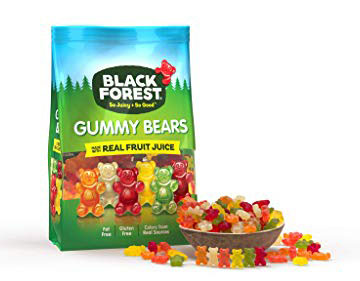
AgencySpy posted: “Ferrara Candy Selects Duncan Channon as Creative Agency of Record for Black Forest.” Based on the Duncan Channon website, the new White creative advertising agency of record for Black Forest has few Black staffers—and they won the account during Black History Month. Perfect.


Adweek spotlighted the annual BHM initiative from Derek Walker, who’s out to prove Black talent exists and is available for adland. Of course, Walker’s revolutionary advocacy will be ignored during the remaining 11 months of the year.
For the Second Year, This Agency Owner Highlights Black Talent in Advertising
Derek Walker addresses staff diversity, or lack thereof, during Black History Month
By Mary Emily O’Hara
To many people—and, of course, brands—Black History Month means revisiting the achievements great African-American leaders made in the past. But what about the here and now? And how does the celebration apply to the advertising industry itself, especially as it works towards greater inclusivity?
Derek Walker, founder of South Carolina agency Brown & Browner, got tired of hearing people in the industry wave away critiques about lack of staff diversity by saying they couldn’t find enough talent when it’s usually right under their nose.
“There’s a group of individuals who are already working, sometimes on the fringes, in advertising, who are experienced and can step in and do the job immediately,” said Walker. “And everyone says, ‘but I can’t find them.’”
For the second year in a row, the agency veteran is using the month of February to highlight black advertising professionals. Like an Advent calendar of talent, Walker profiles a different person each day—posting to Twitter and LinkedIn. They are art directors, creative directors, social media strategists, brand strategists and more. Thousands of likes and shares over the two years are adding up.
The professionals Walker profiles each February are already working in the industry. He hopes to not only bring people together through the project but also to influence industry hiring and promotion by pointing to their skills and experience. The project is a way of saying, we exist—and you can’t ignore us.
“It’s so important to highlight the black talent excelling in this industry because it shows young people of color who might be thinking about a future in it that there is space for them,” Oriel Davis-Lyons, creative director, Droga5, told Adweek. “That there is a path to follow and mentors they can reach out to. There’s no ‘old boys club’ for Black people, so we have to work harder to make the connections that can make all the difference in your career.”
The February profiles may seem like a fairly low-key social media project, but the response shows they’re filling a void. Alima Trapp, svp, strategic planning, Doner’s Detroit office, did more than allow Walker post her photo and bio. She got involved, offering to turn the month of profiles into an interactive digital calendar that will be completed after February ends.
Trapp told Adweek that the advertising industry presents stiff obstacles for black professionals. She pointed to several industry-wide problems, including what she sees as “true scarcity”—not only in underrepresentation, but a decline in numbers and diversity in human resources and talent acquisition, as well as a “lack of creativity and innovation in hiring practices and resources.”
The industry seems to fail most is in retention. According to Trapp, part of the problem is “the limited cultural competency and support required to retain diverse talent.” She hopes that what Walker is doing will grow beyond February, escalating conversation, networking building, appreciation and understanding among peers and beyond.
Walker has his own ideas about why retention is a challenge when it comes to racial minorities, women, LGBTQ and disabled professionals and other underrepresented groups. He said it comes down to glass ceilings blocking promotions, and a sort of willful ignorance on the part of leadership.
“There was an agency at an event complaining that they couldn’t find senior-level Black talent they could promote to creative director,” Walker recalled. “At their agency, they had [a Black] acd who was and is creative director-level talent. The individual left that agency as an acd and went to work on the client side as a group creative director without skipping a beat. But they’d been passed over at the previous agency for the last four or five years.”
The same promotion obstacles, Walker says, are often faced by women creatives as well. Walker cited two female creatives who carry the weight of the work at their agencies and want to manage teams of their own but find themselves regularly passed over for creative director roles.
Known for speaking out about diversity issues in advertising, Walker sometimes finds that frustrated young people of color reach out to him for advice. Recently, he said, a young creative reached out to him after being called “arrogant” at work because they had told their boss that they believed a particular job could be improved.
According to Walker, the biggest opportunity to improve diversity in the industry starts with changes to leadership. Too often, the focus is on the minority groups impacted by a lack of diversity instead of putting the onus on CEOs. Hiring a D&I coordinator isn’t enough.
“Those are not C-level positions,” he said. “They report to HR, not to the CEO. They can’t do any hiring and firing. They have less power than anybody else sitting at the table.”
If the power at the top continues to struggle with the idea of hiring and promoting underrepresented groups, Walker suggested tackling diversity the same as any other campaign: targeting CEOs.
“We haven’t dialed into that idea and realized that we should approach this as an advertising problem,” said Walker, “The target market for our message is white men.”

This campaign was explained as follows:
In Sweden, sick-leave is the highest in February. Every year. It also has consequences for society, both in terms of economy and productivity. Making February a better month thus benefits not only ourselves but society as well. So Brämhults juice has decided to take up the fight against darkness, illness and sedentary. Using the power of nature in a juice shot, it’s time to Reclaim February. If you are in Gothenburg, Sweden and in case of health emergency, just break the glass to get a shot including chili, turmeric and black pepper.
Great, the goddamn Swedes are going to reclaim February, effectively denying Blacks to claim the 28 days (29 during leap years) for Black History Month.

Adweek published a story titled, “Portrait Series Celebrates the ‘Illustrious 5%’ of Black Advertising Professionals,” which opened as follows:
Brooklyn-based photographer Kenny St. George can usually be found courtside, shooting for sports and lifestyle clients like the NBA, Nike and Slam magazine. While he hasn’t worked in ad land himself, St. George recently learned that African Americans make up only about 5% of the advertising industry—and decided to shine a light on some of the people who make up that small percentage through the new portrait series Our Seat.
Only adland would “celebrate” the “Illustrious 5%” when Blacks represent up to 13% of the U.S. population—with higher figures in key advertising industry markets including New York City, Chicago, Los Angeles, Atlanta and Detroit.

It probably isn’t a Black History Month initiative, but TBWA\WorldHealth created #BlackHealthNow to expose the Black experience with medical professionals. Um, this is not a new phenomenon—it’s pretty common knowledge among the culturally competent. The discrimination that Blacks face in healthcare is similar to the biased bullshit presented in adland. White advertising agencies like TBWA\WorldHealth, incidentally, are shining examples of unhealthy environments for Blacks.
#BlackHealthNow Reveals Painful and Frustrating Experiences With Medical Professionals
TBWA\WorldHealth employees share their stories of bias in treatment
By Mary Emily O'Hara
The statistics are unmistakable. Black women are three times more likely to die from complications in pregnancy than white women. And according to the Office of Minority Health at the U.S Department of Health and Human Services, black Americans are more likely to die from heart diseases, stroke, cancer, asthma, influenza and pneumonia, diabetes and HIV/AIDS than white Americans.
Pinning down all the factors behind such heartbreaking stats is far from easy, but one problem certainly seems to be playing a role in perpetuating the racial imbalance: Black patients say they aren’t being listened to.
Watch the intimate, emotional stories shared by black employees at TBWA\WorldHealth for the new campaign #BlackHealthNow, and it becomes clear: The medical profession may be plagued by unconscious bias that leads doctors and nurses to treat black patients differently—sometimes with deadly results.
The first few videos for the project feature TBWA\WorldHealth staffers Zaira Zafra, Bianca Williams and Trevor Gilchrist. Zafra shares a horror story of being pressured to have a hysterectomy—while pregnant—instead of removing uterine fibroids through laparoscopy. Williams and Gilchrist recall the deaths of their grandmothers and ways they observed their mistreatment.
The campaign is not tied to any brands, but stands alone as a public health initiative that encourages people to share their own stories on social media using the hashtag #BlackHealthNow. TBWA\WorldHealth has a unique direct line to the medical and pharmaceutical industries by virtue of its client base, and the team hopes to potentially partner with a medical association to scale up.
The campaign could grow in a more tech-centered direction as well. Bryan Gaffin, ecd at TBWA\WorldHealth’s Wildtype, told Adweek he’d like to see some sort of interactive database of approved doctors, or perhaps a ‘black health advocate’ badge that can be added to existing medical sites like ZocDoc.
#BlackHealthNow isn’t just about revealing personal trauma. It’s about empowering black patients as well as informing the medical establishment of an overarching problem. To help people act as their own medical advocates, Holloway and Geer published a list of10 questions everyone should ask their doctor, under the mantra, “Never feel embarrassed to ask for the health care you deserve.”
It’s an approach that Gilchrist knows well. In his video for #BlackHealthNow, he recalled, “When my grandmother was in the hospital the first and second time, I remember doctors talking to her as if she was a child.”
The experience left him with feeling committed to making sure no one else in his family experienced that level of disrespectful treatment.
“When my mother went to the hospital for kidney issues, I decided in that moment I wasn’t going to let what happened to my grandmother happen to my mom,” Gilchrist said. “I would be the person asking those questions. I made it a point to not be silent.”

The New York Times promoted The 1619 Project—focused on how slavery ultimately impacted society—for Black History Month, declaring “the truth can change how we see the world.” Okay, maybe the newspaper should consider how slavery inevitably affected and influenced the White advertising agency behind its campaign.


Okay, this is probably not a Black History Month promotion, but Advertising Age reported on a Buffalo Wild Wings video starring Bone Thugs-N-Harmony. Now, it’s not uncommon to use rap artists in campaigns, as White advertising agencies love hip hop. The responsible White advertising agency is none other than The Martin Agency—an enterprise with its own version of Boners Thugs-N-Harmony.
Bone Thugs-N-Harmony Goes ‘Boneless’ To Promote Buffalo Wild Wings
After taking heat from Astros fans, B-Dubs is now looking for attention with a social media-driven campaign
By Jessica Wohl
Bone Thugs-N-Harmony is calling itself Boneless Thugs-N-Harmony in a campaign from Buffalo Wild Wings that shows the chicken wing chain trying to drum up interest in its boneless wings by using nostalgia and social media.
Buffalo Wild Wings got the members of the rap group to star in a “Behind the Music”-style video, complete with a narrator’s voiceover telling the tale, a mock disagreement among the members of the group and bleeped words. The nearly two-minute spot has minimal branding for the wings chain.
It’s the latest effort by a brand to associate itself with a bit of a retro theme to draw the attention of those who are familiar with something from the 1990s, as well as younger consumers who are interested in throwback culture. Bone Thugs-N-Harmony, which is still touring, is known for hits such as “Tha Crossroads,” which won a Grammy Award in 1997 and was recently mentioned on the NBC show “The Good Place.”
In the video, it appears that three members of the group—Flesh-n-Bone, Krayzie Bone and Wish Bone—want to change the group’s name and changed their individual stage names to include “Boneless” rather than “Bone.”
Layzie Bone, however, calls the change preposterous.
The other members of the group get him to try the boneless chicken pieces, which he declares “are actually pretty good,” adding “they ain’t change-your-name good.”
The push includes having the group promote the changing of the name through their own social channels. No word yet on how they’ll be announced during their upcoming tour dates. But there are plans to give away Boneless Thugs-N-Harmony merchandise on a BonelessThugs.com site, though customers have to pay for shipping.
The Martin Agency worked on the project.
The online-focused effort is rolling out after Buffalo Wild Wings criticized cheating by the Houston Astros, then apologized for its comments. B-Dubs noted how another team caught cheating, the Manchester City Football Club, was banned from Champions League play for two years and fined 30 million euros. “THAT’S how you punish a team that cheats,” it tweeted.
Buffalo Wild Wings handles its own social and community management.

For Black History Month, Mattel released a new doll to commemorate the 40th anniversary of the first Black Barbie. If Mattel were truly progressive, she’d hook up with Ken.


Supplementing its earlier TV commercial divertisement, Google acknowledged Black History Month with a 3-D doodle commemorating the 60th anniversary of the Greensboro sit-in. Appropriately enough, Google will ultimately put the progressive sentiments in a box during the other 11 months of the year.

Forbes published a fluff piece titled, “How Google, Coca-Cola And Other American Companies Are Celebrating Black History Month 2020.” Um, by producing patronizingly deceptive divertisements—veritable heat shields of hypocrisy.

Comcast Xfinity TV reruns its Black History Month promotion—Black Film and TV—with free movies, documentaries and TV shows.


