Showing posts with label cheerios. Show all posts

Monday, December 05, 2022

16057: Inclusive Musical Sings With Latent & Blatant Exclusivity.


“Interracial Couple In A Cheerios Ad” is explained as follows:


Two comedians and advertising creative directors, David Roth and Yuriy Mikhalevskiy, have launched a music video teasing the advertising industry for its awkward treatment of race and social issues. The video is called “Interracial Couple in a Cheerios Ad” and is self-funded, not affiliated with the Cheerios marketing team.


Inspired by Walmart’s Juneteenth-flavored ice cream, Salesforce’s non-binary corporate mascot Astro, and Kendall Jenner’s BLM Pepsi ad, plus countless displays of performative inclusivity in meetings, the creative directors were inspired to poke fun at the industry.


Their Cheerios commercial is the opening number as they hope to fund a full-length Inclusive Musical which includes other songs like “Pride Month’s A-Comin’,” “New Black Lesbian Hire,” and “You’re Absolutely Right, But You’re White.”


This promotional project appears to represent the song-and-dance that White advertising executives routinely perform to conceal and/or deny their feelings of White Fragility, White Genocide, White Guilt, White Privilege, White Rage, and White Supremacy. The vanity URL—InclusiveMusical.com—links to an Indiegogo page for like-minded investors to provide financial support.


Yet even in this video scenario, the decision-making partners are White advertising agency leaders and racially/ethnically ambiguous clients. Can’t help but wonder if “Interracial Couple In A Cheerios Ad” is a parody or unintentional investigative documentary.


Wednesday, May 01, 2019

14614: General Mills Run-Of-The-Mill Bullshit.

Advertising Age reported General Mills pulled AOR status from 72andSunny in a move designed to create a project-based model for the cereal maker. Maybe the White advertising agency should spend less time fabricating diversity playbooks and more time focusing on brand playbooks. Expect future shootouts on projects to feature lots of client-appeasing concepts starring Gracie.

General Mills strips 72andSunny of agency of record title

MDC Partners agency continues to work with brands including Cheerios alongside other roster shops

By Lindsay Rittenhouse

General Mills has stripped MDC Partners shop 72andSunny of its agency of record title as it shifts to a project-based model.

The agency, in partnership with Redscout, won lead U.S. creative duties in 2016 for some of the company’s larger brands including Cheerios, Nature Valley and Yoplait. People close to the situation told Ad Age that 72andSunny will continue to work on certain projects for Cheerios but that it was taken off the Yoplait and Nature Valley accounts.

“We do not have a creative agency of record,” a General Mills spokesman confirmed in an email to Ad Age. “We have a portfolio of agencies that our brands can use based on their current needs.”

The spokesman declined to comment further so it is unclear exactly when this change took effect.

A spokeswoman for 72andSunny declined to comment.

Independent agencies Erich & Kallman, Pereira O’Dell and Joan (which recently rebranded from Joan Creative) are also on General Mills’ roster, working with various of its brands on a project basis. Erich & Kallman, for example, produced a Gen Z-friendly ad for Reese’s Puffs in February that highlighted the woes of prom dress shopping.

Erich & Kallman, Pereira O’Dell and Joan were all selected to handle certain projects as a result of the larger 2016 creative review, as was indie shop The Community, which told Ad Age it has since parted ways with General Mills.

While 72andSunny categorized it as a restructuring move at the time, one person close to the situation said the agency’s layoffs in March, which trimmed five percent of its staff in New York and Los Angeles, may have been related to the loss of General Mills. The Los Angeles office had handled Cheerios and will continue to do so.

Losing AOR status on Cheerios surely comes as a blow to 72andSunny, which last year lost the Nissan Infiniti account; clients Coors Light and Johnnie Walker have been placed into review. The agency declined to defend Coors Light. Late last year, the shop lost MillerCoors’ Coors Banquet to Mekanism.

General Mills’ U.S. measured media spending declined 9.2 percent to $644 million in 2017, according to the Ad Age Datacenter. Cheerios’ 2017 spending fell 31.9 percent from 2018 to $99 million, Nature Valley’s grew 12.6 percent to $59.9 million and Yoplait’s was trimmed 43.2 percent to $59.9 million, Ad Age’s data shows.

Friday, March 08, 2019

14560: Look Out, Wheaties—Cheerios Is The Breakfast Of Champion Hypocrites.

Advertising Age spotlighted the latest patronizing propaganda from Cheerios and 72andSunny, made with 100% Whole Grain Oats and 110% Whole Lotta Bullshit.

Resorting to borrowed interest for campaign concepts is bad enough, yet what Cheerios and 72andSunny shat out also qualifies as borrowed inclusion. The cereal brand is seemingly promoting progressiveness, but it’s literally and figuratively a bunch of song and dance. 72andSunny has developed a mastery of deception with its 3% Certification and Divertsity Playbook. Such smokescreens, however, can’t hide the exclusive leadership—despite the recent hiring of Keith Cartwright.

Advertising icon David Ogilvy is credited with uttering, “If you have nothing to say, sing it.” White advertisers and White advertising agencies sing about diversity and inclusion when they’ve got nothing to show for it.

Tuesday, August 08, 2017

13779: Annie The Honey Pot.

This Popeyes Hot Honey Crunch Tenders commercial could have been a perfect opportunity to team up Annie the Chicken Queen and the Post Honey Bunches of Oats Lady—plus, throw in BuzzBee from Honey Nuts Cheerios to complete the terrible trifecta.

Monday, March 13, 2017

13595: #BringBackTheBlacks With Cheerios.

Advertising Age reported General Mills produced a stunt “to highlight the dwindling number of bees” by removing the Honey Nut Cheerios BuzzBee character from cereal boxes. If only General Mills had put as much effort into its stunt to highlight the dwindling number of Blacks in advertising agencies.

Honey Nut Cheerios Mascot BuzzBee Disappears From Box to Highlight Endangered Pollinators

General Mills Brand Is Encouraging Consumers to Plant Wildflowers

By Alexandra Jardine

Honey Nut Cheerios has removed its bee mascot BuzzBee from cereal boxes in the U.S. and Canada, in order to highlight the dwindling numbers of bees.

The General Mills-owned brand is using the blank space where the bee should be to encourage consumers to plant over 100 million wildflowers this year, in order to ensure a more bee-friendly world. The campaign, #BringBackTheBees, invites families to order and plant free seeds from Vesey’s Seeds by visiting the campaign website.

The brand points out that bees have experienced an unprecedented scale of habitat loss, with more than nine million acres of grass and prairie land converted to crop land since 2008. Approximately 30 percent of all ingredients in General Mills’ products rely on pollination.

Susanne Prucha, director of marketing for Cheerios, said in a statement: “As a General Mills cereal built around nutrition, helping pollinators get the key nutrition they need through fun, family-friendly activities like planting wildflowers is a natural fit.”

Wednesday, January 25, 2017

13516: Dance, Daddy, Dance!

This Honey Nut Cheerios commercial is cloying and annoying. Cheerios has gone from Black dads to gay dads to douche dads to dancing dads. In the Cheerios bizarro universe, there are no moms or sons. Look for a pool-out starring Nelly and his daughter soon. And while General Mills appears to love seeing Black men in its advertising, the cereal maker doesn’t seem to love seeing Black men in its advertising agencies, despite the bullshit mandates for diversity.

Thursday, September 01, 2016

13327: Quotas & Quotes.

AgencySpy posted on the General Mills account review—which features diversity requirements for the competing White advertising agencies—with a headline reading, “General Mills Insists That Its Future Agencies Meet Specific Diversity Quotas.” The tone of the headline and the integration of the term “quotas” was enough to inspire over 75 comments to date. It’s a collection of cultural cluelessness, vividly exposing the ignorance killing inclusion.

Given the drive for diversity that has accelerated over the past decade, White advertising agencies should be capable of meeting General Mills’ mandates—and the agencies should be fully aware of the makeup of their staffs. Indeed, the holding companies are keeping records, although there is a continued refusal to publicly disclose the data. Most White advertising agencies have even made open commitments to diversity and inclusion. The figures sought by the cereal maker do not exceed the goals of the average White shop. So what’s the problem with General Mills’ request?

General Mills isn’t the only client to ask to see the diversity of its advertising agencies. Multicultural shops are routinely scrutinized like this. Clients judge these crumb-collecting companies by their “authenticity”—which is a polite way to say the staffs at such agencies are expected to be majority minority. Plus, minority ownership is an important expectation of the scheme. These shops are typically required to show their diversity supplier figures too, and are often mandated to use minority vendors. And of course, the work produced by multicultural shops must be blatantly targeted, often to the point of being stereotypical.

In short, it’s about time clients scrutinized the diversity of all its partners. And it’s well beyond time for White advertising agencies to deliver on diversity. Why would anyone want to team up with a company that doesn’t keep its promises?

Wednesday, August 31, 2016

13325: General Bullshit From General Mills.

Advertising Age reported the General Mills account review for its U.S. creative and content work isn’t closed after all. Plus, the competition includes diversity requirements, whereby contenders must have creative departments employing at least 50% females and 20% people of color. If the review is truly open, the competing agencies should be required to publicly share the specific inclusion figures. Ad Age identified one competitor as Deutsch, a White advertising agency that deserves to be immediately nixed based on its dearth of diversity and dearth of diversity director. Another contender—Mother—ought to be eliminated just for having produced the infamous Mary J. Blige Burger King bullshit. Oddly enough, incumbent Saatchi & Saatchi won’t participate, despite recently replacing two White male leaders with non-Whites—and one of the replacements is a woman! Finally, Gracie and Raphaëlle should be allowed to make the final selection.

General Mills Opens Up About Its ‘Closed Review’ and Its Five Finalists

Unexpected Shops Are in Contention; Contestants Must Meet Diversity Requirement

By Judann Pollack

General Mills’ U.S. creative review isn’t closed as previously believed—in fact, the marketer is proceeding with some shops not currently on its roster, including Deutsch and Mother.

The other agencies going through to the second round are incumbents 72andsunny, McCann and, rather than Saatchi, a holding company solution from Publicis Groupe.

In another rather unusual twist, General Mills is requiring that participating agencies are staffed with at least 50% women and 20% people of color within the creative department.

In an interview with Ad Age, General Mills Chief Marketing Officer Ann Simonds, who is running the review with Chief Creative Officer Michael Fanuele, described the review as part of a “reengineering, a reassessment of our company and our marketing in particular,” following the company’s adoption of a purpose statement in June 2015 to “serve the world by making food people love.”

The food marketer last year consolidated its media with Mindshare and Ms. Simonds said the current review is intended to insure that “our creative excellence is as robust, modern and relevant” as it can be.

The goal is “one core agency to handle the bulk [of the work] but to supplement with other partners, which might be technology platforms or media partners,” said Mr. Fanuele, or “an anchor agency supplemented with a roster of interesting partners.”

Ms. Simonds said the review was prompted by a desire on General Mills’ part to zero-base its thinking on marketing. “In any relationship, there is an opportunity to rejigger and represent who we are and how we work some of our incumbents moving forward, but going forward with a commitment to reinventing the relationship as we are [doing],” she said. Ms. Simonds said that over time “a laziness can happen” in which companies and agencies can “incrementalize the small decisions” or do the same thing every quarter as opposed to making material differences in marketing. “Over time, things just get bolted in,” she said.

“I do not find joy in change for change’s sake,” noted Ms. Simonds.

When asked whether General Mills was concerned that there may be some complacency on the part of its agencies, Ms. Simonds said, “I would never describe our partners as complacent. But you don’t know what you don’t know and that goes for us and our partners. This is a flashpoint in the history of General Mills to start over again.”

Ms. Simonds and Mr. Fanuele met with the shops in contention for what it called a “creative salon,” a 90-minute meeting which was part chemistry check. The finalists, informed this week, are taking different approaches to the process. When asked why Publicis is offering a holding company solution and McCann is not pitching as IPG, Mr. Fanuele said that could still happen. “The clay is still wet on the proposal,” he said.

“There has been so much talk about agencies being broken and old fashioned, and we as a company remain deep believers in the power of teams with creative thinking to transform a business,” said Mr. Fanuele.

He said that General Mills isn’t necessarily asking for a holding company solution. “This an exercise in finding the right partners, not the right model.”

The next step for shops in the review, conducted by Joanne Davis Consulting, will be workshops over the next five weeks “to get a deeper sense of culture and beliefs for a couple of brands,” said Mr. Fanuele. There will also be a meeting with Mindshare.

He said the company hopes to have a “new partner before we have a new president.”

Ms. Simonds said that while “cost considerations have a role” in the review, they “did not spur it.” The purpose is to make the “right investments and the most important calls,” she said.

As for the diversity requirement, Ms. Simonds said, “we are very excited about that. If you are going to put people you serve first, the most important thing is to live up to it and make it a key criteria.” Mr. Fanuele said the company also made sure to specify that there is diversity not just in the agency but within its creative department. “Agencies are fairly diverse in account and strategic planning, but not with the people who are making the work,” he said.

“It feels like a first” in the industry, Ms. Simonds said. “I think it’s rare and it is important.”

Friday, July 29, 2016

13275: Cheerios Closed To Diversity.

Adweek reported General Mills will hold a closed review for its U.S. creative and content work. The closed review is undoubtedly open to White advertising agencies, as Adweek speculated the competition will include McCann, Saatchi & Saatchi and an unnamed WPP shop. Despite Cheerios’ open-mindedness involving characters of color such as Gracie and Raphaëlle—as well as celebrity shills like Nelly—count on minority contenders to be shut out.

General Mills Launches a Closed U.S. Creative and Content Agency Review

Includes McCann and Saatchi & Saatchi

By Patrick Coffee

Multinational food manufacturing giant General Mills has launched a comprehensive review affecting all of its creative and content agency relationships in the United States. The company, which includes such brands as Cheerios, Yoplait, Quaker Oats, Häagen-Dazs, Betty Crocker, Annie’s and more, is one of America’s largest single advertisers.

“We have a responsibility to ensure we have the right agency partners to continue growing our business and agency reviews are a routine part of running a successful business today,” a General Mills representative said in a statement today.

Details regarding the review remain sparse. The company’s primary U.S. creative agencies are currently IPG’s McCann Worldgroup and Publicis Groupe’s Saatchi & Saatchi, but in the past 18 months alone General Mills has added Fallon, 72andSunny, JWT and Wieden + Kennedy to its roster in varied roles.

The review would appear to be a move toward consolidation on the part of GM, which has been working to cut operational costs across its global organization. Last week, The Wall Street Journal and other publications reported that the company planned to eliminate at least 1,400 jobs across its offices in the U.S., Brazil and China, citing a reduced demand for products such as canned soup across its increasingly health-conscious consumer base. WSJ described this latest round of cuts as “part of a yearslong effort to slash expenses” which is in keeping with similar moves by competitors like Mondelez International.

Sources with direct knowledge of the matter tell Adweek today that the closed review will likely include McCann, Saatchi & Saatchi and an unnamed WPP agency.

Saatchi & Saatchi has been a GM partner agency for more than 35 years. McCann has also worked on brands like Nature Valley and Hamburger Helper for some time, and in 2013 it won Pillsbury away from Saatchi in what a representative described as “a vote of confidence” from the client.

JWT also recently joined the General Mills roster to handle the Häagen-Dazs brand, while the company brought Wieden + Kennedy aboard last year as agency of record for Yoplait. It is unclear whether either of these agencies are participating in the review.

Representatives at McCann and Saatchi & Saatchi declined to comment for this story, while JWT, Wieden + Kennedy, 72andSunny and Fallon had not responded to requests for comment at the time of publication.

Last year, General Mills launched its first media review in more than a decade, eventually choosing WPP’s Mindshare as its U.S. agency of record. The company spent just under $700 million on measured media in 2015 and $186 million in the first quarter of 2016, according to the most recent numbers available from Kantar Media. These totals mark a decline from 2014, when General Mills spent a total of $850 million.

Wednesday, October 07, 2015

12880: Cheerios Diversity…?

Oh, look! The latest Cheerios commercial features an all-Black cast, with no over-the-top interracial or lifestyle quirkiness. The only quirky thing: it’s highly unlikely that an all-Black creative team hatched the spot.

Thursday, June 04, 2015

12698: Cheerios Force Feeds Bullshit.

Advertising Age spotlighted a new Cheerios commercial featuring another mixed-race kid. However, this spot doesn’t include a Dad, so it’s hard to determine the real point of the casting. According to Ad Age, it might be a nod to Mom feeding her son a variety of flavors. If so, someone at Saatchi & Saatchi New York should be beaten with a variety of sticks. The “concept” is forced and offensive. Besides, for Mom to be stuffing her kid with a range of breakfast cereals borders on child abuse. And the commercial borders beyond viewer abuse.

Saturday, February 14, 2015

12511: Cereal Killer.

The New York Post reported breakfast cereal sales are declining, as Americans are choosing smarter and healthier morning meals. Wow, it’s shocking that Gracie, Raphaëlle and the World’s Most Hated Dad can’t turn things around.

Americans eating less cereal for breakfast

By Post Staff Report

More and more Americans are giving cereal the cold shoulder at breakfast — and that is leaving shareholders of Kellogg and General Mills a little soggy.

Kellogg, whose cereal line-up includes the Special K, Corn Flakes and Kashi brands, reported this week that sales of its morning meals unit slid 7.7 percent in the fourth quarter — after a 4.7 percent drop in the third quarter.

Soaked in this bad news, the shares are as soggy as day old Corn Flakes and are down 2.7 percent over the last six months.

At General Mills, whose breakfast cupboard includes Wheaties, Cheerios and Lucky Charms, revenue from its cereal unit is down 7 percent in the six months ended Nov. 23. Investors in the Battle Creek, Mich., company are a little hungry after General Mills’ shares have fallen 1 percent in the last six months.

Both companies were caught flat-footed as Americans breakfast habits have evolved toward simple, more natural food selections — like Greek yogurt. Also, weight watchers, which for years focused on eating a low-fat breakfast cereal like Special K instead of toast, eggs and bacon, are now looking for foods that make them feel good.

Inside the two cereal makers, executives have finally acknowledged this change — but they appear ill-equipped to do anything about it.

Kellogg told its investors that it “continued to see weakness in Special K as it faces headwinds from evolving consumer trends regarding weight management.

It will try to change the “positioning of the brand from a focus on dieting to weight wellness,” it said in a regulatory filing.

As part of this plan, Kellogg will “stress the role that Special K plays in a healthy lifestyle.”
“We plan to reinvent all aspects of the brand in 2015, including innovation, packaging, advertising, and consumer promotions,” it said in the filing. “Each of these will highlight Special K’s position as part of a weight wellness program. New packaging and advertising will highlight the simplicity and goodness of the food, new consumer promotions will help consumers meet their goals, and innovation will directly appeal to consumer trends through Special K Protein, Special K Gluten Free, Special K Granola, and additional hot cereal offerings.”

Still, Kellogg on Thursday reduced its 2015 revenue forecast to a gain of 1 percent to 3 percent — down from an earlier forecast of 3 percent to 4 percent growth.

Thursday, January 29, 2015

12444: Cattiness For Kat Gordon.

Does anyone else think Kat Gordon’s perspectives make sense less than 3% of the time?

Gordon possibly topped her spinach-in-your-teeth nonsense with an Adweek column on the upcoming Super Bowl commercials that displays all the keen insight of an NFL-challenged woman who only watches the annual championship game for the half-time concert. No, honey, Deflategate is not a new VIAGRA® campaign.

In her latest delusional discussion, Gordon proclaimed this year’s Super Bowl commercials reflect a fresh effort to show “What it means to be an American in 2015.” Gordon continued by declaring, “As President Obama challenged in his recent State of the Union address: ‘Imagine if we broke out of these tired, old patterns.’ It appears Madison Avenue has not only already imagined this, but is delivering on it. We’ll see spots that are newly multicultural and inclusive.”

Perhaps, but the creators of the work are anything but multicultural and inclusive. To praise faux progressive propaganda produced by a predominately White male and White female posse is pathetic.

Has Gordon abandoned her alleged desire to battle for equality? Somebody locate the fiery fighter who once stated, “I am not advocating on behalf of my gender. I’m advocating on behalf of our industry. We all will prosper—every gender, ethnicity and culture—when we stop perpetuating this maxim [‘It doesn’t matter who does the creative, as long as they’re good.’] and embrace a more complex and prosperous truth.”

A 2010 report revealed the exclusivity of the folks behind Super Bowl commercials. It’s unlikely that much has changed in five years, as diversity remains a dream deferred and denied in adland—and the industry’s been in deferment and denial for over 60 years.

On the flipside, White women have made great strides in the field and continue to grow in numbers, despite whining to the contrary. But this White women’s movement—happening in US and UK advertising agencies, as well as many other industries—has been accelerating for decades.

Coincidentally, Gordon has scheduled a 3% girlfriends get-together for Super Bowl Sunday, which will take place on the first day of Black History Month. But don’t expect acknowledgment from Gordon and crew, even though White women comprise the group that has most benefited from affirmative action.

Gordon and her friends, incidentally, will be tweeting commentary on the Super Bowl commercials. Um, similar to the Clio Creative Bowl, does anyone really give a shit about self-absorbed opinions from clans of predominately White adpeople?

Additionally, Gordon is wrong to contend that the spots constitute “a lineup that sidesteps stale stereotypes in favor of new characters and storylines more in keeping with what the U.S. looks, feels and sounds like in 2015.” The commercials she references are simply the current pseudo-liberal clichés and stereotypes churned out by White advertising agencies and embraced by White advertisers. For example, the 2014 Cheerios spot is not “in keeping with what the U.S. looks, feels and sounds like,” as Black and White unions are the least common of interracial marriages.

Can’t help but feel like Gordon’s viewpoints are essentially promotional pieces for her 3% Conference—which makes her revolutionary spirit seem, well, patronizing. Sorry, but the 2015 Super Bowl commercials do not represent “What it means to be an American in 2015.” Rather, they ultimately underscore what it means to be a Black American, Latino American, Asian American, Native American, etc. on Madison Avenue in 2015—as well as spotlight the never-ending privileged status of White men and White women in our ranks.

Monday, December 29, 2014

12346: World’s Most Hated Dad Reruns.

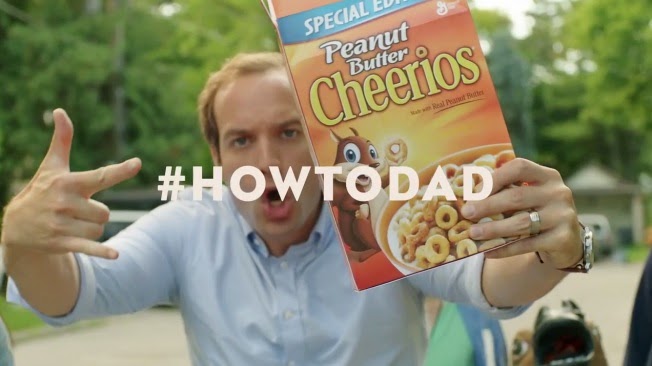
Advertising Age reported on General Mills re-editing a Canadian Cheerios commercial featuring the World’s Most Hated Dad and running the shit in U.S. markets. The scenario underscores the industry’s messed-up state of affairs, where clients use multiple White advertising agencies to produce divergent messaging that ultimately dilutes the brand image. Cheerios now goes from an interracial family featuring a Black dad to gay dads to a douche dad. The latest regurgitated commercial also underscores how digital advertising agencies—in this case, Tribal Worldwide from Toronto—have no business executing videos. Finally, it all underscores the danger in believing concepts can translate between countries and/or one global idea can work across the planet. Then again, one could argue “How To Dad” sucks in every civilized society in the universe.

Tale of Two Ads: Cheerios ‘How To Dad’ Campaign Makes U.S. Debut

General Mills Transplants Canadian Commercial to States—With One Key Difference

By E.J. Schultz

The Cheerios “How To Dad” has migrated south to the U.S. after appearing in Canadian ads all year.

The U.S. version of the spot is nearly identical to the version running in our neighbor to the north, which is a refreshingly modern take on dadhood. The only change is that the U.S. spot plugs Honey Nut Cheerios, while the Canadian ad is for Peanut Butter Cheerios. Rather than reshooting the spot, it appears that brand owner General Mills simply airbrushed in Honey Nut Cheerios boxes.

Judge for yourself. Below is the U.S. ad followed by the Canadian version. General Mills did not immediately return an email for comment.

The U.S. version got a pricey placement on NBC’s “Sunday Night Football,” according to iSpotTV.

If you listen closely, the ad’s Canadian roots are apparent by the dad’s accent. (The version of Peanut Butter Cheerios sold in Canada is not available in the U.S. Cheerios sells a “multi-grain” peanut butter flavor in the states, according to the brand’s website.) But Honey Nut Cheerios is a much bigger seller, which likely explains the product swap in the ad.

The “How To Dad” campaign is by Tribal Worldwide, Toronto. The spots depart from the typical bumbling dad figures so often seen in food ads by presenting dad as a multitasking superhero.

General Mills posted the U.S. version on its Facebook page. The ad got positive feedback, including from one male fan who posted: “Thank you Cheerios! Finally a commercial that shows we are not all buffoons around the house and leave the parenting to others. I have been waiting for this for 6 years! #HowToDad”

In other words, it’s about time. Or as the Canadian dad might say, it’s aboot time.

Monday, October 06, 2014

12131: Gracie, Meet Raphaëlle.

Oh please, Cheerios. First, the brand deliberately invites controversy with biracial Gracie and her soon-to-arrive sibling. Now the breakfast cereal ups the ante with its new video featuring a gay, Euro-ambiguous couple who’ve adopted a Black child. Ironically, Cheerios is the one item in the spot that is not naturally integrated. What’s next? A cross-promotion with the Shirato and Frobinson families?

Sunday, August 17, 2014

11993: World’s Most Hated Dad.

Does anyone who watches this Cheerios video not want to punch Dad in the face? Repeatedly? The Tribal Worldwide creative team responsible for this shit deserves to get bitch-slapped too. Why do clients continue to let digital agencies produce videos?

Thursday, February 06, 2014

11738: Amazingly Stupid Gracie.

By now it’s no news that Cheerios reunited its interracial/biracial family via a pool-out commercial which ran during the Super Bowl. Don’t mean to be a hater; however, MultiCultClassics has already expressed annoyance over the original spot. The fresh installment deserves even greater derision.

For starters, is Saatchi & Saatchi—the White advertising agency behind the campaign—afraid to depict Caucasian mom and Black pops as a loving couple? The two have yet to been seen together physically interacting at all. If they really want to inform Gracie about her soon-to-arrive baby brother, why isn’t Caucasian mom actively participating in the joyous announcement?

Second, the first commercial featured a marketing objective—presenting the cereal’s heart-healthy benefits—and used the unique household for added attention value. The 3.5 family members serve as the sole distraction device in the latest spot. They are pure and patronizing borrowed interest.

Third, generating hype for the commercial appears to be more important than gaining awareness for Cheerios. Are General Mills executives truly qualified to position themselves as social scientists and liberal activists? Yo, they’re selling processed foodstuff.

Finally, the first spot showed the cereal poured upon Black pops’ chest, while the new spot has Cheerios being used to symbolize the family. Um, does anyone in the home actually eat the fucking shit?

Thursday, January 30, 2014

11727: MSNBCheerios Mess.

From The New York Daily News…

MSNBC apologizes for tweet taunting conservatives over Cheerios Super Bowl ad starring biracial child

The tweet was sent from the network’s official account and was aimed at conservatives, assuming they would be offended by the upcoming Super Bowl spot that revisits an interracial family featured in a 2013 ad. MSNBC later apologized and removed the tweet.

By Leslie Larson / NEW YORK DAILY NEWS

MSNBC is backtracking after it used its Twitter account to taunt conservatives over the Cheerios ad starring an interracial family that will air during the Super Bowl.

“Maybe the rightwing will hate it, but everyone else will go awww: the adorable new #Cheerios ad w/ biracial family,” read a tweet posted late Wednesday on the MSNBC account, providing a link to a short article on the news website about the ad.

MSNBC apologized for the “offensive live tweet” and then deleted the message.

“The Cheerios tweet from @msnbc was dumb, offensive and we’ve taken it down. That’s not who we are at msnbc,” MSNBC.com Executive Editor Richard Wolffe tweeted.

Ironically, it was just weeks ago that the network’s own host, Melissa Harris-Perry, had to apologize to Mitt Romney for mocking his adopted black grandson on her show.

Conservative pundit Michelle Malkin sounded off against the cable network, encouraging Republicans from mixed race families to share photos with the hashtag #MyRightWingBiracialFamily.

The social media effort was soon top trending on Wednesday night.

“You’ve been served, @msnbc. Take notice all the rest of you left-wing race card players. Your smears WILL be crushed,” Malkin tweeted to the cable network.

The 30-second ad in question is a follow-up spot to the Cheerios promo featuring actress Grace “Gracie” Colbert as the daughter of an interracial couple.

Gracie first appeared in a spot for the cereal company in May 2013. It was posted on YouTube and received so many racist comments that the company had to shut down the comments section.

“The comments that were made in our view were not family-friendly, and that was really the trigger for us, you know, to pull them off,” Camille Gibson, vice president of marketing for General Mills, told the “Today” show in June.

The racist reaction sparked an outrage and even caught the attention of then-New York City mayoral candidate Bill de Blasio and his wife Chirlane McCray, who is African American.

During the campaign, the interracial couple and their son, Dante, posed for a photo sitting around their kitchen table, with a Cheerios box prominently featured at the center.

“Nineteen years of marriage and two children later, this is the first TV commercial I have ever seen with a family that looks a little bit like ours,” McCray wrote in the email to supporters about the ad.

“Cheerios is recognizing the changing face of America,” she added in praise of the company.