Monday, December 29, 2014

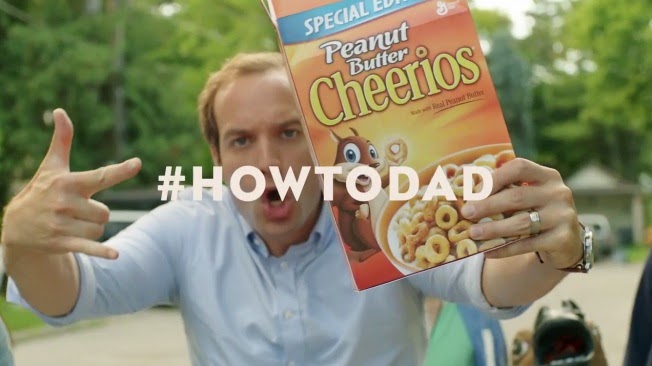
12346: World’s Most Hated Dad Reruns.

Advertising Age reported on General Mills re-editing a Canadian Cheerios commercial featuring the World’s Most Hated Dad and running the shit in U.S. markets. The scenario underscores the industry’s messed-up state of affairs, where clients use multiple White advertising agencies to produce divergent messaging that ultimately dilutes the brand image. Cheerios now goes from an interracial family featuring a Black dad to gay dads to a douche dad. The latest regurgitated commercial also underscores how digital advertising agencies—in this case, Tribal Worldwide from Toronto—have no business executing videos. Finally, it all underscores the danger in believing concepts can translate between countries and/or one global idea can work across the planet. Then again, one could argue “How To Dad” sucks in every civilized society in the universe.

Tale of Two Ads: Cheerios ‘How To Dad’ Campaign Makes U.S. Debut

General Mills Transplants Canadian Commercial to States—With One Key Difference

By E.J. Schultz

The Cheerios “How To Dad” has migrated south to the U.S. after appearing in Canadian ads all year.

The U.S. version of the spot is nearly identical to the version running in our neighbor to the north, which is a refreshingly modern take on dadhood. The only change is that the U.S. spot plugs Honey Nut Cheerios, while the Canadian ad is for Peanut Butter Cheerios. Rather than reshooting the spot, it appears that brand owner General Mills simply airbrushed in Honey Nut Cheerios boxes.

Judge for yourself. Below is the U.S. ad followed by the Canadian version. General Mills did not immediately return an email for comment.

The U.S. version got a pricey placement on NBC’s “Sunday Night Football,” according to iSpotTV.

If you listen closely, the ad’s Canadian roots are apparent by the dad’s accent. (The version of Peanut Butter Cheerios sold in Canada is not available in the U.S. Cheerios sells a “multi-grain” peanut butter flavor in the states, according to the brand’s website.) But Honey Nut Cheerios is a much bigger seller, which likely explains the product swap in the ad.

The “How To Dad” campaign is by Tribal Worldwide, Toronto. The spots depart from the typical bumbling dad figures so often seen in food ads by presenting dad as a multitasking superhero.

General Mills posted the U.S. version on its Facebook page. The ad got positive feedback, including from one male fan who posted: “Thank you Cheerios! Finally a commercial that shows we are not all buffoons around the house and leave the parenting to others. I have been waiting for this for 6 years! #HowToDad”

In other words, it’s about time. Or as the Canadian dad might say, it’s aboot time.

12345: Creativity 50 Is 100% Crazy.

Advertising Age presented, “Creativity 50 2014: The Most Creative People of the Year” along with copy that read:

Presenting Our Annual Review of the Most Influential and Innovative Creative Thinkers and Doers

We examined a broad swath of disciplines, from art and advertising, to entertainment and technology, to pop culture and fashion, in order to pinpoint the individuals and teams—and even married couples—who have evolved the creative landscape over the last 12 months. Their art, ads, tunes, films and ideas got us thinking, connecting, singing and creating some more. We hope they'll provide all of you with inspiration for the year to come.

As the photos above and below illustrate, Creativity 50 2014 includes a hodgepodge of folks. Must admit to having not noticed this annual list in the past. Why does Ad Age deem itself qualified to pass judgment on such a collection of luminaries? Of course, the majority of Black honorees are noted celebrities and artists versus adpeople. Which begs the question, “How can you put Kara Walker and Pharrell Williams in the same company as David Droga and Ted Royer?” That’s like matching Marie Curie and Albert Einstein with Harry Dunne and Lloyd Christmas.

Sunday, December 28, 2014

12344: David Dinkins’ 25th Anniversary.

The New York Daily News commemorates the 25th anniversary of the inauguration of New York City’s First Black Mayor David Dinkins.

12343: Viewability Debate Hard To View.

Adweek published a story titled, “Agency and Brand Leaders Weigh in on Digital’s Mounting Ad Viewability Issues,” while Advertising Age ran “4As Letter Calls for More Stringent Viewability Standards” and “Ask the Right Question About Viewability.” The only thing less viewable than the digital ads is the interactive ignorance clearly visible in all the opinions from advertising and media executives.

Demanding 100% viewability—or even making it the ideal goal—only underscores the digital dumbness of advertisers and adpeople alike. The World Wide Web was not intended to accommodate advertising, especially in the way that the overwhelming majority of advertisers and advertising agencies produce it. Hell, 99 percent of digital advertising doesn’t deserve to be viewed. Attempting to create industry standards for viewability is a futile effort—mostly because there are no universal industry standards for digital advertising.

As previously mentioned, John Wanamaker is credited with having said, “Half the money I spend on advertising is wasted; the trouble is I don’t know which half.” With the Internet, the iconic phrase needs a total rewrite and recalculation—maybe something along the lines of, “Most of the money I spend on digital advertising is wasted; the trouble is the majority of the waste can be traced to the advertising agencies I employ as well as myself, while the rest of the waste involves expending time, energy and resources on uncontrollable issues like viewability.”

12342: The Eyeful Tower.

Zut alors!

From Ads of the World.

Saturday, December 27, 2014

12341: ExxonMobil Is A Bad Egg.

ExxonMobil explains why boiling an egg isn’t as simple as boiling an egg. Shit, if boiling an egg requires so much effort, it’s certainly clear now why ExxonMobil is still trying to clean up the Exxon Valdez mess.

Friday, December 26, 2014

12340: Top 10 Mostly White Suits.

Campaign presented Top 10 advertising suits and managed to include an executive of color. Among the White men and White women is Black Bachelor Number 7:

7. Magnus Djaba

Robert Senior gave Djaba the keys to his kingdom this year with the promotion to UK chief executive of Saatchi & Saatchi Fallon Group – a job previously held by him. While Saatchis is once again deserving of its position as the most famous name in advertising with some pleasing new-business wins and decent work, all eyes are on what Djaba does to reinvigorate Fallon. A former managing director of the agency, he isn’t one to take no for an answer, so expect more changes there soon.

While Djaba’s inclusion is a sign of progress, it also underscores the fact that White women—despite protestations of gender imbalance—are still doing waaaaay better than minorities in regards to representation in the advertising industry.

12339: Merry Xmas, Neil deGrasse Tyson.

From The New York Daily News…

Astrophysicist Neil deGrasse Tyson tweets jokes about Christians on Christmas Day

‘On this day long ago, a child was born who, by age 30, would transform the world,’ Tyson wrote on Twitter on Thursday. ‘Happy Birthday Isaac Newton b. Dec 25, 1642.’

By David Boroff

Astrophysicist Neil deGrasse Tyson decided to spend part of Christmas Day riling up Christians.

The “Cosmos” host cracked wise about the biggest holiday of the year in a series of tweets.

“On this day long ago, a child was born who, by age 30, would transform the world,” Tyson wrote Thursday. “Happy Birthday Isaac Newton b. Dec 25, 1642.”

Considering there are more than two billion Christians worldwide, some were not pleased with his joke, though it has been retweeted more than 56,000 times.

“Hi @neiltyson, trolling Christians on Dec 25 is so EDGY. Please let me know when you troll Muslims on Ramadan. Merry Christmas!,” wrote one Twitter user.

“Looking fwd to witty jabs during the spiritual days of Islam, Buddhism, Judaism etc. Or is it reserved for the easiest target?” wrote another.

Some also took issue with Tyson’s grasp of history, claiming that Isaac Newton was actually born on January 4, 1643. However, some countries used different calendars during that era, and Newton’s birthdate is open for debate. Many have questioned the birthdate of Jesus Christ as well.

Tyson’s ribbing of Christmas didn’t stop there. He also tweeted, “Merry Christmas to all. A Pagan holiday (BC) becomes a Religious holiday (AD). Which then becomes a Shopping holiday (USA).”

The cosmologist also used social media to poke fun at last year’s blockbuster film “Gravity,” saying the film overlooked some laws of physics.

Thursday, December 25, 2014

12338: Jesus Christ, Mother London.

In a colossal collision of cultural cluelessness and Corporate Cultural Collusion, Mother London claims that Jesus has appointed the White advertising agency as his Global AOR. Merry Christmas.

The self-absorbed self-promotion includes a video featuring a Nike-wearing actor portraying Jesus strolling through London, along with the hashtag #ifoundjesusinlondon. Plus, people are encouraged to share Jesus moments on Twitter, Instagram and Tumblr.

This really begs the question, “What would Jesus do?”

Don’t mean to come off as a pre-transformed Scrooge, but what the hell was Mother London thinking here? Would the narcissistic desire to gain attention for oneself—via a hackneyed example of shockvertising—gain approval from Jesus? Would the Son of God have issues being associated with a firm that reflects an industry where exclusivity reigns and diversity is a dream deferred and denied? Jesus did voice strong opinions on hypocrites and liars after all.

Granted, it’s not right to judge others. On the flip side, it’s been argued that Jesus was/is a protestor of wrongdoings and injustice.

So maybe at a minimum, let us pray for Mother London and the advertising industry—as well as ourselves—during the holiday season.

Wednesday, December 24, 2014

12337: Pornhub’s Pathetic. Digiday Too.

Digiday published a fluffer piece titled, “Inside Pornhub’s content-marketing strategy” that presented further evidence proving Digiday and Pornhub are run by ignorant hacks.

Here’s one excerpt worth criticizing:

Pornhub initially saw Insights as a way to entertain its existing users. But as the response took off, it recognized the blog’s use as a marketing tool. It sought to use media outlets to widen the blog’s distribution—and mainstream news outlets have proved willing partners.

“Our first huge data dump was a 2012 year-in-review, and while it was merely experimental, we saw the media coverage explode,” Pornhub vp Corey Price said. “Turns out it wasn’t a fluke, as we saw that when we diversified the offerings using different angles, it kept happening. This told us that the media was super receptive and actually championed our efforts as something unique.”

Um, mainstream news outlets are driven by the same thing as all media—capturing the biggest audiences and responses possible. So it’s only natural that such sources would seek to inflate viewership with sweeps-weeks-friendly porn references. To think the media morons “actually championed [Pornhub’s] efforts as something unique” is a delusional and stupid belief.

Here’s another excerpt deserving of ridicule:

The popularity of porn notwithstanding, Pornhub’s content is still controversial, and pushing its content out there could risk a backlash from those who believe porn objectifies women and is bad for relationships.

Um, “those who believe porn objectifies women and is bad for relationships” would cover the intelligent, responsible and law-abiding public majority. The people who don’t believe porn objectifies women and is bad for relationships—that is, Pornhub’s core audience—are not attractive to advertisers. Or the rest of society, to be frank.

Give the Pornhub crew credit for their consistently desperate attempts to generate self-hype. But even in the case of Digiday, the pornographic brand is being exploited for selfish purposes—that is, Digiday is fishing for visitors to its own lame site.

12336: Sleepless In Exclusive Adland.

Adweek published a fluff piece titled, “5 Agency Leaders on Which Industry Changes Keep Them Up at Night”—and appropriately enough, the story was illustrated with a stock photo of a White man unable to sleep (depicted above). The majority of the honchos mentioned talent as their insomnia-inducing stressor. Um, how about addressing your talent concerns by overhauling the outdated and discriminatory hiring practices?

12335: Kraft To Become The Cheapiest…?

Advertising Age reported a new CEO at Kraft could spark fundamental shifts—mostly rooted in cost cutting and efficiencies—in marketing for the food company. Hey, perfect timing after the recent consolidation of shitty White advertising agencies. Nothing like slamming new partners with a sea change, especially when it will probably lead to chump change. The new CEO should be happy to learn Kraft content gets four times better ROI than advertising—and the figure is undoubtedly higher for an advertiser working with lousy agencies such as Leo Burnett, mcgarrybowen, Taxi and Crispin Porter + Bogusky. Plus, there’s money to save by eliminating digital advertising, as the impressions can’t be trusted anyway. Of course, financial reductions are never good news for minority shops already collecting crumbs from clients. The Ad Age story also speculated Kraft might rethink spending on the underperforming Jell-O brand. Hey, Bill Cosby is available to help—possibly for a super low rate.

Kraft’s New CEO Could Put Marketing Under Microscope

Options Include Cost Cuts, Mergers or Unloading Some Brands

By E.J. Schultz

The surprise CEO shift at Kraft Foods Group could signal major changes at the packaged-foods marketer, possibly including less emphasis on marketing and more focus on cost cutting. The company might reduce spending on underperforming brands like Jell-O, or enter a new phase of deal-making that could lead to mergers or acquisitions of other food companies, according to some analysts.

Kraft’s board of directors announced the change late last week, picking board chairman John Cahill to succeed Tony Vernon. Mr. Vernon had led the company since it was formed in October 2012 when the “old” Kraft split into two companies, also forming Mondelez International.

Mr. Vernon, 58, was a big fan of marketing, routinely calling out his favorite campaigns during earnings calls. In outlining his priorities early on he said advertising was “dearest to my heart” and suggested that Kraft would spend more to catch up to peers. He followed through: Kraft, whose brands include Planters, Oscar Mayer and Philadelphia, in 2013 grew U.S. ad spending by 8.2% to $716.2 million, according to the Ad Age DataCenter.

But recently, Kraft sales have stagnated, along with many of its processed-food peers. The big companies that traditionally dominated store shelves are struggling to grow as small brands get more attention from retailers and consumers gravitate to fresh and natural-food offerings.

Mr. Cahill, in a statement, promised to “take a fresh look at the business to prioritize our investments and focus on sustainable profit growth.” He did not offer details, only saying that “we will have more to say about that in early 2015.”

In a note to investors Sanford C. Bernstein noted Mr. Vernon’s affinity for marketing and innovation, while stating that Mr. Cahill “is likely to be a more operationally focused CEO, potentially focused on more cost-cutting or more deal-making.”

“You probably will have some budgeting cuts and efficiency drives on the marketing and sales side of the business,” said Rick Shea, a former packaged-food marketing executive and president of Shea Marketing. That would follow the broader trend taking hold in the packaged-food industry in which “we do see a lot of companies starting to accept low growth and changing their business models to accommodate it,” Mr. Shea said.

Instead of “always chasing volume and spending more on marketing,” companies are putting “more emphasis on the manufacturing and cost side, like closing plants and shedding headcount,” he added. This seems to be “picking up steam as we head up into 2015,” he said. “I don’t think Kraft is any different.”

General Mills, for instance, recently announced 700 to 800 layoffs, while saying it would close a cereal plant in California and a yogurt factory in Massachusetts.

In a report in November, Bernstein assessed a few merger options for Kraft, including acquiring smaller food companies to either “drive cost synergies or to build exposure to faster-growing brands and categories.” The report even raised the possibility of Kraft merging with General Mills to gain cost synergies, although it noted that Bernstein had “no knowledge of any specific deal activity.”

During Mr. Vernon’s final days, Kraft already began making moves to gain advertising efficiencies. For instance, in November the company trimmed its roster of creative ad agencies to four shops: Leo Burnett, McGarryBowen, Taxi and CP&B.

Mr. Cahill has a deep familiarity with Kraft, having joined the company in January of 2012 and becoming executive chairman, while transitioning to a non-executive chairman role in March of this year. His resume includes nine years at PepsiCo in a variety of leadership roles, as well as a nine-year stint with the Pepsi Bottling Group, including serving as CEO from 2003 to 2006.

John Sicher, who covers Pepsi as the editor and publisher of Beverage Digest, described Mr. Cahill as a good leader who is “very smart” and “down to earth.” Kraft, he added, is “lucky to get him.” But Mr. Cahill will immediately be confronted with tough decisions, including determining if some of Kraft’s aging brands are worth new investments, or if they should get less focus, or even be sold.

That includes Jell-O. Kraft hiked measured media spending on the brand from $15 million in 2012 to $49.4 million last year, according to the Ad Age DataCenter, which uses estimates from Kantar Media. But U.S. Jell-O sales fell from $413.3 million in 2012 to $338.2 million last year and a projected $278.7 million for 2014, according to Euromonitor International.

“Despite multiple stabs at putting the Jell-O brand on more stable ground … the business continues to falter, and we think management may now opt to reallocate investment dollars toward more profitable initiatives,” Morningstar analyst Erin Lash said in a note to investors this week, commenting on the CEO change. She stated that “Kraft may eventually look to take more aggressive actions to shed underperforming brands.”

12334: Deutsch LA Joins Team Sprint.

Advertising Age reported Sprint finally and officially awarded its creative business to White advertising agency Deutsch LA. Figliulo & Partners, the latest White advertising agency to lose the account, will apparently remain on the roster for the beleaguered telecom. Go figure. Team Sprint is technically still alive as well, with Leo Burnett handling retail duties and DigitasLBi covering digital. Um, has there ever been a bigger collection of losers in a client’s stable?

“We went through an intense selection process and we are confident in the capabilities of our new partner,” gushed Sprint CMO Jeff Hallock. “They are a major asset to add to our agency roster.” Hallock, of course, is not a major asset at Sprint, given his departure will happen the second a replacement is identified. Additionally, is Deutsch LA really a major asset—or a major asswipe? The culturally clueless and digitally delinquent shop was preceded by Figliulo & Partners, Leo Burnett, DigitasLBi, Goodby Silverstein & Partners, TBWA\Chiat\Day and Publicis Hal Riney. It looks like Deutsch LA is on the descending end of a death-spiraling degradation of talent and creativity.

Sprint Names Deutsch Los Angeles New Agency of Record

Shop Will Handle Strategy, Creative

By Maureen Morrison

Sprint has finally confirmed that Interpublic’s Deutsch L.A. is its new creative agency of record.

The marketer in recent weeks had been reluctant to confirm that the shop won its business, following a review that began at the end of the summer, saying its new ads from Deutsch L.A. were only project work.

Deutsch L.A. will now officially handle creative and strategy for the telecom. Figliulo & Partners had been handling that work ever since it took it over from Leo Burnett in November 2013. A Figliulo & Partners executive did not immediately respond to a request for comment.

Figliulo & Partners will remain on the roster, said Tracy Palmer, director of brand and advertising, Sprint. She declined to elaborate.

Publicis Groupe’s Leo Burnett continues to handle retail for Sprint and sibling shop DigitasLBi continues to handle digital. Mercer Island Consulting handled the review.

“We went through an intense selection process and we are confident in the capabilities of our new partner,” CMO Jeff Hallock said in a statement to Ad Age. “They are a major asset to add to our agency roster.”

Sprint said last month that Mr. Hallock will depart at the end of the first quarter next year unless the marketer finds a successor sooner.

“We are thrilled to take on this business in a completely integrated way,” Deutsch L.A. CEO Michael Sheldon said in a statement. “Sprint is eager to do the type of bold and disruptive creative work that we do best and we look forward to the massive opportunity ahead.”

Sprint sent out a request for proposals on Aug. 29, only weeks after Marcelo Claure became CEO of the company. Under Mr. Claure, the company has introduced a series of aggressive new plans and price cuts. In its third-quarter earnings call in early November, Mr. Claure detailed “the new Sprint”—one that centers on a revamped marketing agenda. Sprint last week said it will terminate its sponsorship of Nascar after the 2016 season, citing a need to focus on its core business priorities. The partnership dates back to 2004.

But one of Mr. Claure’s first acts was to pull the “Framily Plan” pitch, which Figliulo & Partners had marketed with its “Frobinsons” campaign starring a cast of oddball characters.

The win is another big coup for Deutsch this year. This summer, it picked up the Pizza Hut business from McGarryBowen without a review, and more recently added digital duties to its Taco Bell business. With Sprint on the client list now, Deutsch said it will hire as many as 120 additional people. The shop will also open what it calls a fully functioning broadcast production company to serve Sprint.

Sprint currently commands 15% of the U.S. market, trailing Verizon (33%) and AT&T (28%), according to comScore. Yet amid a network overhaul, Sprint is bleeding customers—it lost 714,000 “postpaid” subscribers over the past year. It’s also confronting a credible challenge from T-Mobile, which added 2.3 million customers during the third quarter.

Sprint, the 23rd largest advertiser in the U.S., spent $1.56 billion in U.S. advertising in 2013, according to Ad Age’s DataCenter. That figure includes measured and unmeasured media. According to Kantar Media, Sprint spent $943.3 million in 2013 on U.S. measured media, which includes spot TV, syndicated TV, cable and other ad venues.

Contributing: Malika Toure, Mark Bergen

Tuesday, December 23, 2014

Monday, December 22, 2014

12332: What’s Not Happening In 2015.

At Advertising Age, DigitasLBi North America CEO Tony Weisman presented “Ten Things That Won’t Happen in 2015”—allowing DigitasLBi hacks to submit a lame twist on the typical list of predictions. To add to the cleverness, MultiCultClassics offers “Ten More Things That Won’t Happen in 2015—Or Ever.”

10. Publicis Groupe CEO Maurice Lévy will make an intelligent purchase of a digital agency.

9. The management teams at Razorfish Global and Publicis.Sapient Digital will bring order and harmony to their respective enterprises.

8. Sprint will decide they were better off working with Team Sprint.

7. WPP Overlord Sir Martin Sorrell will compliment Publicis Groupe CEO Maurice Lévy for his savvy decision-making and leadership.

6. AgencySpy posts about DigitasLBi will only receive positive and praising comments.

5. Publicis Groupe CEO Maurice Lévy will recommend a Black female as his successor.

4. DigitasLBi will produce an original concept.

3. Tony Weisman will treat attractive female staffers with professionalism and respect.

2. The DigitasLBi unicorn logo will be replaced with a flying pig.

1. Publicis Groupe CEO Maurice Lévy will finally get “this digital thing.”

Sunday, December 21, 2014

12331: UK Media Looks Exclusive.

Campaign named the Top 10 media planners—and actually wedged in eleven individuals. Based on the photos above, the group accurately represents the UK industry; that is, the executives appear to be predominately White. The predominately maleness of the collective is disturbing too, although it does accurately reflect how women comprise only 25 percent of the senior-level roles in the UK industry.

12330: Maurice’s Moronic Mutterings.

Campaign reported on an interview with Publicis Groupe CEO Maurice Lévy, where the old man described 2014 as an “annus horribilis.” Well, maybe Lévy should stop acting like a horrible anus. “Everything bad I take personally. It is affecting my behaviour. It is affecting my morale, but at the same time it is giving me a lot of strength,” whined Lévy. “The worst thing that can happen is the negative spiral. You have to avoid getting yourself into a negative spiral when something bad is happening.” Yeah, Lévy can always work his way out of a funk by overspending on another compulsive purchase of a digital agency. Regarding the “digital disruption” impacting the industry, Lévy said. “[It] is something that is transforming not only our business, the behaviour of our consumer, but the business of all our clients. So I am very much paranoid about the business of my clients and how this digital thing will transform them and I believe there is a lot to do in this area.” This digital thing? Sorry, but this is not the kind of clueless muttering one wants to hear from the guy opening his holding company’s wallet to buy every shitty digital firm available.

12329: Facing Uncomfortable Topic.

From The New York Times…

World War II Sex Slaves Bear Witness

By Aileen Jacobson

Chang-Jin Lee, a New York artist, wanted to commemorate what she feared would become a “forgotten history,” she said. After reading an article in The New York Times in 2007 about the experiences of an estimated 200,000 women and girls who had been forced into sexual slavery by the Japanese military during World War II, she decided to do something about it.

From 2008 to 2012, Ms. Lee, who grew up in Seoul, South Korea, took four trips to seven countries to interview survivors, take photographs and gather images, which she has exhibited in different ways across the United States and in other countries over the last few years.

The latest exhibition — seven striking panels showing survivors when they were young and two videos with interviews, photographs and folk songs — is now on view at the Charles B. Wang Center at Stony Brook University. Titled “Comfort Women Wanted,” it is named after the headline in newspaper advertisements intended to lure women to work as prostitutes for soldiers in the Imperial Japanese Army.

The advertisement did not work very well, Ms. Lee said, though a few women may have been paid for their work in the beginning. The rest were kidnapped or deceived with offers of other jobs that did not exist. They ended up being raped up to 100 times per day by one soldier after another in spaces, euphemistically called “comfort stations,” which came in the form of huts or rooms in industrial complexes throughout imperial Japan, and occupied territories. A former Japanese soldier — one of only two to publicly acknowledge and apologize for the practice, she said — describes the conditions in one of Ms. Lee’s videos.

“It was fast,” says Yasuji Kaneko, the former soldier. “No hug, no kiss. We had no time to do such things.” The women sat, wearing kimonos, he says, as men stood in front of them for a few minutes “and just had sex.” His video runs concurrently with a longer one featuring interviews with some of the survivors.

Emah Kastima, an Indonesian woman who was kidnapped from a market when she was 17, says in a whispery voice: “It hurt me inside. Some of them beat me. It hurt my heart. I hated being treated like that.” Jan Ruff O’Herne, who Ms. Lee said was the first European to come forward, describes being selected at age 21 at a Japanese prison camp where she had already spent three and a half years, as her mother and the families of nine other young women who were also being hauled away with her cried and wailed. Lee Yong Soo, a Korean and a former comfort woman, says, “If I am ever born again, I hope to be born as a woman soldier.”

The cacophony created by the battling sounds of the simultaneous videos is intentional, the artist said; it is meant to draw a visceral response. It also reflects the controversy that still surrounds the issue. Though Japan issued an apology in 1993, the current government’s policy, led by Prime Minister Shinzo Abe, is to deny that the women were coerced into working in brothels. However, many other nations and most scholars believe the testimony of the survivors (who represent only about 25 to 30 percent of the women who went through the ordeal, Ms. Lee said).

Jinyoung Jin, the associate director of cultural programs at the Wang Center, who invited Ms. Lee to show her work and curated the exhibition, said it was not about “finger-pointing” but did highlight a continuing global human trafficking problem. “The video is very caring,” Ms. Jin said. “This happened to women who didn’t have a strong voice in society.” The exhibition has elicited strong responses from viewers and has benefited both history and art students. “How you interpret a historical subject in a visual language is also important for students studying art,” she said.

Logan Marks, an master’s student in fine arts at Stony Brook, helped to install the show. “Its location is very effective, because it’s kind of in the belly of the building” on its lowest level, he said. “It has darker and more ominous subject matter, so it fits well with the space.” He added: “It’s a heavy-duty subject. If you’re not moved by that, what kind of person are you?”

Ms. Lee agreed that she set out to make bold artistic choices. “I’m not a documentarian,” she said. To help present the women “as individuals rather than as victims,” she said, she asked each to record a favorite song in her own language to introduce each segment. With support from several grants and fellowships, including aid from the New York State Council on the Arts and the Asian Cultural Council, she traveled to Japan, Korea and Taiwan in 2008, to China and Indonesia in 2010, to Australia in 2011 and to the Philippines in 2012. Seven languages are represented in her video.

For the large prints showing the women who were able to give her photographs of themselves as teenagers before, soon after or, in one case, during their enslavement, she went for a “strong visual impact,” she said. “I want it carved into your memory.” Each print is more than five feet tall.

Fashioned after the advertisements, the photographs are at the center, framed in black and red with “Comfort Women Wanted” boldly displayed in English, Chinese, Filipino and Korean. But the background is gold leaf, “like a saint’s halo in a Renaissance painting,” Ms. Lee said.

The one she finds most moving is of Mei Chen, a Taiwanese survivor whose unsmiling face was photographed by a Japanese soldier. “It’s like she’s no longer there,” Ms. Lee said. “Her expression says something about what these women went through. She’s just not there.”

“Comfort Women Wanted” is on display through Jan. 10, 2015 at the Zodiac Lobby Gallery, Charles B. Wang Center, Stony Brook University. Information: stonybrook.edu/wang or 631-632-4400.

12328: Remembering Rev. Abernathy.

From The New York Post…

How MLK’s right-hand man was ‘erased’ from history

By Leonard Greene

Moviegoers filling theaters this week to see “Selma,” the new docudrama about one of the key battles of the civil rights movement, may come across a name they don’t recognize.

That is an injustice.

The Rev. Ralph David Abernathy was a giant in the historic campaign for justice and equality, but history has treated him like a minor footnote.

As the Rev. Martin Luther King Jr.’s right-hand man and most trusted friend, Abernathy played a momentous role.

But the more the civil rights story is told, the more Abernathy’s role is reduced. The irony is that in the effort to chronicle the visionary struggle against injustice, an enormous one is being carried out.

Abernathy was the one King strategized with at night when the other aides were asleep. Most pictures of King show Abernathy at his side, at the White House with President Lyndon Johnson or in Selma at the Edmund Pettus Bridge.

Abernathy shared King’s dream — and most of his jail cells.

But Abernathy, who died in 1990, has never been forgiven for writing about the dalliances of an unfaithful King. For destroying the perfect-man myth, Abernathy has been relegated to the historical sidelines of a revolution he was instrumental in developing.

Abernathy’s fall from grace coincided with the publication of his 1989 autobiography, “And the Walls Came Tumbling Down.” In the book, Abernathy was writing about the walls of oppression in the guise of cruel Jim Crow laws.

But the ink on Abernathy’s new book was hardly dry when the walls started coming down on him. The author was called everything from a traitor to a sellout for a small section of print that weighed much more heavily than anything else.

Abernathy wrote more than 600 pages about his life, the movement, his family and his friendship with King. But the book will forever be remembered for three pages that helped destroy the man-myth of a moral leader.

Abernathy wrote that after King delivered his famous “Mountaintop” speech — the one that predicted his own death the next day — he spent part of the night with another woman, and maybe a second one.

And just like that, it was over. Four paragraphs later, Abernathy was writing about the catfish lunch he shared with King, the last meal the friends ever ate together.

Abernathy, his critics said, had stabbed his dead friend in the back and sold him out in exchange for a book contract.

“By making sensational claims about what happened in Memphis the night before King was assassinated, Abernathy appeals to the most prurient tendencies in current public life and gives comfort to the civil rights movement’s enemies, who would use anything to discredit the movement,” the Rev. Jesse Jackson, another King lieutenant, wrote in an op-ed at the time.

Former King aides were so incensed that they gathered at the Atlanta crypt of the slain civil rights leader to voice their anger. In a scathing statement, the group of mostly ministers, ordained by God to forgive, urged Abernathy to retract the account, and threatened to “rob you of your rightful place in history.”

Abernathy, who had taken over after King’s death, was already unpopular in some circles for his support — which he later retracted — of Republican President Ronald Reagan.

His biggest downfall, of course, was never measuring up to King, an impossible task for even the most charismatic of leaders.

Abernathy said he agonized over whether to include the account, but reasoned that the book would be more credible if it included it.

Abernathy said it was also important to de-sanctify the person he knew as a man. It’s important, he said, to know that King had frailties and faults like any other human being. He made mistakes, like all great leaders have, in and out of the Bible.

Martin Luther King is no lesser man for what Abernathy revealed. And history is better served by his truthfulness.

Lost in all the controversy was the book’s true mission: to provide a blueprint for a successful social protest campaign.

Abernathy correctly recognized that the struggle had not ended, and that he was giving his readers a lesson in how to organize a people’s movement.

While it was an older, seasoned Abernathy who penned the autobiography, the book reminds us that at the core of the struggle were a group of young, idealistic leaders who were winging it through a difficult time.

Abernathy’s story, like the movement he helped carry, inspires. There are few greater achievements in life.

That is the part that most people missed.

Leonard Greene, a Post reporter and columnist, is researching a book about the Rev. Ralph David Abernathy.

12327: The More Things Change…

The New York Times advertising columnist Stuart Elliott published his final column titled, “The Top 5 Changes on Madison Ave. Over the Last 25 Years”—and the old man ultimately showed that the more things change in adland, the more they stay the same (and even regress). Worth noting was the first change on Elliott’s list:

THE RISE OF DIVERSITY MARKETING As America has come to resemble the “gorgeous mosaic” of David N. Dinkins, advertisers responded—slowly at first, certainly—with inclusive, multicultural campaigns. The results of the 2010 census, which showed the Spanish-speaking population becoming a national presence, produced a boom in Hispanic marketing.

And as same-sex marriage becomes more prevalent and accepted, Madison Avenue is running ads with gay, lesbian, bisexual and transgender consumers in mainstream media, not only in media aimed at this market. This year alone, brands climbing aboard the rainbow bandwagon included Beats Music, Brita, Cheerios, Chevrolet, Coca-Cola, Heineken Light, Honey Maid, Intel, Johnson & Johnson, Mr. Clean, Revlon, Starbucks, Taco Bell and Tide.

Unfortunately, the rise of diversity marketing—which is highly debatable—has not sparked a rise of diversity. Representation of Black executives has actually declined in the field. On Madison Avenue, Mad Men era exclusivity lives on. Diversity remains a dream deferred and denied. Hell, the very definition of the term has shifted in recent years to focus on elevating White women.

For Elliott to state “advertisers responded—slowly at first, certainly—with inclusive, multicultural campaigns” is a little misleading (and perhaps a lot mistaken). The majority of clients responded inadequately; plus, it could easily be argued that a growing number are responding improperly with their non-White initiatives.

As for the “boom” in marketing to Latinos, it’s more like the backyard beating of a piñata—that is, it’s an event isolated from the general market fiesta. Multicultural marketing constitutes a separate-but-unequal ghetto where practitioners scratch and scramble for crumbs from the overall marketing pie. Change is essentially spare change. Plus, executives at minority advertising agencies within the White holding companies are almost indentured servants.

The LGBT pride parade seems fabulously segregated too. Additionally, some advertisers recognize a legitimate audience while others recognize an opportunity to spark interest via borrowed interest. Elliott is right to dub it “the rainbow bandwagon”—and it’s only a matter of time before Skittles incorporates its “Taste the Rainbow” campaign in the selfish hopes of landing a Cannes Lion.

Oh, and although White women are enjoying progress at Cannes, minorities are more apt to be the entertainment or wait staff versus active participants.

Elliott witnessed five top changes on Madison Avenue over 25 years. Minorities witnessed a twisted, discriminatory version of Groundhog Day.