Showing posts with label marc pritchard. Show all posts

Wednesday, December 28, 2022

16081: Ad Age Presents Marketers’ Biggest Bullshit Heading Into 2023.


Advertising Age published ‘Marketers’ Biggest Concerns Heading Into 2023’—and leading the list were the economy, growth, marketing spending, and sustainability. Toward the end of things to care about—right above data and metrics—was DE&I:


Big marketers at least are still concerned at least publicly about diversity, equity and inclusion. But one analysis says otherwise. At least when it comes to casting, the percentage of people of color and women in video ads declined in 2022, reversing two years of gains, according to research by Extreme Reach.


But among big marketers, that isn’t the case. [Procter & Gamble Chief Brand Officer Marc Pritchard] and Verizon Senior VP of Marketing Tony Wells made major points about the importance of DE&I in marketing in speeches at the ANA Masters of Marketing conference in October. And the Cannes Lions—again at the behest of the ANA’s CMO Growth Council members—is requiring that award entries from next year forward disclose the ethnic and gender makeup of people involved in the production of ads.


“DE&I will continue to be a big theme for next year,” said [William White], the CMO of Walmart U.S. “For us, it’s about how we make deeper and long-lasting relationships with our associates, our customers and our partners at large. We’re going to spend a minimum 5% of our total budget with Black-owned media and businesses, and that figure will continue to grow.”


Wow, Ad Age barely buys the patronizing, political, and performative bullshit, using qualifiers like ‘at least’ and ‘at least publicly’ to describe marketers’ DE&I dedication.


As always, the grand proclamations from Pritchard, Wells, and White are absolute hypocrisy when screened against their continued loyal partnerships with White advertising agencies.


In 2012, Walmart made bold promises to increase the crumbs spent with multicultural customers. Has anyone measured—or even recorded—the mega-retailer’s progress over the last decade?


Sorry, marketers do not view DE&I among the biggest concerns heading into 2023—and based on their actions, they don’t appear to care about it at all.

Thursday, November 03, 2022

16016: P&G Stands For Performative & Gobbledygook.

Adweek reported Procter & Gamble Chief Brand Officer Marc Pritchard declared, “…P&G intends to be the No. 1 spender in Black-owned media and take steps to significantly expand the ecosystem. In two years we’ve doubled our funding, and we intend to double and then double again.” Okay, but quadrupling crumbs = crumbs.


Byron Allen will likely file a lawsuit anyway.


P&G's Marc Pritchard Says the Company Will Significantly Increase Its Investments in Black-Owned Media


At ANA Masters of Marketing, he reframed how marketers should think about multicultural marketing


By Jameson Fleming


ORLANDO—P&G will significantly increase its investment in Black-owned media to grow the market and provide more opportunities for its brands and the industry as a whole to reach Black audiences.


“To do our part, P&G intends to be the No. 1 spender in Black-owned media and take steps to significantly expand the ecosystem,” Marc Pritchard, P&G chief brand officer, said at the ANA Masters of Marketing conference. “In two years we’ve doubled our funding, and we intend to double and then double again.”


Pritchard used his annual presentation to drive home the fact that marketers should consider multicultural marketing as mainstream marketing and delivered seven habits marketers should develop to reach diverse audiences. Pritchard pointed to the U.S. Census and other research that showed Black, Hispanic, Asian, Native Indigenous and multiracial segments of the population accounted for 100% of America’s population growth and represent $5 trillion in spending power.


“Half of our sales growth in the U.S. is now consistently coming from Black, Hispanic and Asian [consumers],” Pritchard said.


Seven habits for market growth


Pritchard walked conference attendees through how the company thinks about growth with multicultural audiences, and for the presentation focused on Black audiences.


1. Change Mindset: “We need to break with a habitual mindset that there is a general market. We live in a totally diverse country with many cultures. We are not homogeneous. There is no average consumer,” Pritchard said.


2. Inclusive Research: Pritchard called for marketers to rethink how they use representative bases in marketing, as they historically skew toward white demographics. He pointed to an example for hair care, explaining how “lather, rinse and repeat” is not representative of all hair care routines, as Black women often have more extensive routines.


3. Diverse Media Reach: P&G is working to diversify its media spend to increase its reach with Black audiences, hoping to achieve a reach of 80% to 90% in the coming years.


4. Representation in Ads: “It just makes sense that if you’re seeing someone like yourself in an ad [then] you’re more likely to relate to it,” Pritchard said.


5. Relevance in Ads: Pritchard added that increasing representation isn’t enough if groups aren’t being portrayed in authentic ways. This insight led P&G to create new Old Spice work that portrayed Black couples differently after it found Black audiences considered spots with Isaiah Mustafa and Terry Crews to be “sophomoric.” The new Old Spice work, Pritchard said, shows representation with relevance.


6. Resonance in Media Programming: Just 2% of media spend is invested in Black-owned and operated media outlets, despite a recent study by the ANA’s Alliance for Multicultural Marketing that showed a 17% sales life and a 48% increase in trust when resonant ads are shown across all ethnicities. Pritchard called for advertisers to develop better relationships with Black-owned media with the “intention of growing and creating value together.”


7. Accelerate Investment in Black-Owned Media: Pritchard is pushing marketers to form a consortium with P&G and other groups like the National Association of Black Broadcasters to invest in Black-owned outlets and solve the inventory problem. He called for brands to help develop programming and audiences for media partners that will allow brands more opportunities to get in front of Black audiences.

Tuesday, December 28, 2021

15656: C’MON WHITE MAN! Episode 57—Dimwitted Diversity Duality Dilemma.

(MultiCultClassics credits ESPN’s C’MON MAN! for sparking this semi-regular blog series.)


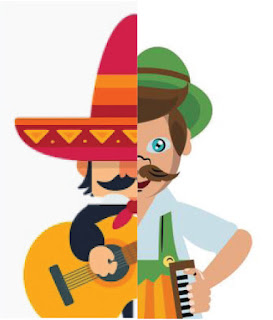
Campaign reported on an interview with Procter & Gamble Chief Brand Officer Marc Pritchard, who continues navel-gazing over his ethnic identity. Pritchard shared that he has a diverse background—his father was of Mexican descent and his mother was of German descent—which allowed him to pass as Caucasian throughout his career. The conversation also touched on Pritchard’s pseudo DE&I defender persona, emphasizing that he has pushed White advertising agencies to diversify their staffs and storyboards. He admittedly declines, however, to enforce his requests by demanding actual quotas and terminating relationships with firms that fail to make meaningful and measurable progress. Like so many in Adland’s exclusive majority, Pritchard presents himself as a bold advocate—and he even accepts trophies and accolades for his faux achievements—yet his efforts yield roughly zero meaningful or measurable results. In short, when it comes to diversity-related pontificating and posing, Pritchard leans on his White side.


C’MON HALF-WHITE MAN!


Talk reveals P&G brand chief’s struggle with ethnic identity


It took P&G vet Marc Pritchard 30 years to embrace his ethnic heritage. An Instagram live talk suggested that he's still coming to terms with that identity.


By Marc Iskowitz


A public conversation Monday evening served as a proof point for why embracing one’s ethnicity remains difficult, even for Procter & Gamble’s brand chief Marc Pritchard.


Pritchard has proved himself an able champion of DE&I and one of its most articulate spokespeople. He’s been hailed for bringing multicultural advertising into the mainstream and has opened up about his own Mexican-American heritage.


But during a very candid conversation that took place on Instagram live with host Walter Geer, executive creative director of experience design at VMLY&R and an industry activist, one of Pritchard’s responses showed that he is still struggling with that identity.


About halfway through their fireside chat, Geer asked Pritchard about the films P&G brands have produced that shine a light on racial bias, such as “The Talk” and “Widen the Screen.” Given that these films have been praised in advertising circles for their rawness and candor, Geer wanted to know the internal process for getting to that type of work.


Pritchard recounted how six years ago, a group of Black executives from its African Ancestry Leadership Network approached him and questioned the firm’s commitment to people of color. Their advocacy served as a catalyst for a comprehensive revamp, in which the CPG giant changed its talent pipeline, recruiting and employee development, and took other steps to ensure there are people of color at every stage of its advertising.


At the time, haircare brand My Black is Beautiful was marking its 10-year anniversary. P&G decided to produce “The Talk” to highlight the tragedy of young Black men and women being killed in the United States.


“I can remember it as clearly today as ever, when I sat around the room, and I was the only white person in that room,” Pritchard recalled of the film’s screenings. “I was hearing stories that I’d never heard before and getting insights.”


The comment may have been more a reflection of ingrained habit than Freudian slip. Still, for Pritchard to describe himself as white was stunning, considering he had just spent the last 30 minutes talking about embracing his ethnic background and how he had (ostensibly) moved beyond the period during which he had to mask his true identity to advance his career.


His dad, whose biological father was named Gonzalez, was adopted by a man named Pritcher. Despite his English surname, Pritcher was also of Mexican descent. His father married a German woman.


“I had both Mexican and German heritage, but I could pass as Caucasian. And many times I also looked very Mexican as well,” Pritchard explained. “So I learned what that was like. And I embraced that pretty heavily as I grew up, mostly because my dad was so into the Chicano world. But when I got into my job, I suppressed it because of fear of judgment, fear of how people might perceive me.”


Code-switching — shifting one’s mode of speech or dress or hiding one’s personal background or beliefs as a way to advance in a working world where there are relatively few executives of color — is all too common in marketing.


Asked by Geer for the moment when he felt like he needed to “come out and own who you are, own your ethnicity,” Pritchard replied that it was very late in his career: “It was more than 30 years in. It was just recently.”


Indeed, just three years ago, at the 2018 AdColor Conference, Pritchard shared his personal journey to an external audience for the first time. During that conversation, he related how he came to grips with his Mexican-American background.


“My parents actually considered naming me Nick,” he said, recalling a story from his AdColor speech. “And I used to joke that I could have been Nicky Gonzalez. And I thought, ‘I don’t think I would’ve made chief brand officer with the name Nicky Gonzalez.’ So that privilege was not lost on me.”


Pritchard may have reached a new level of personal candor during Monday’s talk. But Geer, who said Pritchard agreed to their chat after Geer tagged him in a LinkedIn post earlier this year as an individual with the power to change the entire ad space, had an activist agenda as well.


He wanted to use his personal audience with Pritchard to get him to push for more change among brands that are perhaps fearful of taking the same steps as P&G — and, in turn, to encourage their agency partners to embrace multiculturalism to a greater extent.


“Would you be open to essentially tell vendors even right now that, ‘If you don’t hit these numbers by this certain date, we will have to reconsider your business with us?’” Geer asked.


Pritchard demurred. Nevertheless, he stressed that P&G’s brands are already holding their agencies accountable.


“When I ask [agencies] for their [diversity] numbers, that in and of itself is a powerful step forward because that means I’m watching and I listen and check every time we get together,” he responded. “I wanted to know, within our agencies, what’s their diversity profile? Where are they on women, Black, Hispanic, Asian, Native, Indigenous? At every level in the planning, the account and the creative ranks?


“The reality is with agencies, what we’ve looked at is, ‘Here’s what we expect. And if we don’t see it, we start hiring additional agencies and new agencies,’” he continued.


P&G, Pritchard said, has made the same commitment internally. After realizing it only had 11% female representation behind the camera, “We said, ‘We want to be at 50/50 worldwide.’” P&G discloses on its website that 26% of its U.S. employee base is multicultural, versus its goal of 40%.


Pritchard also said he’s been frustrated by the slow pace of change. “The reason why is because there’s deeply embedded systemic issues that need to be broken down. And that’s where I really want to encourage the industry to keep going.”


While Pritchard stopped short of holding agencies to specific diversity levels, Geer nonetheless characterized the conversation as a success.


“All in all, it was a great conversation,” he said on Tuesday. “He was authentic and real. It showed a broader community of people of all colors that code-switching and passing is a very real thing.”


The fact that one of the most powerful individuals in advertising essentially kept his ethnicity to himself for 30 years and finally came out only three years ago “is a big deal,” Geer added. “Being able to get to where he is meant him not fully disclosing his identity to many people who, quite frankly, he said wouldn’t have allowed him to move further with his organization. That speaks to the greater problems many of us have in this industry.”

Tuesday, November 02, 2021

15592: Delayed WTF 52—Does ADCOLOR Constitute False Advertising?


MultiCultClassics is often occupied with real work. As a result, a handful of events occur without the expected blog commentary. This limited series—Delayed WTF—seeks to make belated amends for the absence of malice.


Adweek published “sponsored content” highlighting the 15th Annual ADCOLOR Awards, penned by none other than Tiffany R. Warren. Why is this pseudo-philanthropic fuck fest still associated with the advertising industry? After all, its top trophy recipients are Hollywood celebrities. Even Warren bailed out of the ad game. Granted, the inaugural ADCOLOR soiree showed its true colors by praising Magic Johnson—and the key winners since then have been more likely to serve as paid ad spokespersons versus ad trailblazers.


The Adweek divertorial was headlined, “15th Annual ADCOLOR Awards: Honoring the DEI Champions Who Go Above and Beyond.” Two of the usual suspects saluted included:


Lifetime Achievement


Antonio Lucio, Principal and Founder, 5S Diversity; Executive Fellow, Yale School of Management


After 40 years as a celebrated marketing leader, Lucio stepped down as CMO at Facebook last year to focus fully on DEI efforts within the industry. He is known for his philosophy of empathetic leadership and for calling on marketing to become “bilingual and bicultural,” building bridges between what companies want to do and where consumers are.


Catalyst


Marc Pritchard, Chief Brand Officer, Procter & Gamble


Pritchard doesn’t want to see your ad storyboards if they’re not reflective of the diverse audience P&G serves. And the same goes for meetings, which is why Pritchard also champions the necessity of hiring BIPOC staff and demanding the same of partners within the industry.


Um, if the lifetime achiever and catalytic converter are so successfully stellar, why do their White advertising agency co-conspirators confess to having failed at DE&I diversions—and continue to annually admit that there is still much work to be done? Hell, their own companies are DE&I deficient. Why are contrived and clichéd excuses for cultural cluelessness regurgitated year after year? Why routinely erect heat shields to conceal and camouflage the abysmal lack of progress? Sorry, the alleged accomplishments should be accompanied by asterisks.


BTW, the traditional gift for a 15th anniversary is crystal. So maybe the organization will salute Crystal Langhorne. Although they’d probably opt for Billy Crystal, as he has greater star-fucker appeal.


Oh, and has anyone asked Nathan Young to weigh in on matters—doesn’t he qualify as a DE&I champion who goes above and beyond?

Wednesday, February 10, 2021

15310: Super Bowl Commercials Fail To Show Super Improved Inclusivity.


Advertising Age reported on an ANA AIMM (Alliance for Inclusive & Multicultural Marketing) analysis that showed Super Bowl advertisers failed to improve on inclusivity ratings based on integrating diverse casting and cultural insights. The findings should surprise no one—especially the ANA, which has consistently reported on the cultural cluelessness and exclusivity of its membership for over a decade.


Casting of Black males was arguably high; however, it would be interesting to see how the figure was impacted by the appearance of celebrities, hip-hop artists and sports stars.


Notably diversity deficient was Procter & Gamble—the mega-advertiser whose Chief Brand Officer, Marc Pritchard, demanded that his White advertising agencies stop presenting storyboards without diversity. A Dawn and Swiffer commercial presented a diverse family, albeit via a filmic technique that didn’t show faces. Yet the showcase Tide commercial featured a Jason Alexander hoodie with a Caucasian family. Well, at least they didn’t go with Michael Richards.


Super Bowl Advertisers Fell Short On Key Diversity And Inclusion Measures, Analysis Shows


The ads got particularly bad scores when it comes to ‘cultural relevance,’ especially from Hispanic audiences, according to a new report from the ANA’s diversity arm


By Jessica Wohl


Despite heightened scrutiny on their diversity efforts, brands advertising in the Super Bowl failed to improve on key inclusivity measures, according to a newly released study of the ads.


Forty-five percent of the ads had casts that represented diverse and inclusive audiences, according to the Association of National Advertisers’ Alliance for Inclusive & Multicultural Marketing (AIMM), which is nearly identical to last year’s score.


And plenty of brands fell short on a measurement AIMM uses to calculate where brands effectively used cultural insights, especially among Hispanic viewers.


The findings, based on 44 of the 58 ads analyzed by AIMM, suggest little progress has been made in the industry’s push to show a broader range of people in ads. Many marketers have set goals around representation in advertising, a movement that gained more attention following the rise in interest in the Black Lives Matter movement after the death of George Floyd. But these preliminary findings from AIMM suggest many brands have a long way to go in casting and cultural relevance when it comes to the ads they produce for the industry’s biggest night.


The results look at representation beyond race. LGBTQ and people with disabilities were largely absent from the spots, representing just 1% of casting, according to AIMM’s tally. (Toyota featured a Paralympian in its ad. Guaranteed Rate’s spot included a blind man.) Black actors account for the majority of diverse representation in the spots, accounting for 29% of all casting in 2021 Super Bowl ads, AIMM reported. The percentage of the U.S. population who identify as Black/African American is 13.4%, according to U.S. Census Bureau data.


Hispanics were cast in 12% of roles, according to AIMM’s early findings, but comprise nearly 19% of the U.S. population. And Asian Americans made up 5.5% of all people cast in the commercials, AIMM data show, nearly in line with the 5.9% share of the population, based on Census Bureau data.


Representation tells only part of the story. The Cultural Insights Impact Measure (CIMM) used by AIMM to study the impact and effectiveness of cultural insights in ads found suggest many spots fell short, particularly with diverse audiences.


Only 4% of Super Bowl ads received the highest marks for cultural relevance among the total population, down from 22% in 2020. And 37% of the ads fell in the lowest quartile of cultural relevance in 2021, versus 16% in 2020.


Among Hispanics, 68% of the Super Bowl ads measured by AIMM fell in the lowest quartile of cultural relevance, versus 31% of ads in the 2020 Super Bowl. Black viewers measured 29% of the ads shown during this year’s big game in the lowest quartile of cultural relevance, after finding only 5% of ads in that bottom quartile in 2020.


AIMM did not share which spots were among the 44 that it had reviewed so far. Advertisers including Amazon, DoorDash and Rocket Mortgage had Black actors and actresses in lead roles. And before the Super Bowl, GLAAD highlighted Michelob Ultra, Logitech, M&M’s and ViacomCBS’ promo for Paramount+ for strong representation of the LGBTQ+ community in their spots.


AIMM plans to release its full findings at a conference on Wednesday.

Monday, November 23, 2020

15214: Shifty Shades Of Grey.

Advertising Age published a lengthy report on reactions to the AKQA-Grey shit pile, with WPP backpedaling on a name change after apparent outrage from Grey staffers and longtime client Procter & Gamble. One key executive to express displeasure over the proposed renaming was P&G Chief Brand Officer Marc Pritchard, who called WPP CEO Mark Read to complain. “P&G is looking forward to continuing to work with Grey and their talented people, who we deeply value,” stated Pritchard. Okay, proposing to change the masthead to AKQA Group—big problem. That Grey is White—no problem. Pritchard continues to expose his true priorities while hiding behind patronizing propaganda. There’s a name for that: hypocrite.


AKQA, Grey Merger Naming Sparks Employee Uproar And ‘Upsets’ P&G


By Lindsay Rittenhouse


When WPP announced it was merging Grey and AKQA, its press release said that “The AKQA Group will launch with the AKQA and Grey brands, which will be integrated over time into a single company.” The combined 6,000-employee agency would be dubbed AKQA Group, leading to media reports, including in Ad Age, that the Grey brand would be killed off in favor of the digital agency's moniker. Campaign, which broke the story, initially wrote that the formation of AKQA Group “means the end of the Grey brand” which would eventually “be dropped.”


“Grey has evolved many times over its 103 years and this is the next step in its evolution,” Grey Worldwide CEO Michael Houston told Ad Age on the day of the announcement, Nov. 11. “As someone who works in the business of brands, while names are obviously important, brands are much more than their names as well.”


Enter Procter & Gamble. According to three people close to the business, though the client was briefed ahead of time on the merger itself, its executives were distressed to read in trade papers that the Grey name would be abandoned in favor of AKQA. This prompted P&G Chief Brand Officer Marc Pritchard to call WPP CEO Mark Read, demanding to know why he wasn’t informed that the Grey brand would be retired. And P&G is a client WPP can’t afford to anger: According to Ad Age Datacenter estimates, P&G spent $4.3 billion on measured media in the U.S. in 2019.


Grey has worked with the consumer goods giant for seven decades. In the past few years, Grey has been behind some of its most defining work, tackling toxic masculinity in “The Best a Man Can Be” for Gillette; and recently working with Grey-backed Cartwright to urge the silent majority to be anti-racist in “The Choice” for P&G.


Though Pritchard declined to comment on the call to Read, he did confirm through a spokesperson that he “was upset” by news reports saying the Grey name would be “going away. He was told that this is not the case and that Grey ‘will remain intact’ and the Grey name is not going away,” the spokesperson said.


WPP, in fact, maintains that the AKQA Group integration is going to take time “based on client and market needs.” The timetable, the company says, “will vary by market and client,” and the Grey name will remain “for some time—for as long as it makes sense to do so in each case.”


So was this a case of WPP walking back a decision to accommodate an unhappy client, or a was it a vague communication that confused the press, clients and many of Grey’s rank-and-file employees?


That’s, well, a gray area.


One executive with knowledge of the situation insists there was a plan to ditch Grey entirely that was “changed to separate brands because of P&G displeasure.” Another said that WPP leaders added “Group” to the AKQA name for the merged agency as a concession to include a part of the Grey name, as in Grey Group.


A WPP spokesman responded in a statement: “Major clients were of course consulted on the plans in advance. As always, we listened to those clients, who helped to shape our approach as we bring together the capabilities of two great agencies.”


Whatever the case, P&G seems to be appeased. “P&G is looking forward to continuing to work with Grey and their talented people, who we deeply value,” Pritchard added in his statement. “We’re expecting enhanced capabilities brought to Grey, and for the merger to be largely seamless to our brands and company.”


Employee ‘chaos’


Internally, there was “chaos,” as one exec describes it, over the disposition of the Grey name, according to five executives interviewed by Ad Age, who say it wasn’t the merger that surprised employees and clients, but the positioning of AKQA as the dominant shop.


Those seeking clarity were thwarted at a virtual “global town hall” with AKQA Founder Ajaz Ahmed and Grey Worldwide CEO Michael Houston, according to a Grey exec who attended. The exec says that employees expecting a town hall were surprised to instead encounter a pre-recorded broadcast between Ahmed and Houston as well as John Patroulis and Justine Armour, Grey’s worldwide and New York chief creative officers, respectively. No one was given a chance to ask questions of agency leaders, which galled many Grey employees, this person says, who were “blindsided.”


“They made a mess of this and clients got upset,” said another person familiar with the matter. “Grey people are furious and resisted completely.”


WPP declined to comment.


Board pressure?


According to two execs close to the matter, WPP’s directors have been twisting Read’s arm to get the ball rolling on further consolidation moves before the end of the year—pushing him to merge Grey and AKQA and, most recently, fold Geometry into VMLY&R. One exec says the board criticized Read for not doing enough in the two years since the 2018 mergers of VML and Y&R and Wunderman and J. Walter Thompson.


The company’s board of directors is run by Chairman Robert Quarta and this year appointed new directors WPP Chief Financial Officer John Rogers, former Apple Retail Senior VP Angela Ahrendts, UCB Executive VP and Chief Financial Officer Sandrine Dufour and Crossword Cybersecurity Founder-CEO Tom Ilube.


Business Insider reported in October that the WPP board hired global management consulting firm McKinsey & Co. to help return the holding company to growth, and that it would be rolling out a plan to do so in the coming weeks. It’s likely the mergers are part of that plan.


For the recent third quarter, WPP reported a 9.8% decline in revenue to $3.8 billion, or a 5.5% decrease in like-for-like sales. By region, the U.S. saw a 5.5% decline in revenue less pass-through costs in the third quarter while the U.K. fell 6.5%, Germany decreased 1.8%, Greater China slipped 16.7% and India declined 16.3%.


When asked to comment whether the board is pressuring Read to act swiftly, WPP said only that “bringing together AKQA and Grey is in line with our strategy outlined in 2018—and driven by the executive team—to create fewer, stronger agency brands that offer outstanding creativity allied with technology expertise. It follows other successful mergers including Wunderman Thompson, VMLY&R and BCW which are among WPP’s strongest-performing companies.”


Some people are betting on the mergers, and Read’s overall strategy to strengthen both its creative and digital agencies by integrating them together. “Given Mark Read’s background with Wunderman and the well-reported challenges of the holding companies, these moves, although appearing desperate to some, may be an effort to survive the competition of the more nimble indies,” says one former WPP exec.


As Ad Age earlier reported, independent agencies—boasting a more nimble and affordable model that can get work out the door faster—are becoming more of a threat to holding companies as they increasingly take their business.


“I wasn’t surprised to see Grey and AKQA combined together,” says Forrester Principal Analyst Jay Pattisall, adding that the merger of Geometry and VMLYR will bring critical commerce capabilities that clients are demanding in the pandemic to a digital player.


“This is just the continuation of a trend that started a few years ago with marketers really looking for streamlined solutions,” Pattisall says. “We see that campaigns perform much higher when [all disciplines] are integrated and leveraging each other.”


On AKQA and Grey, “the only thing that surprised me was how long it took,” he says.


Speed bumps


The merger had, in fact, been suspected by most people in the ad world since the formation of VMLY&R and Wunderman Thompson. Many people thought the debut of GreyKQA or AKQGrey would be next. In some countries like Denmark, Grey and AKQA have already been sharing office space.


Though Read argued in an earlier interview with Ad Age that he didn’t want to create “a linguistic tongue twister” by combining the agency names, two people close to the matter say it was AKQA’s Ahmed, who was appointed CEO of the combined company, who refused to work under the name Grey.


“The original thinking was that Grey, being the bigger name, would absorb AKQA but Ajaz said ‘no way,’” says one exec. Since the WPP board was giving Read “an extremely hard time” to move ahead with the merger, says the exec, the Grey team led by Houston, now global president of AKQA, ended up caving.


WPP declined to comment on that report.


Still, while the decision may be the right one, it could cost Grey talent, like the ones P&G made clear it so "deeply values." 


“These mergers, which are actually takeovers, make people extremely anxious and unhappy,” says one former WPP executive who worked across several of the holding company’s agencies including Grey New York. A Grey employee adds, “I don’t know any high-level creatives who aren’t considering going independent right now.”


Contributing: Jack Neff