Tuesday, April 10, 2012

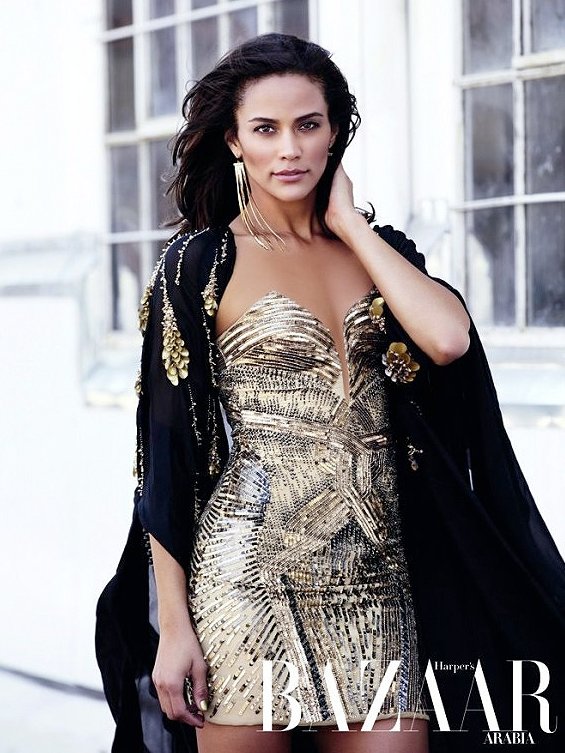
9992: Sexy Arabia With Paula Patton.


9991: Bear Drinker.


Is it really a good idea to drink beer before riding a bicycle, skiing or surfing—even for bears?


From Ads of the World.

9990: Taking Another Run At AMC’s The Pitch.


A visitor took offense to parts of MultiCultClassics’ review of AMC series The Pitch. Here are the highlights of the gripe:

You rightly bemoan the lack of diversity in agencies like McKinney. (Although the fact that most of the creatives working on the pitch seems to have escaped you. Or don’t women count?) But apparently you have no compunction about discriminating against people based solely on their age.

Why is ageism any more acceptable than racism or sexism? All discrimination is wrong. There are incredibly talented creatives over 40 and even 50. Should you cast them aside just because they may have a few grey hairs or wrinkles? What is this, “Logan's Run?”

OK, to avoid completely rehashing past posts, MultiCultClassics will respond with topline statements and links.

Q. Which group has most benefited from affirmative action?
A. White women. And this certainly holds true in the advertising industry, where White women are pretty well represented in the majority of departments. Granted, there appears to be a dearth of dames in creative director roles, although the McKinney GCD spotlighted in The Pitch proved female creative honchos do exist. Ironically, the theme of the infamous Neil French rant has seemingly been consistently corroborated by White women—including the McKinney GCD. So when it comes to diversity, White women do not count.

MultiCultClassics does not discriminate against people based solely on their age. Boomers and Old White Guys have been criticized at this blog, but primarily for their outdated attitudes and behaviors, which have little to do with how old they are. BTW, the characters on The Pitch displayed age-related bias by giving the assignment to “younger” staffers. Additionally, MultiCultClassics has noted the hypocrisy of elder adpeople crying ageism now that they are in the cultural crosshairs, despite having spent their careers turning blind eyes and deaf ears while nearly every minority group has faced blatant discrimination in our industry. Former passive bigots are suddenly accusing everyone else of bigotry.

For the record, the barbs directed at the participants on The Pitch were not intended for Tracy Wong. The man is clearly an authentic, relevant leader. On the program, he inspired his team to do their thang, provided direction and resources, and finally supported and promoted their efforts. Take a close look at the performances of the McKinney bigwigs. The GCD didn’t offer a single meaningful contribution, while the CCO clumsily forced himself into the process. They made a point to assign the project to “younger” writers and art directors, and then effectively stifled their creativity. McKinney was lucky to encounter conservative, culturally clueless clients and seal a victory, yet the win doesn’t negate their stupidity. The North Carolina-based shop may succeed on reality TV, but actual reality is probably another story.

Monday, April 09, 2012

9989: Tie One On With AA.


More unauthorized Alcoholics Anonymous advertising from Brazil. Would drunken guys really be able to secure such perfect knots before jumping?


From Ads of the World.

9988: Mad Men Is A Riot.


AMC series Mad Men hinted at the New York Race Riots in the latest episode.

Joan Harris’ husband Greg returned from military service. While having a conversation with Joan’s mother about “the riots,” Greg remarked, “Plenty of Negroes in Saigon—and they’re plenty brave.” Yep, the program continues to display reverence to Blacks.

Peggy Olson caught Dawn sleeping in Don’s office, and learned the secretary was avoiding the riots. Peggy invited Dawn to stay at her apartment, where the two bonded. Peggy tried to connect by saying she was once “the only one” at the agency too—meaning the sole female copywriter. Gee, that’s really relatable. However, Peggy hesitated when leaving her purse with Dawn in the living room. Nice.

9987: AMC’s The Pitch Is Pathetic.


Caught the sneak preview for The Pitch, the new AMC series featuring real advertising agencies—McKinney and Wong, Doody, Crandall, Wiener—competing for AOR status. The first prize: an opportunity to hawk breakfast items for Subway to a youth audience.

Couldn’t help but notice all the pathetic sides of the industry on display. Not sure what the appeal is here either, as reality TV shows like The Apprentice have already depicted people concocting campaigns.

Besides Tracy Wong and one Asian-American staffer, the agencies appeared to be predominately White. Old too. In fact, both shops made a point to assign “younger” creatives to work on the shootout. The Old White Guys, however, ultimately forced themselves into the process.

The McKinney team found a viral video featuring a White rapper and actually pursued it as a big idea. Watching the mesmerized McKinney staffers listening to the rapper’s lyrics was nothing short of pathetic. The agency even brought the sell-out rapper to the final presentation.

The McKinney group creative director spent some time bemoaning the challenges of being a woman and mom while serving as a senior-level advertising executive. Boo-hoo, old White lady, boo-hoo. McKinney CCO Jonathan Cude, incidentally, is a mediocre presenter. From a creative standpoint, the agency deserved to lose.

Oddly enough, the lame McKinney concept won—proving once again that White adpeople love hip hop.

Sunday, April 08, 2012

9986: John Derbyshire’s Demons.


Recent events like the Trayvon Martin shooting have inspired Black parents nationwide to have The Talk with their children. This in turn prompted John Derbyshire to write The Talk: Nonblack Version at Taki’s Magazine. It’s hard to imagine what might have been rattling around Derbyshire’s skull while he typed the perspective, but he clearly is not among the 36% of Americans (FYI, Derbyshire is British-American) who would be most hurt over being labeled a racist. One must also question the sanity of the editors at Taki’s Magazine for their questionable judgment. The publication’s site boasts:

We at Taki’s Magazine take our politics like we take life—lightly. We believe political labels such as conservative and liberal are as outdated as flared trousers and nazis. Ideology is a false god, a secular religion that seeks vainly to create a paradise on Earth. Our only ideology is to be against the junk culture foisted upon us and mirages of a new world order. Think of us what you will, but read us. Our writers are never boring.

Ignorance masquerading as the intelligentsia is never impressive. Promoting hate for the sake of visitor hits is pathetic.

9985: Studying Homophobia.


From USA TODAY…

Study examines the roots of homophobia

By Michelle Healy, USA TODAY

Acceptance of gays and lesbians has never been higher, but anti-gay bias still exists. A new study suggests intense hostility toward homosexuals may be linked to a repressed same-sex attraction, combined with an authoritarian upbringing.

Though such factors are not the only cause of homophobia, the findings suggest those “who have a discrepancy within themselves about their expressed vs. unconscious sexual attraction find gay and lesbian people more threatening and are more likely to express prejudice and discrimination toward them,” says University of Rochester psychology professor Richard Ryan, co-author of the study, which is published in the April Journalof Personality and Social Psychology. Also an author is Netta Weinstein of the University of Essex, England.

The blocking of unconscious desires by adopting an opposite view is a well-known psychoanalytic concept, suggested by Freud and others. The new study uses “modern methods that allow us to more reliably peer into these less explicitly available parts of peoples’ psyches and see what’s arising,” Ryan says.

Among those methods: studies that measure discrepancies between what people say about their sexual orientation and how they react during split-second timed tasks. Study subjects — four groups of about 160 college students each, in the USA and Germany — also rated the attractiveness of people in same-sex or opposite-sex photos and answered questions about the type of parenting they experienced growing up, from authoritarian to democratic, as well as homophobia at home.

Researchers also measured homophobia — both overt, as expressed in questionnaires on social policy and beliefs, and unconscious, as revealed in word-completion tasks.

The findings suggest participants with accepting parents were more in touch with their innate sexual orientation. But, Ryan says, “if you come from a controlling home where your parents do have negative attitudes toward gays and lesbians, you’re even more likely to suppress same-sex attraction and more likely to have this discrepancy that leads to having homophobia and feeling threatened.”

Some in the field are skeptical.

Psychology professor Gregory Herek of the University of California-Davis has done extensive research on anti-gay bias and violence, and he says measuring unconscious same-sex attraction is “incredibly difficult.”

“This study is asking the right questions,” Herek says, but “it’s a pretty big leap to say it’s revealing sexual orientation.”

Psychiatrist T. Byram Karasu of Montefiore Medical Center in New York has similar concerns. The suggestion that parents play a role in homophobia fails to address the importance of “identifying with the authoritarian parent” and then taking that oppression “and projecting it outward. The study skips the self-oppression part,” he says.

Ryan says the study may help explain the personal dynamics behind some bullying and hate crimes directed at gays and sheds light on high-profile cases in which public figures who have expressed anti-gay views have been caught engaging in same-sex sexual acts.

“Some people who are threatened by gays and lesbians and are most vociferous in their opposition to them are suffering internally themselves,” he says.

9984: Bunnies For Easter.


Darine Stern was the first Black model to appear on the cover of Playboy for the October 1971 issue.

Naturi Naughton played a Bunny on AMC series Mad Men and the short-lived NBC series The Playboy Club.


Naomi Campbell has incorporated Bunny imagery in her work.


Runa Lucienne became the first Black Playboy Bunny to work at the Playboy Club Macao in Macau, China. Lucienne was one of the 16 original Macao Bunnies, beating thousands of international applicants.


Saturday, April 07, 2012

9983: Reading Labels.


CBS News reported that a poll conducted by 60 Minutes and Vanity Fair revealed the following:

When asked which label would hurt them most if they knew someone would apply it to them, slightly more Americans picked “liar” (42 percent) than “racist” (36 percent). Republicans and independents picked “liar” as the more hurtful label, while more democrats chose “racist.” Few Americans would care if someone considered them “cheap” (8 percent), “neurotic” (3 percent), or “ugly” (2 percent).

Oddly enough, the figures probably reverse on Madison Avenue, where “liar” is essentially a professional badge of honor. Plus, the average advertising executive is so culturally clueless, he doesn’t even realize he’s a “racist.” It’s a safe bet, however, that the overwhelming majority of adpeople would take great offense to being labeled “ugly.”

9982: Kraft Cuts From Conservative ALEC.


From The Chicago Tribune…

Kraft drops membership in conservative group amid protest

By Tiffany Hsu Tribune Newspapers

Kraft Foods joined Coca-Cola in bowing to consumer pressure this week to cut ties with the American Legislative Exchange Council, a conservative lobbying group that has recently backed controversial voter ID and so-called “stand your ground” laws.

Kraft said in a statement that it has “made the decision not to renew” its ALEC membership, which is expiring. The company, based in north suburban Northfield, was opaque in its reasoning, citing “limited resources” and saying that its involvement with ALEC “has been strictly limited to discussions about economic growth and development, transportation and tax policy.”

Advocacy group Color of Change launched a boycott against Coca-Cola for its participation in ALEC’s Private Enterprise Board, but within hours, the soft drink giant issued a statement saying that it had “elected to discontinue its membership.”

The company blamed ALEC’s support of “discriminatory food and beverage taxes” instead of “issues that have no direct bearing on our business.”

“We have a long-standing policy of only taking positions on issues that impact our company and industry,” Coca-Cola said.

The withdrawals pleased ALEC detractors, which includes the Center for Media and Democracy. The liberal-leaning nonprofit said it had launched a protest campaign in tandem with Color of Change opposing what it said were ALEC’s efforts to deny climate change, undermine public schools and encourage laws that would require voters to present various forms of identification before voting.

Critics of the policies, which have already been implemented in several states, say that they are more likely to shut out minorities, the poor, the elderly and even college students.

Draft legislation from ALEC has also helped fan the debate over “stand your ground” laws, which have played a central role in the February shooting of unarmed Florida teen Trayvon Martin by neighborhood watch volunteer George Zimmerman.

Color of Change, an African American advocacy group co-founded by James Rucker and Van Jones, issued a statement saying that the group would direct its sights at other companies associated with ALEC.

ALEC helps corporations and individuals draft model legislation to send to politicians. Its website says that the group’s mission is “to advance the Jeffersonian principles of free markets, limited government, federalism and individual liberty.”

Other members of ALEC’s Enterprise Board include executives from Wal-Mart, Johnson & Johnson, Pfizer, AT&T, UPS and ExxonMobil. In January, PepsiCo quietly pulled itself off the board.

9981: Talking The Talk.


From The Los Angeles Times…

For black parents in Pasadena, shootings give fresh relevance to ‘The Talk’

The fatal shootings of Kendrec McDade in Pasadena and a black teen in Florida renew the painful generations-old discussion about the need to swallow one’s anger and pride when dealing with the police.

By Christopher Goffard and Richard Winton, Los Angeles Times

When Martin A. Gordon talks to his 19-year-old son about the history of race relations in America, he invokes the Black Panthers, Martin Luther King Jr.and the watershed moments of the civil rights era. It’s a story of hard-won rights that fills the ‘60s-era activist with pride.

Then the conversation turns urgently personal, survival its theme: On the wrong street, at the wrong time of day, he tells his son, pride might be his undoing. “I know my son can be a moment away from being killed if he acts the wrong way, if he’s arrogant,” Gordon said. “He started to learn about this as a child.”

Gordon was speaking in a Pasadena church, blocks from where an unarmed black college student, Kendrec McDade, was fatally shot March 24 by two white police officers pursuing two men who they mistakenly believed were armed robbers. Police say the incident began when the 19-year-old McDade and a friend stole a backpack from a car, and the owner lied to police, telling them the thieves were armed.

The incident, which remains under investigation, followed the controversial shooting death of an unarmed black teen in Florida by a neighborhood watch leader. For many black parents, the shootings have given fresh relevance to a painful generations-old conversation. “The Talk,” some call it.

“Certain things are a reality for him — he needed to understand that early on,” Jim Collins, a longtime Pasadena resident, recalled of his conversation with his son. “The Talk is because they have to know what to do and not do.”

Parents say some version of the conversation, ubiquitous in African American life, is necessary regardless of how high they climb on the socioeconomic ladder. It is about learning to say “Yes, sir” and “No, sir” when a policeman pulls you over, no matter how unjustified the stop seems. It is about keeping your hands on the steering wheel and giving officers no cause for panic. It is about swallowing your anger and pride and coming home alive.

Gordon, an activist with the Pasadena Community Coalition, said he worries when his son stays out late. “If I wake up and he’s not there, I go, ‘Oh, boy,’” Gordon said.

He said he speaks at seminars, instructing black youths about how to handle themselves around police. He wants them to know their rights, but also to be respectful.

“Just because you asserted your rights doesn’t mean you won’t get your butt kicked,” Gordon said. “You can be dead and no one’s there to speak for your rights. That’s what scares me most.”

Read the full story here.

9980: Delayed WTF 17—Mad Ave Assimilation.


MultiCultClassics is often occupied with real work. As a result, a handful of events occur without the expected blog commentary. This limited series—Delayed WTF—seeks to make belated amends for the absence of malice.

The half-hearted diversity discussions at the recent 4A’s conference and the announcement of IAM graduates shed new light on the
training consultancy being launched by Nancy Vonk and Janet Kestin.

To recap, Vonk and Kestin are starting Swim, a training program for young advertising agency creatives. “With agencies no longer investing time and money to bring people along, it’s pretty much ‘sink or swim,’ and a lot of talented people sink,” explained Vonk. “Careers are stalling, work is suffering, and retention is poor.”

It’s a safe bet that Vonk is talking about White creative staffers. After all, she and Kestin are chummy alums from Ogilvy, where Ogilvy North American Chairman-CEO John Seifert expressed depression over the company’s lame diversity efforts.

Yet Vonk and Kestin inadvertently point out the monumental challenges that minorities face trying to succeed in the advertising industry. Hey, if White creatives require exclusive training, imagine what it must be like for non-Whites. The presumption already exists that minorities depend upon additional tutoring to make it on Madison Avenue—as evidenced by the plethora of segregated internships, inner-city high school initiatives and colored college courses. It appears that Whites feel minorities can’t make it without extra help.

So if Swim indicates even Whites could benefit from special attentive care, the logical next thought would be to believe minorities need super supplemental seasoning.

On the flip side, this really goes back to the arrogance of White adpeople. Specifically, no one ever considers the reality that the group with the greatest urgency for reform is the White majority. The Impact Study showed minorities endure isolation in the field; that is, our industry is not friendly and/or welcoming to non-Whites. But one never hears about philanthropic schemes to enlighten the culturally clueless. No courses are presented for eliminating exclusivity to build inclusive workplaces.

It’s much more pleasant to promote assimilation under the guise of goodwill.

9979: Stove Top’s Plymouth Crock.


In What’s Black About It? by Pepper Miller and Herb Kemp, the authors spotlighted a case study involving Stove Top. To target Black consumers, the brand tapped research showing the audience preferred using cornbread over loaf bread, and referred to the side dish as dressing versus stuffing (see excerpt above). This marketing insight came to mind while viewing the new Stove Top campaign by The Martin Agency—a White shop in Richmond, Virginia—featuring annoyed Pilgrims to position the product as being great for occasions beyond Thanksgiving. Can’t help but wonder how the characters and concept cross over to Black consumers. Or Latinos. Or Native Americans.

Maybe Stove Top will produce a targeted commercial featuring Malcolm X proclaiming, “We didn’t land on Plymouth Rock. The rock was landed on us.”

9978: RadioShack Needs Shuttering.


Adweek reported RadioShack has selected a new White advertising agency which is actually Grey—that is, Grey New York. Oddly enough, RadioShack’s chief marketing officer left the company last month, and the retailer has yet to identify a successor. This puts Grey in an uncomfortable position; it’s as if they just got married, with the spouse to be named later. Then again, does it really matter? The true problems RadioShack faces will not be solved by a White agency, as evidenced by the photo above. Incumbent Butler, Shine, Stern & Partners’ “The Shack” branding is lost in the overall customer experience. The place continues to feel like a five and dime for pocket-protector-wearing CB enthusiasts.

RadioShack Selects New Creative Agency

Incumbent Butler, Shine declined to defend

By Andrew McMains

The Shack has a new lead agency. The New York office of Grey won RadioShack’s creative account after a review, according to sources.

The WPP agency succeeds Butler, Shine, Stern & Partners on the business. The brand spends an estimated $200 million annually on advertising.

McCann Erickson and Goodness Mfg. were the other finalists in the review, which began in November. Select Resources International in Santa Monica, Calif., managed the search.

Butler, Shine, Stern & Partners of Sausalito, Calif., had worked on the brand since 2009. The incumbent was invited to defend, but ultimately declined.

Media planning and buying efforts were not in play and remain at WPP’s Mindshare.

In an odd coda to the review, Lee Applbaum, RadioShack’s chief marketing officer since 2008, exited the retailer last month. The company has yet to name a successor in that role.

Grey did not return calls, and the Fort Worth, Texas-based RadioShack could not immediately be reached.

Friday, April 06, 2012

9977: The Male-Only Masters Mess.


The Chicago Tribune offered an opinion on the Masters Tournament and Augusta National Golf Club’s male-only membership policy. Hey, somebody should get a comment from Tiger Woods.

Will ‘she’ don the green jacket?

IBM’s Ginni Rometty reduces the Masters to ‘no comment’

As the Masters Tournament eased into its 76th competition on Thursday — the course looked as impeccable as it ever has — a boorish little smudge crept up again.

Tournament host Augusta National Golf Club in Augusta, Ga., faces an unusually pesky public relations problem this year. While the club regularly incites, and even thrives on, criticism of its male-only membership policy, the issue is generating particular melodrama due to an important tournament partner.

IBM is one of the Masters’ most dedicated and generous sponsors. As a “thank-you” to the global technology and consulting firm, Augusta National traditionally gives the company CEO membership privileges and, of course, the bodacious green jacket.

Ah, but there’s a problem. IBM has a new CEO and it’s a “she.”

Virginia “Ginni” Rometty, who boasts Chicago roots as a 1979 graduate of Northwestern University’s engineering school, oversees IBM as the company’s first female president and CEO. Her predecessor, Sam Palmisano, told The New York Times she got the job last fall “because she deserved it. … It’s got zero to do with progressive social policies.”

So, what about the Augusta membership?

Despite protests and severed sponsorships over the years, the clubhouse maintains its men-only protocol. Reporters grilled Augusta National Chairman Billy Payne this week during his annual news conference, asking whether the club would make an exception for Rometty. Payne offered “no comment” on JacketGate. Club matters are private, he said.

IBM, too. A spokesman told us the firm would not be discussing the membership issue.

Perhaps Rometty is too busy, and savvy, to respond to an anachronous, obnoxious clubhouse policy that doesn’t impact her life, her company or her employees. Yet IBM was one of several corporate sponsors to pull its television ads from the 1990 PGA Championship, which took place at an Alabama golf course that had white-only membership rules.

At what point do corporate CEOs stop looking the other way?

At the very least, Rometty should consider ending IBM’s deeply embedded relationship with the Masters and Augusta National if they don’t offer to her the same courtesy and respect extended to the CEOs of Exxon Mobil and AT&T, the tournament’s other corporate sponsors, both led by men. Closing ceremonies and the hallowed jacket-donning take place Sunday.

If Rometty is not included, or chooses not to participate, she can take comfort in the fact that she won’t have to wear one of professional sports’ homeliest garments: the Easter-egg-hue, brass-buttoned Masters jacket with a Girl Scout-reminiscent badge fastened to the left breast.

As tradition goes, the donning of the jacket is certainly more noble than the winner of the Indy 500 dribbling through a bottle of milk.

But in case you were wondering, yes, even the Indy 500 allows women to drive.

How radical.

9976: More Mary J. Blige-BK Thoughts.


Over at Slate, Aisha Harris declared that Mary J. Blige’s Burger King Ad Is Silly, Not Racist. Harris wrote:

So why the uproar this time? Perhaps the answer has to do with the ad’s intended audience. Unlike the many fast-food commercials aimed specifically at black audiences, usually found on black-targeted networks like BET, the Blige ad features a mostly white supporting cast. It is meant to appeal to a “mainstream” (read: white) audience; some of the ad’s critics seem worried about the way it might make black people look to white people.

Not sure why Harris believes the ad is intended to reach a “mainstream” audience. In fact, she is probably dead wrong to think so. As previously noted, Burger King made a deliberate decision in 2010 to dump its minority agencies, claiming to take a more “cross-cultural” approach to advertising. In other words, the Mary J. Blige spot is not intended to primarily appeal to Whites, as Harris contends; rather, it’s for the mythical multicultural audience. And as the Salma Hayek companion spot has “cross-cultural” appeal, but really targets Latinos, the Blige spot is probably intended to have greater appeal for Blacks.

MultiCultClassics agrees with Harris that the commercial is not racist for the reasons many people think it is. However, it is arguably racist for reasons the general public does not realize. Specifically, a White agency was charged with producing advertising targeting blacks, delivered a culturally clueless effort, and allegedly saw fit to release the commercial in an unfinished state. There’s definitely some questionable behavior at play in this affair, but ordinary citizens remain oblivious to the behind-the-scenes details.

9975: Holier-In-One Than Thou Attitude.


The Gospel According To Luke…? Perfect for the Easter holiday.

From Ads of the World.

Thursday, April 05, 2012

9974: Beyoncé.com Is Livé.


From Advertising Age…

Beyonce Unveils Revamped Web Presence She Demanded Last Fall

After Putting Pitch to Madison Avenue in November, Shows Off New Web, Social Media

By Rupal Parekh

Who runs the world? Beyonce.

Last fall we reported that Bey—despite the megawatt smile, glamorous glittery gowns, and then-impending motherhood—was lacking in one regard: an acceptable digital presence.

In the superstar’s view, her website, focused largely on announcing singles and concert appearances, didn’t reflect the full scope of her interests and talents. So she and her management company, Parkwood Entertainment, turned to adland with a brief to fix her website.

The results of that initiative are now on display at beyonce.com. The revamped site was announced by the star over Twitter, which itself marked a major milestone. With 3.5 million followers, Beyonce had never tweeted until today, when she said: “Hey World, It’s B! I’m so excited to invite you to my new beyonce.com—we’ve been working hard, and it’s finally ready for you XO.”

The winner of the pitch (which several large New York shops turned down because of what was described to Ad Age as unreasonably tight turnaround times and a lack of specificity in the brief) was New York studio Designed Memory.

A letter on its website displays the shop’s motto: “We love solving problems.”

With Beyonce as a client, Designed Memory is making a big splash in the entertainment space. The boutique’s founder and creative director, Matthew Siskin, is something of a go-to among the stylish set. Back in 2008, The New York Times Magazine said he’s “like an ethonographer presenting artifacts from the exotic world of fashion.”

Designed Memory was the interactive studio behind sites for fashion brands such as Suno and jewelry designer Irene Neuwirth, and personal sites for Chris Benz, Genevieve Jones, and Albertus Swanepoel. Beyonce’s choice of Mr. Siskin for the revamp was probably driven in no small part by the fact she wants to promote her fashion brand, House of Dereon, via the site. A “spring look book,” with a collection of flowy dresses and jumpsuits, has already been uploaded.

Its homepage describes the site as “A newly personal view into her world, for you, by her.”

One executive familiar with her plans told us in the fall that Beyonce hated the previous site “because she doesn’t think that it looks like who she is as an artist, someone who likes fashion and art and photography and travel.” The star “has all sorts of interests, and wants to communicate that,” the person said, adding that Beyonce wanted the new site to be “daring and forward-thinking.”

The update includes handwritten ramblings and a bit of musing on Jean-Michel Basquiat, so we can probably expect to learn more about Beyonce’s artistic passions. There are also links to her newly unlocked Tumblr page, Facebook and Twitter, which indicates that she’s trying to get more aggressive on social media.

All in all, it’s a big move for brand Beyonce, and it’s possible that she got a little help from her friends in rethinking her virtual persona. By the looks of it, Bey is taking some cues from bud Gwenyth Paltrow, who has morphed into a media property via her weekly newsletter, Goop, and books that aim to convey she’s more than a hanger for red-carpet gowns but is into crafts and wood-burning pizza ovens.

And of course there’s Beyonce’s husband, Jay-Z, who has created a bit of a media property of his own with his Life & Times website. Already the two are cross-posting some content: photos of their new daughter, Blue Ivy.

9973: McJudgment.


From Advertising Age…

Judge Dismisses Happy Meal Lawsuit

Consumer Group Considers Appeal in Case Against McDonald’s

By E.J. Schultz

A California state court has dismissed a lawsuit against McDonald’s aimed at stopping the fast-feeder from using toys to market directly to children.

The suit, which focused on Happy Meals, was filed by consumer group Center for the Science in the Public Interest on behalf of Monet Parham, a mother of two from Sacramento, who said she was concerned about the fast feeder “getting into my kids’ heads without my permission and actually changing what my kids want to eat.”

Reacting to the dismissal, McDonald’s USA spokeswoman Danya Proud said in a statement: “As we have maintained throughout these proceedings, we believe this lawsuit is without merit and detracts from the important issue of children’s health and nutrition. We are proud of our Happy Meals and will vigorously defend our brand, our reputation and our food. We stand on our 30-year track record of providing a fun experience for kids and families at McDonald’s.”

CSPI in a statement said it was considering an appeal. “McDonald’s must stop exploiting children at some point,” the organization stated. “Using toys, of all things, to lure young children to fast-food meals is not responsible corporate behavior. It’s a predatory practice that undermines parents, causes rifts in families, and harms kids’ health.”

The suit was filed at the California Superior Court in San Francisco. The judge’s order was not immediately available for viewing on Wednesday.

9972: Uhura Meets Commander Obama.


From The New York Post…

‘Beaming’ aboard

‘Trek’ icon Spocks the vote with O

By Geoff Earle, Bureau Chief

WASHINGTON — “Star Trek” actress Nichelle Nichols had a close encounter with President Obama and gushed about it in breathless Twitter posts that went around the world at warp speed yesterday.

The actress, 79, met with Obama last month after speaking at NASA’s Goddard Space Flight Center during Black History Month.

On Tuesday, she posted a photo (pictured) of herself and Obama both grinning and flashing the Vulcan salute that is a hallmark of the show.

“Taken 2/29 in the Oval Office — Live Long & Prosper,” she wrote.

Earlier missives from Nichols — who played communications officer Lt. Uhura (above) on the show — suggest some gravitational pull between them.

“President Obama also confirmed for me that he was definitely a Trekker! How wonderful is that?!” she wrote.

“Months ago Pres Obama was quoted as saying that he’d had a crush on me when he was younger. I asked about that & he proudly confirmed it!”

But nowadays, Nichols is the one who has a crush.

“He was as charming and handsome as I had expected,” she tweeted. “I’m still walking on air after last week’s visit,” she wrote another time.

9971: We Don’t Need No Stinkin’ Badges.


From The Los Angeles Times…

Latino or Hispanic? For many Americans, neither feels quite right

A new report suggests that the majority of people of Latin American descent prefer to identify themselves by their countries of origin. The findings shed light on the complexities of identity in a growing community that includes dozens of nationalities.

By Paloma Esquivel, Los Angeles Times

Growing up in the suburbs of Detroit, Helen Iris Torres responded to questions about her identity by telling people she was Puerto Rican. It didn’t matter that schoolbooks referred to her as Hispanic.

Now, as head of an organization that supports women of Latin American heritage, Torres still says she’s a “proud Puerto Rican” but prefers the term Latina, which she says encompasses the larger community of Spanish speakers in the country.

Torres’ quandary is reflected in a new report by the Pew Hispanic Center, which suggests that the majority of people of Latin American descent choose to identify themselves by their countries of origin, over either Latino or Hispanic. When choosing between the latter terms, the majority, 51%, were ambivalent.

The findings shed light on the social and political complexities of identity in a community that is growing but includes dozens of nationalities.

“The notion of a pan-ethnic Hispanic identity is uniquely American,” said Mark Hugo Lopez, a lead author of the report. “Latinos have not fully embraced the terms Hispanic or Latino when it comes to describing themselves.”

Only one-quarter of those polled used the terms Hispanic or Latino most often, while about 21% said they predominantly use the term American. Most of those polled did not see a shared common culture among Latinos — as sometimes is assumed by politicians courting a voting bloc.

The survey of 1,220 Latino adults was conducted in English and Spanish during November and early December.

The term Hispanic was adopted by the government in the 1970s in an attempt to count people from such countries as Mexico, Cuba and the nations in Central and South America. But many whose lineage traces to those countries, particularly in Southwestern parts of the United States, have never felt an affinity for the term.

“It was a word that was used to identify Spanish-speaking people in the census,” said Haydee Cervantes, who works for the Chicano/a Latino/a Arts and Humanities program at UC San Diego. “It’s a word that was given to us.”

Cervantes said she chooses to identify as Chicana partly because of the political implications of the term, which was embraced by Mexican American student activists in the 1960s.

In the 1990s, the White House’s Office of Management and Budget added the term Latino to government data. But that term has also not been fully embraced, the report’s authors said.

For many Latinos, identity is fluid and can change with experience and context. In a larger group it might make sense to use a broader term, while in one-on-one conversations people often try to be specific, Torres said.

Some young Latino immigrants have embraced an altogether new term of identification.

Delia Arriaga and Alma Castrejon, who were both born in Mexico but came to the U.S. at young ages, said the term Mexican never quite reflected their experience.

“I used to identify as Chicana, but now I really don’t use that term,” Castrejon said. “I was born in Mexico, but I don’t identify as Mexican, or Latina or Hispanic. A lot of times when I talk to people I just say, ‘I’m undocumented.’”

Arriaga said she often calls herself an “undocumented American.”

“I am fully American,” she said. “I’ve been living in the United States my whole life. I am of Latin heritage but I haven’t been able to experience it. I’ve always experienced the American version of what being a Latina or Hispanic is.”

Nearly half of those polled said they consider themselves a “typical American,” while the same percentage said they are “very different from the typical American.”

Still, nearly all said opportunity for advancement in the U.S. is better than in the country of their ancestors. And nearly 80% of those who migrated here said that if they had to do it over, they would come again to the U.S.

9970: Starving For A Concept.


The copy in this Swiss ad reads, “Donate courage in the fight against hunger. Swissaid, inspiring courage.” Um, is the image supposed to look like a Black warrior with spear and shield?

From Ads of the World.

9969: Havas & Victors & Spoils.


Advertising Age reported Havas has acquired Victors & Spoils. “When an industry goes through a revolution, you can either sit and watch it happen or embrace the exciting new business models at the forefront of that revolution,” said David Jones, CEO of the Paris-based holding company. “Victors & Spoils is one of those new models that is challenging our entire industry, and I’m delighted to welcome them into the group.” Well, the French also view Jerry Lewis as a genius. But shouldn’t Havas make V&S work for free until they come up with something a client will buy? Let’s put the exciting new business model to the test.

Havas Acquires Victors & Spoils

French Holding Company Buys Majority Stake in Crowdsourcing Agency

By Rupal Parekh

Paris-based Havas has acquired a majority stake in Victors & Spoils—the creative agency built around crowdsourcing that has been a source of a lot of debate in adland for the past few years.

Terms were not disclosed.

Boulder, Co.-based Victors & Spoils was opened in 2009 by two former CP&B executives, John Winsor and Evan Fry, and Claudia Batten, who co-founded the gaming ad network Massive. The three continue to own a minority stake in the shop.

Also, Big Fuel CEO Jon Bond, one of the founders of Kirshenbaum Bond Senecal & Partners, is an investor in Victors & Spoils and will need to sell his shares, as it will now be part of a conflicting holding company, a representative for Mr. Bond said.

As part of the deal, Mr. Winsor remains CEO and becomes chief innovation officer at Havas.

According to people familiar with the situation, V&S and Havas have been in talks for the better part of a year.

During the past few years, V&S has worked with Harley-Davidson, General Mills, Dish Network, Gap and WD-40, among others, which are served ideas that are products of a “crowd” of 6,000 creatives who are managed via a digital platform. V&S has persuaded clients to work with the firm under the premise that their model offers marketing concepts and projects at lower cost than traditional agencies, and that has caused consternation as some creatives argue that the firm’s approach devalues the expertise of trained talent.

“When an industry goes through a revolution, you can either sit and watch it happen or embrace the exciting new business models at the forefront of that revolution,” said Havas CEO David Jones in a statement. “Victors & Spoils is one of those new models that is challenging our entire industry, and I’m delighted to welcome them into the group.”

Victors & Spoils will be in the Havas Worldwide business unit. In its statement, the companies said one of their first projects will be to use V&S’s proprietary technology to create a 15,000-person professional Havas “crowd” from which to source ideas for clients.

The move is the latest under Mr. Jones to reshape Havas. He recently announced the rebranding of creative network EuroRSCG to Havas Worldwide, which will take effect later this year. The V&S acquisition is the latest in a string of investments in smaller agencies, such as Colleen Decourcy’s social-media shop Socialistic and creative shop Camp & King.

9968: Unfinished Business With Blige & BK.


The Burger King-Mary J. Blige fiasco is getting crazier by the minute. According to Advertising Age, BK and Blige said the spot aired in an unfinished state. OK, but based on the quality of the companion campaign commercials, the “finished” version will essentially involve polishing a turd. Additionally, the scenario hints at potential racism. That is, the minority agencies got dumped in favor of a White shop that doesn’t even bother to present quality work for audiences of color. Maybe they figured selling fried chicken to Blacks was a slam dunk. Hell, they probably considered running the rough cut or animatic. Just play a hip-hop groove behind tabletop footage of the nasty chicken items and call it a day.